Leave room for a vintage discovery
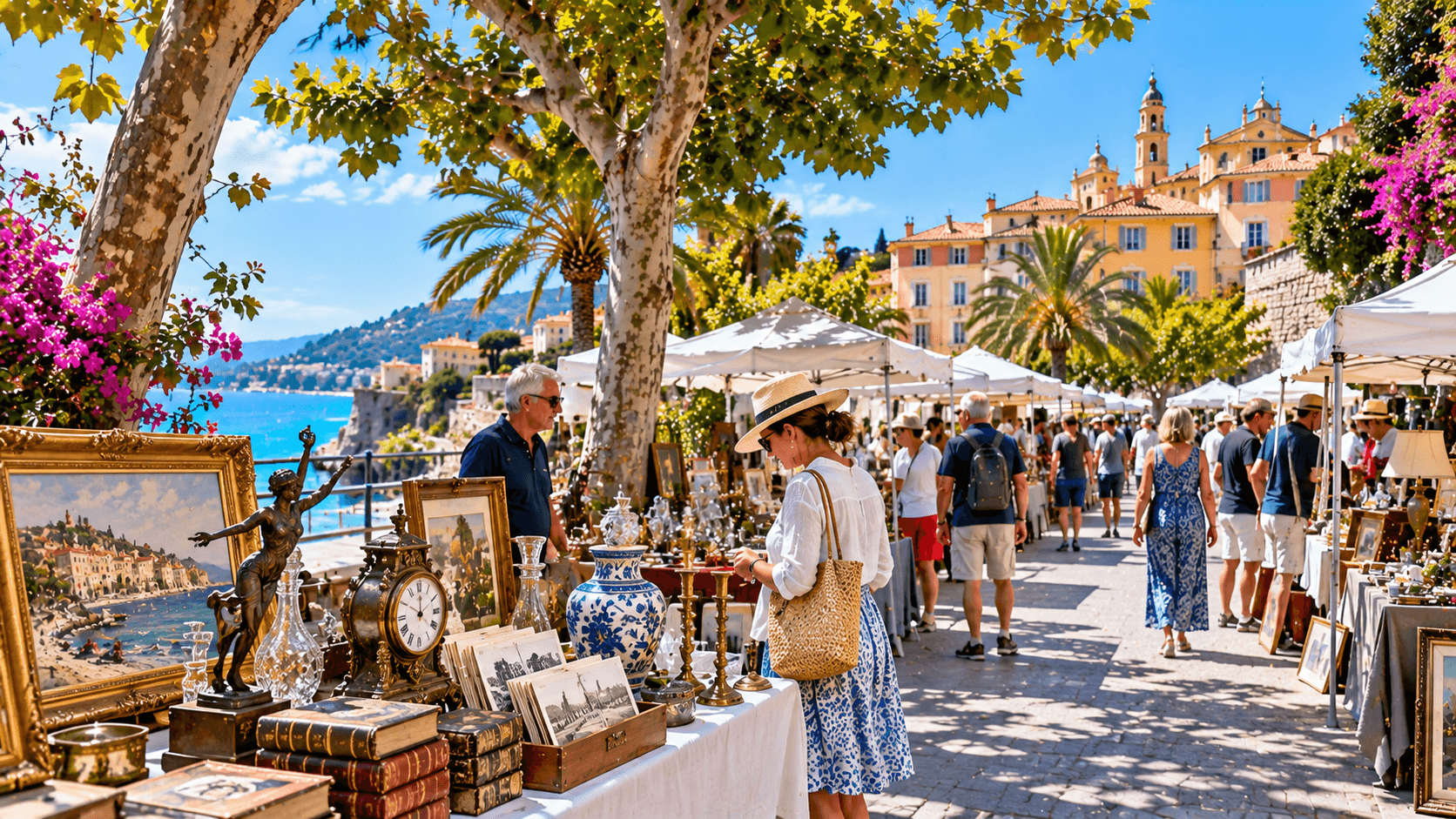
There's something rather addictive about browsing a good flea market on the French Riviera. You might arrive looking for a vintage postcard and leave with an old ceramic dish, a collection of French books or a small painting that somehow needs to fit into your suitcase. Around Menton, you'll find everything from traditional brocantes to specialist antique dealers, collectors' markets and neighbourhood sales where residents clear out their cupboards. But there's an important distinction.
A food market isn't a flea market. A brocante isn't necessarily an antiques fair. And the famous Friday market in Ventimiglia isn't primarily a vintage market. Knowing the difference will save you time and help you find the kind of objects you're actually interested in. This guide focuses on established markets in Menton and nearby destinations, explains where to look for occasional sales and covers the practical details that matter when buying second-hand goods abroad.
1. Understanding French flea markets: what's the difference?
You'll encounter several different French terms when searching for markets. They don't all describe the same type of event.
These categories can overlap. A brocante may sell antiques, while a collectors' market might include vintage fashion or decorative objects. The important thing is to check the actual type of exhibitors before making a special journey.
| French term | What it usually means | What you'll find |
|---|---|---|
| Brocante | Second-hand and vintage market, often with professional traders | Old homewares, ceramics, books, decorative objects, collectibles |
| Marché aux puces | Flea market | Mixed second-hand goods, antiques and occasional curiosities |
| Marché des antiquaires | Market specialising in older or collectible objects | Furniture, art, jewellery, decorative antiques |
| Vide-greniers | Garage-sale-style event, often with local residents | Household items, clothes, toys, books, inexpensive finds |
| Vide-dressing | Second-hand clothing sale | Clothes, handbags, shoes and accessories |
| Marché aux collections | Collectors' market | Records, postcards, coins, stamps, toys and memorabilia |
| Marché forain | General outdoor market | Clothes, accessories and assorted new merchandise |
| Marché alimentaire | Food market | Fruit, vegetables, cheese, meat and other groceries |
| Marché artisanal | Artisan market | Handmade products, crafts and original creations |
2. Where to go: flea markets around Menton
The schedule is a planning reference rather than a live confirmation of individual stalls. Weather, holidays, municipal events and organiser decisions can affect any market.
| Market | Location | Regular schedule | Best for |
|---|---|---|---|
| Menton Brocante Market | Mail du Bastion, Menton | Fridays; 2nd and 4th Sundays | Old postcards, books, curiosities and vintage objects |
| Menton Vintage & Collectors Market | Place du Cap / Quai Bonaparte | Published seasonal dates; verify each edition | Vinyl, collectibles and vintage treasures |
| Cours Saleya Brocante | Old Nice | Mondays, generally 7 a.m.–6 p.m. | Antiques, art, furniture and decorative pieces |
| Nice Marché aux Puces | Rue Robilante, near Nice Port | Tuesday–Sunday | Antique dealers, decorative objects and art |
| Ventimiglia Old-Town Antiques Market | Ventimiglia Alta | Date must be confirmed | Italian antiques and vintage objects |
| Ventimiglia Friday Market | Ventimiglia seafront | Fridays | Clothes, leather goods and general shopping, not principally antiques |
3. Menton Brocante: the easiest place to start
Location: Mail du Bastion and Place aux Herbes, 06500 Menton If you're staying in Menton and want to browse vintage objects without travelling elsewhere, start with the town's regular brocante. The market occupies the Mail du Bastion, close to the old port and central waterfront. It's conveniently positioned for combining a market visit with a walk through the old town or lunch near the sea.
What can you find?
The municipal description mentions old postcards, second-hand books, ornaments and collectable objects. Depending on the participating sellers, you may also encounter ceramics, old photographs, decorative pieces, small artworks and other second-hand goods. As with any brocante, the selection changes from one visit to the next. That's part of the pleasure.
When does it take place?
The City of Menton publishes the following recurring schedule:
Every Friday.
The second and fourth Sunday of each month.
The municipal information describes Friday trading from 7 a.m. to 6 p.m. The tourism office repeats those hours in its narrative but lists 9 a.m. to 5 p.m. in its structured timetable. Because the published hours aren't identical, plan your visit during the main morning or early-afternoon period and confirm the current schedule if timing is important. The market is listed as a year-round event, but temporary changes are possible.
How long should you allow?
Approximately 45–90 minutes is a reasonable starting point. If you enjoy discussing objects with dealers or searching through boxes of books and postcards, you may easily spend longer.
Is it worth visiting?
Yes, especially if you enjoy small discoveries rather than shopping for a particular expensive antique. It's also a convenient low-cost activity: browsing doesn't require an admission ticket. Official information: City of Menton: Markets and Brocantes
market
market
Menton Brocante — Mail du Bastion
Brocante for old postcards, used books and decorative finds near the old port. Distinct from the food market and the dated Vintage & Collectors editions.
Mail du Bastion & Place aux Herbes, 06500 Menton
Tourism narrative says 07:00–18:00, but its timetable says 09:00–17:00. Weather, holidays and temporary changes can affect editions.
Source checked:
4. Menton's Vintage and Collectors Market
Location: Place du Cap and Quai Bonaparte, Menton Menton also organises a separate market dedicated to vintage and collectable objects. This is a useful distinction because the sellers and merchandise may differ from the regular Mail du Bastion brocante. The municipality describes a market featuring collectors, vinyl records, coins and other collectable objects.
When does it take place?
The city's website publishes specific 2026 dates, including several weekends between May and October and an additional edition on 27–29 December 2026. Its general description refers to the second weekend of the month, but the individually published dates don't consistently follow that simple pattern. For this reason, use the dated municipal calendar, not a generic assumption that it takes place every second weekend. The published 2026 timetable includes 9 a.m.–6 p.m. as the market's usual hours.
What should you look for?
This is potentially a better choice than a general brocante if you're interested in:
Vinyl records.
Coins and small collectibles.
Vintage memorabilia.
Old postcards and paper goods.
Small collectable objects.
The selection depends on participating vendors.
Who should choose it?
Collectors and visitors who enjoy searching for something specific. If you're in Menton during a confirmed edition, it's worth including in your day. Official calendar:Menton Municipal Markets
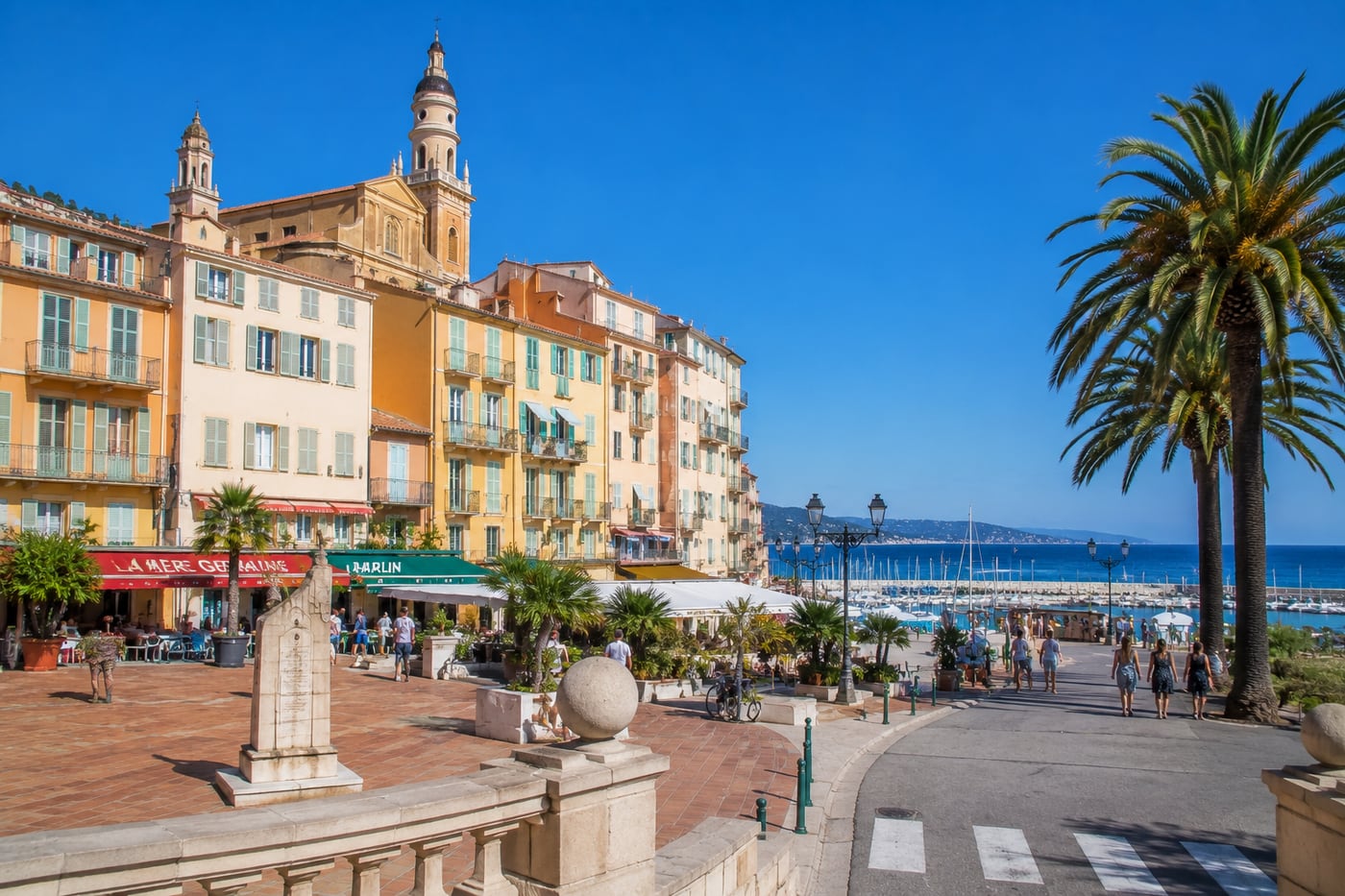
viewpoint
viewpoint
Place du Cap
The point where Menton's old town opens toward the old port and seafront, with an easy connection to the Bond location walk.
Old town / old port
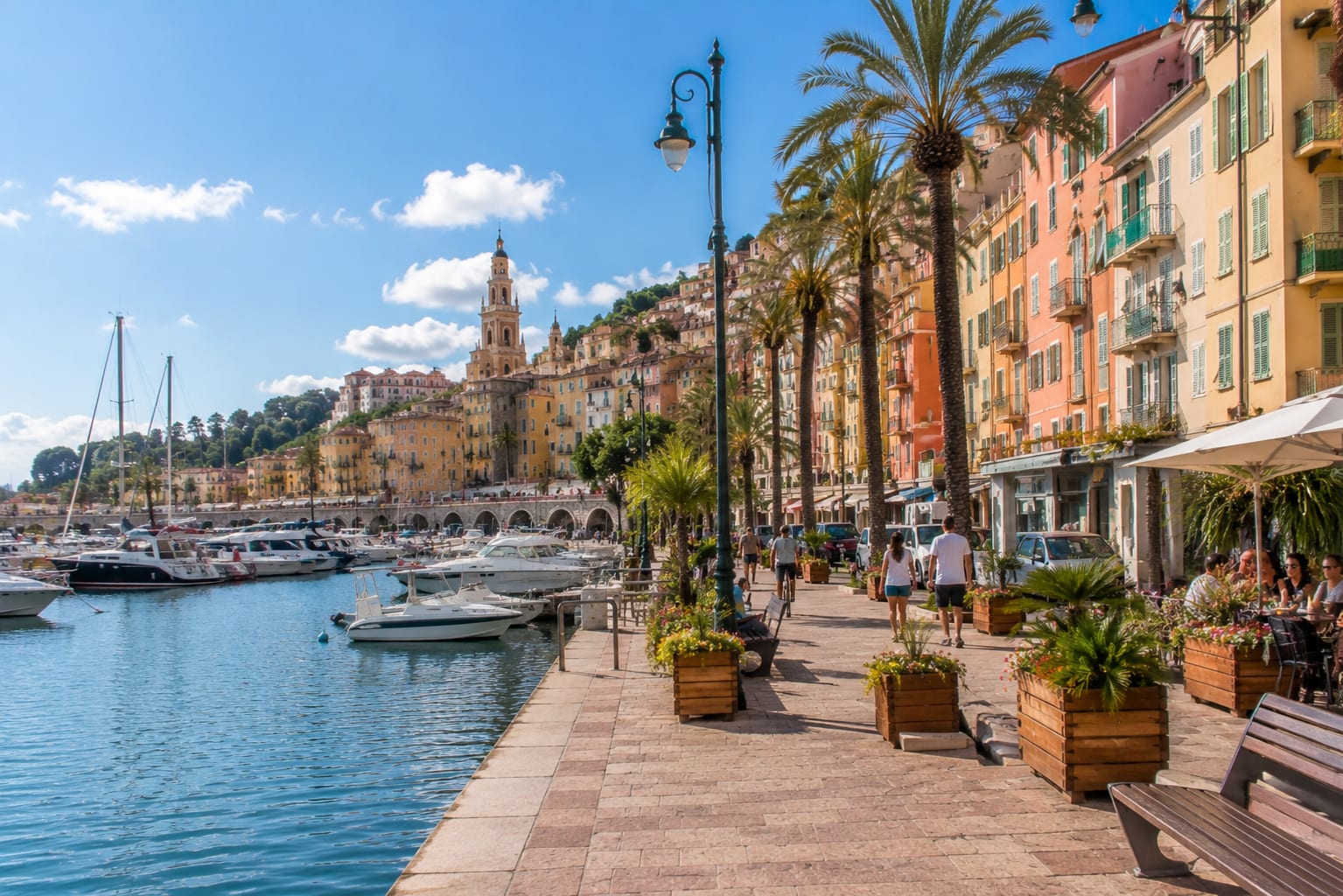
walk
walk
Quai Bonaparte
A compact old-port route for sea views, the Bastion area and an easy gelato stop before or after the old town.
Quai Bonaparte, 06500 Menton
5. Cours Saleya in Nice: the major Monday antique market
Location: Cours Saleya and Place Pierre Gautier, Old Nice For a more substantial antiques experience, head to Nice. Cours Saleya is famous for its colourful food and flower markets, but Monday has a different identity. On Mondays, the square becomes a large brocante and antiques market. According to the Nice Côte d'Azur tourism office, approximately 180 traders may participate, offering a broad selection of old and vintage objects.
What can you find?
Expect a mixture of:
Antique furniture.
Old paintings and prints.
Ceramics and tableware.
Decorative objects.
Books and old documents.
Collectors' items.
Vintage household accessories.
The range is one of the market's greatest strengths. You might find a small souvenir for a few euros or an expensive piece requiring professional appraisal and transport.
Opening schedule
Mondays, approximately 7 a.m.–6 p.m., throughout the year, subject to public-holiday exceptions and official decisions. Nice's municipal market regulations provide for exceptions on certain holidays and special dates. Don't assume the market operates normally on every holiday Monday.
How to get there from Menton
Take a regional train towards Nice and check the best station for your planned walking route. Nice-Ville is a main arrival station, while some services may offer a more convenient connection through Nice-Riquier for the eastern side of the city. Cours Saleya is in Old Nice, near the seafront. Allow approximately two to three hours for a relaxed market visit, plus your journey.
Our recommendation
If you genuinely enjoy antiques, Cours Saleya is the strongest general-purpose market excursion in this guide. The combination of numerous dealers, varied objects and the surrounding old town makes it worth a dedicated morning.
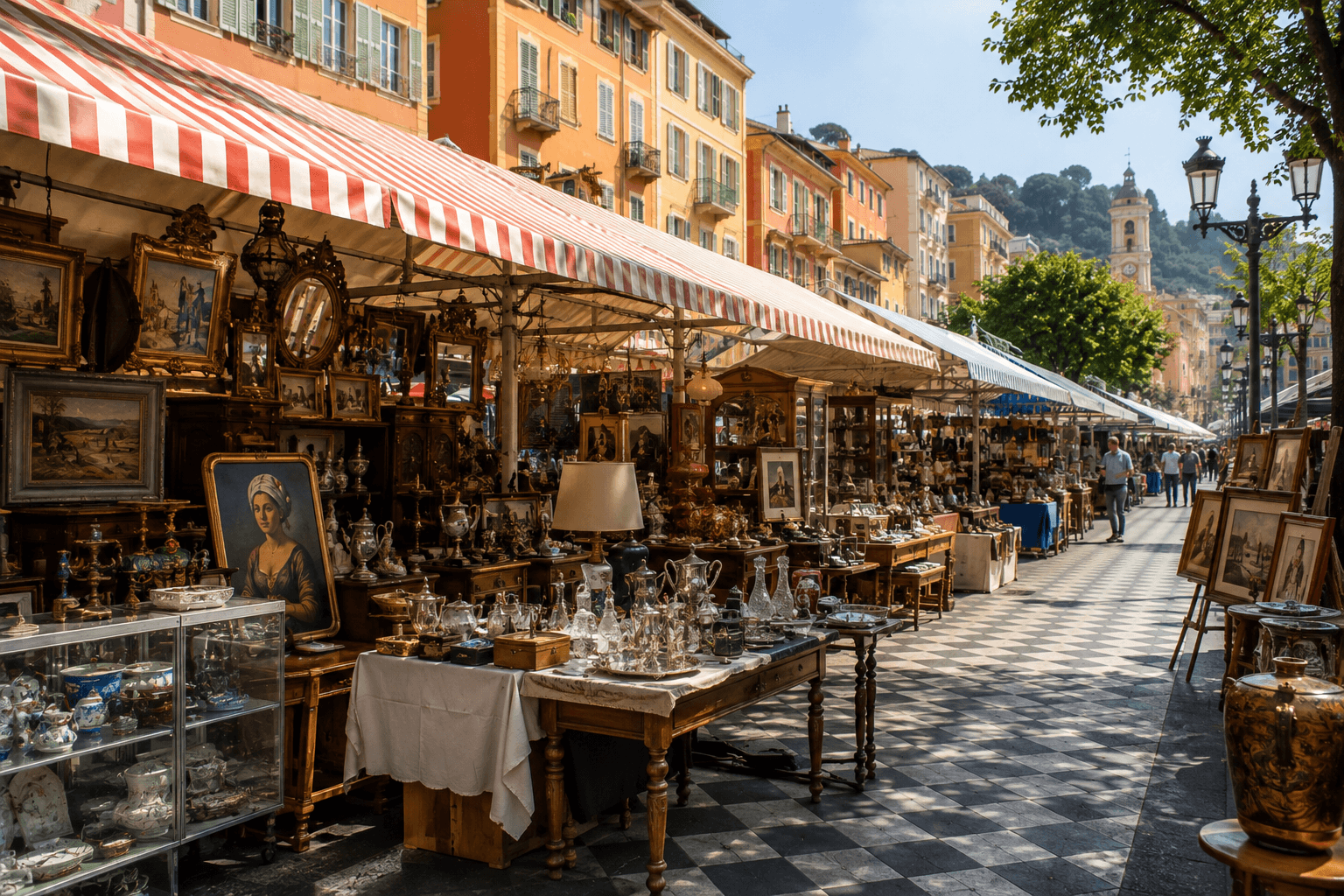
market
market
Cours Saleya antiques
Specialized antiques section of Nice's famous Cours Saleya market square, useful if you need souvenirs or design items.
Nice
Check current hours before visiting
6. Nice Marché aux Puces: a more specialist antique-shopping experience
Location: Rue Robilante, near Port Lympia, Nice Nice has another option that shouldn't be confused with the Monday Cours Saleya event. The Marché aux Puces near the port is an established cluster of dealers specialising in antiques, decorative objects and works of art. It's a useful destination if you're particularly interested in examining objects rather than simply enjoying the atmosphere of a large outdoor market.
When can you visit?
The tourist office publishes regular opening from Tuesday to Sunday. The current advertised schedule is:
October–May: 10 a.m.–6 p.m.
June–September: 10 a.m.–7 p.m.
Monday: Normally closed.
Individual dealers may operate different hours.
What should you expect?
Antiques, art and decorative objects are the main draw. It's a place to compare different pieces, discuss provenance and possibly return for something you've seen earlier. If you're considering an expensive purchase, don't feel pressured to decide immediately.
How to plan the visit
Combine the flea market with a walk around Port Lympia. If you're already visiting Cours Saleya on a Monday, note that this second market normally follows a different weekly schedule. Official information:Nice Marché aux Puces
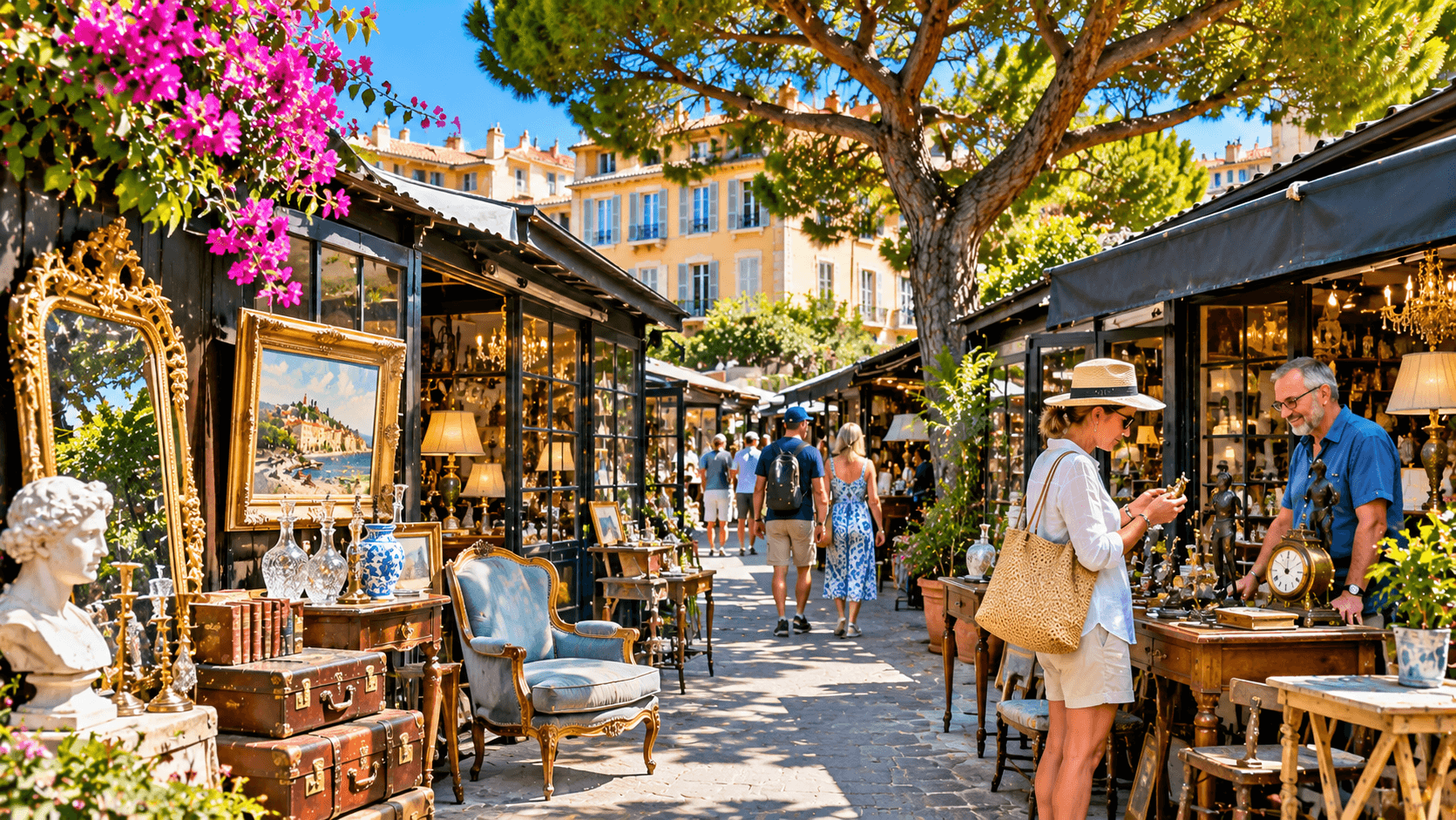
market
market
Marché aux Puces de Nice
Antique, art and decorative-object dealers near Port Lympia; not the Monday Cours Saleya brocante.
Rue Robilante, Nice
Tourism listing covers October 2026–May 2027 and June–September 2027. Individual dealer attendance is not guaranteed.
Source checked:
7. Ventimiglia: know which Italian market you're visiting
Ventimiglia is only a short train journey from Menton, making it tempting to add an Italian market to your holiday. But several different markets operate in the town.
The famous Friday market
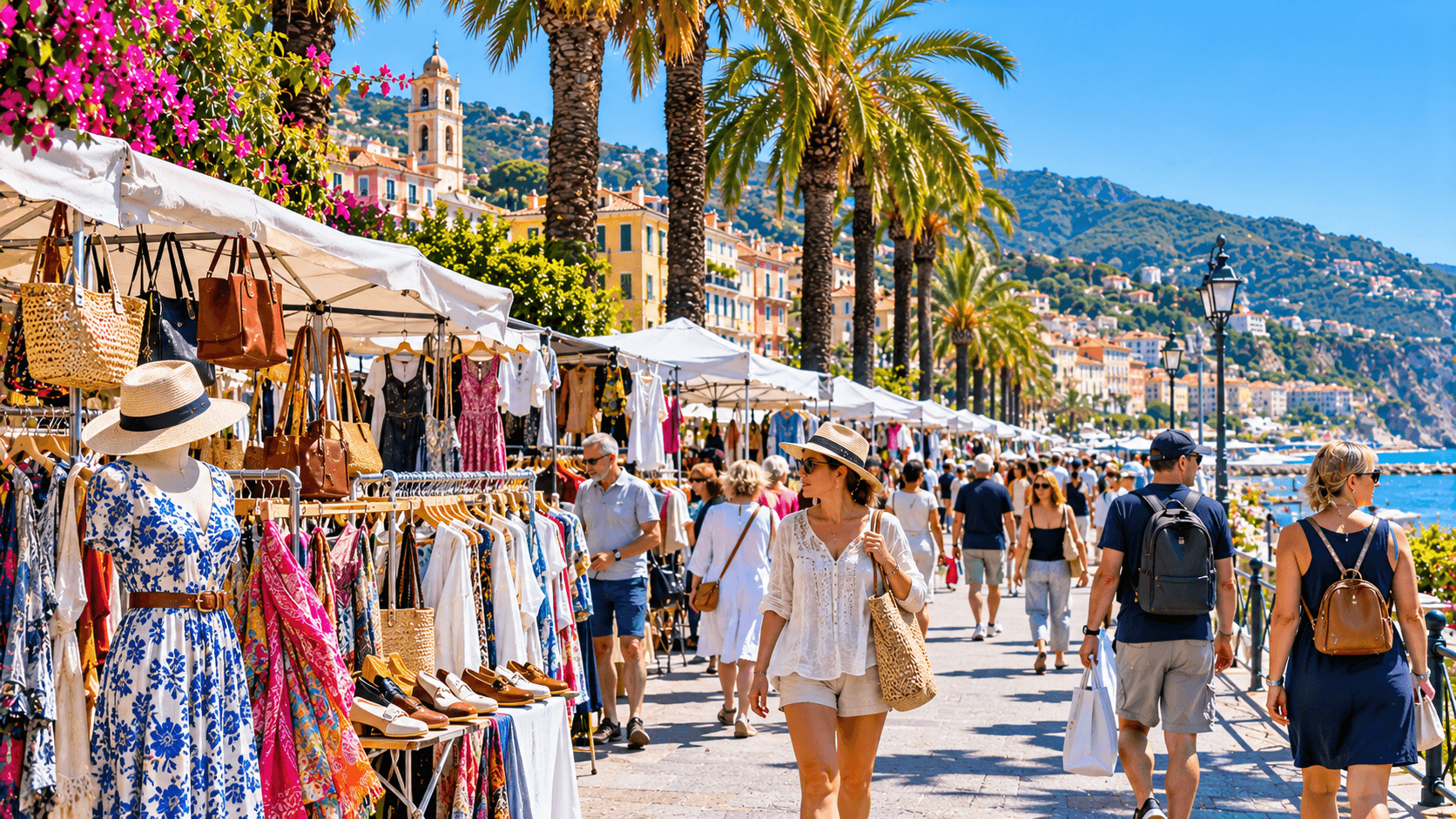
Ventimiglia's large open-air Friday market is a well-known shopping destination. It occupies the seafront area and attracts visitors from both Italy and France. The municipality highlights clothing, leather goods, shoes, eyewear and assorted everyday merchandise. It's a lively experience, but it isn't primarily an antiques or authentic vintage market. If your goal is old furniture, ceramics or rare collectables, don't make this your only destination without checking other options.
The municipality advertises the Friday market from 7 a.m., with the day's exact arrangements subject to local conditions.
Official Ventimiglia Friday Market
The historic-centre antiques market
The Ventimiglia tourism website separately mentions an antiques market in the historic centre, known as Ventimiglia Alta. This is more relevant for visitors searching for vintage and period objects. However, the municipal tourism material reviewed for this guide doesn't provide a sufficiently reliable recurring calendar for the antiques market. Confirm an actual upcoming date with the Ventimiglia tourist information office before travelling specifically for it. The tourist office publishes the following contact: Email: infopoint@comune.ventimiglia.im.it Telephone: +39 0184 1928309
Ventimiglia official market overview
What about U Desbaratu?
Ventimiglia also has an annual event called U Desbaratu. It's a traditional shopkeepers' clearance sale in which local merchants sell goods outside their premises. The municipality describes it as taking place on the first Sunday in August. This can be entertaining, but it isn't the same as a regular antique market or a resident-run garage sale. Check each year's programme before making plans.
market
market
Ventimiglia Friday Market
Clothing, leather goods, shoes and household items on the seafront. Confirm arrangements before travelling; antique-market dates in Ventimiglia Alta are separate and unverified.
Lungomare, Ventimiglia
General seafront shopping, not principally antiques. Distinct from the covered food market and the historic-centre antiques market.
Source checked:
8. Finding vide-greniers and occasional second-hand sales
Some of the most enjoyable second-hand shopping experiences aren't part of a permanent market. They're organised by neighbourhood associations, local communities, schools and other groups. In French, look for vide-greniers. These events are similar to car boot sales or community garage sales. You might find household items, children's toys, books, kitchenware, small furniture and clothing. Prices can be lower than at professional antique markets, but condition and quality vary.
Where to find upcoming events
The most useful starting points are:
Official municipal event calendars.
Local tourist office event listings.
Organiser websites or social media announcements.
Search for Menton and neighbouring communities such as Roquebrune-Cap-Martin, Beausoleil and other towns you can realistically reach.
Don't confuse an event listing with a confirmed event
A directory may show an annual event based on its previous edition. Before travelling, verify:
The exact date and year.
The location and street address.
Whether the event has been confirmed by the organiser.
Whether it's open to visitors or primarily intended for registered sellers.
Cancellation arrangements in case of rain.
The expected number and type of exhibitors.
If an event appears only on an old directory listing without confirmation, treat it as unverified. A five-minute check can save a disappointing journey.
9. Antique shops versus flea markets: which is better?
Markets are wonderful for discovery. Shops can be better when you're searching for a particular category of object or want additional time to examine an expensive piece.
Choose a flea market when...
You enjoy browsing, comparing and occasionally finding something unexpected. You're interested in small decorative objects, postcards, books and affordable vintage accessories. You don't mind variable stock and the possibility of leaving empty-handed.
Choose a specialist antique dealer when...
You're looking for furniture, artwork, jewellery or an item with significant historical or monetary value. You want to discuss its age, condition, origin and possible restoration. You need a receipt, written description or shipping arrangements. Antique dealers generally specialise in historic or artistic objects, while brocante dealers trade more broadly in second-hand goods. A seller’s category is not an independent guarantee of authenticity. That distinction can help set expectations, although the merchandise often overlaps.
10. Paying at flea markets: cash, cards and negotiation
Payment arrangements depend on the individual seller. Don't assume that every stall accepts cards, even at a professionally organised market.
Bring some cash
Small euro notes and coins are useful for inexpensive purchases. A seller may accept electronic payment, but cash can make a small transaction easier. Keep valuables secure, especially at busy outdoor markets.
Ask whether cards are accepted
A simple question in French: “Vous acceptez la carte ?” Meaning: “Do you accept cards?” In Italian: “Accettate le carte?” Don't assume payment methods from the type of market alone.
Is bargaining acceptable?
Negotiation can be part of the brocante experience, particularly for second-hand or antique goods. But it's best approached politely. If an item costs €40, asking whether the seller could accept €35 is more reasonable than demanding a dramatic discount. You can say: “Est-ce que vous pourriez faire un petit prix ?” Meaning: “Could you offer a slightly better price?” For several items, ask whether a combined price is possible.
When not to negotiate
Don't assume bargaining is appropriate for everything. An artisan selling original work, a charity stall raising funds or a shop displaying fixed prices may follow different conventions. Use judgment and respect the seller's answer.
11. What to inspect before buying vintage items
An object can look wonderful on a market table and less convincing once you bring it home. For more expensive purchases, take a few minutes to examine it carefully.
Never assume a vintage electrical appliance is safe to plug in simply because it looks attractive. For old ceramics, be cautious about using decorative pieces for food. The original glaze or materials may not meet current food-contact safety standards. Ask whether an item has been restored, repaired or modified. For valuable antiques, request the seller's description in writing.
| Item | What to check |
|---|---|
| Ceramics | Chips, cracks, repairs, stability and maker's marks |
| Glassware | Cracks, cloudiness, damaged rims and repairs |
| Furniture | Woodworm signs, loose joints, structural damage and restoration |
| Paintings | Signature, condition, frame and claimed provenance |
| Jewellery | Hallmarks, materials, missing stones and authenticity |
| Vintage clothing | Stains, repairs, sizing, seams and odour |
| Books | Missing pages, water damage, binding and edition |
| Vinyl records | Scratches, warping, sleeve condition and edition |
| Old electrical objects | Wiring, electrical safety and practical usability |
12. What should you ask an antique dealer?
You don't need to be an expert collector to ask useful questions. For a valuable or unusual item, try these:
Approximately when was it made?
Is it original, restored or a reproduction?
Are there any repairs or known defects?
Does it have a maker's mark or signature?
Do you know anything about its previous ownership?
Can you provide a receipt and written description?
Is the price negotiable?
Can you arrange packing or shipping?
For a painting or collectible claimed to be rare, don't treat a verbal statement as independent authentication. If the value is substantial, consider professional advice before committing.
13. Buying furniture or large antiques: how do you get them home?
This is one of the most overlooked parts of vintage shopping. A little ceramic bowl can go into your luggage. A pair of antique chairs is another matter. Before buying a bulky item, solve the transport problem.
Measure everything
Record the object's height, width, depth and approximate weight. For furniture, check whether legs or other parts can be removed safely. If you're staying in an apartment, consider staircases, lifts, doors and corridors before arranging delivery.
Ask about local delivery
Some professional dealers may be able to arrange delivery within Menton, Nice or the surrounding area. But this is not universal. Ask for a confirmed quote rather than assuming delivery is included.
Ask about professional shipping
For fragile antiques or furniture, specialist packing and transport can be more appropriate than an ordinary parcel service. Before paying, confirm:
Who arranges packing.
Whether the quote includes collection and delivery.
What insurance is included.
Who is responsible for damage during transport.
Whether the item must be crated.
Estimated shipping charges.
Any storage fees if collection is delayed.
Get these terms in writing.
Check whether the purchase still makes financial sense
A €100 chair that costs €250 to pack and ship isn't necessarily a bargain. These figures are illustrative, not a shipping quotation. Compare the total cost, not just the stall price. If you're shopping for your home abroad, it may be more sensible to concentrate on smaller objects.
14. Taking antique purchases across borders
Menton is close to Italy and Monaco, but crossing borders with valuable objects requires some care.
France to Italy, or Italy to France
For ordinary personal purchases within the European Union, goods can generally move between member states without additional customs duties. However, special regulations may apply to protected cultural objects, certain artworks and antiques. The fact that you purchased an item legally doesn't automatically mean it can be exported without documentation. If the object is particularly old, rare, culturally significant or expensive, ask whether any authorisation is required before removing it from the country.
Monaco
Monaco has a special customs relationship with France, but you should still check relevant restrictions for protected objects or valuable cultural goods. Don't assume that the absence of a routine customs checkpoint eliminates every possible legal requirement.
Taking purchases outside the EU
If you're flying home to a country outside the EU, import taxes, customs declarations and restrictions may apply. The destination country's rules are just as important as the seller's country. For valuable artworks, antiques or items made from regulated materials, check the necessary documentation before purchase.
Always keep proof of purchase
Request an invoice or receipt for valuable items. It can help with insurance, customs declarations, resale, provenance questions and shipping disputes. These are general planning notes, not clearance for a particular object. Check with the relevant authorities before purchase and export.
EU: Personal Purchases and VAT
15. Three useful vintage-shopping itineraries
Option A: a Friday morning in Menton
Best for: A relaxed introduction without leaving town. Start at the Mail du Bastion brocante. Browse the dealers, looking for postcards, books and small vintage pieces. Continue towards the old town and waterfront. Enjoy lunch in central Menton. You can combine this with the covered food market, but remember that it's a separate experience selling different types of goods. Allow: Approximately 2–3 hours including a café or lunch stop.
Option B: Monday antiques in Nice
Best for: Serious browsing and a larger selection. Take the train from Menton to Nice. Head to Cours Saleya for its Monday brocante. Allow enough time to compare sellers and examine objects. Enjoy lunch in Old Nice, then explore the surrounding streets. If you're considering a substantial furniture purchase, ask about shipping before you commit. Allow: A half-day or longer, plus travel.
Option C: Italian shopping and discovery
Best for: Combining a different atmosphere with a market visit. Take a train to Ventimiglia. If you're interested in general shopping, consider the Friday market. If antiques are your priority, first confirm the next edition of the historic-centre antiques market. Explore Ventimiglia Alta and enjoy an Italian lunch. Don't organise the trip around an unverified market date. Allow: Half a day to a full day, depending on your plans.
market
market
Halles du Marché
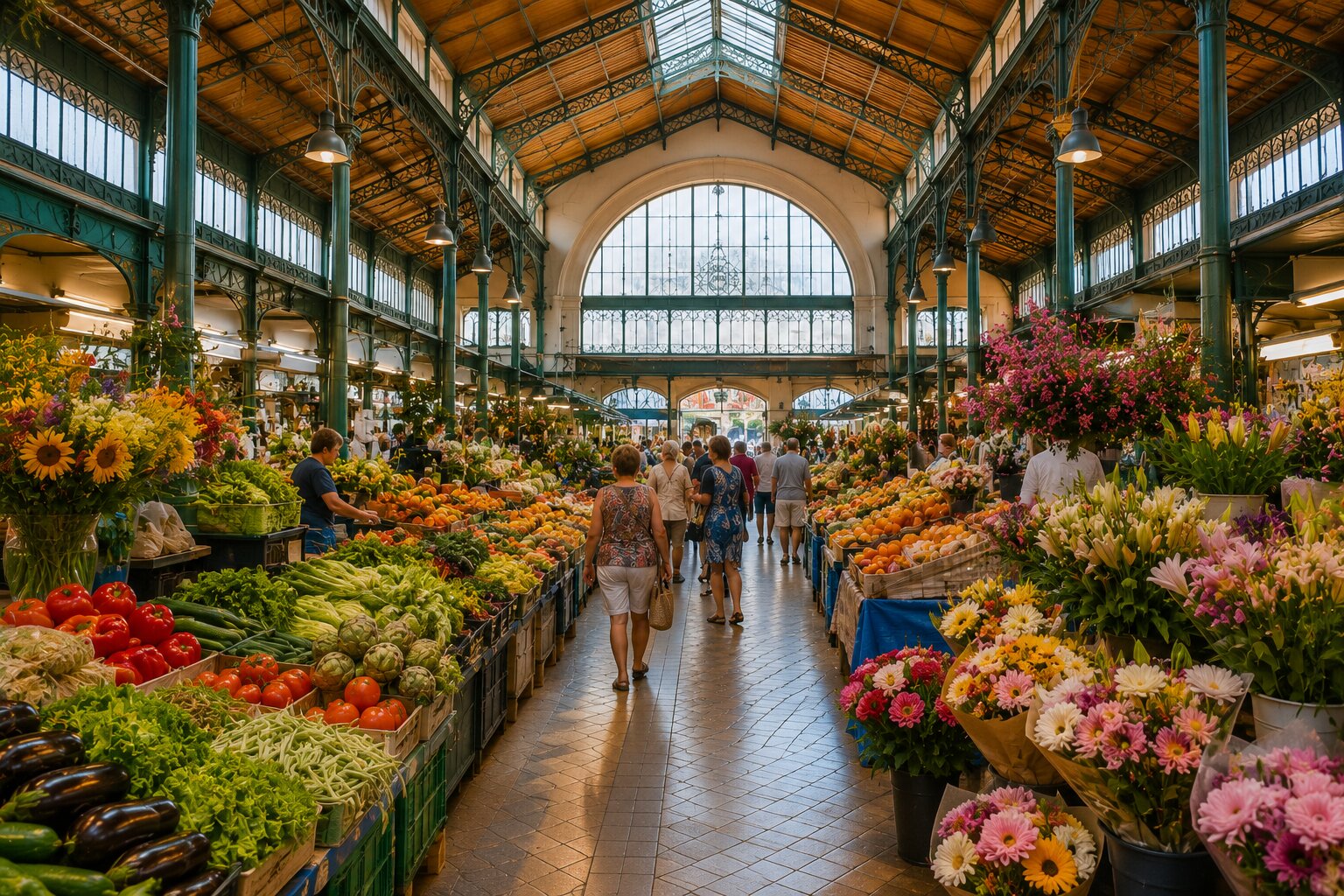
A natural first stop for picnic ingredients, citrus products and a morning look at local food life.
5 Quai de Monléon, 06500 Menton
Check current hours before visiting
The tourist office lists independent wheelchair access and free entry. This concerns the market building, not the surrounding streets or a published pushchair policy.
Source checked:
16. Which market is best for you?
For a casual vintage souvenir: Menton's Friday brocante is the easiest choice. For vinyl and collectibles: Look at Menton's published Vintage & Collectors Market dates. For serious antiques: Cours Saleya on Monday provides a broad selection. For antique shops and decorative objects: Nice's Marché aux Puces near the port offers a more specialist experience. For inexpensive household discoveries: Search for a confirmed vide-greniers.
For general fashion and accessories in Italy: Ventimiglia's Friday market is suitable, but it shouldn't be mistaken for a specialist vintage event. For a one-off Italian clearance-sale atmosphere: Investigate U Desbaratu when its annual edition is confirmed.
Frequently asked questions
Is there a flea market in Menton?
Yes. Menton has a regular brocante at Mail du Bastion on Fridays and the second and fourth Sundays of the month, according to the municipality.
Is Menton's flea market open all year?
It's advertised as a year-round regular market. Individual dates can be affected by public holidays, weather or local events, so check before travelling.
Where can I buy antiques near Menton?
Menton has its own brocante, while Nice offers the large Monday Cours Saleya antiques market and the regular Marché aux Puces near the port.
Is the Friday market in Ventimiglia a flea market?
Not primarily. It's a large general market specialising in clothing, accessories, leather goods and everyday shopping. Ventimiglia's historic-centre antiques market is a separate experience.
What is a vide-greniers?
A community second-hand sale, often with local residents selling household goods, books, clothes and other possessions. Individual events require date confirmation.
Can you bargain at French flea markets?
Often, yes, especially at brocantes and second-hand markets. Be polite and recognise that not all sellers negotiate.
Do flea market sellers accept credit cards?
Some do, but not all. Carry a reasonable amount of cash and confirm payment methods before agreeing to a purchase.
Can I ship antique furniture home?
Sometimes. Professional dealers may arrange transport, but you'll need to confirm packing, costs, insurance and delivery conditions. Large-item shipping is not automatically included.
Do I need customs documents for antiques?
Ordinary personal purchases within the EU generally move freely, but protected cultural goods, valuable artworks and certain antiques can be subject to special rules. Check before buying or exporting.
Final thoughts: leave room for discovery
Vintage shopping isn't like visiting a museum with a list of masterpieces you expect to see. You never really know what will be on the tables. That uncertainty is part of the appeal. One Friday in Menton, you might discover a small collection of old Riviera postcards. On another visit, you could find vintage ceramics, an unusual book or nothing you want to buy at all. For a bigger choice, spend a Monday at Cours Saleya in Nice.
And if you're travelling into Italy, enjoy Ventimiglia's market culture while remembering that not every market is dedicated to antiques. Check the dates, bring a little cash and ask questions before buying. If you're considering furniture or valuable objects, solve the transport and documentation questions before paying. Above all, give yourself time to browse. The best vintage finds are rarely the ones you went looking for.
Official sources and useful links
City of Menton: Markets, Brocantes and Vintage Calendar
Nice: Cours Saleya Monday Brocante
Ventimiglia: Official Markets Guide
Brocabrac: Upcoming Markets and Garage Sales
EU: VAT and Cross-Border Personal Shopping
Tourism Office: Menton Brocante
French Customs: Cultural Goods
French Customs: Customs Territory and Monaco
Italian Ministry of Culture: Export Office
Market schedules and practical information checked on 2 November 2026. Regular dates are not a guarantee that an individual market will operate on every public holiday or during adverse weather. Always confirm special-event dates directly with the organiser.