One morning, four very different choices
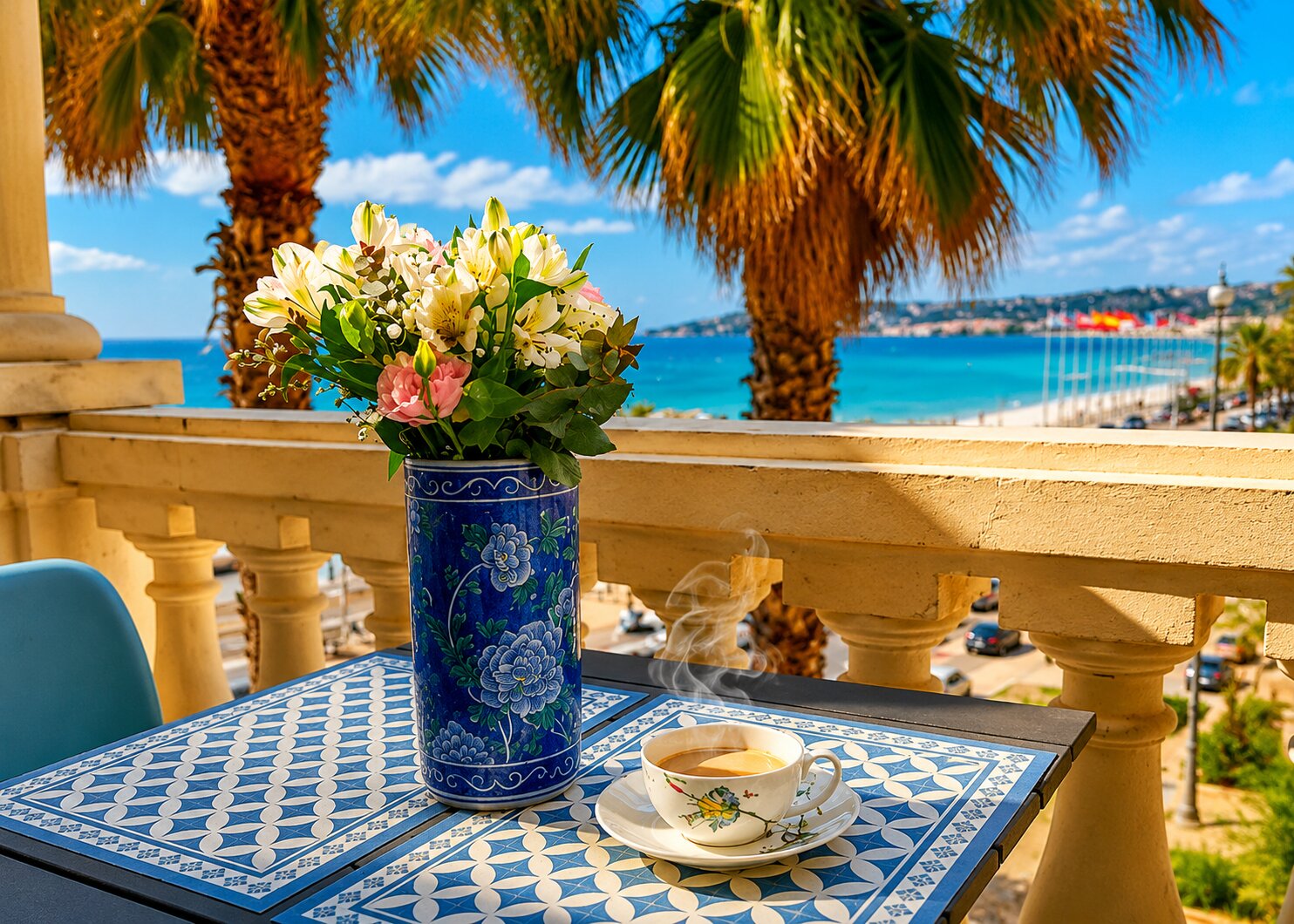
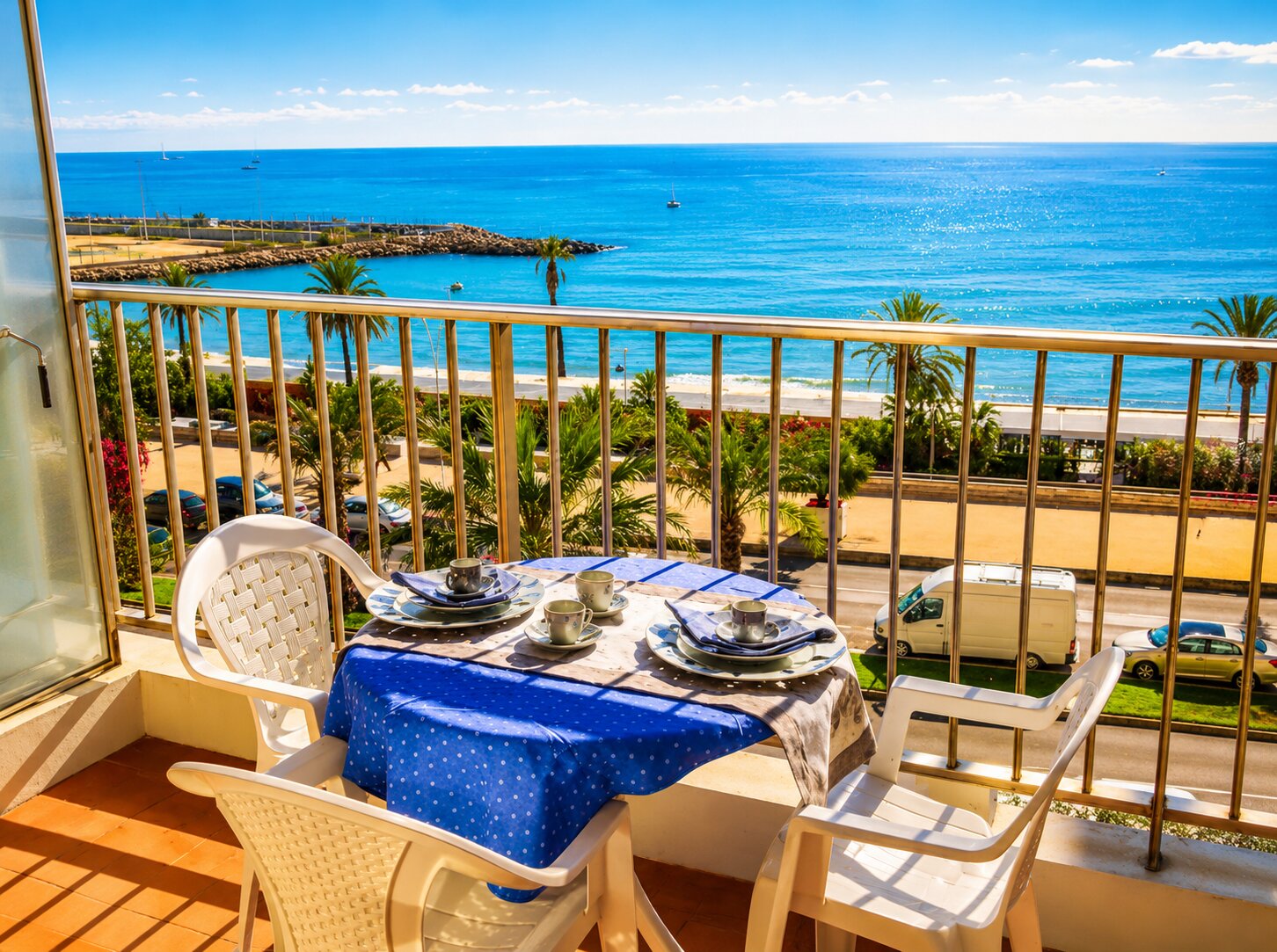
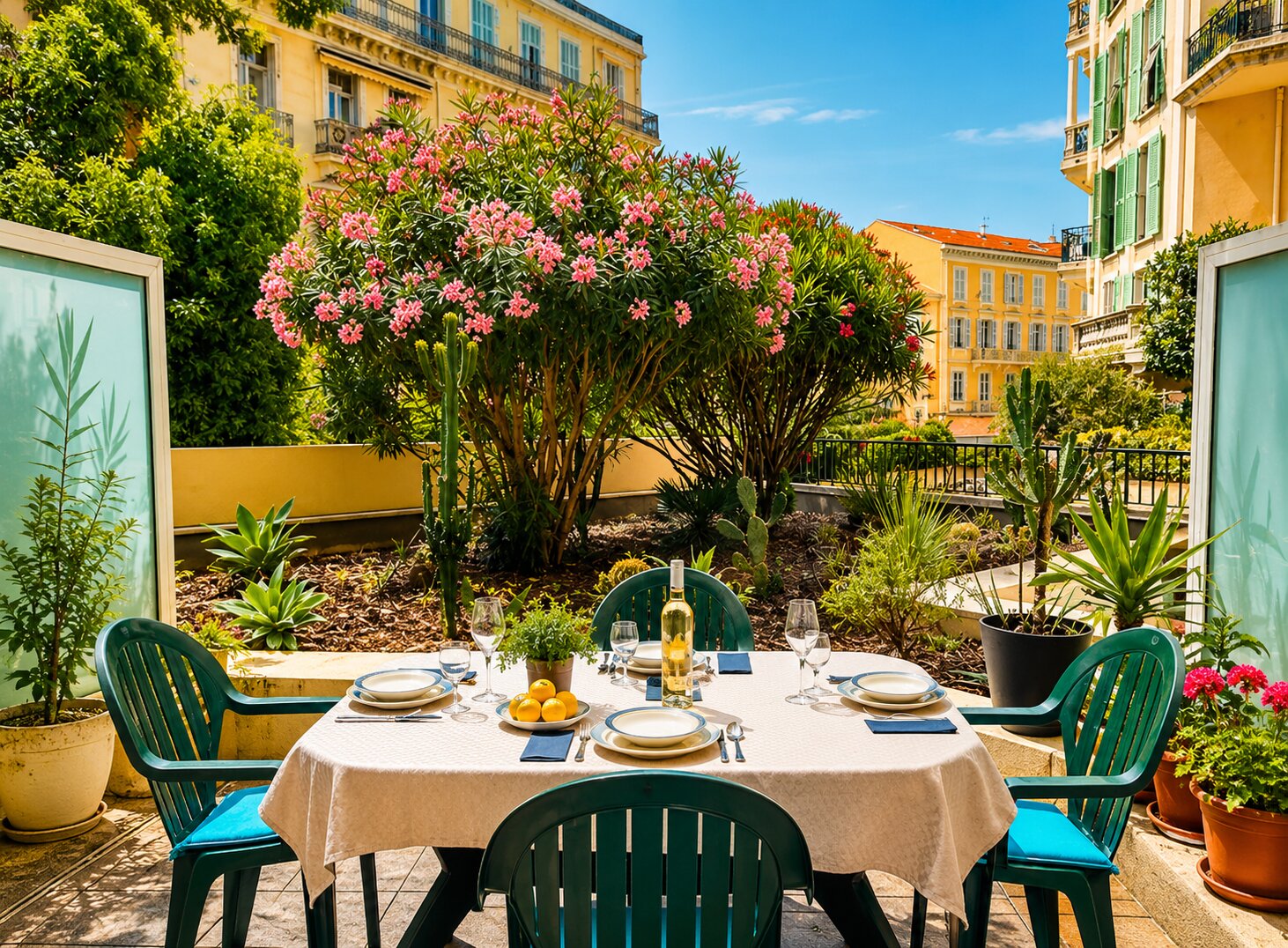
From Menton's waterfront, the mountains seem impossibly close.
Look up from the beach and you'll see villages clinging to the hillsides, with church towers, stone houses and narrow streets overlooking the Mediterranean.
Four of the most rewarding are Sainte-Agnès, Gorbio, Castellar and the old village of Roquebrune.
They're all beautiful. They're all historic. And they're all close enough to Menton for a half-day excursion.
But they're not interchangeable.
One offers exceptional mountain views and military history. Another is all about sitting beneath a centuries-old elm tree. A third feels almost Italian, with ochre façades and covered passages. The fourth has a medieval castle and streets that seem to twist around the hillside.
If you have only one free morning, which village should you choose?
This guide compares them by atmosphere, walking difficulty, transport, lunch options and how comfortably you can return to Menton.
1. Four villages, four different experiences
These are suggested sightseeing durations, not measured walking times. Add your actual transport time and any waiting between services.
Choose by what you enjoy
For the biggest views: Sainte-Agnès.
For a leisurely village lunch: Gorbio.
For colourful photography and quieter streets: Castellar.
For medieval history and a castle: Roquebrune.
For a first hilltop village visit: Sainte-Agnès if views are your priority, or Gorbio if atmosphere matters more.
For visitors who dislike stairs: None of these villages is reliably step-free. Consider a shorter, carefully planned visit to an accessible central area rather than a complete historic-centre walk.
| Village | Best reason to visit | Walking difficulty | Public transport | Ideal time in village |
|---|---|---|---|---|
| Sainte-Agnès | Dramatic sea views, medieval ruins and Maginot Line history | Moderate; strenuous for castle ruins | Zest 10 | 2–3 hours |
| Gorbio | Authentic village atmosphere, shaded square and slow lunch | Moderate; uneven cobbled lanes | Zest 5; check service pattern | 1.5–2.5 hours |
| Castellar | Italian-looking streets, photography and mountain atmosphere | Moderate; stairs and sloping lanes | Zest 6 | 1.5–2.5 hours |
| Old Roquebrune | Medieval castle, ancient olive tree and Riviera history | Moderate to strenuous; stairs and gradients | Zest 24 or local connections | 2–3 hours |
2. Sainte-Agnès: choose it for the extraordinary views
Location: Approximately 10 km from Menton, around 760–780 metres above sea level.
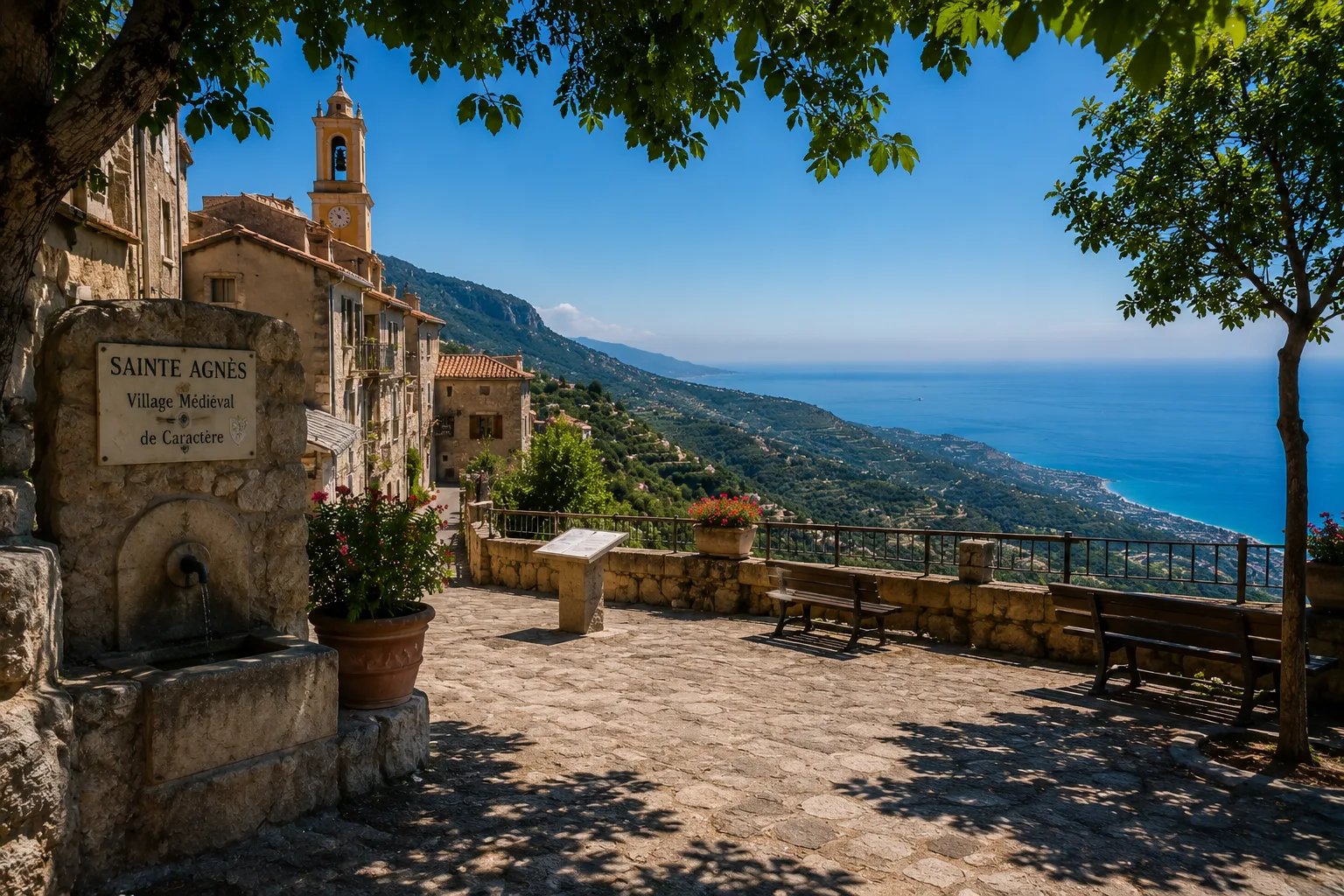
Sainte-Agnès is one of the most memorable hilltop villages on the eastern French Riviera.
Perched high above the coastline, it offers views stretching over Menton, the Mediterranean and towards Italy.
It's officially classified among the Plus Beaux Villages de France, the country's most beautiful villages.
And its elevation gives it a completely different atmosphere from the coast.
On a clear day, the contrast is remarkable: mountains behind you, the blue Mediterranean far below.
What makes Sainte-Agnès special?
The historic centre is a network of stone houses, vaulted passages and narrow streets.
Small artisan shops add to the atmosphere.
Above the village are the ruins of a medieval castle and a reconstructed medieval garden, while a twentieth-century military fortification tells an entirely different chapter of local history.
The castle and medieval garden
For the most dramatic panorama, climb towards the castle ruins and garden.
The reward is a remarkable view over the coastline.
But the climb involves steep, uneven ground.
Don't treat this as an easy extension for visitors with limited mobility.
You can enjoy the village and some viewpoints without reaching the very top.
The Maginot Line fort
Sainte-Agnès is also home to Fort de Sainte-Agnès, part of France's Alpine Maginot Line defensive system.
The underground fortification is particularly interesting for visitors interested in military history.
However, access depends on published guided visits and operating arrangements.
Don't assume it will be open just because you're in the village.
If the fort is the main purpose of your trip, confirm a bookable visit before arranging transport.
Where to have lunch
The tourist office lists several options, including Le Righi, Le Saint-Yves, Au Gaïné and Le Lilly's.
Le Righi is associated with the area around Place du Fort, while Le Saint-Yves offers another established village dining option.
For a half-day visit, a proper restaurant lunch can be part of the experience, not simply a quick stop.
Reserve ahead if a particular restaurant or terrace matters to you.
In winter or on a quiet weekday, confirm that lunch is actually being served.
How to get there from Menton
Zest bus 10 connects Menton Gare Routière with Sainte-Agnès.
The village municipality confirms this service and specifically advises checking the day's stops, timetable and return journey in advance.
By car, follow the winding road uphill from Menton and use designated parking areas.
Don't expect to drive through the narrow historic lanes.
The return problem
The greatest mistake would be arriving on a convenient morning bus without checking when the next practical return service leaves.
Choose your return departure first.
Then decide whether you have enough time for the castle, fort or a restaurant meal.
Our recommended half-day
Arrive in the morning, explore the old lanes and enjoy the lower viewpoints.
If you're comfortable with the climb, visit the castle ruins and garden.
Have an early lunch or coffee, then return to Menton.
Add the fort only if its guided-tour schedule fits your transport arrangements.
Choose Sainte-Agnès if: You want a dramatic panorama and a feeling of being high above the Riviera.
Think twice if: You dislike winding mountain roads, steep paths or uncertain weather at elevation.
neighbourhood
neighbourhood
Sainte-Agnès
A hill village above Menton, useful for views, walks and occasional organised local celebrations. Check programmes and access before going.
06500 Sainte-Agnès
3. Gorbio: choose it for an authentic village atmosphere
Location: Above Menton and Roquebrune-Cap-Martin, beneath the surrounding mountain slopes.
Gorbio is less about ticking off famous monuments and more about enjoying the atmosphere of a traditional village.
Its narrow lanes, stone houses, vaulted passages and small squares make it particularly rewarding for slow exploration.
The most recognisable feature is the remarkable elm tree in the village square.
The famous elm
At the heart of Gorbio stands an elm planted in 1713.
It has become a symbol of the village.
The tree creates a natural focal point for local life and offers a beautiful setting for a short rest.
It's the kind of place where you might sit for twenty minutes and feel that you've understood more about the village than from a long list of attractions.
What else is there to see?
Explore the old stone lanes and covered passages.
Look for the traditional gateways, fountains and buildings associated with the village's noble families.
The Château-Musée Lascaris hosts cultural exhibitions during published periods, while other heritage buildings are not necessarily open to visitors.
There's also a traditional olive mill associated with the village's agricultural history.
The tourist office describes Gorbio as a lively community throughout the year, with local traditions and seasonal celebrations.
Is Gorbio difficult to walk around?
The central square is the easiest place to enjoy the atmosphere.
The surrounding historic lanes have uneven stone paving, slopes and steps.
A short village visit doesn't necessarily require a long climb, but this isn't a uniformly smooth or accessible destination.
For visitors who prefer a gentler outing, stay near the main square and choose a limited loop.
Where to have lunch
Bistrot de l'Orme and Restaurant Beauséjour appear in the tourist office's local dining listings.
A meal near the historic centre is particularly appealing because the setting is part of the experience.
Gorbio is not a town with dozens of restaurant alternatives, though.
Confirm the restaurant's opening hours and reserve if lunch is central to your plan.
If you arrive on a quiet afternoon, don't assume that a kitchen will still be serving.
Getting there from Menton
The current Zest network map lists line 5 between Gorbio and Menton Gare Routière. Line 7 is labelled Sigua–Gare Routière, so do not assume it takes you to Gorbio village.
Check your exact departure point, village stop and operating day on the current timetable.
The Gorbio municipality publishes transport information and seasonal timetable updates.
Planning the return
Set aside enough time to return to the appropriate bus stop.
If services are infrequent, don't plan to finish lunch five minutes before departure.
An agreed taxi pickup can be a fallback, but confirm the arrangement and cost in advance rather than assuming a vehicle will be immediately available.
Our recommended half-day
Arrive in the late morning.
Explore the old streets, find the elm tree and enjoy the village square.
Have lunch at a confirmed open restaurant.
Return to Menton during the afternoon.
Choose Gorbio if: You want a quiet, atmospheric village rather than an intensive sightseeing itinerary.
Think twice if: You need a large selection of restaurants, attractions or frequent transport departures.
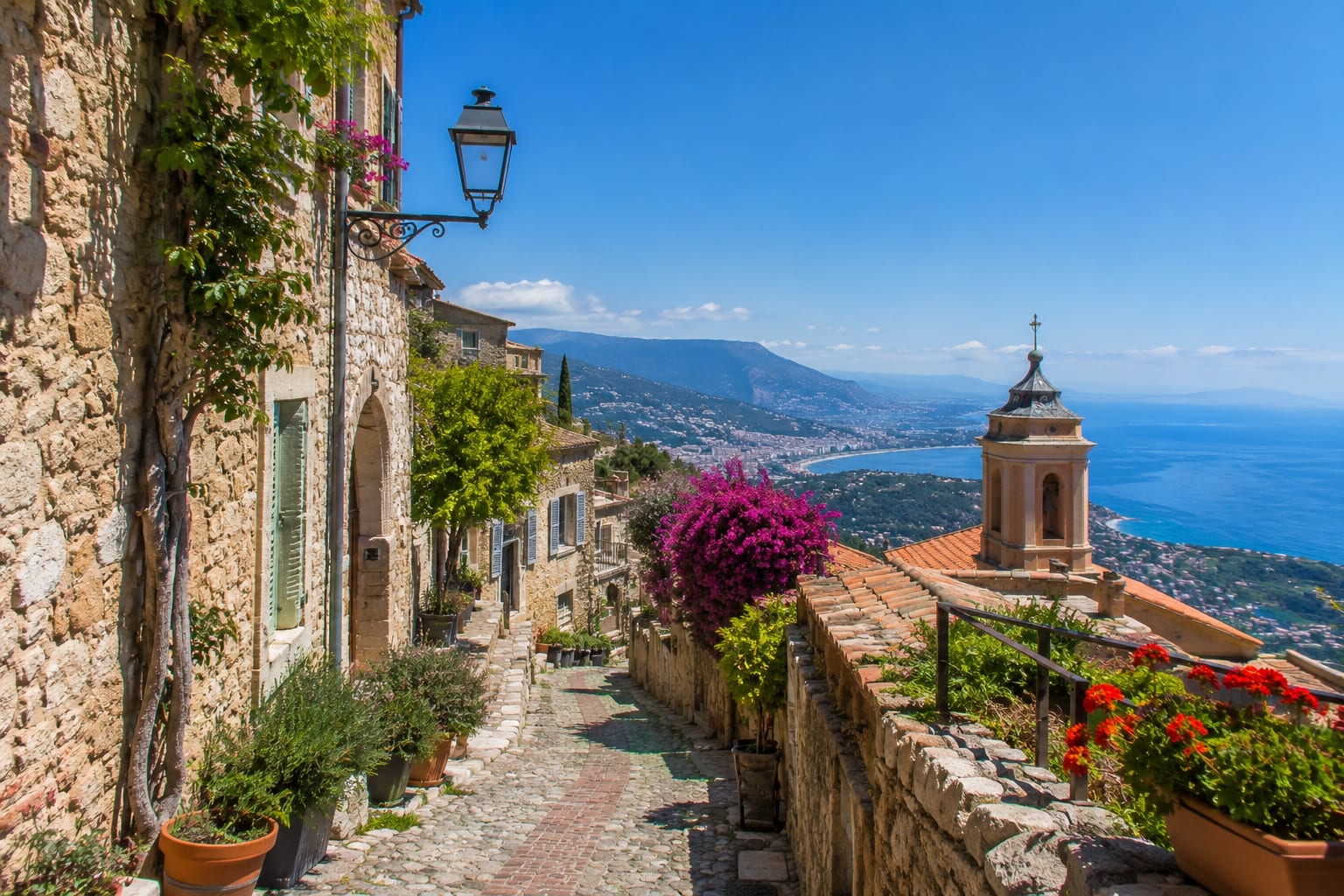
neighbourhood
neighbourhood
Gorbio
A small hill village above Menton, useful for a quieter half-day detour and the Yolo Prelude visual reference.
Hill village above Menton
4. Castellar: choose it for photography and an Italian atmosphere
Location: Approximately 7 km from Menton, around 370 metres above sea level.
Castellar feels different almost immediately.
Its narrow streets, orange and ochre façades, vaulted passages and small squares recall the villages of neighbouring Liguria.
This isn't a coincidence.
Castellar has a long history connected to the borderlands between Provence and the Italian territories.
Its medieval character remains visible in the street layout and architectural details.
What should you see?
Begin in the historic centre around Place Georges Clemenceau; the location card below identifies that square, not the whole village.
Notice the tall houses, coloured façades and covered passages linking the lanes.
Visit the area around Palais Lascaris, a former aristocratic residence with baroque elements.
Look for the church of Saint-Pierre and the small chapels that form part of the village's religious heritage.
You don't need to enter every building to enjoy Castellar.
Its strongest attraction is the village itself.
Why photographers like Castellar
The combination of warm-coloured façades, narrow lanes and views towards the Mediterranean makes Castellar particularly rewarding in morning or late-afternoon light.
A short photo walk might focus on:
Ochre, yellow and orange façades.
Vaulted passages and architectural shadows.
Stone stairways.
Small fountains and village details.
Views towards Garavan, Menton and Italy.
You could spend an entire morning here without visiting a conventional attraction.
What about hiking?
Castellar is also a starting point for mountain routes.
The official tourist office describes trails towards Col du Berceau, Roc de l'Orméa and Mont Carpano.
However, some of these are substantial hikes, not short village extensions.
The complete Roc de l'Orméa circuit, for example, is described as a five-to-six-hour sporting hike with a technical descent.
Don't add it casually to a half-day village outing.
Where to eat
The tourist office lists Bistrot L'Ormeau at 2 Place Clemenceau.
Its published description highlights bistro cooking, drinks and meals suitable for hikers and cyclists.
Other listings include La Veillée, La Ferme Saint Bernard and local food trucks, but individual opening patterns differ.
If you're travelling specifically for lunch, contact your chosen venue beforehand.
A restaurant listed as operating year-round may still have changed service hours, private events or temporary closures.
Getting there from Menton
Zest bus 6 serves Castellar from Menton.
The road is winding, and the village sits above the coastline.
For visitors driving, use designated parking near the village rather than navigating into its historic lanes.
Return planning
Check the exact stop and return service before setting out.
If you're visiting on Sunday for the village market, don't assume the Sunday bus schedule matches weekdays.
For those without a car, a short morning visit followed by a confirmed return is usually more practical than improvising the journey.
Our recommended half-day
Arrive in the morning.
Explore the historic streets, Palais Lascaris surroundings and viewpoints.
Enjoy coffee or an early lunch at a confirmed open establishment.
Return to Menton without attempting a major mountain hike.
Choose Castellar if: You enjoy photography, architecture, quiet exploration and the French-Italian character of the border region.
Think twice if: You want a large museum programme or a village that is easy to explore without steps.
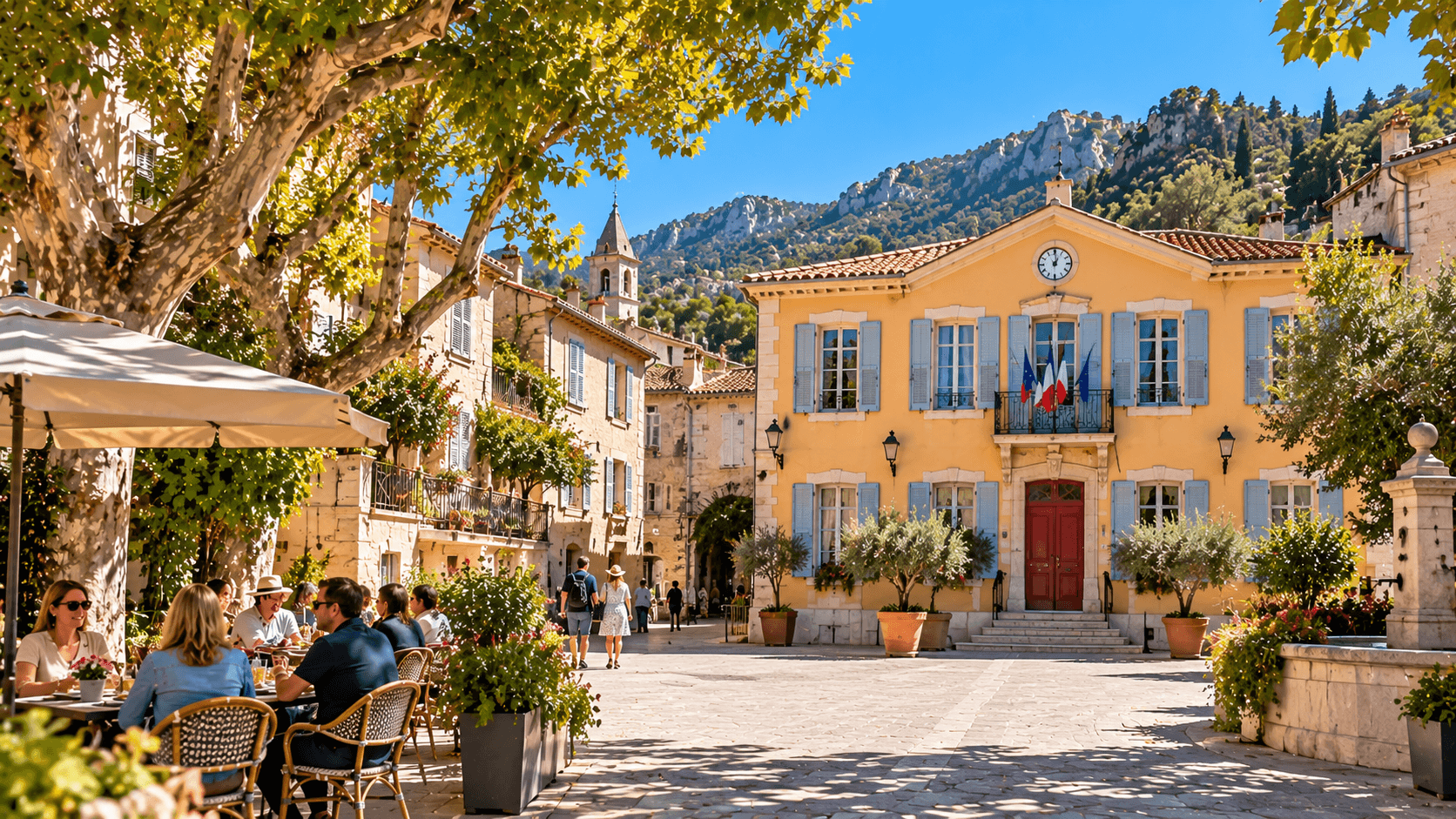
civic
civic
Place Georges Clemenceau, Castellar
A central Castellar square for starting a village visit and finding the listed Bistrot L'Ormeau nearby. It also hosts the published Christmas programme; confirm service, event dates and return transport.
1 place Georges Clemenceau, 06500 Castellar
5. Old Roquebrune: choose it for medieval history
Location: Above Roquebrune-Cap-Martin, between Menton and Monaco.
Roquebrune is the most obvious choice if you want a village with a major historical monument.
Its old centre climbs around one of the Riviera's oldest surviving medieval castles.
Stone houses, steep lanes, archways and panoramic viewpoints create a distinctly historic atmosphere.
But make sure you navigate to Vieux Village de Roquebrune, not simply to Roquebrune-Cap-Martin.
The municipality includes several separate coastal and hillside districts.
The medieval castle
The château dates back to the tenth century and dominates the village.
It's a fascinating place to discover the history of the region, including its connections with the Counts of Ventimiglia and the Grimaldi family.
The castle offers impressive views towards Monaco, Cap Martin and the Mediterranean.
Entrance arrangements and opening hours vary by season.
If visiting the interior is important, check the current castle schedule before planning the trip.
The thousand-year-old olive tree
Another notable attraction is the Olivier Millénaire, an ancient olive tree traditionally described as more than two thousand years old.
It's located outside the historic village centre, approximately 300 metres away according to the tourist office.
Access is pedestrian-only.
The tree is a worthwhile extension, but the distance doesn't reveal the full difficulty of the approach.
Check the gradient and walking surface before including it in a visit with limited mobility.
A self-guided heritage walk
The tourist office also publishes a themed route following the traces of writer Romain Gary.
It includes the village square, chapel, church, castle area and ancient olive tree.
Allow approximately 90 minutes to two hours as an editorial planning estimate, depending on your chosen stops; this is not a measured route time or a promise published on the current listing.
This provides a useful structure for visitors interested in history and culture.
How difficult is the village?
Roquebrune has narrow lanes, stone stairs and significant changes in elevation.
The most demanding part may be the final climb from transport or parking to the old centre.
Don't judge accessibility solely from the distance on a map.
If you're travelling with a stroller or cannot comfortably manage stairs, it's not the easiest choice.
Where to have lunch
The historic centre has dining options including La Grotte et l'Olivier around Place des Deux Frères and Au Grand Inquisiteur on Rue du Château.
These are useful names to investigate, not guaranteed walk-in availability.
For a meal on a terrace or at a specific time, make a reservation.
Also distinguish restaurants in the old village from those elsewhere in Roquebrune-Cap-Martin. A restaurant with a Roquebrune address may be down on the coast.
How to get there from Menton
Zest's published network map lists line 24 serving the Vieux Roquebrune area, with additional local connections such as line 22.
Confirm the exact route, stop and operating day.
Travelling by train to a coastal station is not equivalent to arriving in the hilltop village. It may leave you facing a substantial uphill walk or requiring another transport connection.
Our recommended half-day
Arrive near the old village.
Explore the medieval streets and castle, subject to opening.
If you have enough time and energy, continue towards the ancient olive tree.
Have lunch at a reserved restaurant or return to Menton.
Choose Roquebrune if: You're especially interested in medieval history, a castle and dramatic architecture.
Think twice if: You want a gentle, mostly level walk or an effortless connection from a coastal railway station.
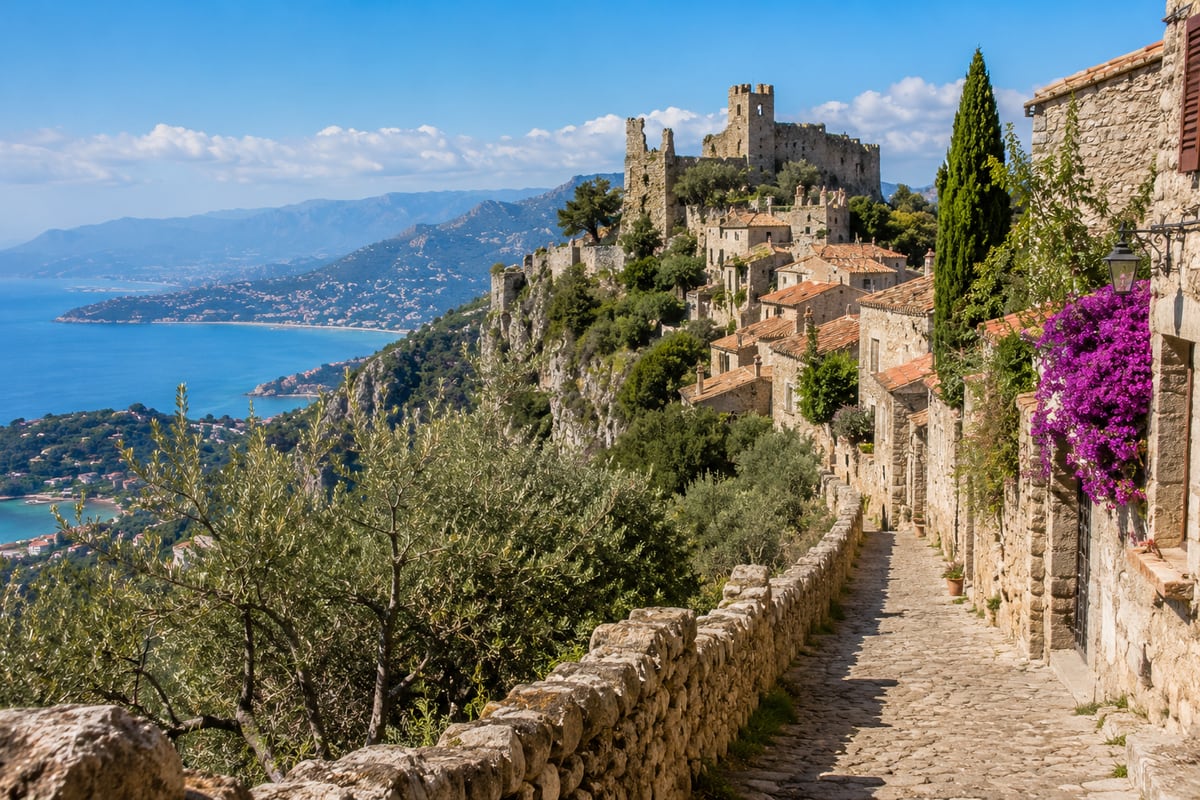
neighbourhood
neighbourhood
Roquebrune Medieval Village
A hill village walk from the coast with olive trees, stone lanes, a historic castle and sea-and-mountain views.
Roquebrune-Cap-Martin
6. Which village has the easiest walking?
The honest answer is that none of these four villages is designed around level streets.
They're medieval hilltop settlements.
Their character comes partly from their relationship with steep terrain.
However, the demands are different.
These are qualitative assessments based on published descriptions, not measured accessibility ratings.
A bus bringing you into the village doesn't guarantee a step-free route afterwards.
For travellers using wheelchairs or with significant mobility limitations, check specific entrances and paths before choosing any of these destinations.
| Village | Gentler version | More demanding extension |
|---|---|---|
| Sainte-Agnès | Selected main village lanes and lower viewpoints; access must be checked | Castle ruins and medieval garden climb |
| Gorbio | Historic square and neighbouring streets | Extended cobbled lanes and surrounding paths |
| Castellar | Main square and selected central lanes | Historic stairs and mountain trails |
| Roquebrune | Limited central heritage walk | Castle interior, steeper lanes and olive-tree extension |
7. The real challenge: getting back to Menton
Getting to a hilltop village can feel straightforward when you see a route on a transport map.
Returning is where good planning matters.
The mountain villages have more limited bus services than the coastal railway corridor.
Service patterns can change between weekdays, Saturdays, Sundays, school holidays and public holidays.
Confirm these five things before departure
Your exact departure stop in Menton. The main Zest bus station is a common starting point, but not every service uses identical stops.
The correct route for your date. Use the live or current published timetable.
The village stop where you should get off. A named village may have several stops.
The return departure you intend to use. Save its time and location.
Your alternative if you miss the bus. This might mean a later confirmed service or a prearranged taxi.
Don't rely exclusively on a map application's estimate.
The official Zest website provides network maps and current timetables.
The operator also lists a customer contact number: +33 4 93 35 93 60.
Which bus goes where?
Route designations were checked against the operator's published network maps on 3 November 2026. Specific stops, departures and holiday services must be checked for your travel date.
The operator's fare page, checked on 3 November 2026, lists a standard single ticket at €2 and a one-day ticket at €5. The single ticket allows transfers within one hour but not a return journey; the day ticket is valid on the calendar day of first validation, not for a rolling 24 hours. Recheck fares before travel.
A round trip may therefore be inexpensive, but the low fare doesn't make a poor return connection any more convenient.
| Village | Main Zest route to check |
|---|---|
| Sainte-Agnès | Line 10 |
| Gorbio | Line 5: Gorbio–Menton Gare Routière; line 7 is Sigua, not a village guarantee |
| Castellar | Line 6 |
| Old Roquebrune | Line 24, with local connections depending on itinerary |
8. Should you drive or take the bus?
Choose the bus if...
You prefer not to drive on winding hillside roads, are comfortable following a timetable and want to keep the outing inexpensive.
This can work very well when the outward and return services align with a morning visit.
Choose a car if...
You want more flexibility, are travelling with several people or plan a restaurant lunch that might not align with bus times.
However, roads can be narrow and winding, with limited parking in peak periods.
A car gets you to a parking area, not necessarily into the pedestrian historic centre.
Consider a taxi if...
You need a more flexible return or want to avoid driving.
But arrange the journey and price in advance.
Don't assume that an available taxi will be waiting in a small hilltop village.
9. Lunch or picnic: what works better?
A restaurant lunch can be a wonderful part of a village excursion.
But it changes the timing.
If your bus leaves shortly after midday, a leisurely three-course lunch probably isn't realistic.
And if a small village restaurant is unexpectedly closed, there may be few alternatives.
Restaurant strategy
Choose a village first.
Select a restaurant listed by the local tourist office.
Confirm the actual date, lunch service and reservation availability.
Only then arrange your transport around the meal.
Picnic strategy
Buy bread, cheese, fruit and water in Menton before departure.
Use a suitable public area where picnicking is permitted.
Carry your rubbish back with you.
A picnic is particularly useful for photographers, walkers and visitors who want flexibility.
However, don't assume that every historic square or garden permits picnics.
Our preference by village
Sainte-Agnès: A reserved lunch with a view is a strong choice.
Gorbio: A slow village-square lunch fits the atmosphere beautifully.
Castellar: Coffee, a casual lunch or picnic, leaving time for photography.
Roquebrune: A reserved restaurant meal works well after the castle and village walk.
10. Four ready-made half-day itineraries
The panoramic half-day: Sainte-Agnès
Morning: Travel up from Menton, walk through the old streets and visit the viewpoints.
Late morning: Explore the castle area if you're comfortable with the climb.
Lunch: Eat at a confirmed open restaurant, or take a picnic.
Return: Use your preselected bus or vehicle arrangement.
Why it works: One dramatic destination, no unnecessary extra village.
The slow-living half-day: Gorbio
Late morning: Arrive and explore the streets around the elm tree.
Lunch: Enjoy a village-square restaurant or another confirmed option.
Early afternoon: Take a final stroll, then return.
Why it works: The pleasure is the atmosphere rather than the number of attractions.
The photographer's half-day: Castellar
Morning: Explore the coloured façades and covered passages.
Late morning: Photograph architectural details and coastal views.
Lunch: Visit the village bistro or enjoy a picnic.
Return: Head back before turning the excursion into a demanding hike.
Why it works: A strong visual theme with manageable sightseeing scope.
The medieval half-day: Roquebrune
Morning: Enter the old village and explore its winding lanes.
Late morning: Visit the castle if open.
Optional extension: Walk towards the ancient olive tree if time and mobility permit.
Lunch: Reserve in the village or return to Menton.
Why it works: A clear historical focus rather than generic village sightseeing.
11. What if you have time for only one village?
Here's the decision we'd make.
If you want a photograph you'll remember, choose Sainte-Agnès.
If you want a wonderful, unhurried lunch in an authentic setting, choose Gorbio.
If your favourite travel activity is wandering through picturesque streets with a camera, choose Castellar.
If medieval castles and historical details are what excite you, choose Roquebrune.
And if you haven't decided at all?
Choose Gorbio for a gentler, atmosphere-led outing, or Sainte-Agnès for a more dramatic introduction to the hills above Menton.
Don't try to combine all four in half a day.
The reward of visiting a hilltop village is having enough time to enjoy being there.
12. Best time of year for the hilltop villages
Spring and autumn are particularly attractive.
The weather is often comfortable for walking and the views can be beautiful.
In summer, start early. Stone streets, exposed viewpoints and uphill paths can become hot.
Sainte-Agnès is at a much higher elevation than the coast, so bring a layer if conditions are cooler or windy.
In winter, all four villages can be atmospheric on clear days, but restaurants, attractions and public transport may operate reduced schedules.
After heavy rain, uneven stone steps and mountain paths can become slippery.
For the most convenient half-day trip, choose a day with good weather and confirmed return transport.
Frequently asked questions
Which is the most beautiful hilltop village near Menton?
There's no universal winner. Sainte-Agnès offers the most dramatic elevation and sea views, while Gorbio, Castellar and Roquebrune each offer distinctive historic settings.
Which village is best for a half-day trip?
All four can work. Gorbio and Castellar are particularly suitable for unhurried short visits, while Sainte-Agnès and Roquebrune offer more substantial historical attractions.
Can you visit the hilltop villages without a car?
Yes. The Zest network serves all four areas, but individual schedules and return connections must be checked carefully.
Which village has the best views?
Sainte-Agnès is an excellent choice for broad views over the coastline from its high elevation.
Which village is best for lunch?
Gorbio is especially appealing for a leisurely village meal. Sainte-Agnès also has several established restaurants, including options near the fort and viewpoints.
Which village is easiest for walking?
None is entirely level. Gorbio's central square offers a relatively contained introduction, while additional lanes and paths may still involve uneven surfaces or slopes.
Is Roquebrune-Cap-Martin the same as old Roquebrune?
No. Roquebrune-Cap-Martin is the wider municipality, including coastal districts. Vieux Roquebrune is the historic hilltop village.
Can you hike from Menton to Sainte-Agnès?
Yes. The tourist office describes a historic path taking approximately two hours one way. This is a separate walking excursion, not the easiest way to organise a relaxed half-day visit.
Should I book lunch in advance?
Yes, particularly if a specific restaurant is part of your plan. Small villages have limited dining capacity and variable seasonal schedules.
Final thoughts: choose one village and enjoy it properly
The hills above Menton offer much more than distant scenery.
Within a relatively short journey, you can discover medieval castles, ancient trees, quiet squares, mountain views and villages with centuries of history.
But each destination rewards a different kind of visit.
Sainte-Agnès is about height, history and horizons.
Gorbio is about slowing down.
Castellar is about colour and atmosphere.
Roquebrune is about stepping into the medieval past.
Choose the one that sounds most interesting to you.
Check your transport, confirm lunch if you want it and leave enough time to wander without rushing.
Then return to Menton with one memorable village experience rather than four hurried stops.
Official resources and further reading
Menton Tourist Office: Hilltop Villages
Zest: Transport Maps and Timetables
Sainte-Agnès municipality: transport and parking
Sainte-Agnès municipality: planning a day and fort visit
Roquebrune castle: current entry and access information
Roquebrune: the Romain Gary heritage route
Information reviewed on 3 November 2026. Bus route labels and standard fares were checked against published operator information; village heritage and restaurant listings against municipal and tourism sources. No individual departure, table reservation or guided-tour availability was confirmed. Exact departures, restaurant service, castle entry and fort bookings must be confirmed for your travel date. Walking difficulty descriptions and half-day durations are editorial estimates, not a professional accessibility survey. The castle's official listing explicitly states that it is not wheelchair-accessible.