Plan one good day in the valley
Less than an hour from Menton's Mediterranean coastline, the landscape begins to change. The sea disappears behind the mountains. Roads wind through olive groves and rocky gorges. Villages cling to steep hillsides, while old railway bridges cross rivers far below. This is the Roya Valley, one of the most fascinating areas of the eastern French Riviera. It's a place where French and Italian influences meet, where medieval villages preserve centuries of history, and where the mountains feel remarkably different from the beaches of Menton. But visiting the Roya Valley isn't quite like taking the train to Monaco. Transport connections are less frequent, mountain roads can be affected by weather and repair work, and some of the most interesting cultural sites are several kilometres from their nearest village. The best approach is to choose one main destination, confirm how you'll get home, and leave time to enjoy the valley rather than rushing between every village. This guide helps you decide where to go and how to organise a realistic day trip from Menton.
Important: transport restrictions in October 2026
The Roya Valley is accessible, but current engineering works affect some journeys. Checked on 28 October 2026: Rail maintenance affects the Nice–Breil–Tende line during the middle of the day on weekdays from 26 to 30 October. Some services are replaced by buses. The Col de Tende road tunnel is closed in both directions until 30 October at 6 a.m., according to Alpes-Maritimes departmental road information. Road access from Menton via Sospel and Col de Brouis is a separate route, but conditions must be checked before driving. Zest bus line 25 connects Menton with destinations in the Roya Valley, with actual departure times depending on the current timetable. Regional trains, Italian connections and on-demand transport are possible alternatives, but not automatically convenient on every date. SNCF also announces a full suspension between Nice, Breil and Tende, as well as on the coastal Nice–Menton–Ventimiglia corridor, on 10 November and until approximately 5:30 p.m. on 11 November 2026. Check the official engineering-work notice before planning those dates. Don't use historical journey times as proof that a connection is operating today. Before departure, check: SNCF TER Sud,Zest,Inforoutes 06 and theofficial Roya Valley access page. If you can't confirm a practical outbound and return journey, postpone the valley trip rather than improvising with several uncertain connections.
1. Which Roya Valley village should you choose?
The valley has five main French communes: Breil-sur-Roya, Fontan, Saorge, La Brigue and Tende. They offer different experiences, and there's no need to visit them all in a single day. Our recommendations First visit without a car: Breil-sur-Roya. Best for dramatic architecture: Saorge. Best for history and an indoor museum: Tende. Best for Renaissance religious art: La Brigue, provided you can reach the chapel and have confirmed admission. Best for quiet countryside: Fontan. If you have only one day, choosing a destination according to your interests is more satisfying than trying to cover the entire valley.
| Destination | Best reason to visit | Walking demands | Cultural highlight | Best approach |
|---|---|---|---|---|
| Breil-sur-Roya | Easy introduction to valley life, water and local food | Generally moderate in the centre; optional climbs | Santa Maria in Albis, historic streets, transport heritage | Bus, train or car |
| Saorge | Dramatic medieval architecture and panoramic views | Strenuous: steep pedestrian lanes and steps | Franciscan monastery | Car plus walking, or confirmed bus connection |
| Tende | Mountain culture, archaeology and museums | Moderate around museum; strenuous in upper old town | Musée des Merveilles | Confirmed bus/train or car |
| La Brigue | Medieval frescoes and traditional mountain village | Moderate in village; more demanding beyond | Notre-Dame-des-Fontaines chapel | Car or prearranged local transport |
| Fontan | Quiet riverside atmosphere and access to walks | Depends on route | Small-village heritage and surrounding landscapes | Car or verified public transport |
2. Breil-sur-Roya: the best first experience
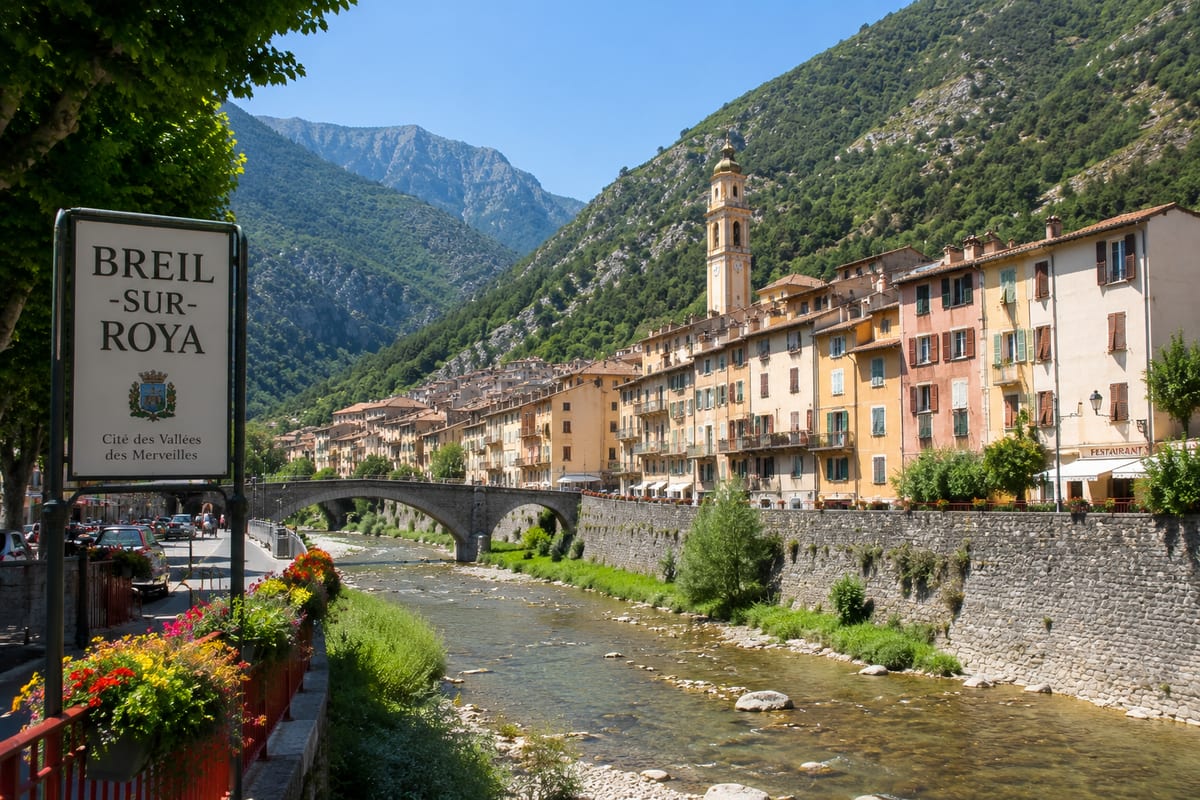
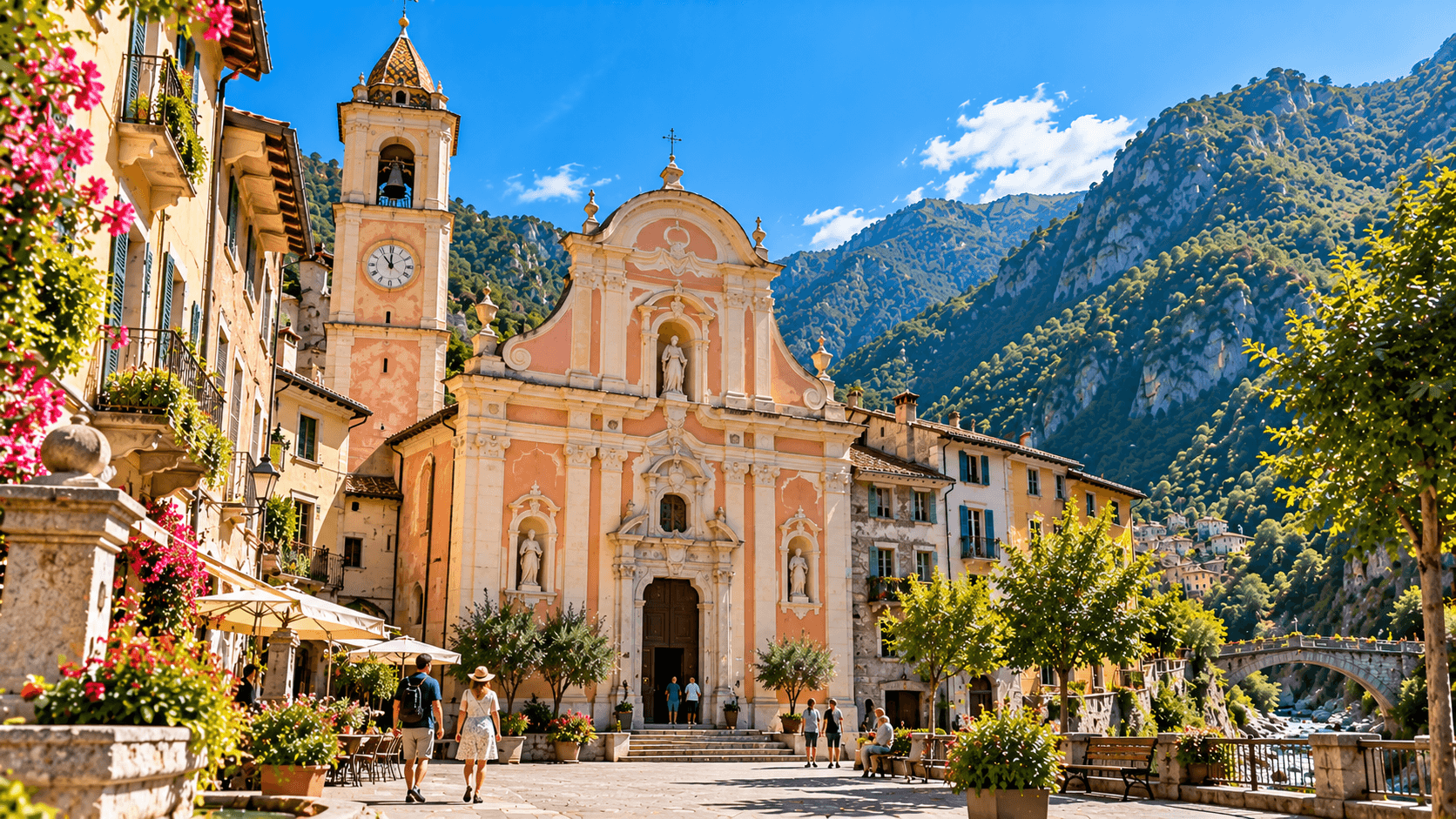
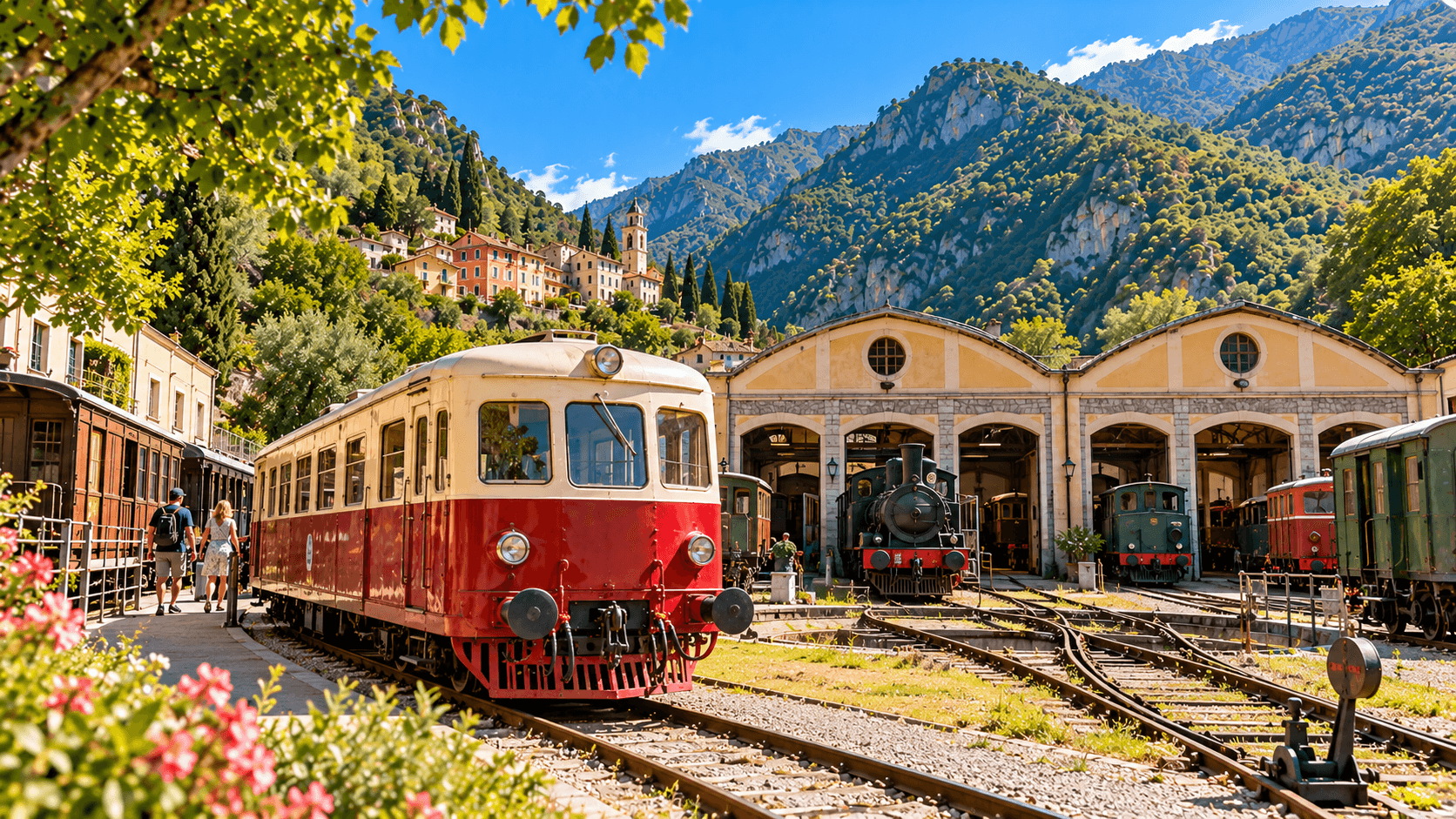
Breil-sur-Roya is an excellent starting point for visitors unfamiliar with the valley. It's a historic riverside town surrounded by olive groves and mountains, with a distinctive blend of French and Italian influences. Unlike some of the more dramatic hilltop settlements, Breil has a central area where you can enjoy a substantial visit without a difficult mountain hike. What should you see? Begin with the waterfront and the reflective lake known locally as Lac aux Cygnes. Continue towards the historic centre, with its narrow streets, colourful façades and traditional fountains. The church of Santa Maria in Albis is particularly worth seeing if open. Its baroque interior includes significant religious artworks. The old streets also reveal the close relationship between the town and its agricultural surroundings. Discover local food Breil is a good place to taste some of the Roya Valley's traditional dishes. Look for suggellis, a local pasta preparation, and boursouzes, savoury pastries associated with the area. You may also encounter olive-based products, regional breads and traditional sweets. The town's market takes place on Tuesday mornings, according to the tourist office. Restaurant opening hours vary, so reserve if lunch is an essential part of your plan. What about the transport museum? Breil has a railway heritage museum, the Écomusée des Transports, associated with the history of the Nice–Cuneo railway. However, published visiting information is inconsistent: some tourism material describes broader seasonal afternoon opening, while other local guidance refers to Sunday afternoons. For this reason, treat the museum as an optional visit until a specific opening time has been confirmed. Walking difficulty A relaxed walk around the waterfront and lower historic centre is a manageable choice for many visitors. However, Breil also offers uphill routes to viewpoints such as the Tour de la Cruella. These are separate walking activities and shouldn't be included automatically in a gentle village itinerary. A realistic Breil day Arrive in the late morning. Explore the waterfront and church, then enjoy a relaxed lunch. Spend the early afternoon walking through the historic streets or visiting a confirmed open museum. Return to Menton using the transport you've already checked. Why choose Breil? It offers the best balance between culture, scenery, food and a relatively simple first introduction to the valley.
neighbourhood
neighbourhood
Breil-sur-Roya
Riverside Roya Valley town with a historic centre, Santa Maria in Albis and railway heritage; check transport and attraction hours before travelling.
Roya Valley
civic
civic
Santa Maria in Albis
Baroque church in Breil's historic centre; visit the interior only when open.
Centre historique, 06540 Breil-sur-Roya
museum
museum
Écomusée du Train des Merveilles
Railway heritage beside Breil station; confirm the exact seasonal opening before planning around it.
Plateau de la gare, 06540 Breil-sur-Roya
3. Saorge: a medieval village suspended above the valley
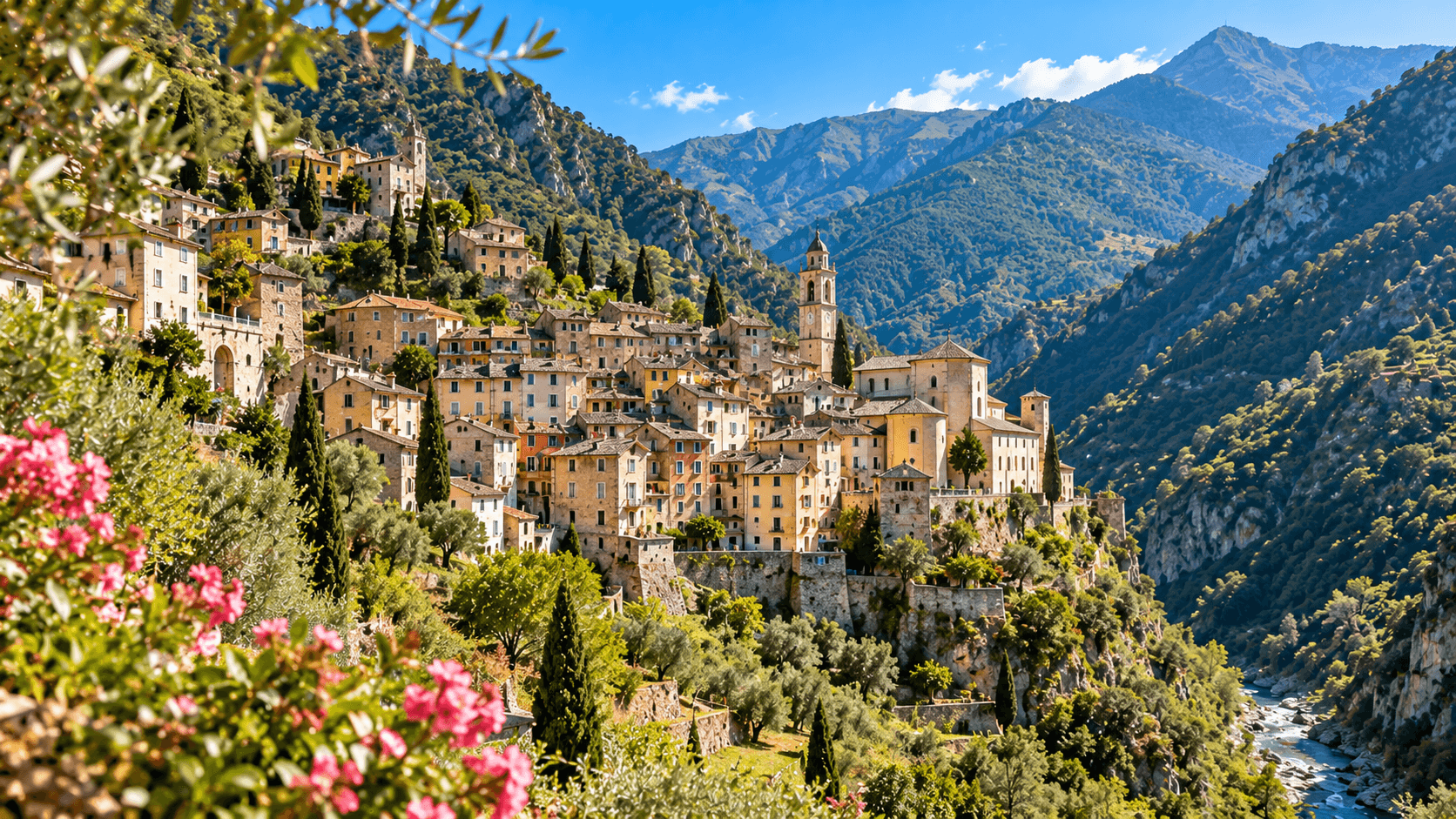
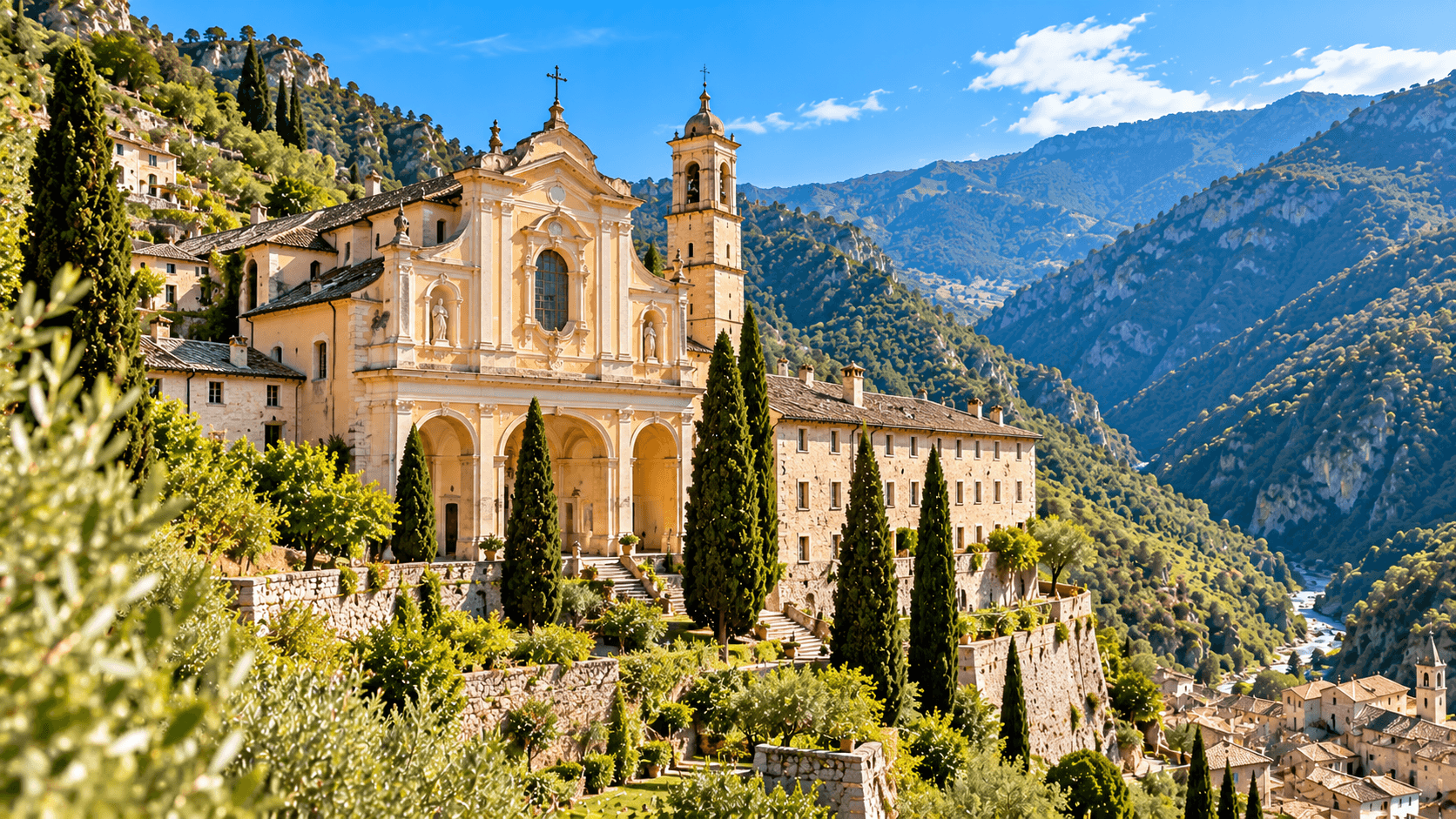
Saorge is one of the most visually striking villages in the region. Its buildings seem to cascade down the mountainside, with narrow lanes and stone stairways connecting small squares and historic houses. The village is often compared to a Tibetan settlement because of its dramatic position above the valley. It's a memorable place, but it isn't an easy, flat walk. Explore the historic village Saorge's pedestrian streets twist between tall stone buildings. Small squares open suddenly to magnificent views of the surrounding mountains. The church of Saint-Sauveur provides an important example of the valley's baroque religious heritage. The village is most enjoyable when explored slowly, allowing time to stop at viewpoints and appreciate its unusual setting. Visit the Monastery of Saorge The former Franciscan monastery was founded in the seventeenth century. Its architecture includes a cloister, painted decoration, historic interiors and a terraced garden overlooking the valley. Today, the monastery is managed by France's Centre des Monuments Nationaux. It also hosts writers and artists in residence. This gives the place an interesting connection between religious heritage and contemporary cultural life. Can you visit? The national monument operator publishes seasonal opening periods. For autumn visits, the current programme generally lists opening from 10 a.m. to 1 p.m. and 2 p.m. to 5 p.m., with Mondays closed. An annual winter closure follows in November, with reopening in February according to the published seasonal pattern. Confirm the actual date before travelling, particularly near the seasonal closing period. Official website: How difficult is Saorge? Saorge requires more effort than Breil. The village is entirely pedestrianised, and the tourist office advises visitors arriving by car to park at one of the road entrances and complete the approach on foot. Allow for approximately one kilometre of walking from some parking areas, as well as steep lanes and steps within the village. Don't rely on the distance alone: the gradients matter. What about public transport? Saorge isn't a straightforward stop-off from the main valley railway. The railway station known as Fontan-Saorge is not located in the historic village centre. You need a confirmed onward connection or must be prepared for a significant walk. The regional network also offers on-demand transport under specific booking conditions. Why choose Saorge? Its architecture, monastery and mountain views offer a distinctive cultural experience, provided you're comfortable with the walking involved.
mountain
mountain
Saorge
A steep pedestrian village; confirm local connections from Fontan-Saorge station.
Saorge, 06540
civic
civic
Monastère de Saorge
Franciscan monastery and terraced garden; winter closure 1 November–31 January.
Montée du Couvent, 06540 Saorge
4. Tende: archaeology and the high mountains
Tende lies farther up the Roya Valley and feels distinctly more Alpine. The historic village climbs the hillside above the main road, while the surrounding mountains connect the area with the Mercantour National Park. For many visitors, Tende's greatest attraction is the Musée des Merveilles. Musée départemental des Merveilles Address: Avenue du 16 Septembre 1947, Tende. The museum introduces visitors to one of Europe's most remarkable collections of prehistoric rock engravings. The original engravings are located high in the mountains around Mont Bégo, particularly in the Vallée des Merveilles and Fontanalba areas. The museum explains their historical setting, interpretation and relationship with the region's landscape. You'll find archaeological material, reconstructions, cultural history and information about the natural environment. Admission and opening Admission: Free. 16 June–15 September: Generally 10 a.m.–6 p.m. 16 September–15 June: Generally 10 a.m.–5 p.m. Regular closing day: Tuesday. Annual closure: 13–25 November, plus specified public holidays. These times are published by the departmental museum, but special events and temporary closures should still be checked before visiting. Official website: What about the historic village? After visiting the museum, explore Tende's narrow streets and greenish stone buildings. Its medieval core reveals the town's long history as a borderland settlement. Expect slopes and steps if you climb into the upper village. You can enjoy the museum with substantially less physical effort than a complete exploration of the old town. Can you visit the actual rock engravings in the same day? Not as a casual extension to a normal Menton–Tende day trip. The archaeological sites are high in mountain terrain and require their own walking plan, access arrangements and suitable season. Some routes involve several hours of hiking. Parts of the protected archaeological area have regulations governing access and interpretation. For a conventional day trip from Menton, choose the museum rather than promising an easy excursion to the original engravings. Why choose Tende? It's the strongest choice for archaeology, mountain heritage and a substantial indoor cultural activity. It's also particularly useful when you want an alternative to spending the entire day outdoors.
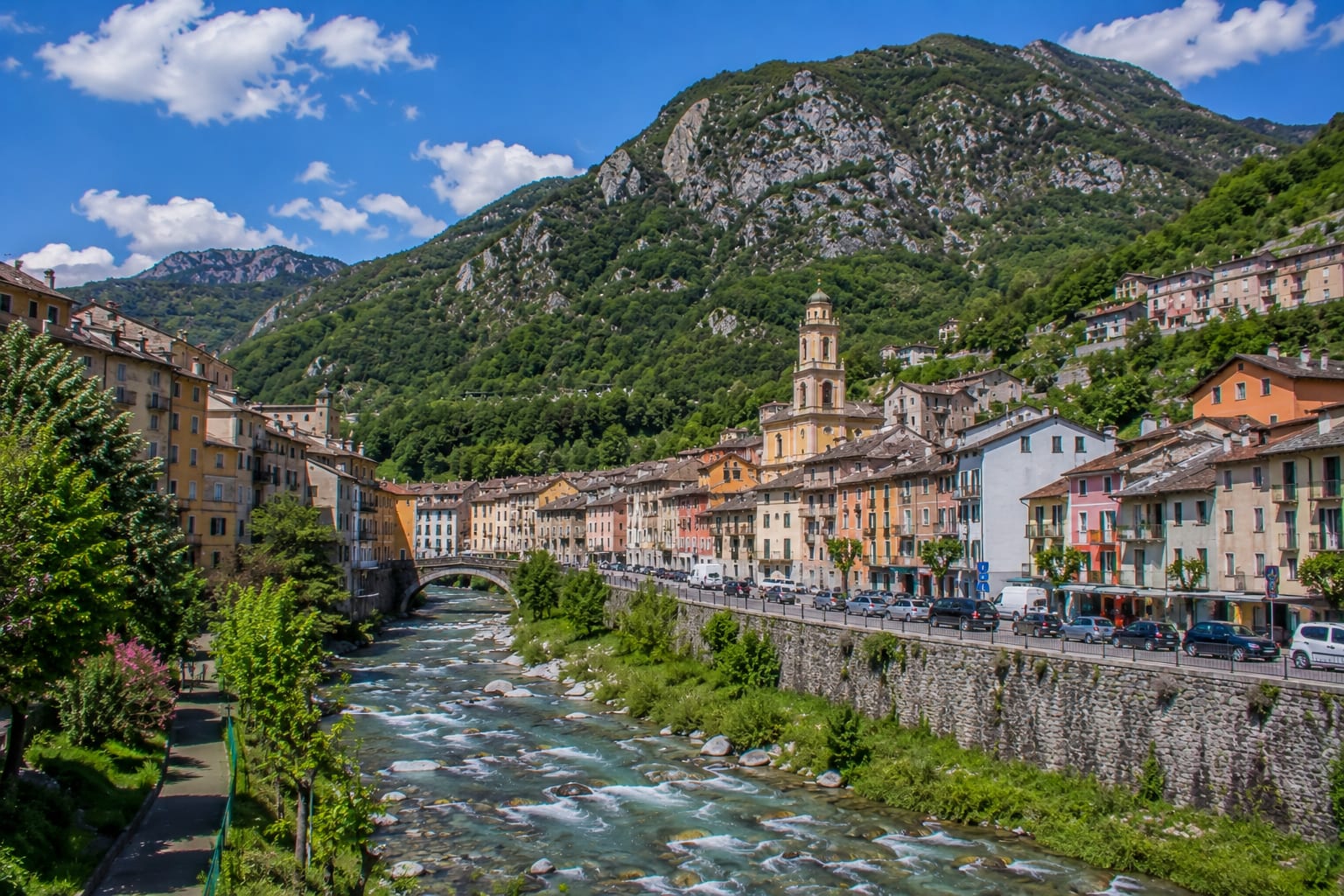
mountain
mountain
Tende
A higher Roya Valley town and gateway idea for Mercantour culture, mountain roads and summer cool air.
Tende, Roya Valley
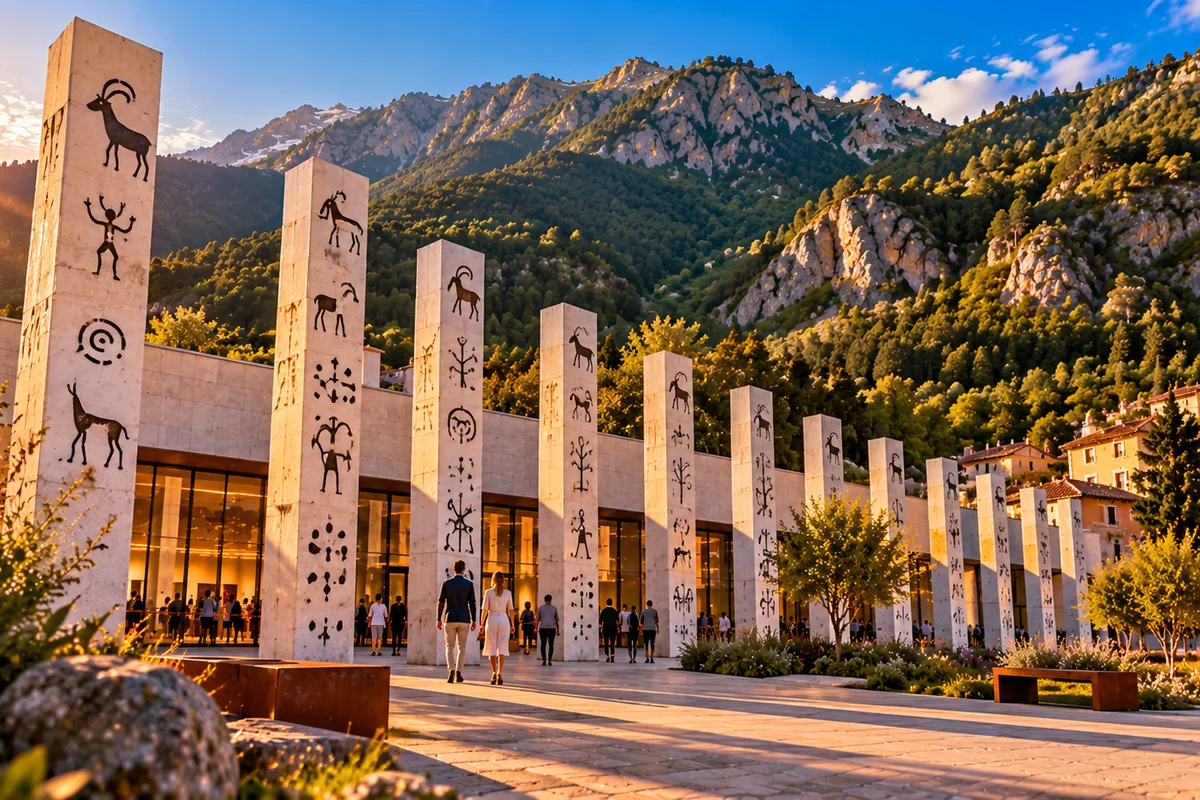
civic
civic
Musée départemental des Merveilles
A venue listed in the official C'est pas classique 2026 programme. Check the programme for the specific performance.
Avenue du 16 septembre 1947, 06430 Tende
5. La Brigue: a village with extraordinary medieval frescoes
La Brigue is one of the most rewarding choices for travellers interested in art and religious heritage. The historic village has narrow streets, stone houses and a strong connection with the cultural traditions of the Alpine borderlands. But the main attraction lies outside the centre. Notre-Dame-des-Fontaines Approximately five kilometres from La Brigue stands the chapel of Notre-Dame-des-Fontaines. Its interior is covered with extraordinary late-fifteenth-century frescoes, associated with painters Giovanni Canavesio and Giovanni Baleison. The paintings depict religious narratives in vivid detail, making the chapel one of the region's most important artistic treasures. Sometimes described as the “Sistine Chapel of the Alps”, it deserves special attention from visitors interested in medieval art. Visiting arrangements The tourist office publishes a standard admission of €4 and guided admission of €6, with advance arrangements available. However, published seasonal information differs between the tourist office's individual attraction listing and its broader editorial guides. One page describes normal opening from May through September and visits by arrangement outside that period. Another provides more detailed season-dependent hours. The safest approach is to contact La Brigue Tourist Office and confirm a specific visit before travelling. Telephone: +33 4 83 93 95 49. Getting to the chapel The chapel isn't in the village centre. It's roughly five kilometres away, along a separate valley road. You can reach it by car when the road is open, by a suitable seasonal shuttle if operating, or on foot as a dedicated walking excursion. The tourist office describes a pedestrian interpretation trail of approximately 90 minutes towards the chapel. Remember that a walk to the chapel also creates a return journey. Don't include it in a standard village stroll without budgeting the extra time and physical effort. Seasonal transport Summer services have included a shuttle linking the village or railway area to the chapel. At other times, on-demand transport may be possible with advance booking. These services should not be assumed available on every date. Why choose La Brigue? Choose it if the chapel's frescoes are a major interest and you've confirmed both access and transport. If the chapel is closed or unreachable, you can still enjoy the village, but it becomes a different outing.
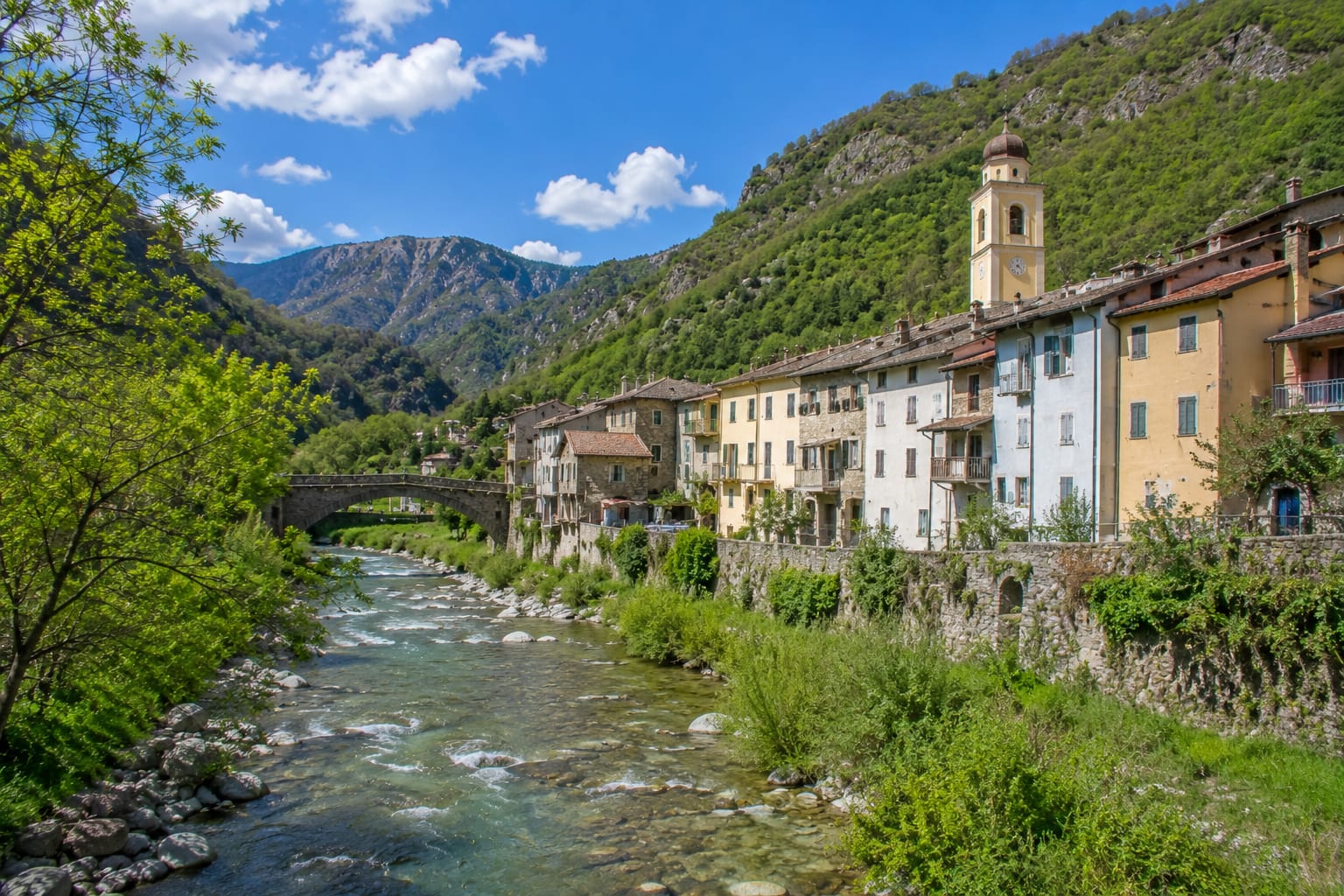
mountain
mountain
La Brigue
A Roya Valley mountain village for heritage, cooler air and a slower inland day from Menton.
La Brigue, Roya Valley
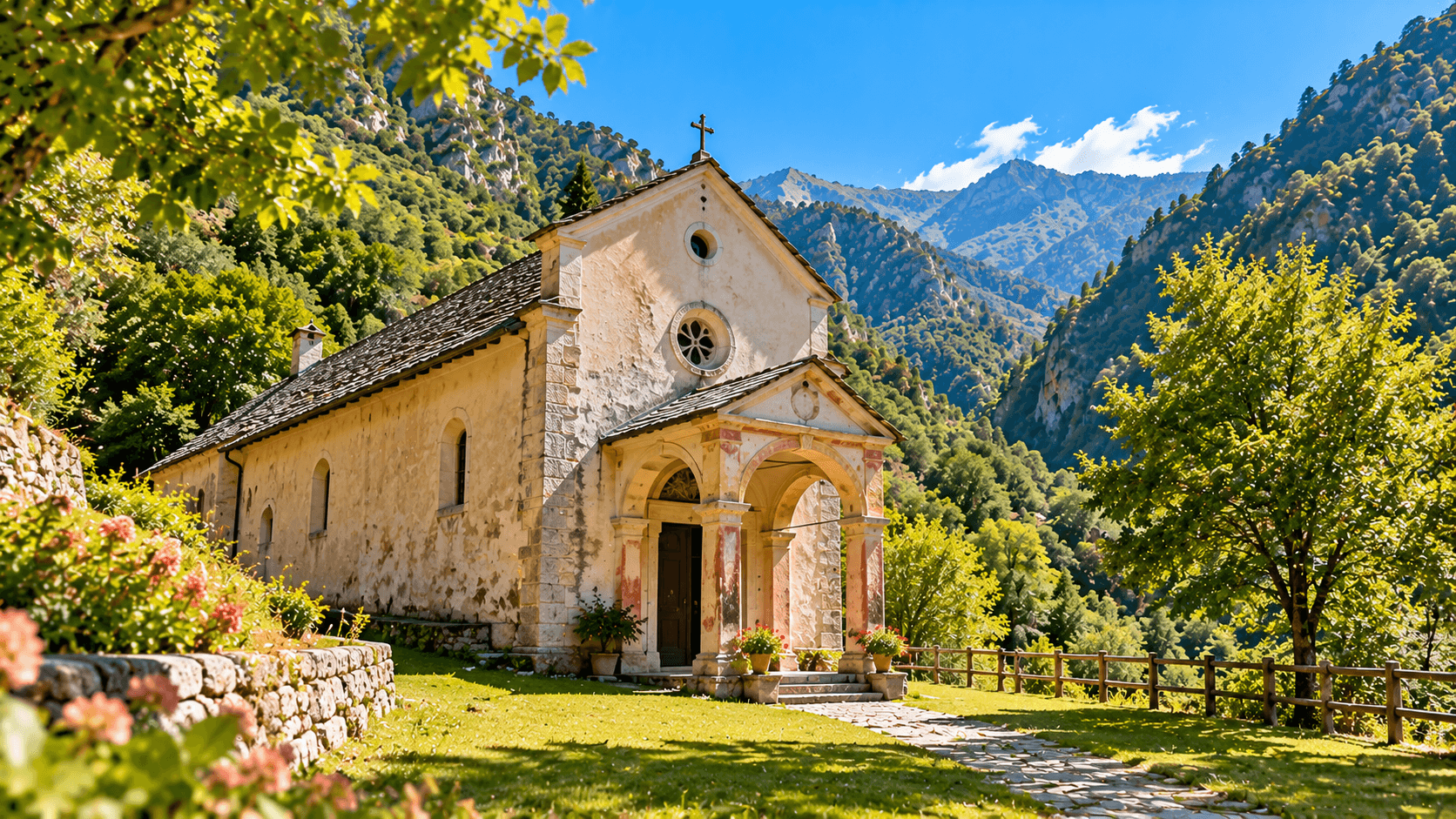
civic
civic
Notre-Dame-des-Fontaines
Frescoed chapel outside La Brigue; confirm the visit and the separate journey before travelling.
Notre-Dame-des-Fontaines, 06430 La Brigue
6. Fontan: the quieter alternative
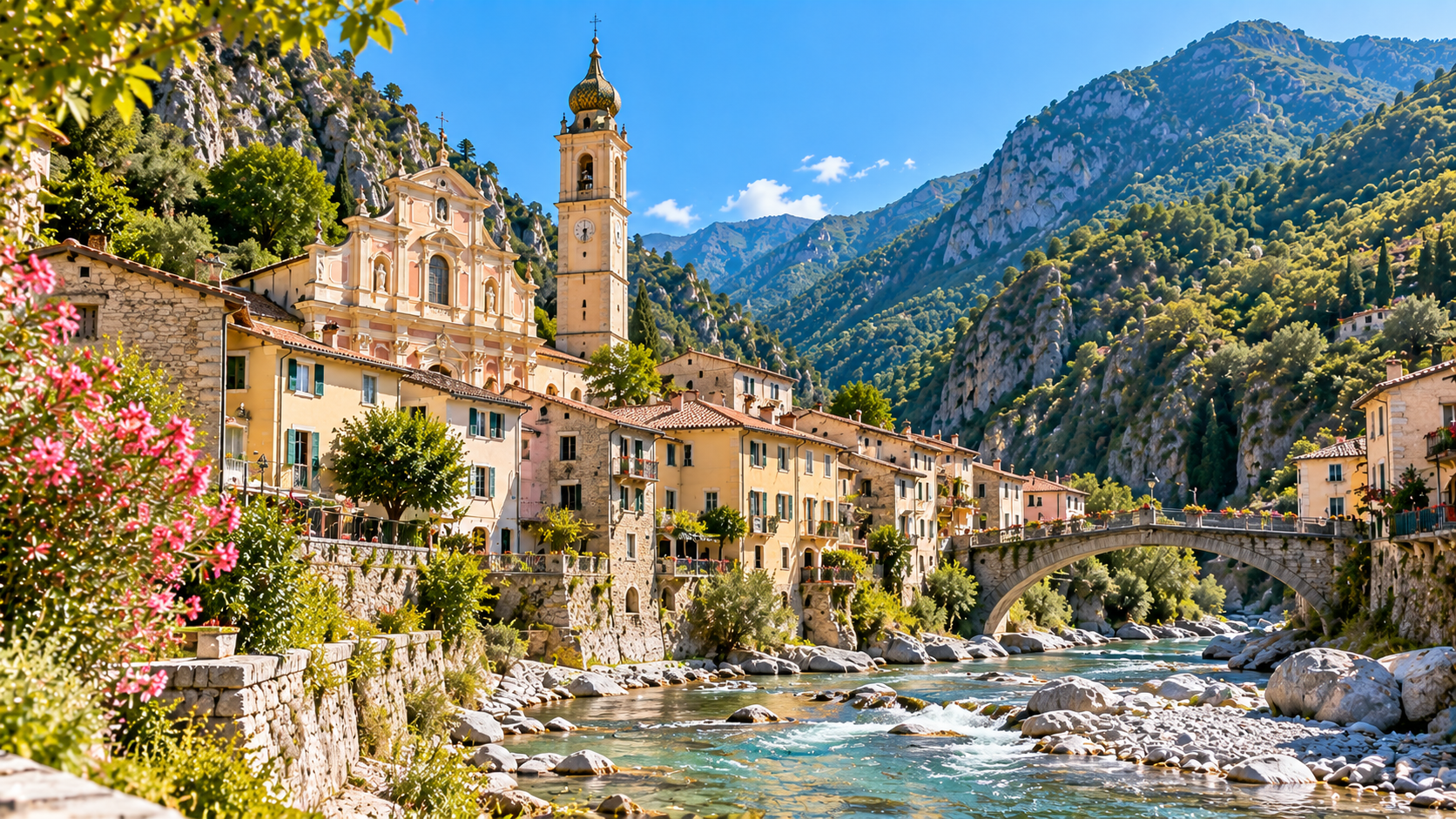
Fontan is smaller and less visited than some of its neighbours. It's a good choice if you're interested in the valley's everyday character rather than a packed cultural programme. You can appreciate the traditional village setting, surrounding mountains and river landscape. However, Fontan isn't the strongest destination for someone seeking several major museums or monuments in one day. It's better treated as a quiet stop when travelling by car or as the starting point for a specifically planned walk. The difference between Fontan village and Fontan-Saorge railway station is also important. Don't assume the station deposits you directly in the centre of Saorge.
mountain
mountain
Fontan
A quiet riverside village, distinct from Saorge and the station's name.
Fontan, 06540
7. Getting to the Roya Valley from Menton
There are three principal ways to organise the trip: local bus, train or car. None is universally best. Option A: Zest bus line 25 The tourist office identifies line 25 as an important service linking Menton with Breil-sur-Roya and destinations farther up the valley. It's potentially the most straightforward public transport option when a suitable service is running. The tourist office gives a planning figure of approximately 50 minutes between Menton and Breil. However, this is a broad reference, not a confirmed duration for every service or date. Check the timetable for both directions. Don't assume there will be a convenient return bus immediately after lunch or a museum visit. Option B: Train des Merveilles The scenic Nice–Breil–Tende railway is one of the region's remarkable journeys. It crosses mountain valleys, bridges and tunnels, providing views very different from the coastal railway near Menton. The SNCF markets certain services as the Train des Merveilles, with guided commentary during published periods. But travelling from Menton requires careful planning. The main scenic service departs from Nice, and regional connections may involve travelling to Nice or using the Italian rail corridor through Ventimiglia. Don't assume there's a direct Menton-to-Tende departure simply because both towns appear on regional transport maps. A critical October 2026 warning From 26 to 30 October, rail maintenance interrupts some daytime Nice–Breil–Tende services on weekdays. Replacement buses may operate, but the resulting journey can be substantially different from the usual train trip. The guided commentary service also follows a seasonal schedule. The railway itself doesn't simply stop operating when the summer commentary programme ends. Check the precise day's service on SNCF Connect or TER Sud. Option C: Driving Driving offers more flexibility, especially if you want to visit a site outside a village such as Notre-Dame-des-Fontaines. The tourist office identifies two main approaches from Menton. Via Sospel and Col de Brouis: Travel inland from Menton, then continue towards Breil-sur-Roya. Via Ventimiglia: Cross into Italy and follow the SS20/RD6204 corridor towards the valley. These roads cross mountainous terrain. Check for closures, rockfall protection work, traffic restrictions and weather conditions before setting off. The Col de Tende tunnel lies farther north and is particularly relevant to journeys continuing towards Limone Piemonte or Cuneo. Its current closure doesn't by itself mean that Breil, Saorge, La Brigue or Tende are inaccessible from Menton. Road conditions can change quickly The Roya Valley suffered severe damage during Storm Alex in October 2020. Much of the damaged transport infrastructure has since been rebuilt, but the area's geography remains challenging. After heavy rain, check road warnings rather than assuming yesterday's conditions still apply. UseInforoutes 06 for departmental road information.
8. How much walking should you expect?
The valley is not generally a step-free sightseeing environment. Stone stairways, uneven paving, gradients and mountain paths are common. For visitors with limited mobility, the Musée des Merveilles is worth investigating because the operator publishes accessibility provisions. Saorge, by contrast, involves substantial physical effort even before reaching some attractions. Don't mistake short distances on a map for easy walking conditions.
| Destination | Easier option | More demanding option |
|---|---|---|
| Breil-sur-Roya | Waterfront and lower town | Cruella tower and hillside trails |
| Saorge | Shorter approach and selected viewpoints | Full pedestrian village and monastery |
| Tende | Musée des Merveilles | Upper historic town and mountain paths |
| La Brigue | Village streets | Walking to Notre-Dame-des-Fontaines |
| Fontan | Short village visit | Extended mountain trails |
9. Lunch in the Roya Valley
Food can be one of the pleasures of a day in the mountains. Traditional dishes reflect a mixture of French, Ligurian and Alpine influences. Look for local pasta, savoury pastries, olive-based preparations and seasonal regional cooking. Where should you plan lunch? Breil-sur-Roya: One of the more practical choices, with several restaurants and casual food options in the centre. Saorge: Atmospheric for a relaxed meal, but limited capacity and seasonal opening patterns make reservations sensible. Tende: Suitable for combining the museum with a restaurant lunch, provided service times align. La Brigue: A village restaurant or picnic can work well, but a chapel reservation may determine the day's schedule. A simple rule If you're depending on public transport, confirm the return service before booking a lengthy lunch. If you're driving, you have more flexibility, but still check whether your chosen restaurant is serving food on that date. Carry water and a snack regardless of your lunch plans. In small mountain villages, an open café doesn't always mean the kitchen is still serving meals.
10. Three realistic day-trip plans
Plan A: Breil-sur-Roya, the straightforward first visit Leave Menton on a confirmed morning bus or other verified service. Explore the riverfront and historic centre. Visit Santa Maria in Albis if open. Have lunch in the village. Spend the afternoon on a gentle local walk or an attraction with confirmed opening. Return using your preselected service. Why it works: One destination, a compact cultural programme and fewer connecting journeys. Plan B: Saorge, the architecture-focused day Travel by car or a confirmed combination of public transport and local connections. Park or arrive at the appropriate village access point. Explore the steep pedestrian streets and viewpoints. Visit the monastery during its published opening period. Have lunch or a café break. Return in daylight, particularly outside summer. Why it works: The whole day focuses on one exceptional village rather than multiple rushed stops. Plan C: Tende and the Musée des Merveilles Choose a day when the museum is confirmed open. Plan transport to Tende, allowing for slower mountain connections. Start with the Musée des Merveilles. Have lunch. Explore the lower town and, if you're comfortable with steps, part of the historic hillside centre. Return on the service you've checked. Why it works: The main cultural attraction is accessible within the town, without requiring a long mountain hike to archaeological sites.
11. A more ambitious cultural day: La Brigue and Notre-Dame-des-Fontaines
This is best attempted with a car or a fully confirmed transport arrangement. Reserve the chapel visit first. Confirm whether the road, shuttle or booked transport will get you to the actual entrance. Visit the frescoes. Return to La Brigue for lunch and a short exploration of the village. Avoid adding Tende, Saorge and Breil to the same day. It's entirely possible to spend a rewarding day on La Brigue alone. The chapel is the reason to choose this itinerary. If you cannot confirm access, select another destination rather than travelling five kilometres out of the village in the hope of finding it open.
12. Seasons: when is the Roya Valley best?
Spring One of the most attractive periods for village visits and moderate walking. The valley becomes greener, temperatures are generally more comfortable and the contrast with the coast is especially beautiful. However, high mountain routes may still have snow or seasonal restrictions. Summer Good for mountain excursions, scheduled guided visits and outdoor activities. Some tourist shuttle services operate during summer, including access towards high-altitude areas and Notre-Dame-des-Fontaines. But mountain thunderstorms, heat and holiday traffic need consideration. Start early and carry adequate water. Autumn A beautiful period for village visits, photography and cultural stops. However, rain can become a significant issue, particularly in steep valleys. Some attractions begin seasonal closures in October or November. Check the weather and road conditions carefully. Winter Winter trips are possible, particularly to lower villages and indoor museums when open. But short daylight hours, colder mountain temperatures and possible snow at higher elevations make flexibility important. Don't plan a high-altitude hike based only on weather conditions in sunny Menton.
13. What if the transport doesn't work?
A good day trip needs a backup plan before departure. If your train is cancelled Check whether the operator provides a replacement bus. Confirm the replacement departure point and whether it reaches your intended destination. Don't assume the bus takes the same amount of time as the train. If the replacement itinerary would leave you with almost no time in the village, postpone the excursion. If road conditions deteriorate Don't try to bypass an official closure using an unfamiliar mountain road. Check Inforoutes 06 and follow local safety instructions. Consider a shorter outing closer to Menton. If a museum or chapel is closed If you're already in the valley, switch to a suitable village walk only when the weather and return transport permit it. Otherwise, choose a different destination where the primary activity is confirmed available. If you're still in Menton There are several useful alternatives that don't depend on Roya Valley connections. Sospel: A historic town with an impressive cathedral and old bridge, subject to its own transport access. Gorbio: A quiet hilltop village with an attractive traditional centre. Castellar: A photogenic village close to Menton. Old Roquebrune: A medieval village and castle above the coast. These aren't exact substitutes for the Roya Valley, but they provide meaningful historical and cultural outings without committing to an unreliable long journey.
mountain
mountain
Sospel and the Bévéra Valley
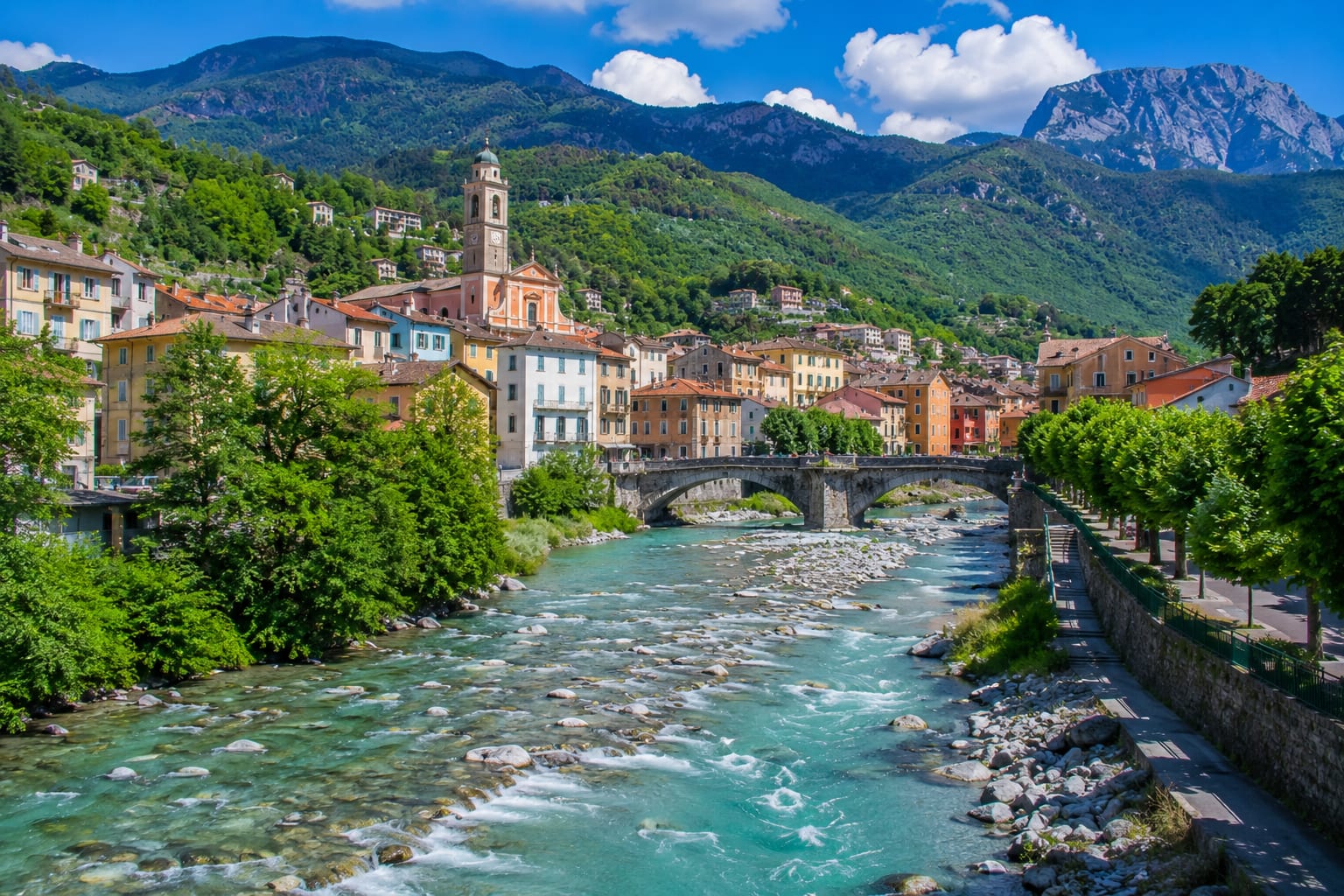
A lower mountain escape from Menton for cooler air, village streets, valley scenery and a non-ski day inland.
Sospel, Alpes-Maritimes
neighbourhood
neighbourhood
Gorbio
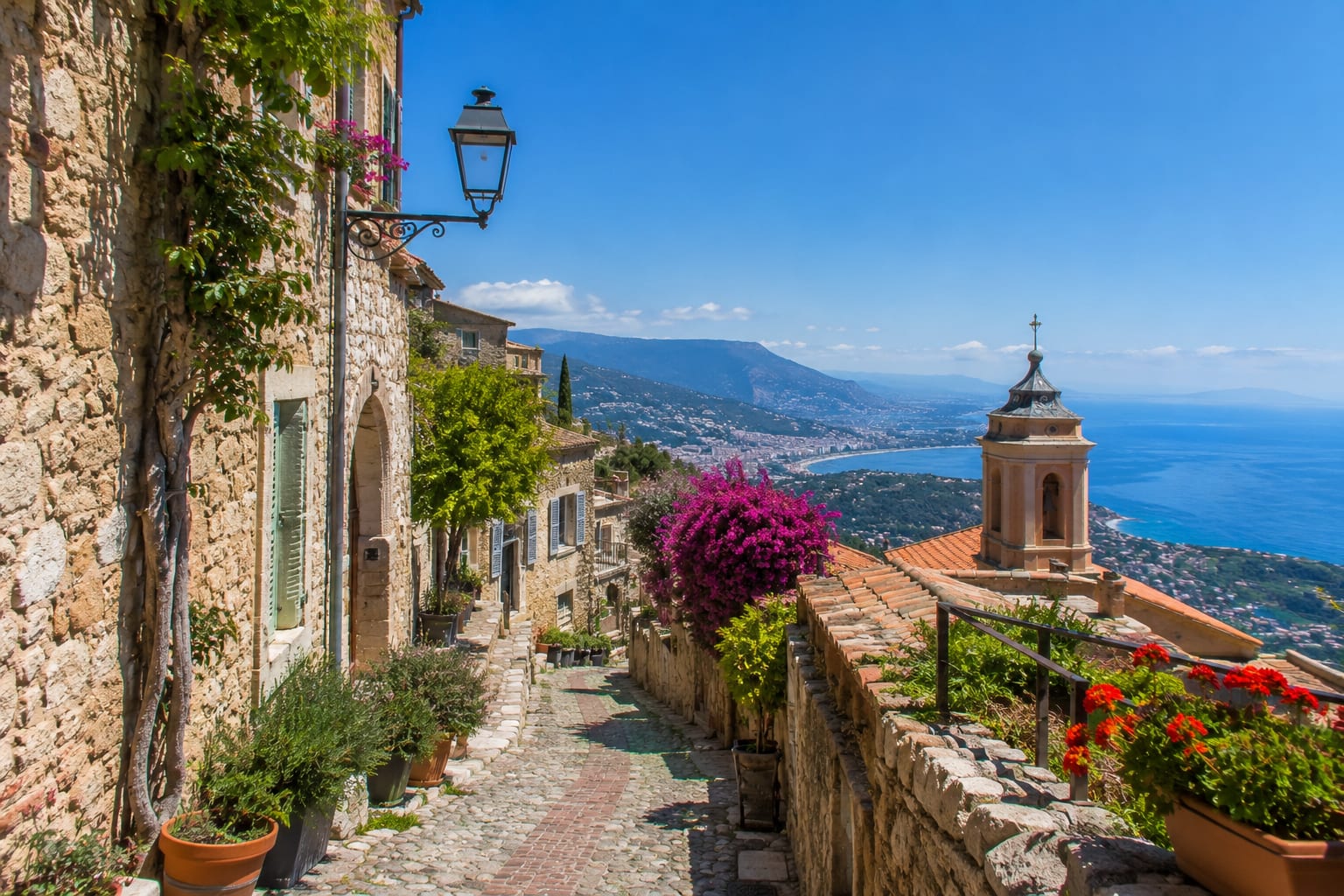
A small hill village above Menton, useful for a quieter half-day detour and the Yolo Prelude visual reference.
Hill village above Menton
neighbourhood
neighbourhood
Roquebrune Medieval Village
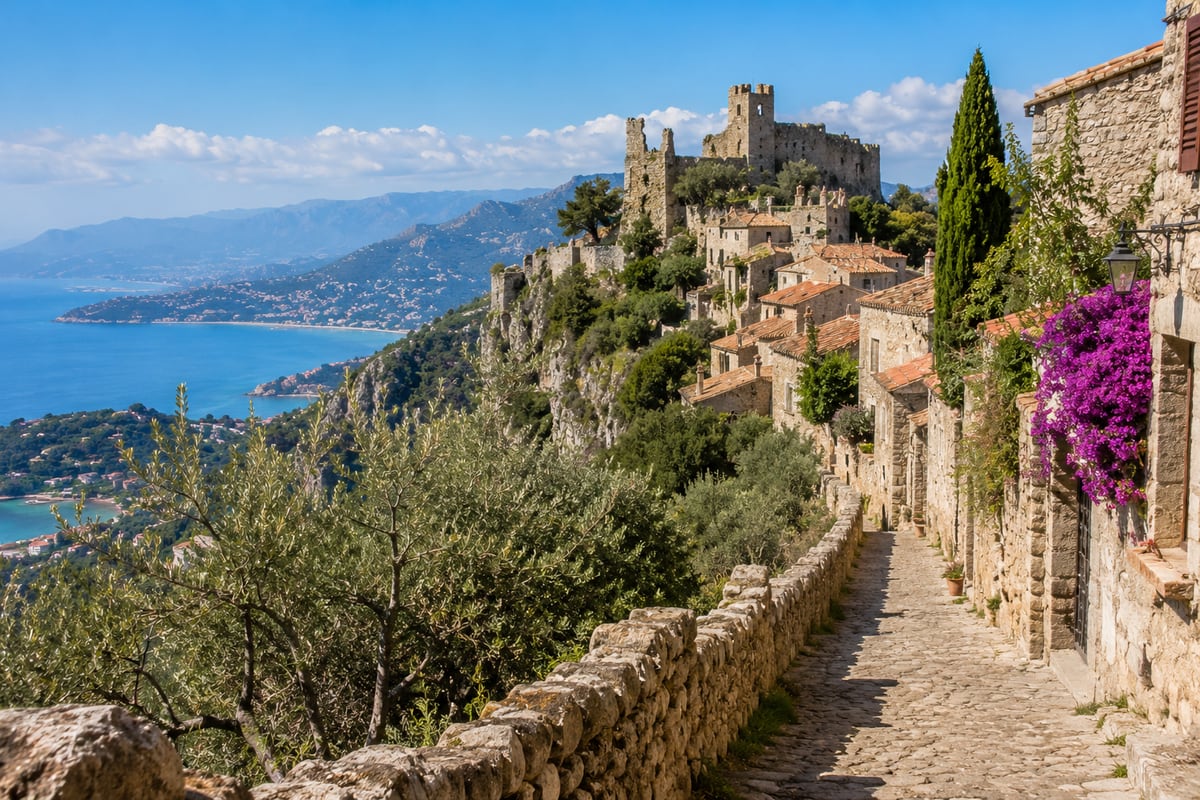
A hill village walk from the coast with olive trees, stone lanes, a historic castle and sea-and-mountain views.
Roquebrune-Cap-Martin
14. The morning-of-departure checklist
Before leaving your accommodation, make sure you can answer the following questions: Is the outbound transport actually operating? Have you identified your return departure? Are any transfers required? Is the road or railway affected by planned engineering works? Is your main cultural attraction open on that date? Do you need a reservation? How much walking is required from the stop or parking area? Is your chosen lunch option available? Are weather warnings in force? Do you have a realistic alternative if conditions change? If several essential answers are uncertain, a relaxed day in Menton is preferable to spending hours navigating unreliable connections.
Frequently asked questions
Can you visit the Roya Valley from Menton in one day? Yes. Breil-sur-Roya, Saorge, Tende and La Brigue can be day-trip destinations, provided transport and attraction availability are confirmed. Which Roya Valley village is best for a first visit? Breil-sur-Roya is the most straightforward general recommendation, with its waterfront, historic centre and local food. Is the Train des Merveilles running? The Nice–Breil–Tende railway remains an active regional route, but specific services can be affected by engineering works. Check the actual travel date rather than relying on an old timetable. Can you take a direct train from Menton to Tende? Don't assume so. The scenic Nice–Tende service operates on a different corridor from the coastal railway, and a journey from Menton may require connections or alternative bus services. Is the Roya Valley accessible by car? Yes, subject to current road conditions. Routes include Menton via Sospel and Col de Brouis, or the approach through Ventimiglia. Temporary closures and restrictions must be checked. Is the Col de Tende tunnel open? Checked on 28 October 2026: an official closure is scheduled until 30 October at 6 a.m. The tunnel operator announces alternating-direction passage from 6 a.m. to 11 p.m. on 30 October–1 November; this is a scheduled reopening, not confirmation of live conditions. Check the tunnel operator and Inforoutes 06 for subsequent restrictions. Is the Musée des Merveilles worth visiting? Yes, especially for visitors interested in archaeology and the prehistoric rock engravings of the Mercantour. Entry is free, but the museum closes on Tuesdays and for an annual period in November. Can you see the real Vallée des Merveilles rock engravings on a normal day trip? Not as an easy extension to a village visit. Access involves high mountain terrain, significant walking and specific protected-area regulations. Plan it as a separate excursion. Is Saorge difficult to reach on foot? Yes, compared with more accessible valley towns. The village is pedestrianised and contains steep, uneven streets and steps. Do you need to book Notre-Dame-des-Fontaines? Advance confirmation is strongly recommended, particularly outside the main season. The chapel is five kilometres from La Brigue, so transport and opening arrangements should both be confirmed.
Final thoughts: make one good choice
The Roya Valley is one of the most rewarding contrasts to a holiday in Menton. In a relatively short distance, you move from the Mediterranean to a landscape of dramatic gorges, historic railway engineering, Alpine villages and remarkable cultural heritage. But this isn't a destination that benefits from an overloaded itinerary. Choose Breil-sur-Roya for a relaxed introduction. Choose Saorge for historic architecture and its monastery. Choose Tende for archaeology and mountain culture. Choose La Brigue for extraordinary medieval frescoes. Then arrange the day around that choice. Confirm transport, check the attraction, allow enough time for lunch and return before the journey becomes stressful. The best Roya Valley excursion isn't the one that visits the most places. It's the one that lets you experience the mountains properly and return to Menton with a memorable story.
Official resources and useful links
Menton Tourist Office: Roya Valley Access SNCF TER Sud: Train des Merveilles Zest: Bus Network and Timetables Inforoutes 06: Current Road Conditions Musée Départemental des Merveilles Monastery of Saorge Notre-Dame-des-Fontaines: Tourist Information Mercantour National Park: Trail Conditions Explore More AzurMenton Guides Transport, road restrictions and attraction information reviewed on 28 October 2026. Published journey times are illustrative and do not confirm a specific departure or connection. Roads, trains, shuttles, museums and mountain trails may change their availability at short notice. Verify the complete outward and return itinerary before travelling.