Sunshine and unease on the Riviera
A beautiful summer. A villa by the sea. And something deeply wrong beneath the sunshine.
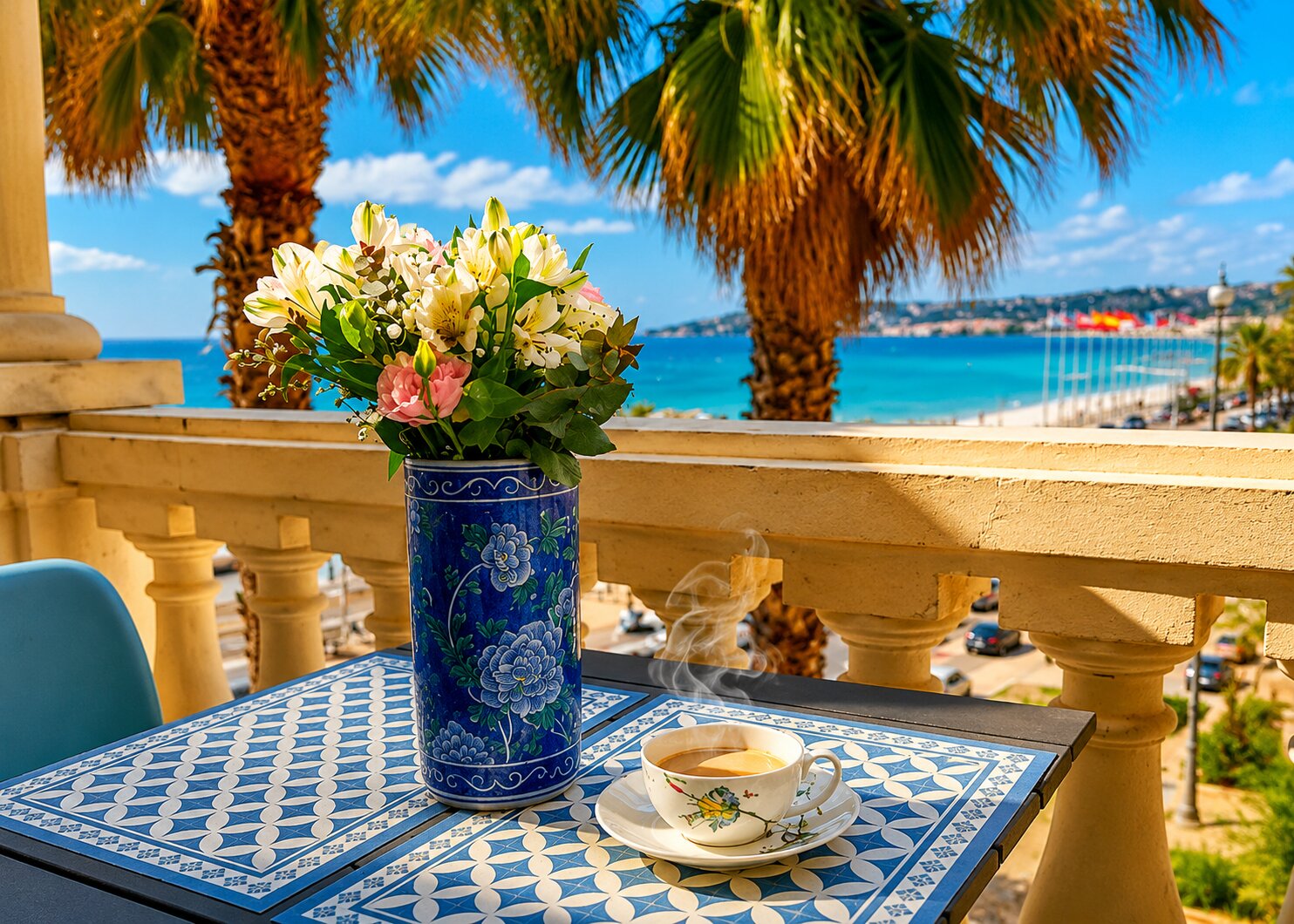
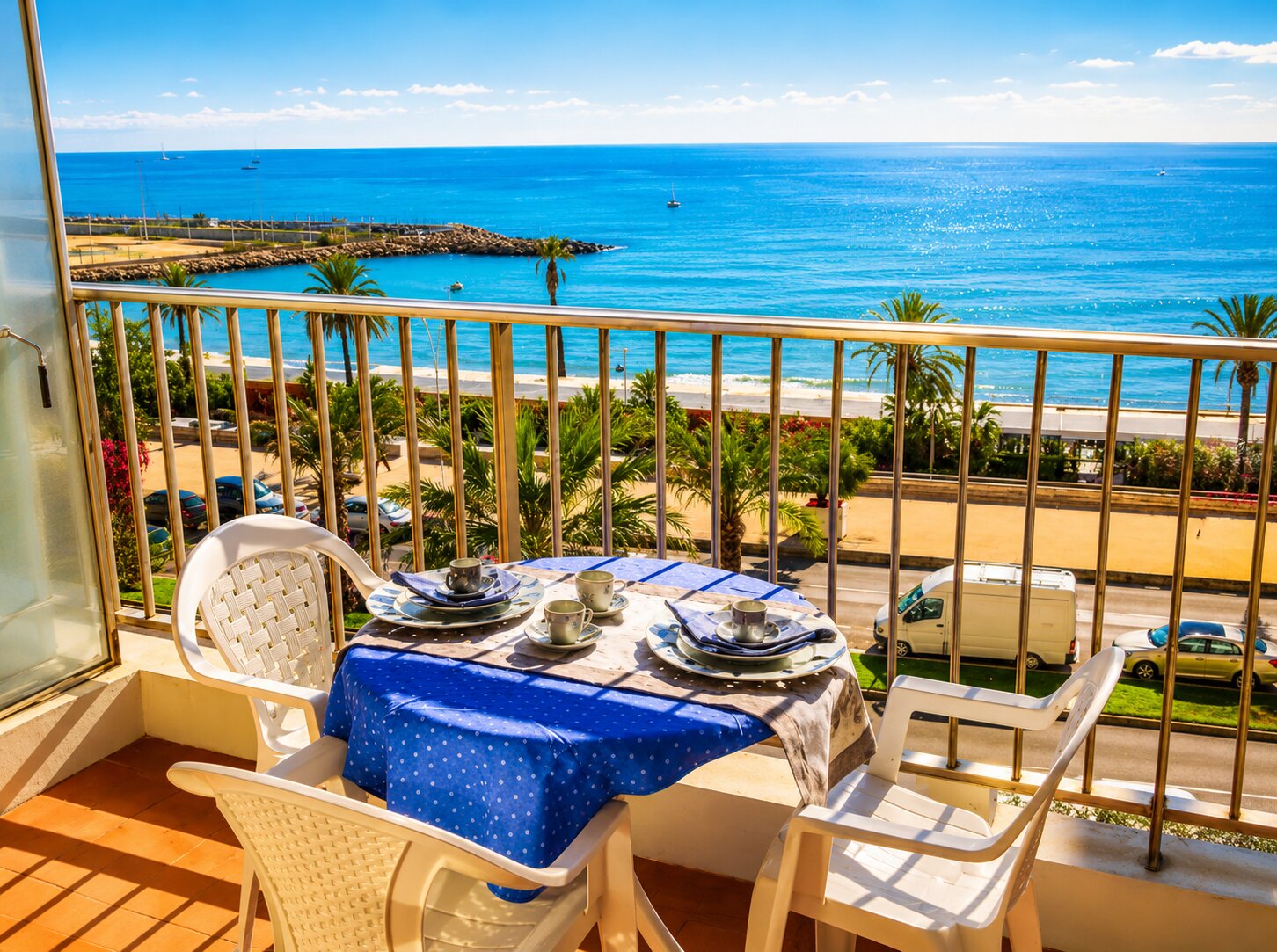
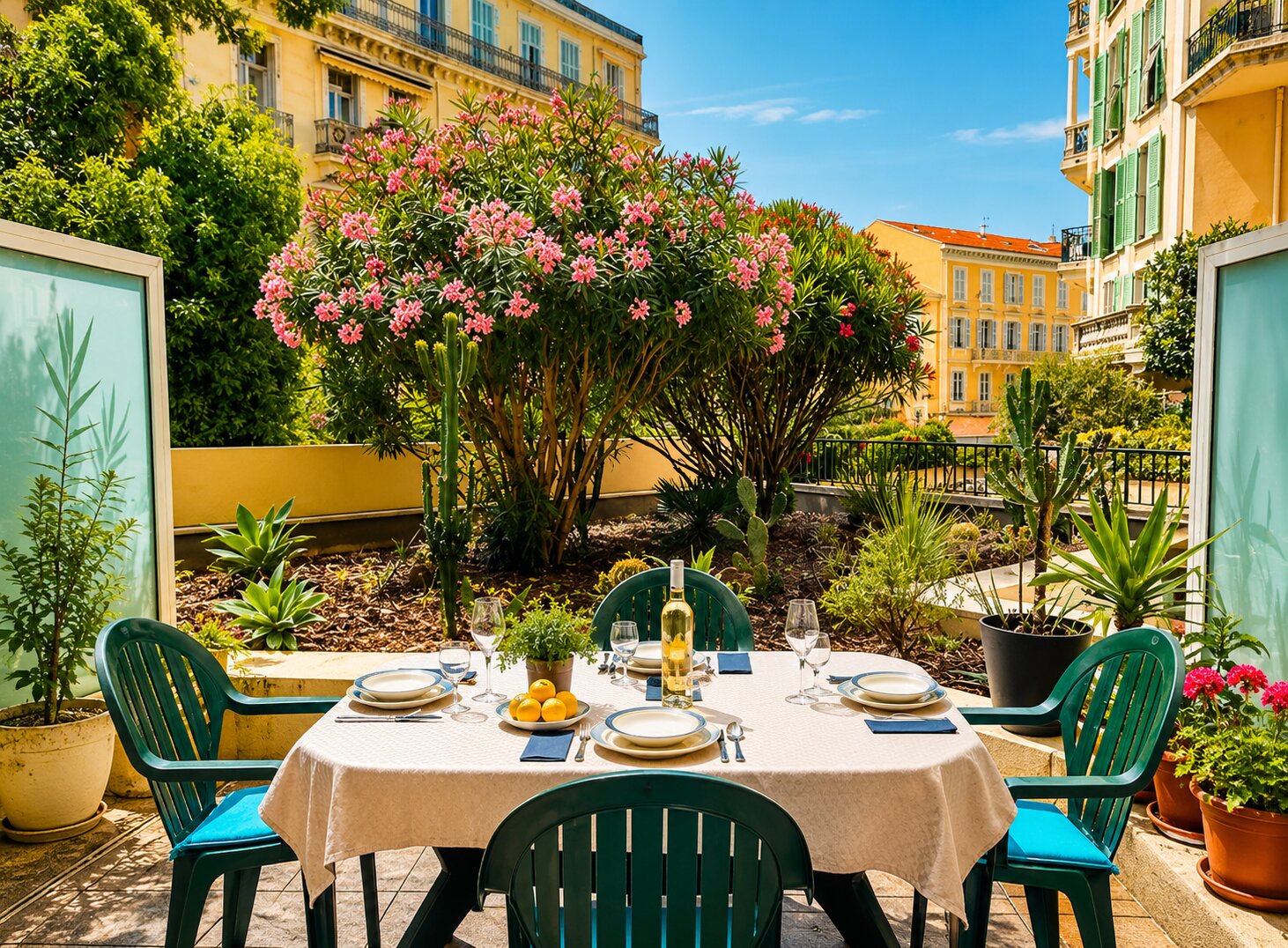
Imagine a summer on the French Riviera.
The sea is warm, the days are long and a rented villa offers everything required for an apparently perfect holiday.
There are swims, lunches, late mornings and very few obligations.
For seventeen-year-old Cécile, this is almost an ideal existence.
She's spending the summer with her father, Raymond, an attractive widower who enjoys pleasure, freedom and the company of beautiful women.
Also staying with them is Elsa, his current girlfriend.
Nobody seems particularly concerned about conventional family arrangements. Cécile and Raymond have an easy intimacy, and their life together is organised around enjoyment rather than responsibility.
Then Anne arrives.
Intelligent, sophisticated and accustomed to a more disciplined way of living, Anne begins to challenge the comfortable disorder Cécile has grown to love.
What follows is the subject of Bonjour Tristesse, the extraordinary first novel by Françoise Sagan, published in 1954 when its author was just eighteen.
It's a short book, but an uncomfortable one.
The Mediterranean is beautiful. The villa is luxurious. The pleasures of summer are everywhere.
And yet the emotional landscape is far more complicated than the physical one.
This guide explores the novel's relationship with the French Riviera, the postwar world in which it appeared and the way Sagan turns an apparently carefree summer into a study of freedom, manipulation and responsibility.
It also suggests how to enjoy the atmosphere of the novel while staying in Menton.
But first, an important distinction.
Bonjour Tristesse is set on the French Riviera. It is not specifically established as a novel set in Menton.
The places suggested below are literary companions to the book, not verified addresses from its plot. This guide introduces the premise and themes without revealing major later developments or the ending.
1. Discover Bonjour Tristesse by Françoise Sagan
Title: Bonjour Tristesse
Author: Françoise Sagan (1935–2004)
First published: 1954, Éditions Julliard
Original language: French
Genre: Literary fiction, coming-of-age fiction, psychological drama
Principal setting: A summer villa on the French Riviera
Narrator: Cécile, aged seventeen
When Bonjour Tristesse appeared in March 1954, it caused an immediate sensation.
Its author, born Françoise Quoirez, had written an unusually confident novel about a teenage girl whose attitudes towards love, sex and family life challenged the moral expectations of postwar France.
Its style was direct, economical and psychologically sharp.
Sagan didn't need hundreds of pages to create a complicated emotional world.
The novel's central characters are introduced through their behaviour, relationships and small acts of selfishness or affection.
The result is an unsettling examination of how easily pleasure can become destructive when people refuse to consider the consequences of their choices.
Why did the novel cause a scandal?
France in the early 1950s remained socially conservative in many respects.
A novel narrated by a teenage girl who openly discusses desire, pleasure and unconventional relationships was bound to provoke a reaction.
What made the book particularly striking was its refusal to turn Cécile into a simple moral example.
Sagan allows her narrator to be charming, intelligent, selfish, perceptive and unreliable.
Readers are invited to understand her without necessarily approving of her.
The novel became a bestseller and established Sagan as one of the most recognisable literary voices of her generation.
Where to find the book
Search for Bonjour Tristesse in Penguin's editions
The book is also widely available in French editions from Julliard and Pocket.
If you're learning French, the original is relatively short, although its emotional subtleties may be more challenging than its length suggests.
2. The villa: a private world that cannot remain private
The villa is one of the most important elements of the novel.
It's a holiday home, temporarily removed from the responsibilities of ordinary life.
For Cécile, its isolation offers a particularly appealing freedom.
There are no school obligations, few social constraints and little reason to think about the future.
The sea and summer landscape seem to provide everything she wants.
But the villa also creates an enclosed emotional environment.
The characters are constantly exposed to one another's habits, relationships and changing moods.
They cannot easily escape the consequences of their shared life.
The house as a psychological setting
The villa represents privilege.
The characters have enough money and leisure to spend a summer without worrying about work, rent or everyday domestic survival.
That freedom is important to the story.
It allows Cécile to imagine that pleasure can continue indefinitely.
But the same isolation means that changes within the household become unusually significant.
The arrival of a new person can alter the entire balance.
Is there a real villa to visit?
The novel doesn't provide a sufficiently documented real-world address for its fictional holiday house.
There's no verified “Bonjour Tristesse villa” in Menton that tourists can visit as the exact setting of the book.
Historic Riviera villas can evoke the same world, but resemblance should not be presented as proof of literary inspiration.
This distinction becomes particularly important when discussing the film adaptations, which used actual houses and landscapes to represent Sagan's fictional setting.
3. Cécile: a teenager who understands more than she admits
Cécile is one of the great teenage narrators of twentieth-century French literature.
She is observant, intelligent and frequently amusing.
She also has a talent for explaining her own behaviour in ways that make it seem perfectly reasonable.
Her relationship with Raymond is central to this.
Father and daughter share an unusually informal companionship.
They enjoy many of the same pleasures and seem to understand one another without the conventional distance between parent and child.
But there's a problem.
Cécile depends on the continuation of this arrangement.
Her father's freedom is also her own.
When Anne introduces different expectations, Cécile experiences them not simply as advice but as a threat to her identity.
Why Sagan's narrator remains interesting
The novel is not only about an adolescent making decisions.
It's about the stories people tell themselves to justify those decisions.
Cécile can be perceptive about other people's weaknesses while remaining remarkably selective about her own.
The reader sees events through her eyes, but that doesn't mean her interpretation is always complete.
This tension gives the novel much of its psychological power.
4. Raymond, Elsa and Anne: three different ideas about happiness
The three principal adults represent contrasting attitudes towards pleasure, commitment and responsibility.
Raymond values charm and freedom.
His relationships are often temporary, and he seems comfortable organising life around whatever makes him happy in the moment.
Elsa belongs naturally to this light-hearted world of leisure.
Anne offers something different.
She values culture, discipline, intelligence and the possibility of a more stable life.
The tension among them is not simply a competition between personalities.
It reflects a deeper conflict about how people should live.
Is pleasure enough?
Sagan doesn't offer a comfortable answer.
The characters' enjoyment is genuine.
Their capacity for affection is genuine too.
But neither guarantees that their choices will be harmless.
The Riviera setting makes this conflict particularly effective.
Everything outside the villa encourages pleasure.
The landscape seems to promise that happiness should be easy.
The people inside demonstrate why it isn't.
5. Why the French Riviera matters
The novel could hardly have the same effect in an ordinary Paris apartment.
Its summer setting creates a sense of temporary exemption from normal life.
The characters are away from their usual environment.
They have time, privacy and money.
They can swim, drive, eat, rest and pursue relationships without the immediate pressures of work or school.
This freedom makes their emotional decisions more visible.
The landscape is beautiful but indifferent
Sagan's Mediterranean is not a magical place that solves problems.
The sunshine doesn't make the characters wiser.
The sea doesn't give them greater empathy.
The villa doesn't protect them from emotional consequences.
Instead, the contrast between external beauty and internal discomfort becomes central to the novel's atmosphere.
A different image of the Riviera
Many travel descriptions present the French Riviera as a place of effortless happiness.
Sagan's Riviera is more complicated.
It's a landscape in which privilege allows people to avoid ordinary responsibilities, but not the effects of their own behaviour.
That makes the book a particularly rewarding companion to a modern holiday.
Not because you can reproduce Cécile's summer.
But because you may recognise the temptation to imagine that a beautiful place can make life uncomplicated.
6. The Riviera of 1954: a changing social world
When Bonjour Tristesse appeared, France was still emerging from the social and economic consequences of the Second World War.
The Riviera already had a long history as a resort for wealthy international visitors.
But the postwar decades would transform its image.
Cinema, fashion, motorcars and a new culture of celebrity helped create the idea of the Côte d'Azur as a place associated with youth, freedom and modern pleasure.
Sagan's novel appeared at an important moment in this transformation.
Young people and changing expectations
Cécile's attitudes towards relationships and independence were especially provocative in the cultural environment of 1954.
Her behaviour challenged conventional expectations about the proper role of a teenage girl.
Yet Sagan did not simply write a celebration of rebellion.
The novel also investigates the limits of a life without responsibility.
Its originality lies partly in the tension between these two perspectives.
The Riviera was not everyone's paradise
The characters belong to a privileged social world.
Their summer depends on money, leisure and access to a private villa.
That should not be confused with the everyday lives of the people who worked in the region.
The Mediterranean coast was also home to farmers, fishermen, shopkeepers, domestic workers and families whose circumstances were very different.
Recognising that inequality makes the novel's atmosphere more historically meaningful.
7. Can you follow Bonjour Tristesse through Menton?
Not in the conventional filming-location sense.
There is no verified sequence of Menton addresses corresponding to Cécile's villa, her swimming places or the novel's private conversations.
But Menton offers an excellent setting for a literary experience inspired by the book.
The town combines Mediterranean beaches, historic villas, public gardens and the everyday culture of a Riviera resort.
You can use these places to think about the atmosphere and themes of the novel.
The following route is therefore deliberately labelled a thematic literary walk, not a tour of actual story locations.
8. A Bonjour Tristesse-inspired afternoon in Menton
These stops are not named locations from Bonjour Tristesse. They offer a way to experience aspects of its Mediterranean atmosphere using public spaces. Times are editorial estimates with pauses, not measured walking times.
Stop 1. Promenade du Soleil: the holiday everyone imagines
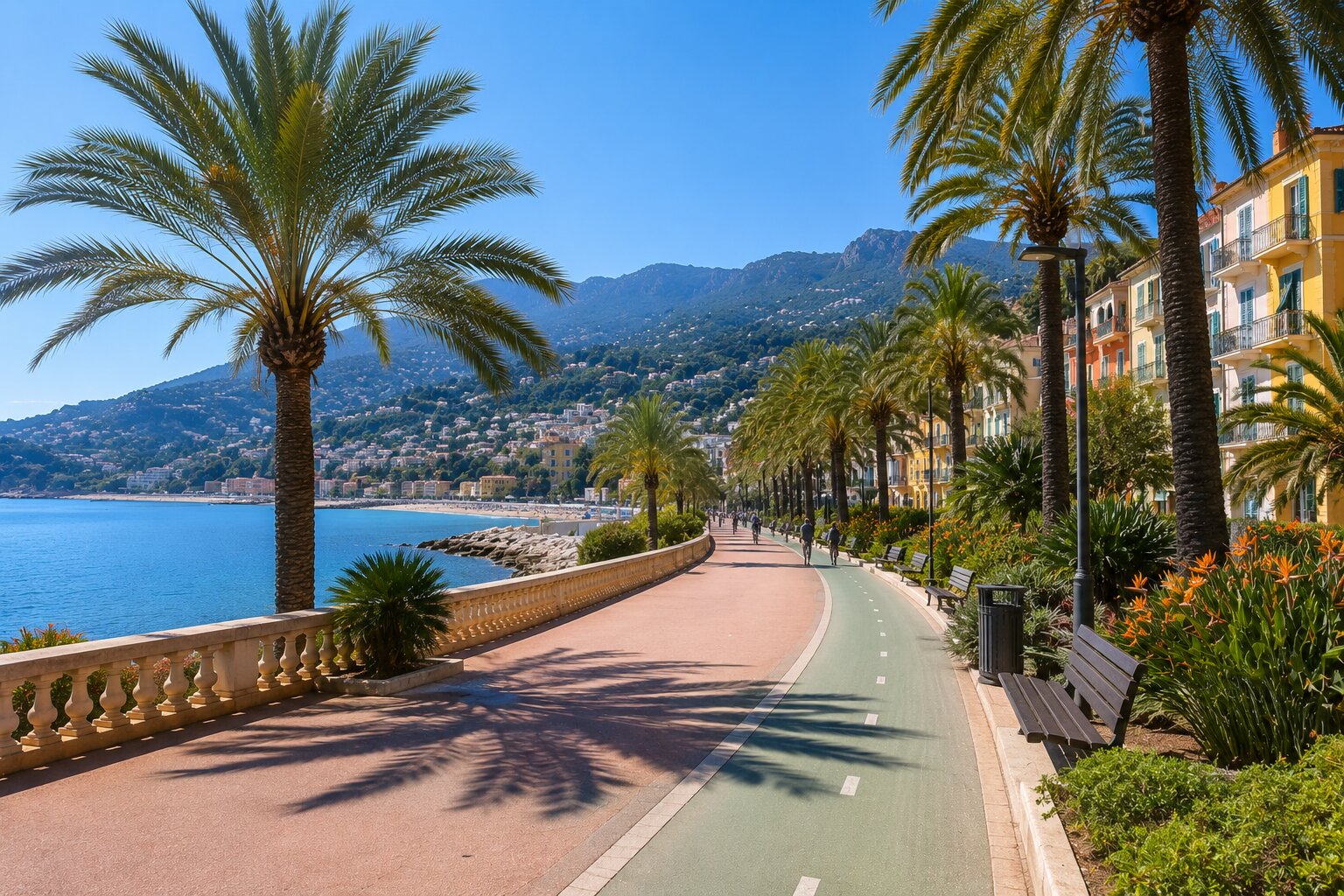
Begin along Menton's main seafront promenade.
The Mediterranean stretches ahead, with palm trees and historic buildings lining the shore.
On a sunny day, the atmosphere seems almost designed for pleasure.
People walk, sit at cafés, meet friends or spend time beside the water.
It's an excellent place to think about the world Cécile wants to preserve.
A holiday in which nothing urgent seems likely to happen.
What to notice
Look at the difference between the public promenade and the private villas scattered across the surrounding hills.
The Riviera has always offered different experiences depending on wealth and social position.
The characters in Sagan's novel inhabit the privileged side of that divide.
Their freedom is real, but it is not universal.
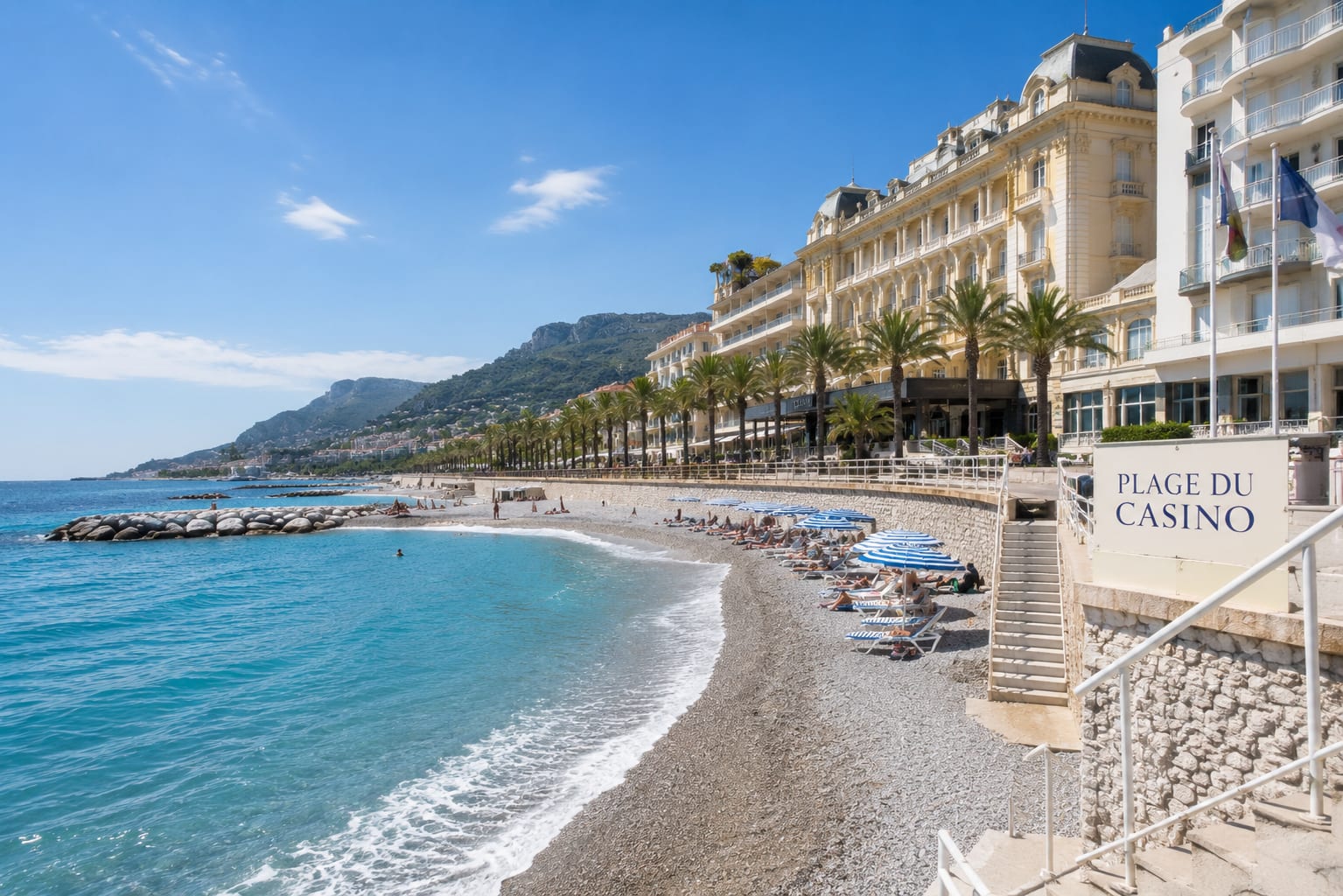
Stop 2. Plage du Casino: the sea as an escape
Continue towards the public beach area near the casino.
Swimming is an important part of the world evoked by Bonjour Tristesse.
The sea offers movement, physical pleasure and apparent independence from ordinary rules.
In the novel, water and summer activities help establish Cécile's sense of freedom.
You don't need to visit the fictional beach to appreciate that atmosphere.
A quiet reading stop
Find a suitable public place to sit.
Read a few pages of the novel, or simply enjoy the sea.
Think about how Sagan uses a physically beautiful environment to introduce emotional tension.
Practical note: Beach conditions, swimming safety and seasonal facilities vary. This is a thematic literary stop, not a recommendation to swim in unsuitable conditions.
Stop 3. The Belle Époque waterfront: the architecture of privilege
Walk along the developed seafront and notice the grand historic buildings.
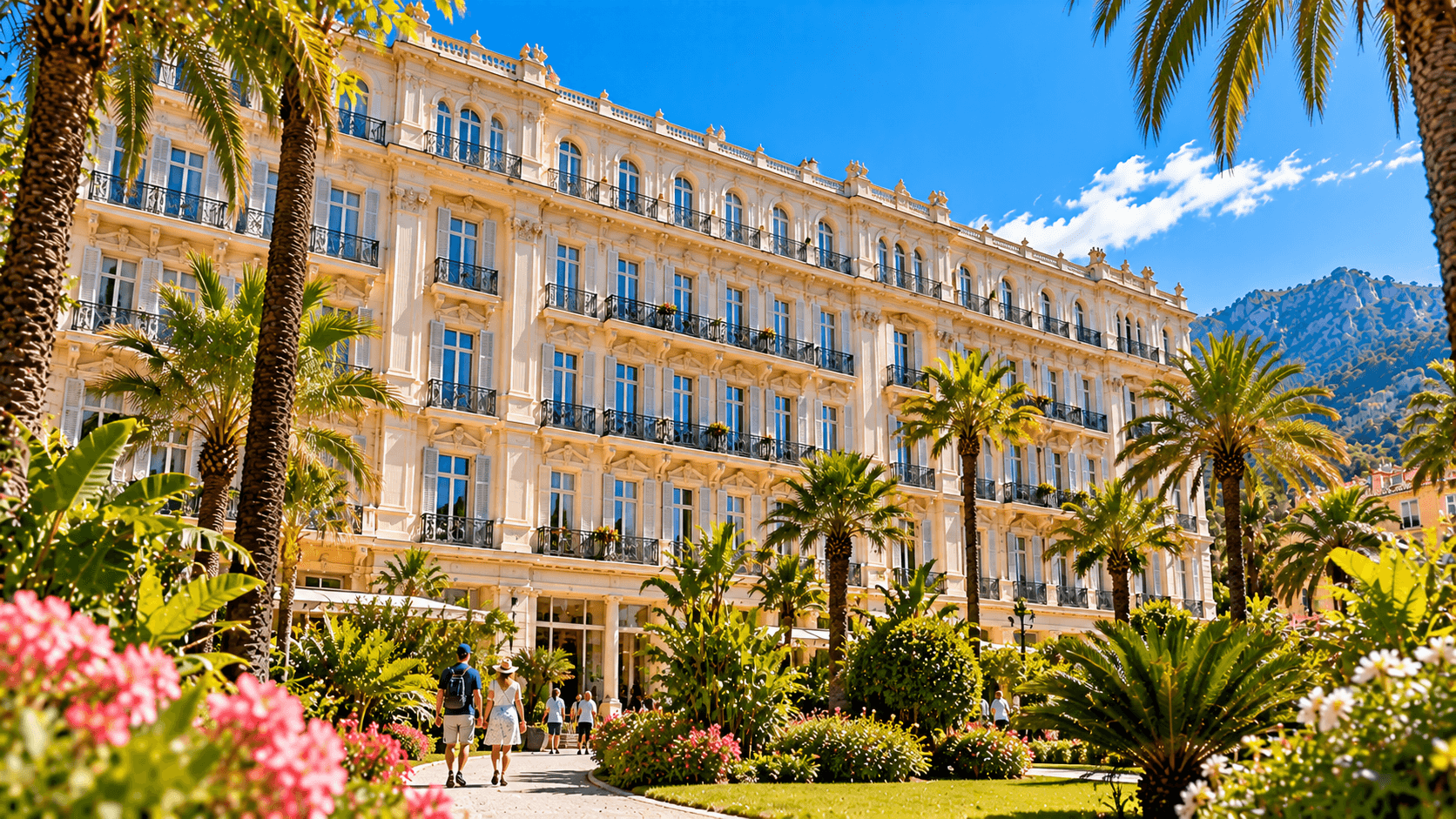
Royal Westminster provides a concrete example of this resort architecture. View its façade from public space; do not assume free access to interiors or gardens. It is not a documented Sagan address, fictional villa or filming stop.
Menton's resort architecture belongs largely to an earlier period than Sagan's novel.
The town's Belle Époque hotels and villas reflect the international winter-tourism culture of the late nineteenth and early twentieth centuries.
By the 1950s, the French Riviera was moving towards a different image, increasingly associated with summer holidays, cars, cinema and youthful glamour.
Why include this stop?
Because the novel's privileged lifestyle didn't emerge from nowhere.
The region's luxury tourism developed over generations.
Grand hotels and private villas helped establish the social geography that later writers and filmmakers used as a backdrop.
However, the historic buildings you see in Menton should not be described as Cécile's fictional accommodation.
Stop 4. Jardins Biovès: a pause away from the beach
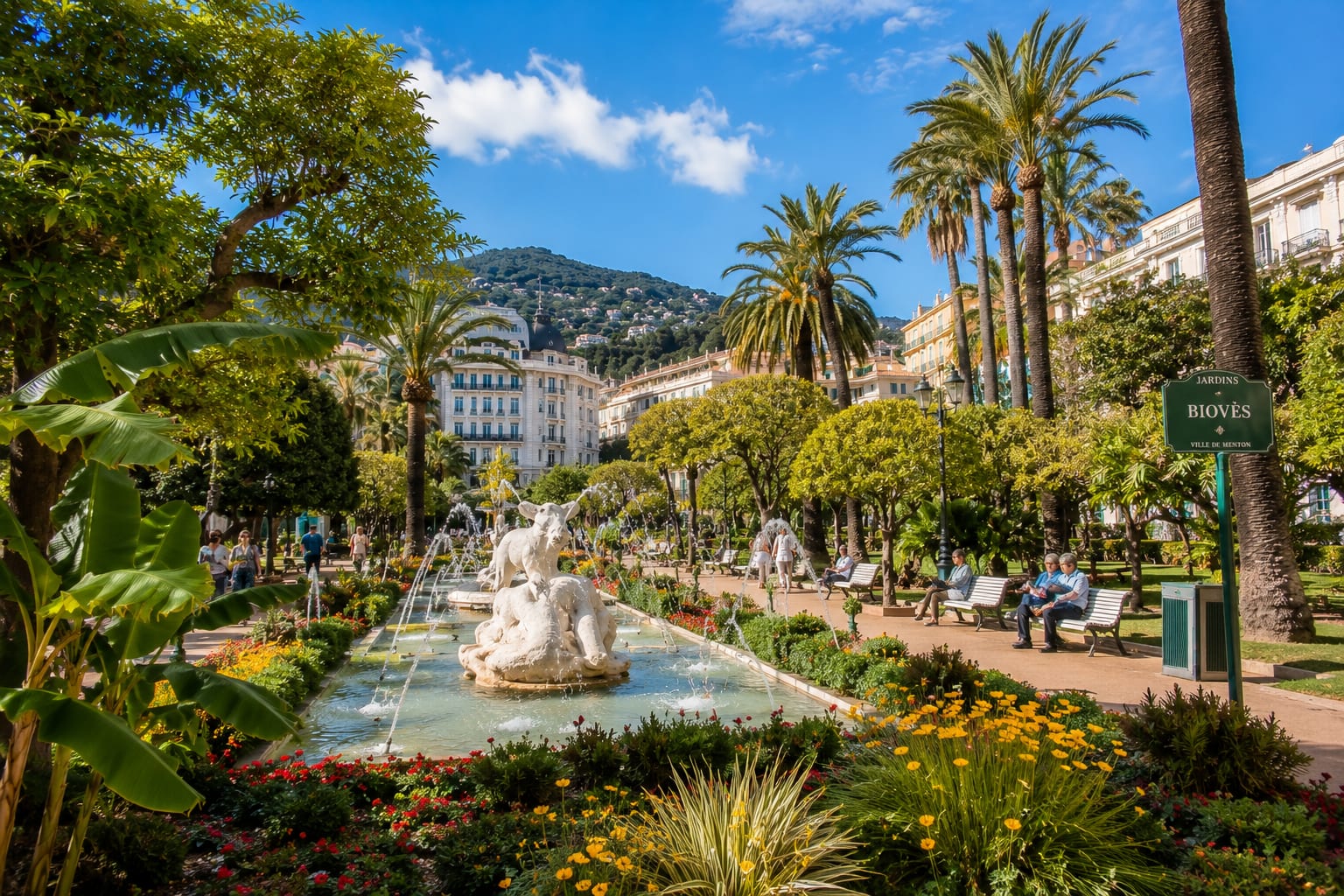
Finish with a stroll through Jardins Biovès, close to the town centre.
The gardens provide a quieter contrast with the open waterfront.
There are paths, planting and public spaces where you can pause.
This is an appropriate place to consider one of the novel's central questions:
Can a person preserve happiness by preventing the lives of others from changing?
There's no need to answer immediately.
Sagan's novel is interesting partly because it makes the question uncomfortable.
How long does the walk take?
Allow approximately 90 minutes to two hours, including pauses.
The four time ranges are optional pause estimates, not a compulsory timetable. Check weather, beach signs and any event-related garden restrictions. Jardins Biovès is not guaranteed to be quiet or unrestricted during events.
You can make it shorter by concentrating on the seafront.
The suggested route uses developed urban areas but has not been field-audited for continuous step-free accessibility.
| Stop | Place | Literary connection | Time |
|---|---|---|---|
| 1 | Promenade du Soleil | The public face of Riviera leisure | 20–30 min |
| 2 | Plage du Casino | Summer, swimming and the freedom of holiday time | 20–40 min |
| 3 | Historic waterfront and Belle Époque façades | The wealth and social history behind resort life | 20–30 min |
| 4 | Jardins Biovès | A quieter place to reflect on the novel | 20–30 min |
walk
walk
Promenade du Soleil
The simplest Menton ritual: morning light, sea air and an evening return by the water.
Menton seafront
Outdoor alternative from Palais de l'Europe, instead of the Wedding Hall: east Biovès entrance, Avenue Carnot, Square des États-Unis, Avenue Édouard VII, seafront. The tourist office describes its walk as level; this does not certify other connections.
Source checked:
beach
beach
Plage du Casino
A practical central beach for quick swims between the promenade, cafes and the apartment.
central seafront / Casino Barrière
civic
civic
Royal Westminster
Historic seafront hotel still operating. Interior, garden and restaurant access follows the hotel's customer policies.
28 Avenue Félix Faure, 06500 Menton
garden
garden
Jardins Biovès
Central gardens used for the Lemon Festival citrus sculpture displays and an easy town-centre walk.
Menton centre
9. A more atmospheric option: spend a slow day by the sea
For this particular book, a strict sightseeing itinerary may be less effective than a slower experience.
Consider spending a morning at the beach, enjoying lunch without rushing and reading during the afternoon.
The point isn't to imitate the characters' behaviour.
It's to experience the contrast between carefree surroundings and the more complicated emotional questions raised by the novel.
A beautiful Mediterranean afternoon can be a surprisingly effective setting for reading Bonjour Tristesse.
Just remember that the book itself isn't as carefree as its scenery.
10. The film adaptations: a different geographical question
The original novel and its screen adaptations must be treated separately.
A film may use a real villa to portray a fictional one.
That doesn't establish the actual location of the house in Sagan's prose.
Bonjour Tristesse (1958), directed by Otto Preminger
The best-known adaptation stars Jean Seberg as Cécile, David Niven as Raymond and Deborah Kerr as Anne.
It also features Mylène Demongeot and Geoffrey Horne.
The film is particularly celebrated for its visual contrast between Riviera sunshine and the characters' emotional experiences.
The American Film Institute identifies location filming in France, including Saint-Tropez and the Pointe de la Croisette area, with interior work in England.
The Saint-Tropez tourism office additionally identifies Monte Carlo, Le Lavandou and Cannes among the film's locations.
These are filming locations, not proof that the novel names the same places.
The 2024 film adaptation
Another adaptation, directed by Durga Chew-Bose and starring Lily McInerny, Claes Bang and Chloë Sevigny, premiered at the Toronto International Film Festival in 2024.
It revisits the novel for a contemporary audience, with its own visual interpretation of the Riviera and the characters.
A separate filming-location guide would require checking its production records rather than assuming it used the same houses and coastlines as the 1958 film.
Why not combine everything into one route?
Because there are three different questions.
Where does the novel take place?
Where were the films actually shot?
And which contemporary places best communicate the work's atmosphere?
Each produces a different type of itinerary.
This page concentrates on the novel and its cultural setting.
11. What to read alongside Bonjour Tristesse
A Certain Smile, Françoise Sagan
Sagan's second novel, published in 1956, offers another examination of youth, desire and emotional uncertainty.
It's an excellent choice if you enjoy the concise style and psychological complexity of Bonjour Tristesse.
Rebecca, Daphne du Maurier
Although very different in tone, Rebecca also begins in a luxurious Riviera environment before exploring the darker dimensions of relationships and privilege.
Its Monte Carlo chapters provide an interesting comparison with Sagan's world.
The Long Afternoon, Giles Waterfield
This novel, inspired by the author's family history in Menton, explores a much earlier generation of British expatriate life on the Riviera.
Its private villa, garden and domestic world offer another perspective on the idea of a Mediterranean retreat.
The Houses That Remember, Anton Biletskyi-Volokh
For readers interested in the real histories behind the Riviera's elegant residences, this AzurBooks title explores eight historic homes and the people whose lives became connected with them.
It is narrative nonfiction rather than a novel, so its approach to evidence and historical interpretation is different.
Together, these works show how Riviera houses can be settings for pleasure, ambition, artistic creation and difficult personal choices.
12. Who will enjoy Bonjour Tristesse?
Readers interested in coming-of-age fiction will find Cécile a particularly memorable narrator, capable of insight and self-deception in almost equal measure.
Readers who enjoy psychological drama will appreciate the tensions among the characters and the novel's interest in motives rather than spectacle.
Readers of French literature will discover one of the most influential publishing sensations of the 1950s.
Travellers interested in Riviera culture will encounter a less idealised account of the region's postwar glamour.
And readers who prefer morally straightforward characters may find the book deliberately frustrating.
Sagan doesn't make it easy to admire or condemn Cécile without qualification.
That is part of its achievement.
Frequently asked questions
Is Bonjour Tristesse set in Menton?
No specific evidence establishes Menton as the location of the novel's villa. The story is set on the French Riviera, and this guide uses Menton as a thematic starting point rather than a verified fictional address.
Who wrote Bonjour Tristesse?
Françoise Sagan, a French novelist born in 1935. It was her debut novel, published in 1954 when she was eighteen.
What is the book about?
It follows seventeen-year-old Cécile during a summer on the Riviera with her father and his girlfriend. The arrival of another woman disrupts their carefree household and creates emotional conflict.
Is the novel a romance?
Romantic relationships are important, but the book is more accurately described as a psychological coming-of-age novel concerned with freedom, selfishness and responsibility.
Is the villa real?
No particular surviving Riviera property has been reliably established as the precise fictional villa in the novel.
Was the 1958 film shot on the French Riviera?
Yes. Filming records identify locations including Saint-Tropez, the Cannes area and other Riviera settings. These should not be confused with the literary geography.
Can you follow the story as a walking route?
Not as a verified scene-by-scene itinerary. You can, however, experience the atmosphere of the novel through public beaches, promenades and gardens in Menton or elsewhere on the Riviera.
Is it suitable for teenagers?
The novel's narrator is seventeen, but the book deals with adult relationships, sexuality and morally complex behaviour. Suitability depends on the reader's maturity and interests.
Do I need to read it in French?
No. English and other translations are available. Reading it in French offers direct access to Sagan's concise original prose.
Does this guide contain spoilers?
It introduces the characters and initial conflict without revealing the novel's major later developments or ending.
Final thoughts: the sadness beneath the sunshine
The French Riviera is exceptionally good at suggesting that life should be easy.
The Mediterranean, the long afternoons, the gardens and the beautiful houses create an atmosphere of endless possibility.
In Bonjour Tristesse, Françoise Sagan takes that familiar image and quietly turns it upside down.
Her characters have freedom, comfort and beauty.
But they don't necessarily know what to do with them.
The novel's power comes from the contrast between a landscape that seems almost perfect and relationships that are anything but.
For travellers staying in Menton, the book offers an interesting way to experience the coast.
Walk along the promenade.
Spend time beside the sea.
Enjoy an afternoon without an elaborate itinerary.
Then open Sagan's novel.
You may find that the same sunshine looks a little different.
Sources and further reading
Bibliothèque nationale de France: Bonjour Tristesse, 1954 edition
Lumni: Bonjour Tristesse, literary analysis with plot spoilers
American Film Institute: Bonjour Tristesse (1958)
Saint-Tropez Tourist Office: Saint-Tropez and Cinema
Menton Riviera & Merveilles: Jardins Biovès
Menton Riviera & Merveilles: beaches
Literary and historical information reviewed on 3 November 2026. This guide draws on bibliographic, film and tourism sources rather than an independently verified chapter-by-chapter location analysis of the complete novel. The Menton itinerary is thematic and does not claim to identify the novel's fictional villa or specific scenes. Film locations are distinguished from literary settings. Confirm current beach, garden and hotel rules; no current prices, opening hours or free interior access are guaranteed.