Before Manderley, sunshine in Monte Carlo
It's one of the most famous novels of the twentieth century. An unnamed young woman. A wealthy, mysterious widower. A magnificent country house. And the enduring influence of a woman who is no longer alive. Most readers associate Daphne du Maurier's Rebecca with Manderley, the imposing English estate that dominates the novel. But before the heroine enters that world, another place shapes her future. Monte Carlo.
Here, in an expensive Riviera hotel, the young narrator works as a paid companion to a wealthy American woman, Mrs Van Hopper. She spends her days following instructions, enduring awkward social situations and feeling painfully conscious of her own lack of money and status. Then she encounters Maxim de Winter. He's rich, reserved and recently widowed. Their acquaintance begins amid the hotels, gardens and fashionable society of the Mediterranean coast.
And what initially looks like the beginning of a romantic escape eventually leads the narrator towards a very different life. This guide explores the real Monte Carlo behind the opening of Rebecca. It isn't an attempt to present the whole book as a Monaco novel. Most of the story takes place in England, and Manderley is its emotional and architectural centre.
Instead, we'll focus on the Riviera chapters, the social world they represent and a short literary walk through Monte Carlo that you can enjoy from Menton. You don't need to have read the book. And if you have, the route offers a new perspective on why du Maurier began this unsettling story in such a beautiful place.
1. Discover Rebecca by Daphne du Maurier
Rebecca Author: Daphne du Maurier (1907–1989) First published: 1938, Victor Gollancz Genre: Gothic fiction, psychological suspense, literary romance Principal fictional settings: Monte Carlo and Manderley, an English country estate associated with Cornwall Rebecca is narrated by a young woman whose first name is never revealed. At the beginning of the remembered story, she's employed as a companion to Mrs Van Hopper, an affluent American visitor staying at a luxury hotel in Monte Carlo.
The narrator is inexperienced, shy and acutely aware of the differences between herself and the people around her. When she meets Maxim de Winter, the owner of Manderley, their acquaintance offers the possibility of a completely different future. That's enough of the story for this guide. The relationship becomes the doorway to the novel's central mystery, but the most important discoveries belong to readers, not a travel article.
Why read it?
Rebecca combines the emotional appeal of romantic fiction with the atmosphere of a Gothic psychological thriller. Du Maurier is particularly interested in memory, power, jealousy and the ways people compare themselves with others. The novel's first-person narration makes the reader unusually close to the heroine's insecurities and misunderstandings. And the contrast between Monte Carlo and Manderley is essential. The sunny Mediterranean beginning feels almost like a different literary genre from the darker story that follows.
Where to find it
Discover Daphne du Maurier and Rebecca through the Daphne du Maurier website
The novel is available in numerous editions, translations and audiobook formats. For this literary walk, any complete edition of the original novel will work.
2. What actually happens in Monte Carlo?
The novel doesn't begin with the heroine arriving at the casino. Its famous opening is a memory of Manderley. The narrative then returns to the earlier period when the young woman was staying in Monte Carlo with Mrs Van Hopper. This creates a deliberate contrast between the remembered Riviera and the narrator's later experiences.
The hotel
Mrs Van Hopper is staying at the fictional Hôtel Côte d'Azur. The hotel is grand, expensive and socially intimidating. Its public rooms are places where wealthy guests observe one another, exchange gossip and make introductions. The narrator occupies an awkward position. She's a guest in the hotel, but only because she's employed by someone who can afford to stay there. She belongs to the setting physically without belonging to its social world.
The meeting
Maxim de Winter is another hotel guest. Mrs Van Hopper takes an immediate interest in him because of his wealth, position and reputation. The young narrator becomes involved almost accidentally in their acquaintance. As the story develops, Monte Carlo provides the setting for a series of encounters, conversations and outings. Du Maurier uses the apparent leisure of Riviera life to reveal very different experiences of wealth, independence and dependence.
Why Monte Carlo matters
The contrast between the narrator's social position and Maxim's status is essential to the relationship. Monte Carlo makes that contrast particularly visible. It's a place designed around privilege, luxury and being seen. For Mrs Van Hopper, this is an enjoyable environment. For her companion, it can be humiliating. For Maxim, it offers temporary distance from his life in England. The same hotel means something different to each person.
3. Was the Hôtel Côte d'Azur a real hotel?
This is the most important practical distinction for anyone trying to follow the novel. The Hôtel Côte d'Azur is a fictional literary hotel, not a reliably identified historic establishment that visitors can book or tour today. Du Maurier doesn't provide enough verifiable information to establish one precise real-world counterpart. Monte Carlo had several prestigious hotels capable of providing the atmosphere described in the novel. But architectural resemblance isn't evidence of direct inspiration.
What can you visit instead?
The historic hotel district around Place du Casino provides an excellent introduction to the world du Maurier evokes. You can see the exterior of Hôtel de Paris Monte-Carlo, the Casino de Monte-Carlo and the surrounding Belle Époque architecture. These are real buildings connected with the history of elite tourism in Monaco. They are contextual stops, not confirmed equivalents of the fictional Côte d'Azur hotel. That distinction allows the walk to remain interesting without inventing a literary address.
4. Monte Carlo in the 1930s: wealth, travel and social hierarchy
By the time Rebecca was published in 1938, Monte Carlo had been an international luxury destination for decades. Its development was closely connected with the casino, grand hotels, railway access and the growth of European leisure travel. Wealthy visitors arrived from Britain and elsewhere in Europe. Some came for gambling and entertainment. Others came to escape colder weather, spend the winter or participate in fashionable social life. Hotels were more than places to sleep. Their lounges, dining rooms and terraces were important social environments.
They provided opportunities to observe others, form acquaintances and display status.
The social world of Mrs Van Hopper
Mrs Van Hopper's behaviour is particularly revealing. She is determined to meet people she considers important. The hotel gives her an opportunity to pursue social connections in a setting where wealth and reputation are constantly visible. The narrator, meanwhile, occupies an insecure position within that same environment. She is neither an independent tourist nor a conventional servant. Her employment requires her to participate in a world whose rules she doesn't fully control.
Why this matters today
Modern Monte Carlo remains associated with luxury. But the social world of the novel belongs to a particular historical period. The buildings have changed. Hotels have been renovated. The public square has been redesigned. And the customs governing paid companions, hotel guests and social introductions are no longer identical. A literary visit should explore that history rather than pretend the contemporary casino district is an unchanged 1930s film set.
5. Place du Casino: the stage of Riviera society
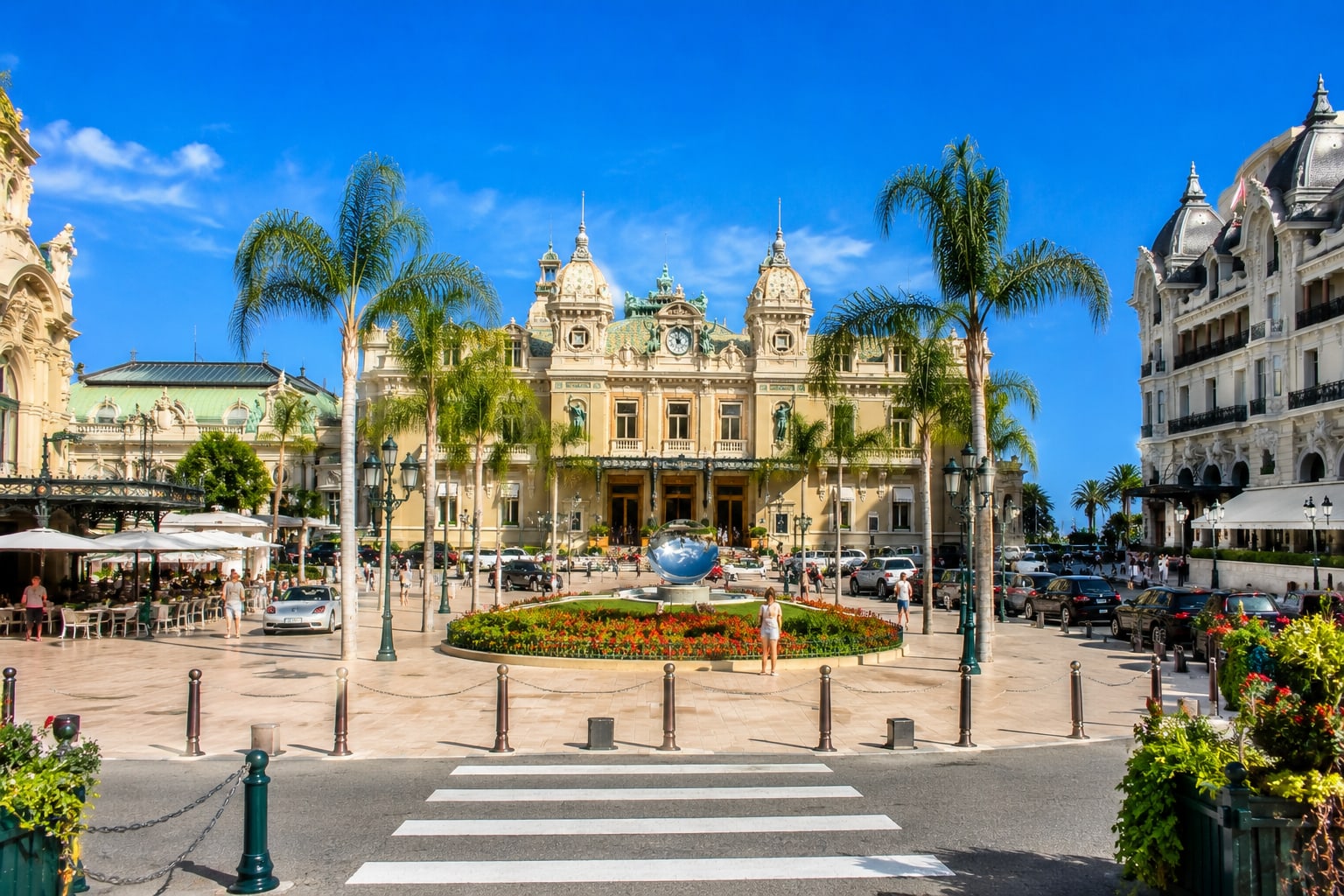
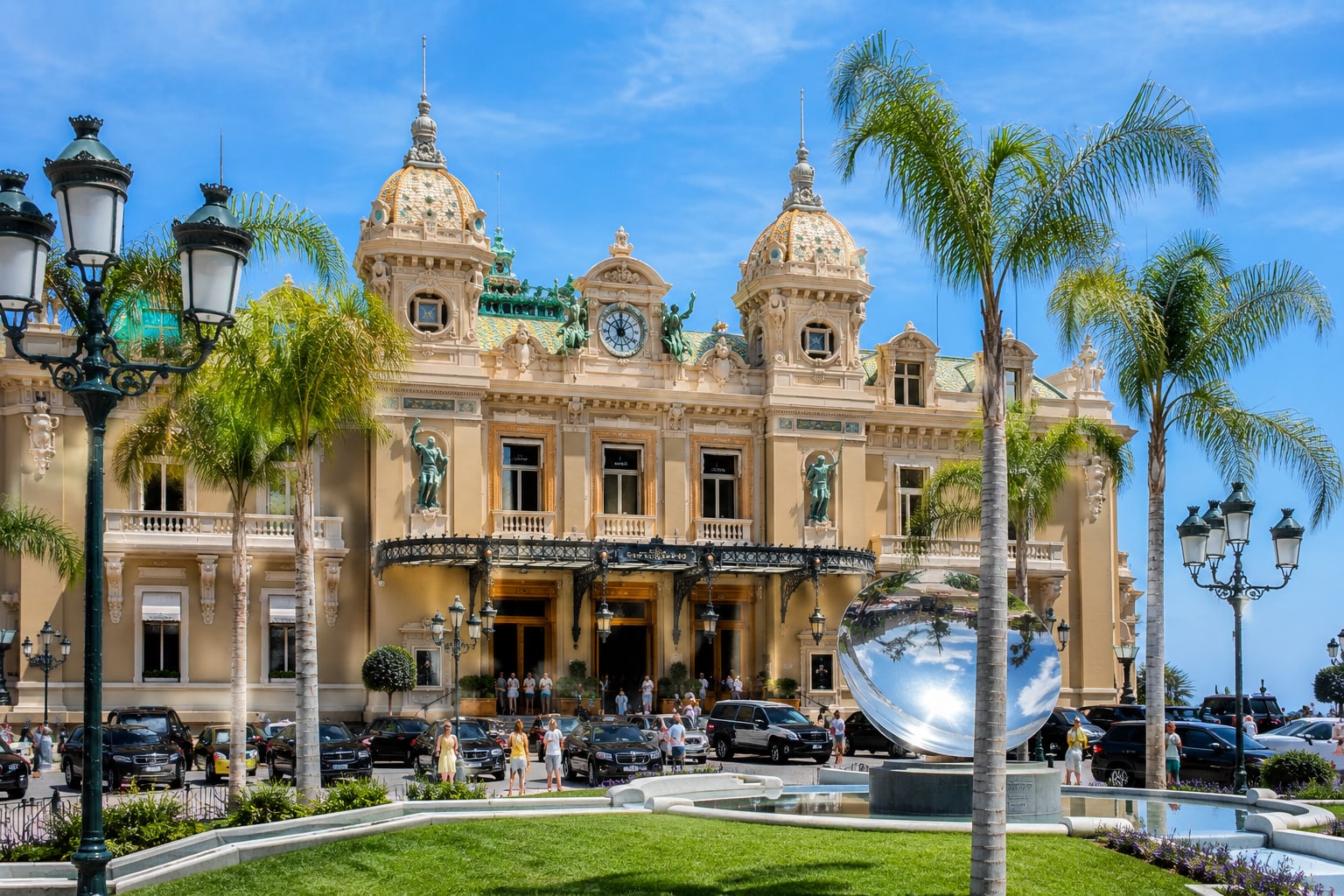
Location: Place du Casino, Monte Carlo. Begin your literary walk at the famous casino square. This is the centre of the historic resort district and the best place to understand the world of luxury travel that forms the background to Rebecca. The square is dominated by the Casino de Monte-Carlo, with its ornate nineteenth-century architecture and impressive entrance. Nearby stand some of the Principality's most prestigious hospitality buildings.
Why start here?
The novel's Monte Carlo chapters depend on the existence of a recognisable world of elegant hotels and wealthy international visitors. Casino Square embodies that world. You don't have to gamble or enter a luxury hotel to appreciate it. Simply stand in the square and look at how the buildings face the central public space. The architectural arrangement communicates prestige. The casino provides the focal point. The hotels and surrounding establishments complete the social environment.
What to notice
Look at the monumental scale of the casino façade. Observe the relationship between the historic buildings, gardens and open space. Consider how a hotel lobby or public terrace could function as a place where strangers become aware of one another. That is the kind of social setting du Maurier uses so effectively.
A historical caution
Today's Casino Square doesn't look exactly as it did in the 1930s. Its most recent major redevelopment was completed in 2020, introducing a substantially redesigned public space. Enjoy the architecture, but don't mistake every modern feature for a detail that the narrator could have seen.
viewpoint
viewpoint
Casino Square Monaco
The public square around Monaco's casino, hotels and evening terraces.
Monte-Carlo
6. Hôtel de Paris: imagining the grand-hotel world
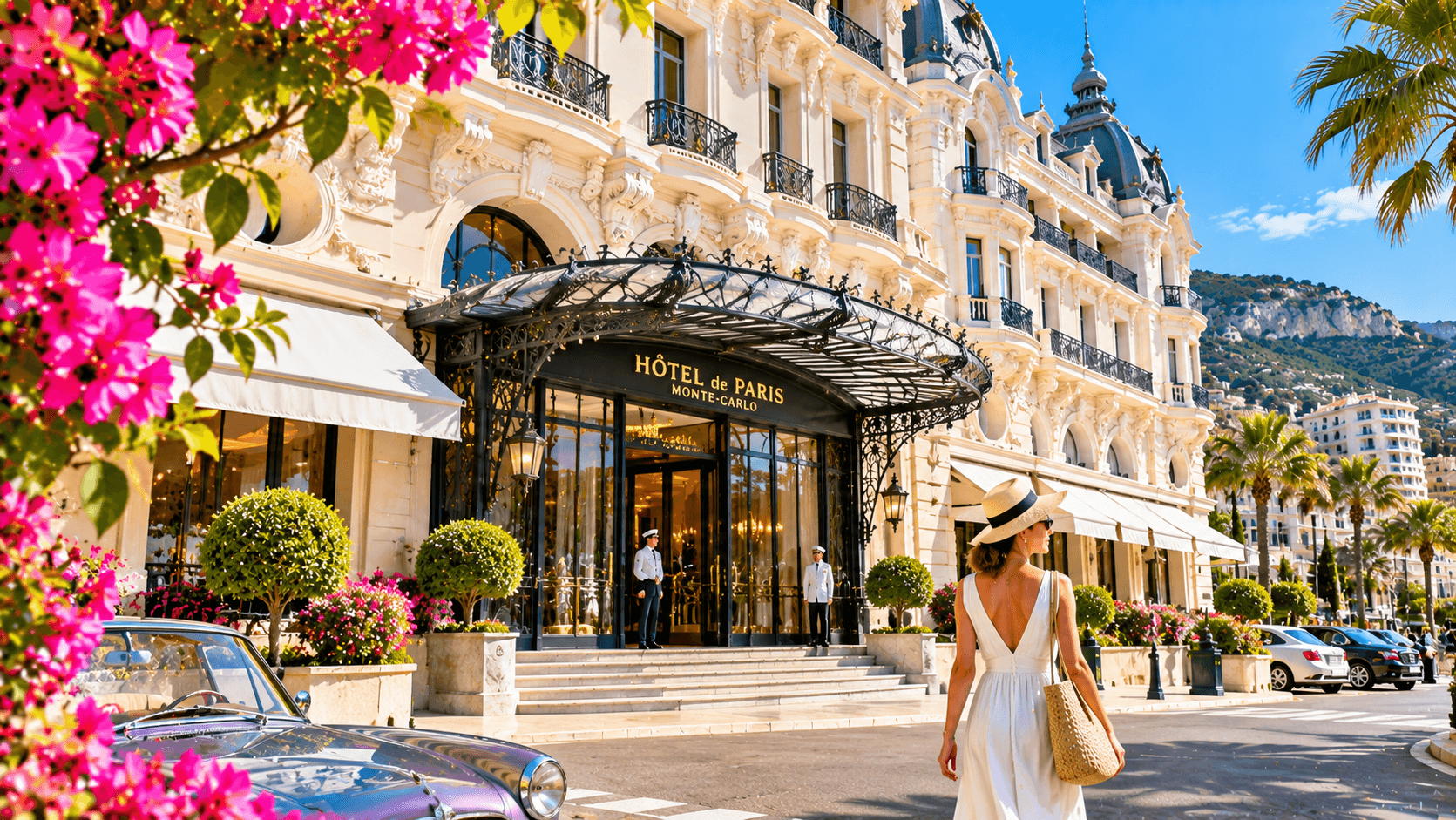
Location: Place du Casino. Facing the square, Hôtel de Paris Monte-Carlo is one of Monaco's most prestigious historic hotels. It opened in 1864 and became closely associated with the development of Monte Carlo as an international luxury resort. Its architecture and reputation make it useful for understanding the kind of hotel society described in Rebecca.
Is this the novel's hotel?
No confirmed evidence identifies Hôtel de Paris as the model for Hôtel Côte d'Azur. We include it because it provides an authentic example of the historic hospitality culture that inspired many Riviera writers.
What makes it interesting?
The building's monumental architecture communicates the prestige of the district. Its position beside the casino reinforces the historic relationship between accommodation, entertainment and fashionable society. For the novel's young narrator, such a world is alluring but intimidating. The physical architecture helps make that emotional experience more understandable.
Can you enter?
Hôtel de Paris is an operating luxury hotel, not a free public heritage museum. Access to rooms, lounges and other spaces depends on hotel and restaurant policies. If you want to enjoy a meal or drink, check the appropriate venue's current reservations and dress requirements. Don't assume that an interest in the novel provides access to private hotel areas.
viewpoint
viewpoint
Hôtel de Paris Monte-Carlo
Historic hotel opened in 1864, viewed from the public square for this literary walk. Not a confirmed model for Rebecca's fictional Hôtel Côte d'Azur. Interior, restaurant and dress conditions need direct confirmation; it is not a free public museum.
Place du Casino, 98000 Monaco
7. Casino de Monte-Carlo: the architecture of privilege
Location: Place du Casino. The Casino de Monte-Carlo is among the Riviera's most recognisable historic buildings. Its architecture reflects the ambition of nineteenth-century Monaco to attract an international clientele. Although the casino isn't established as a particular scene location from the novel, its presence helps explain the larger culture of Monte Carlo.
More than gambling
For an international visitor in the early twentieth century, the casino district symbolised an entire way of life. The combination of hotels, gardens, restaurants, concerts and gaming created a distinctive social environment. A person might come simply to see and be seen. The narrator of Rebecca encounters precisely this kind of hierarchy, where a person's social significance can seem to determine how they're treated.
Visiting
The casino exterior and public square can be appreciated without entering the gaming rooms. Interior visits, gaming access, admission requirements, age restrictions and dress codes are governed by the operator's current rules. Check the official Casino de Monte-Carlo visitor information before planning an indoor visit. Detailed operator access pages returned an access restriction during this review, so current prices, hours and eligibility are not asserted here. For this literary route, an exterior stop is sufficient.
casino
casino
Casino de Monte-Carlo
The classic Monaco casino for architecture, atmosphere and a formal Riviera evening.
Place du Casino, 98000 Monaco
Check current hours before visiting
8. The gardens: a quieter Monte Carlo
After the grand façades, spend some time in the landscaped spaces around the casino district. The nearby gardens provide a useful contrast with the formality of the hotels and gaming rooms. They also introduce another aspect of the novel's Riviera setting: the opportunity to escape public social expectations, at least temporarily.
Jardins de la Petite Afrique
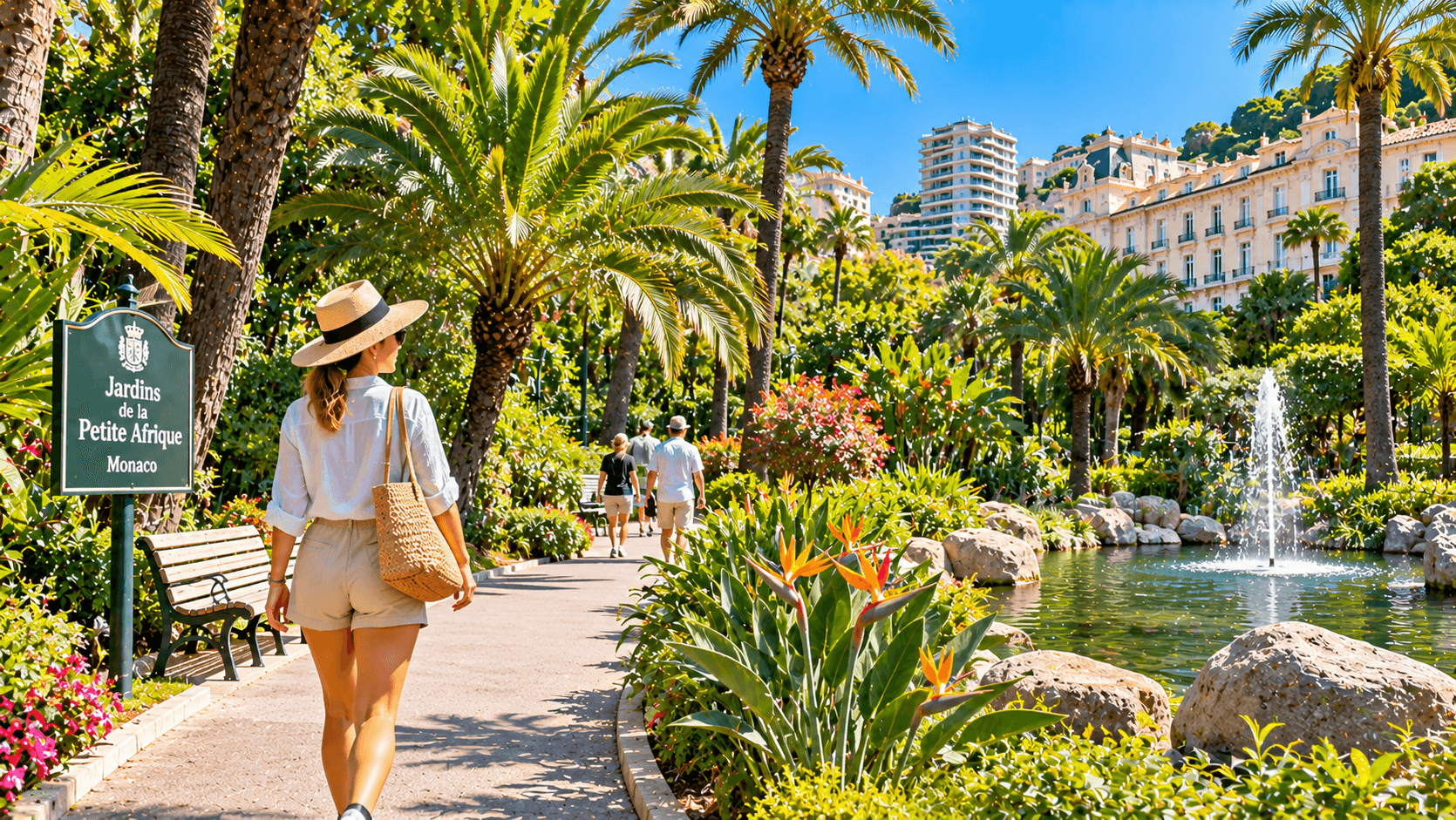
These gardens near the casino district contain subtropical vegetation that reflects Monaco's mild coastal climate. Palm trees, large ornamental plants and carefully maintained landscaping create a calmer environment close to the busy square. The atmosphere is different from the hotel interiors, even though the gardens belong to the same historic resort landscape.
What to think about while walking
In the novel, the narrator's experiences with Maxim create moments that feel separate from the social world controlled by Mrs Van Hopper. A peaceful public garden offers an appropriate place to reflect on that contrast. But the garden is a thematic stop. It isn't presented here as a confirmed location described by du Maurier.
Practical note
Use open public garden paths and respect any temporary closures, maintenance works or event restrictions. The precise layout and planting have changed over time.
garden
garden
Jardins de la Petite Afrique, Monaco
Subtropical part of the casino gardens and a thematic pause for the Rebecca walk, not a verified novel scene. Use open public paths and respect maintenance or event closures; the tourism listing is not a same-day access inspection.
Casino Gardens, Place du Casino, 98000 Monaco
9. The Riviera road: travel as freedom and uncertainty
Cars and excursions matter in the Monte Carlo section of Rebecca. Leaving the hotel gives the narrator an opportunity to experience the region outside Mrs Van Hopper's immediate supervision. The movement away from public rooms into a landscape of roads and changing views becomes part of the relationship between the characters.
Is there a documented driving route?
Not one that can responsibly be reconstructed as an exact modern tourist itinerary from the evidence used for this guide. The novel evokes Riviera travel without providing a reliable set of present-day filming-style location coordinates.
How to experience the idea safely
Instead of trying to identify every bend in the road, consider a separate coastal excursion between Monaco and Menton. The regional railway offers views of the coastline and connections between the towns. You can also explore pedestrian promenades in either destination. A road trip is an option if you have a suitable vehicle, but it shouldn't become an attempt to recreate a fictional journey at speed or stop on unsafe roads for photographs.
The important connection is thematic: movement away from the hotel's rigid social environment.
10. A spoiler-free Rebecca walk through Monte Carlo
This route is intended as a literary interpretation, not an assertion that du Maurier named each of these buildings.
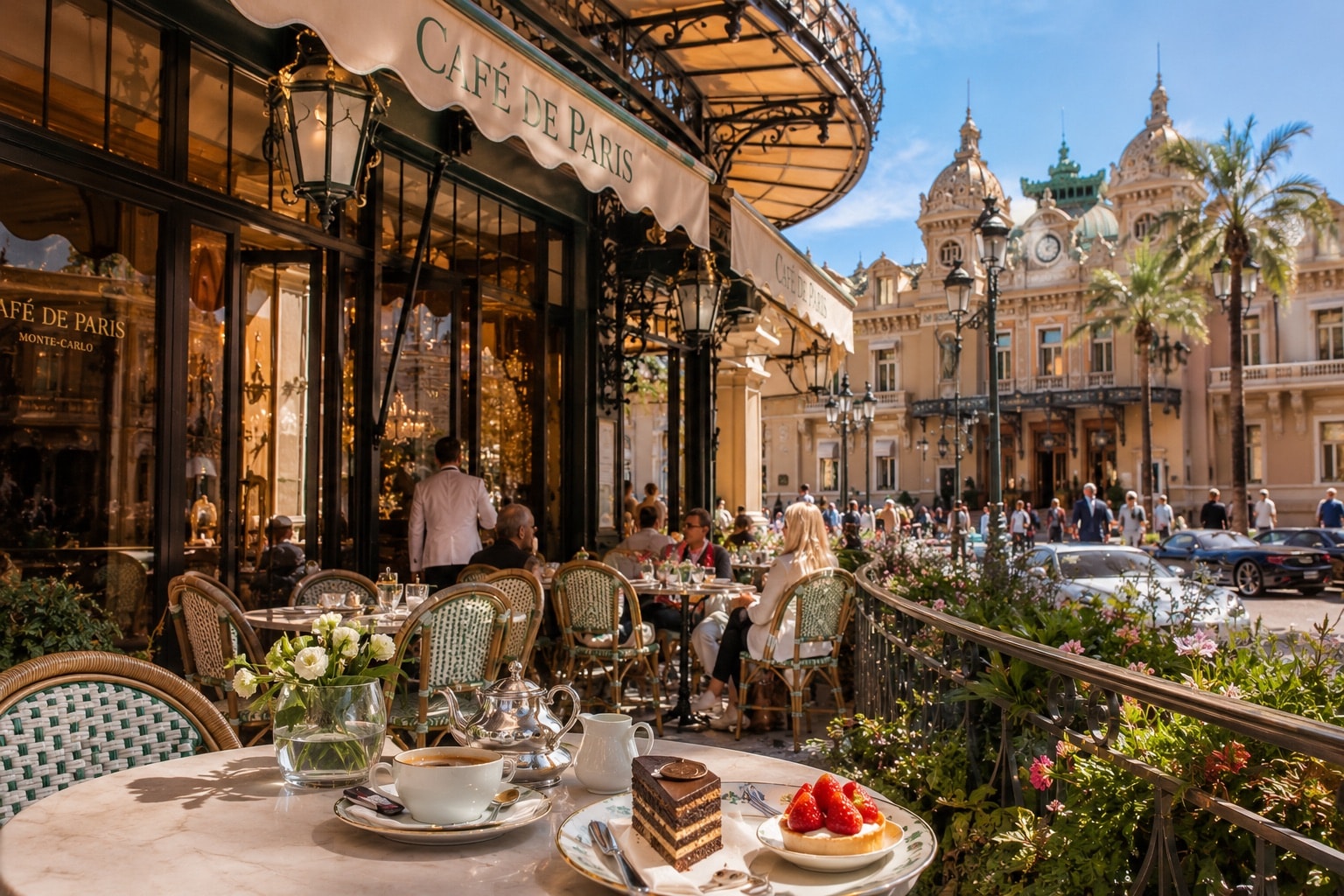
Allow approximately 1–2 hours for the walk itself, or 2–3 hours with a long café stop. The route is compact, though Monte Carlo includes gradients, building entrances and busy streets. This is not a field-certified accessibility itinerary. Café de Paris Monte-Carlo is one optional contextual terrace near the square, not a confirmed scene from the novel. Check its menu, budget, reservation and current access before choosing it; any suitable nearby café can fulfil this stop.
A small literary exercise
As you walk, consider the same place from three perspectives. For Mrs Van Hopper, Monte Carlo is an opportunity to meet important people. For the narrator, it is a workplace in which she often feels invisible. For Maxim, it is a temporary refuge from an entirely different life. The buildings don't change. Their meaning depends on who is looking. That is one of du Maurier's most effective techniques.
| Stop | What to explore | Literary connection |
|---|---|---|
| 1. Place du Casino | Historic centre of Monte Carlo luxury | Social hierarchy and visibility |
| 2. Hôtel de Paris exterior | Grand-hotel architecture | The fictional hotel's social world |
| 3. Casino de Monte-Carlo | Architecture of entertainment and prestige | Wealth, reputation and appearances |
| 4. Jardins de la Petite Afrique | Landscaped public space | A quieter contrast to hotel society |
| 5. Casino district cafés | A reserved or available café terrace | Conversation, observation and social rituals |
restaurant
restaurant
Café de Paris Monte-Carlo
The iconic Monte-Carlo terrace for people-watching, desserts and a more public afternoon tea stop than a dedicated salon de the.
Place du Casino, 98000 Monaco
Check current hours before visiting
11. Visiting Monte Carlo from Menton
Staying in Menton makes this an easy cultural half-day trip. The regional TER connects Menton with Monaco-Monte-Carlo. The ordinary train journey generally takes around 10–15 minutes. The SNCF timetable checked on 3 November 2026 lists direct services taking about 10–12 minutes for the displayed date; check your own travel day, the last return and any replacement transport. This is train time, not door-to-door time.
But Monaco-Monte-Carlo railway station isn't directly on Casino Square, and the final part of the journey involves navigating the station exits and local streets. Allow additional time to reach the casino district.
A simple half-day plan
Late morning: Travel from Menton to Monaco-Monte-Carlo. Before lunch: Explore Place du Casino, the Hôtel de Paris exterior and the casino architecture. Lunch or café break: Choose an establishment that suits your budget rather than assuming you need a luxury dining experience. Early afternoon: Walk through the nearby gardens. Return: Take a confirmed TER service back to Menton.
Do you need a car?
No. For this compact itinerary, public transport and walking are generally more practical than finding parking in central Monte Carlo.
What should you budget?
The principal outdoor literary stops are free to appreciate. Your main expenses are transport, refreshments and any optional indoor admission. Casino entry or a luxury hotel experience isn't necessary to follow the route. Check the actual train fare and any optional venue prices for your date.
Menton to Monaco
Often one of the simplest options, especially during busy event periods.
Useful links
12. Novel, history and film: three different Rivieras
Rebecca has been adapted for the screen more than once. That creates an important distinction for our Books & Films series. The literary geography of the 1938 novel is not identical to the production geography of its adaptations.
The novel: 1938
Monte Carlo is the setting for the narrator's first encounters with Maxim. The majority of the story later unfolds in England. The fictional Hôtel Côte d'Azur should not be treated as a verified real hotel.
Hitchcock's film: 1940
Alfred Hitchcock directed the celebrated adaptation starring Joan Fontaine and Laurence Olivier. Its Riviera setting forms part of the fictional narrative, but the film was produced using studio facilities and other locations. It shouldn't be presented as evidence that particular scenes were filmed in Monaco.
Netflix's Rebecca: 2020
Ben Wheatley's adaptation, starring Lily James and Armie Hammer, uses a combination of real Riviera sites and other buildings to evoke Monte Carlo. Published production accounts identify locations including the former Hôtel Régina in Nice, Villa Eilenroc in Antibes and the Exotic Garden of Monaco. The National Trust confirms that Waddesdon Manor in Buckinghamshire stood in for parts of the Monte Carlo hotel. These film locations are background information, not extra stops on this compact literary walk or evidence of present-day public access.
This provides an excellent example of screen geography. The story says Monte Carlo. The camera may actually be in Nice, Antibes or Buckinghamshire.
Why it matters
A literary walking guide explores the world described in a book. A filming-location guide identifies the actual places used by a production. These are related but different kinds of research. The itinerary above follows the first approach. It is not intended as a frame-by-frame route through the 1940 or 2020 films.
13. Why Monte Carlo is only the beginning
The novel's Riviera chapters offer an attractive contrast with the darker world of Manderley. In Monte Carlo, the narrator is young, uncertain and fascinated by someone whose life appears far beyond her own experience. The hotel environment makes class and personal status highly visible. The Mediterranean landscape suggests freedom and possibility. Yet even here, there are signs that the story won't remain a conventional romance. The narrator's perception is shaped by insecurity. Maxim carries a past that she does not fully understand.
And the glamour surrounding them cannot resolve those difficulties. Once the story moves to England, the physical setting changes dramatically. The house, its rooms and its history become central. The sunny Riviera opening remains important because it establishes the emotional contrast. Without Monte Carlo, the reader would encounter the heroine's later circumstances differently.
14. What kind of reader will enjoy Rebecca?
Readers who enjoy psychological suspense
The novel is deeply interested in uncertainty, memory and the way people interpret incomplete information. The atmosphere matters as much as the plot.
Readers of Gothic fiction
Manderley belongs to a long tradition of houses that seem to possess identities of their own. Its architectural presence is essential to the story.
Readers interested in class and identity
The narrator's position as a paid companion in a wealthy hotel is an important part of the novel's opening. Her sense of inferiority shapes how she experiences the people around her.
Readers who enjoy complicated romantic relationships
The relationship begins in an attractive Riviera setting, but du Maurier isn't offering a simple holiday romance. Power, grief and unequal experience shape the characters' interactions.
Travellers interested in the Riviera's literary history
Even though Rebecca isn't mainly set in Monaco, its opening provides a rewarding perspective on Monte Carlo's historic luxury culture. It's particularly interesting alongside other Riviera fiction about British visitors, grand hotels and private estates.
15. What to read before visiting
If you're new to Rebecca, read the opening chapters through the narrator's time in Monte Carlo. They establish the social atmosphere and introduce the characters without requiring you to read the entire novel before your trip. Pay attention to the descriptions of the hotel and the narrator's relationship with Mrs Van Hopper. Consider how the novel uses wealth and social attention to establish power.
You may also enjoy reading a short biography of Daphne du Maurier to understand her relationship with Cornwall and its country houses. But don't confuse the author's own biography with the narrator's fictional experiences. Du Maurier's most important personal connection to the novel's landscape lies in Cornwall rather than Monaco.
Frequently asked questions
Is Rebecca set in Monte Carlo?
Its early remembered chapters take place in Monte Carlo, where the unnamed narrator meets Maxim de Winter. Most of the novel's principal action later takes place at Manderley in England.
Is the Hôtel Côte d'Azur a real hotel?
It's a fictional hotel in the novel. No specific present-day Monte Carlo establishment has been reliably identified as its real counterpart.
Did Daphne du Maurier write Rebecca in Monaco?
No. Du Maurier began writing the novel in 1937 while living in Egypt and completed it after returning to England. Monte Carlo is a fictional setting, not an established writing location.
Is Manderley in Monaco?
No. Manderley is the fictional English country estate at the heart of the novel, associated with Cornwall.
Can you visit the real places behind the Monte Carlo chapters?
Yes. Place du Casino, historic hotel exteriors and public gardens provide a useful sense of the resort environment. They are contextual locations, not documented equivalents of every fictional scene.
Is the Casino de Monte-Carlo in Rebecca?
The novel evokes Monte Carlo's fashionable hotel and resort society. The casino is included in this itinerary for historical context, not as a verified scene location.
Can you visit from Menton without a car?
Yes. Regional trains connect Menton with Monaco-Monte-Carlo, and the casino district can be reached from the station on foot or by suitable local transport.
Were the film adaptations shot in Monaco?
The answer depends on the adaptation. The 2020 film used locations in Monaco and elsewhere, including Nice, Antibes and England. The films' actual locations should not be confused with the novel's geography.
Does this guide contain spoilers?
No major plot revelations or ending details are included. It discusses the novel's opening premise and central themes.
Final thoughts: the Riviera before the shadows
In Rebecca, Monte Carlo represents a world of sunlight, elegance and apparent possibility. But Daphne du Maurier uses that beauty for more than atmosphere. The luxurious hotel is a place of social hierarchy. The narrator's position within it reveals her insecurity. And the meeting that changes her life begins amid circumstances she doesn't fully control. For visitors to Monaco today, the real Casino Square and surrounding hotels provide a fascinating connection with that vanished world of European luxury travel.
You can explore the architecture, walk through the gardens and imagine the expectations that governed the lives of wealthy visitors and those employed to accompany them. But remember that this is only the beginning of Rebecca. The Riviera introduces the romance. Manderley gives the novel its darker identity. And the distance between the two is one of the reasons du Maurier's story remains so powerful.
Sources and further reading
Daphne du Maurier literary website
Rebecca: Background and Synopsis, Daphne du Maurier website
The Bookseller: Rebecca, Published Extract
British Vogue: Filming Locations of Rebecca (2020)
National Trust: Rebecca (2020) Filming Locations
SNCF Connect: Menton to Monaco
Monte-Carlo SBM: Resort History and the 2020 Square
Official Regional Tourism: Casino Gardens and Petite Afrique
AzurMenton: Books & Films and Other Travel Guides
Literary background, published history and transport sources reviewed on 3 November 2026. Detailed casino, hotel and café operator pages could not be independently read during this review; confirm their current rules directly. The garden listing is not a same-day inspection. The route is an original thematic walk inspired by the opening chapters of Rebecca, not a reconstruction of named addresses from the novel. The fictional Hôtel Côte d'Azur has not been identified with a real hotel. Current transport and venue-access arrangements should be checked before travelling.