A writer arrives in Menton
Menton is a beautiful place to spend a few months. The Mediterranean is close, the gardens are extraordinary, and the hills seem to offer a suitable backdrop for almost any ambitious literary project. At least, that's how a writer's residency might look from the outside. In Janet Frame's In the Memorial Room, the reality is rather less peaceful. Harry Gill, a moderately successful New Zealand writer of historical fiction, arrives in Menton after receiving the Watercress-Armstrong Fellowship.
The award is intended as a living tribute to the late poet Margaret Rose Hurndell, who once lived and worked in the town. Harry is supposed to write. Instead, he finds himself surrounded by people with strong opinions about literature, memory, artistic obligation and what a visiting writer ought to do with his time. Even the Memorial Room, supposedly provided as a place to work, proves problematic.
The result is an unusually sharp, often very funny novel about literary celebrity, creative freedom and the strange burden of being expected to produce something important. And behind the satire lies a real story. Janet Frame herself held a literary fellowship in Menton for 1974, honouring Katherine Mansfield. She worked in the Memorial Room associated with Villa Isola Bella, where Mansfield had lived decades earlier.
Frame's experiences helped inspire In the Memorial Room, which she completed in the 1970s but chose not to publish during her lifetime. The novel finally appeared in 2013, nine years after her death. Today, you can explore the real Menton behind its fictional world.
1. The book: In the Memorial Room by Janet Frame
In the Memorial Room Author: Janet Frame (1924–2004) Written: 1974, during her stay in Menton First published: 2013, posthumously Genre: Literary fiction, black comedy, social satire Setting: Menton, on the French Riviera Janet Frame is one of New Zealand's most celebrated writers. Her fiction is known for its distinctive language, unconventional narrative techniques and fascination with the complicated relationships between individuals and the societies around them.
In the Memorial Room is an excellent introduction to her humour. The novel begins with an apparently enviable opportunity. A writer has been awarded a prestigious fellowship in a beautiful Mediterranean town. He has time to work and a literary predecessor whose reputation is supposed to inspire him. But the people surrounding him seem considerably more interested in the idea of literary greatness than in the practical business of writing.
Harry Gill becomes an awkward participant in a world of admirers, benefactors, expectations and inherited reputations. What should have been a retreat becomes something far less private. The publisher describes the book as a black comedy, and that description is well deserved. Yet its humour also raises serious questions. What happens when a writer becomes a monument?
Who owns a famous author's memory? And can artistic creativity survive when everyone insists on celebrating it?
Where to find the book
In the Memorial Room: Text Classics, publisher's edition
The publisher provides a description, edition details and purchasing options. The 2015 Text Classics paperback has 240 pages. You don't need to read the novel before visiting Menton. But knowing its central situation makes one particular place, Villa Isola Bella, considerably more interesting.
2. Why did Janet Frame come to Menton?
Frame's connection with Menton began through the Katherine Mansfield Fellowship. The programme was created to give New Zealand writers time and financial support to work in the French town associated with Mansfield's final years of productive writing. The first fellowship was awarded in 1970 to poet Owen Leeming. Janet Frame was selected as the 1974 fellow.
The award was announced in 1973 for her 1974 fellowship; contemporary reporting places her departure for France in late November 1973. The fellowship provided an opportunity to live and write away from ordinary responsibilities, with access to a room commemorating Katherine Mansfield.
The reality of a literary retreat
The Memorial Room was located beneath Villa Isola Bella. It was small and basic. Accounts of the residency describe difficulties including the absence of running water and toilet facilities in the room. These were not ideal working conditions. The contrast between the prestige of the award and the practical inconveniences is important. It helps explain why Frame found such fertile material for a novel about the absurdities of literary commemoration.
The fellowship was designed to honour one great writer by supporting another. But honouring the past can create its own expectations. A new writer may be invited to work in a place associated with a celebrated predecessor, only to discover that the predecessor's reputation dominates the room. Frame transformed this uncomfortable situation into fiction.
3. Katherine Mansfield: the literary presence behind the novel
To understand In the Memorial Room, it's worth knowing something about Katherine Mansfield. Mansfield was born in New Zealand in 1888 and became one of the most important innovators of the modern short story. During the final years of her life, tuberculosis forced her to search for places where she might work in relatively comfortable conditions. She spent time in Menton during 1919–1921, including a stay at Villa Isola Bella from September 1920 to May 1921.
There, she wrote, revised and corresponded with friends and fellow writers while dealing with increasingly serious illness. Her time in Menton is associated with some of her significant literary work, including The Daughters of the Late Colonel.
What is the connection with Janet Frame?
Mansfield died in 1923, more than fifty years before Frame's residency. By the time Frame arrived, Mansfield had become a major literary figure whose memory was celebrated through the fellowship. The Memorial Room represented that commemoration. But there's a revealing complication. The room used by visiting writers wasn't Mansfield's original writing room.
It was a later memorial space, arranged to evoke her presence. This is where the relationship between history, memory and imagination becomes particularly interesting. Mansfield had lived and written in the villa. Frame was given a room dedicated to Mansfield's memory. And Harry Gill, Frame's fictional protagonist, is expected to write beneath the symbolic presence of an invented deceased poet.
Each layer changes the meaning of the one before it.
4. Where biography ends and satire begins
In the Memorial Room draws on Janet Frame's experiences, but it isn't a documentary account of her residency. Harry Gill is a fictional character. Margaret Rose Hurndell, the dead poet whose memory dominates the novel, is fictional. The Watercress-Armstrong Fellowship is fictional. They are recognisable transformations of a real situation, not identities that should be treated as interchangeable with Frame, Mansfield and the actual fellowship.
Why this distinction matters
A novel can exaggerate situations, combine personalities, invent conversations and reshape events to explore an idea. Frame's fiction shouldn't be used to identify real Menton residents as models for unflattering characters without documentary evidence. Nor should every inconvenience suffered by Harry Gill be attributed directly to Frame. The relationship is more creative and more interesting than that.
Frame took a real experience and used it to investigate the way institutions, admirers and cultural expectations can overwhelm the individuals they claim to celebrate. Her novel is about Menton, but also about what happens when a living writer encounters the machinery of literary memory.
| Historical reality | Fictional transformation |
|---|---|
| Janet Frame receives the Katherine Mansfield Fellowship | Harry Gill receives the Watercress-Armstrong Fellowship |
| Katherine Mansfield is the celebrated literary predecessor | Margaret Rose Hurndell is the memorialised poet |
| Villa Isola Bella has a memorial writing room | Harry is expected to work in the fictional Memorial Room |
| A writer encounters the practical and social realities of a residency | The novel develops a satire of expectation, reputation and literary culture |
5. Villa Isola Bella: the most important real location
Area: Garavan, eastern Menton. Villa Isola Bella is the central historical location connecting Janet Frame, Katherine Mansfield and In the Memorial Room. Mansfield stayed here in 1920–1921. Decades later, the property's lower-level Memorial Room became associated with the fellowship that brought New Zealand writers to Menton. Frame worked there during her residency.
The building therefore connects two different generations of New Zealand literature.
The room that became a symbol
It is tempting to imagine a perfectly preserved writer's study, with the same desk, chair, books and view that Mansfield would have known. That isn't what the Memorial Room represented. Research into the villa's literary heritage explains how the lower-level space was adapted long after Mansfield's stay. It became a place where later writers could work in proximity to a celebrated predecessor's memory.
This raised an important question about literary heritage. Does recreating the atmosphere of a writer's life bring us closer to understanding their work? Or can the commemorative setting become a distraction from the writing itself? Frame's novel turns that question into comedy.
Can you visit Villa Isola Bella?
Villa Isola Bella should not be treated as a conventional museum with regular walk-in admission. The currently available historical and tourist information does not establish a dependable public programme allowing independent visitors to enter the Memorial Room. The property has restricted-access and private areas. Respect gates, residential entrances and any signs.
Do not enter the grounds or assume that the fellowship's historical connection means the building is open to tourists. For an independent visit, focus on Garavan's public streets and landscape. The strongest part of this literary journey isn't necessarily entering the exact room. It's understanding why the room mattered.
viewpoint
viewpoint
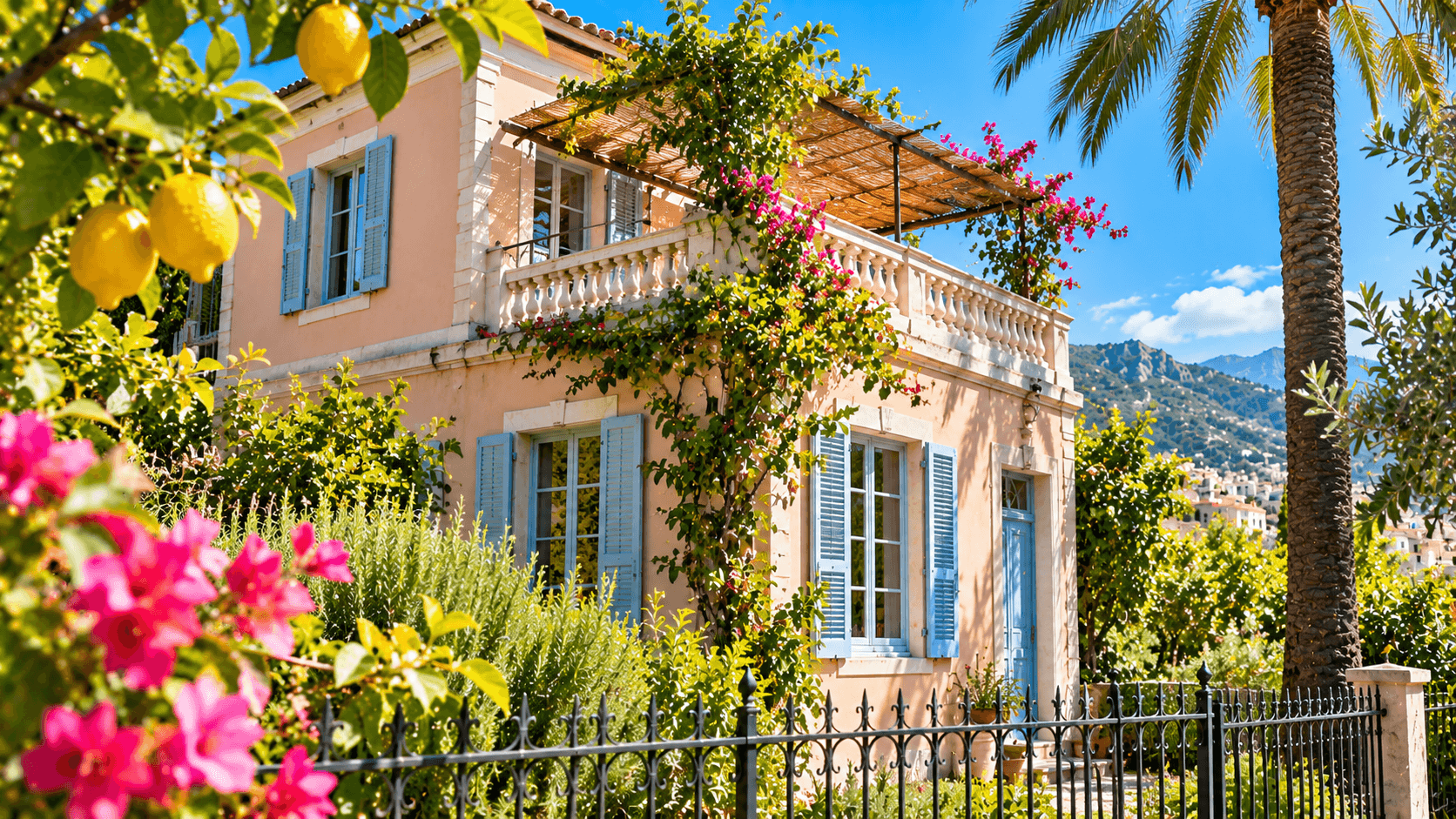
Villa Isola Bella
Katherine Mansfield's Garavan home is literary heritage, not a confirmed walk-in museum. View only from public spaces; respect residential doors and grounds.
Garavan, Menton; public-street context only
Check current hours before visiting
6. The literary walk: discovering Janet Frame's Garavan
The following route is an original AzurMenton itinerary. It connects the real geographical and historical context of the novel, rather than claiming to reconstruct Harry Gill's fictional movements. You can enjoy it without reading In the Memorial Room.
Stop 1. Menton-Garavan: arrive where two literary worlds meet
Starting point: Menton-Garavan railway station. Begin with the neighbourhood that links the historic villa to the wider Riviera. Garavan lies on Menton's eastern side, close to the Italian border. Its railway station, coastal roads, gardens and hillside villas reflect the town's long history of international visitors. During the late nineteenth and early twentieth centuries, this district became associated with wealthy winter residents and people seeking the mild Mediterranean climate.
Writers were among them.
What to notice
Look towards the hills above the railway and the sea below. The contrast between the practical railway infrastructure and the elegant villas is revealing. Literary history often presents writers' homes as peaceful retreats isolated from the world. In reality, they existed in ordinary neighbourhoods where trains arrived, people shopped and residents dealt with everyday problems.
That tension suits Frame's novel particularly well.
Stop 2. The Isola Bella setting: a house with more than one history
From the public streets of Garavan, consider the location of Villa Isola Bella and its connection with both Mansfield and Frame. The villa is the historical anchor of the walk, but not a guaranteed visitor attraction. Only approach viewpoints and roads that are publicly accessible. Do not seek entry to the property without permission.
The literary question
If a famous writer lived in a house, what exactly should later visitors expect the building to preserve? The original furniture? The actual working room? The atmosphere? Or merely the knowledge that something important once happened there? It's a question that runs through both the historical fellowship and Frame's fiction.
Stop 3. Boulevard de Garavan: the world of winter visitors
Location: Boulevard de Garavan. The boulevard developed during the 1880s as part of Menton's expansion into a fashionable winter resort. It became known for its villas, gardens and panoramic views. Today, it's an excellent place to explore the architectural environment that surrounded the writers who came to Menton.
What to notice
Look at the relationship between the villas, garden walls, vegetation and views towards the Mediterranean. Many properties were designed to offer privacy, sunlight and an escape from the colder cities of northern Europe. The same landscape could represent luxury to one visitor, medical necessity to another and professional opportunity to a third. For Mansfield, health and the ability to continue writing were central concerns.
For Frame, Menton was a place to work under the unusual conditions of a literary fellowship.
Practical caution
Boulevard de Garavan is not a level pedestrian promenade. It includes slopes and sections where road traffic and pedestrian space require attention. The full boulevard is several kilometres long, so there's no need to walk its entire length. Choose a suitable section and turn back according to your comfort and mobility.
Stop 4. The Garavan waterfront: a different perspective
Descend using a suitable public route towards the waterfront around Promenade Reine Astrid. The sea provides a striking contrast to the more enclosed hillside streets. This is a good place to pause and consider how different writers can interpret the same landscape. For one person, the Mediterranean may represent beauty and freedom. For another, it may be a reminder of distance from home.
For Harry Gill, the fictional setting of Menton becomes inseparable from uncomfortable social expectations. A landscape doesn't determine what a person experiences. The people and circumstances around them matter just as much.
What to do here
Walk along the public waterfront. Find a suitable place to sit. Look back towards the hills and the villas partly hidden among the trees. You don't need a museum ticket to appreciate the setting.
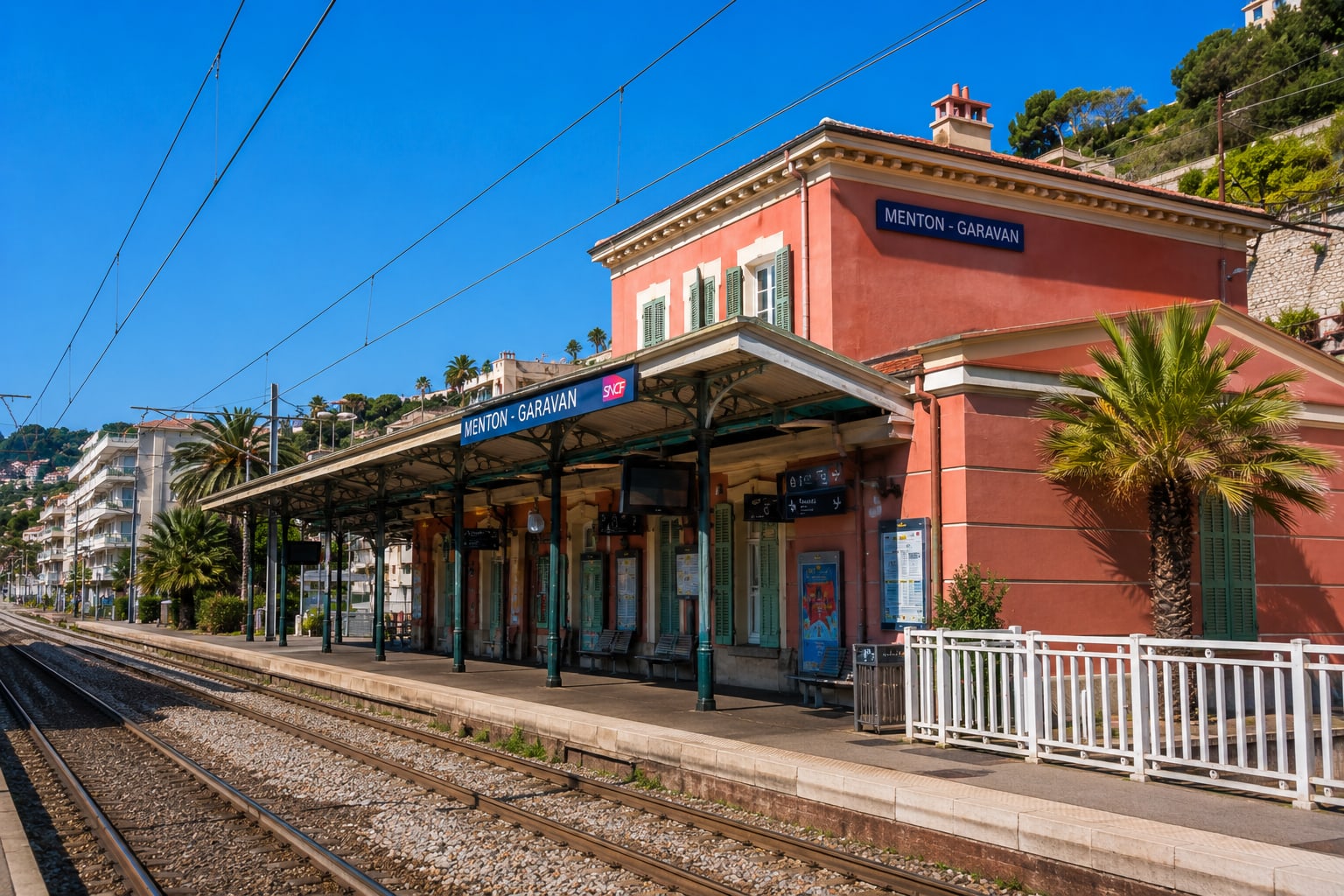
station
station
Menton Garavan Station
Eastern Menton station useful for Garavan, the port and some Italian Riviera train plans.
Garavan, 06500 Menton
Check current hours before visiting
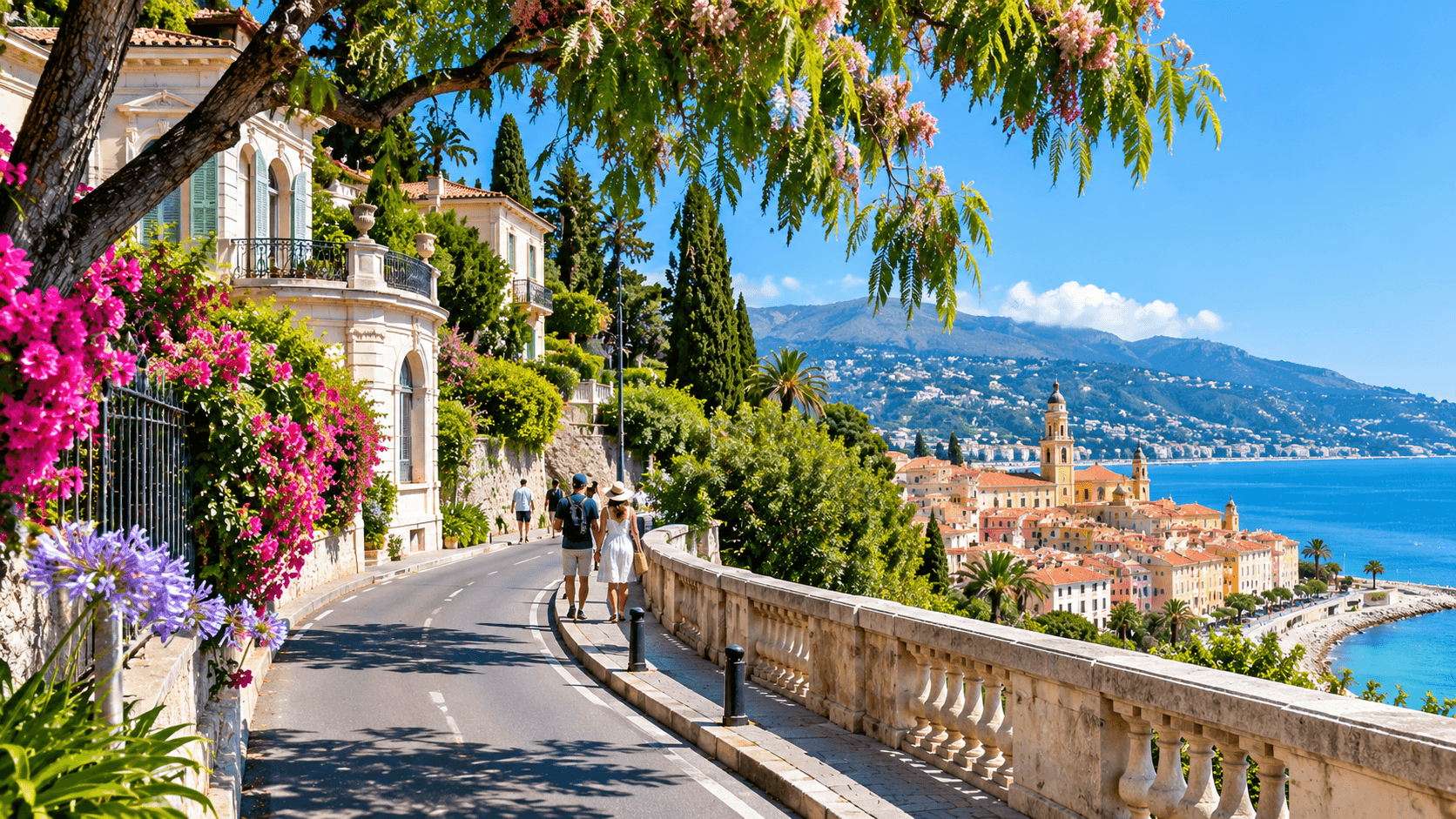
viewpoint
viewpoint
Boulevard de Garavan
Historic hillside boulevard above Garavan, with villas and bay views. Slopes, traffic and variable pedestrian space: choose a suitable public section, not an assumed step-free route. Villa grounds remain private.
Boulevard de Garavan, 06500 Menton
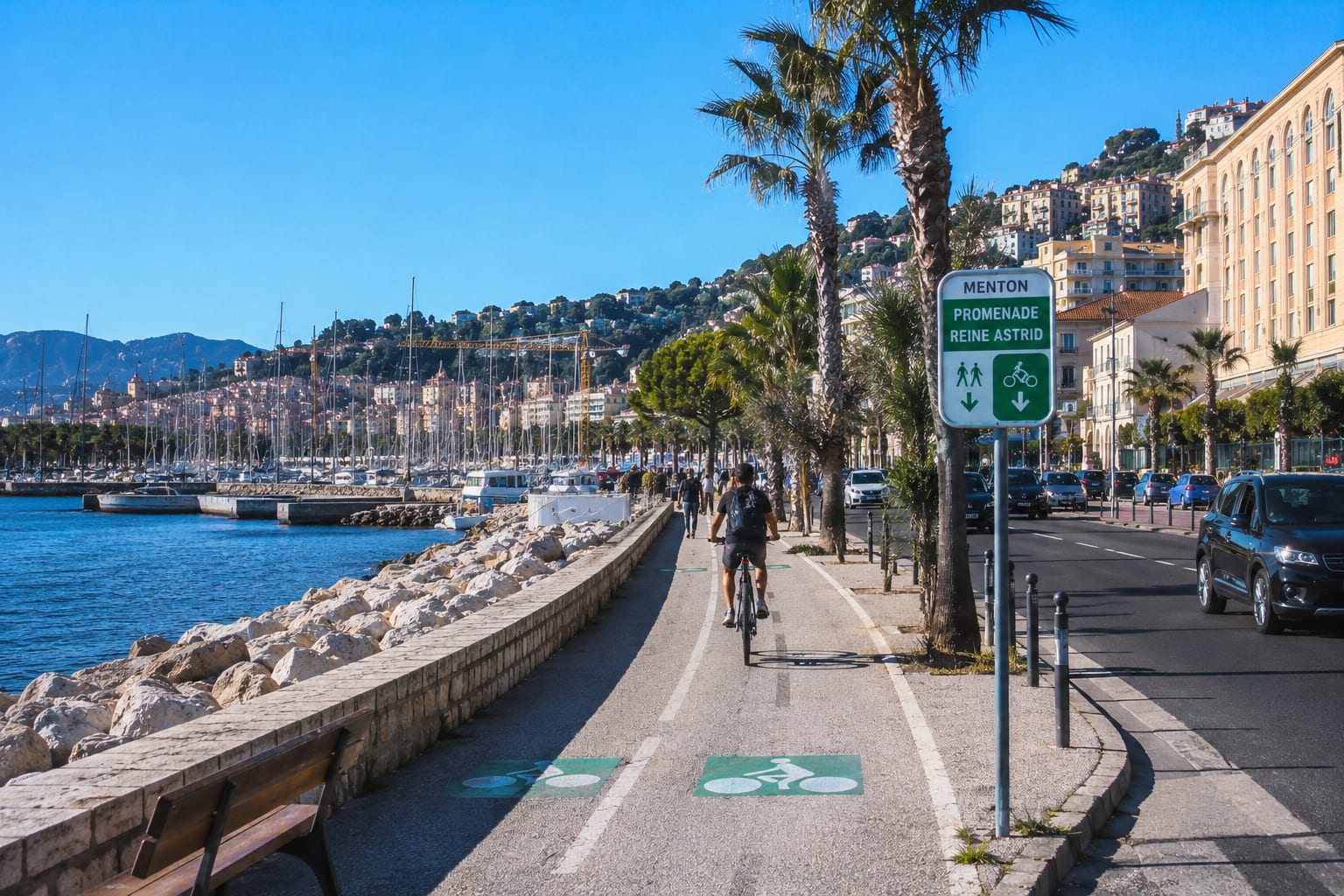
cycle route
cycle route
Promenade Reine Astrid
Scenic Garavan-side promenade used by the official local cycling route toward the border.
Garavan seafront
7. A meaningful extension: Val Rahmeh
Location: Avenue Saint-Jacques, Menton. If you'd like to add an actual historic garden visit, consider Val Rahmeh. This is not presented as a confirmed setting of In the Memorial Room or as a place Janet Frame is known to have visited. It's an optional extension that helps visitors understand the botanical environment of Garavan. The garden contains tropical and subtropical plants made possible by Menton's unusually mild local climate.
It's also connected with the history of international residents who transformed the town's villas and gardens.
Why add it?
Mansfield's letters from Menton frequently reveal her attention to gardens, plants, weather and the quality of light. Walking through a historic botanical garden can help visitors appreciate the natural environment that contributed to Menton's appeal. However, the garden's own history should not be confused with that of Villa Isola Bella.
Visiting information
Val Rahmeh is a ticketed botanical garden with seasonal opening hours. Its operator announces closure from 2 to 28 November 2026 for irrigation works. Verify reopening before travelling. The grounds contain gradients and uneven paths, so check access requirements if mobility is limited.
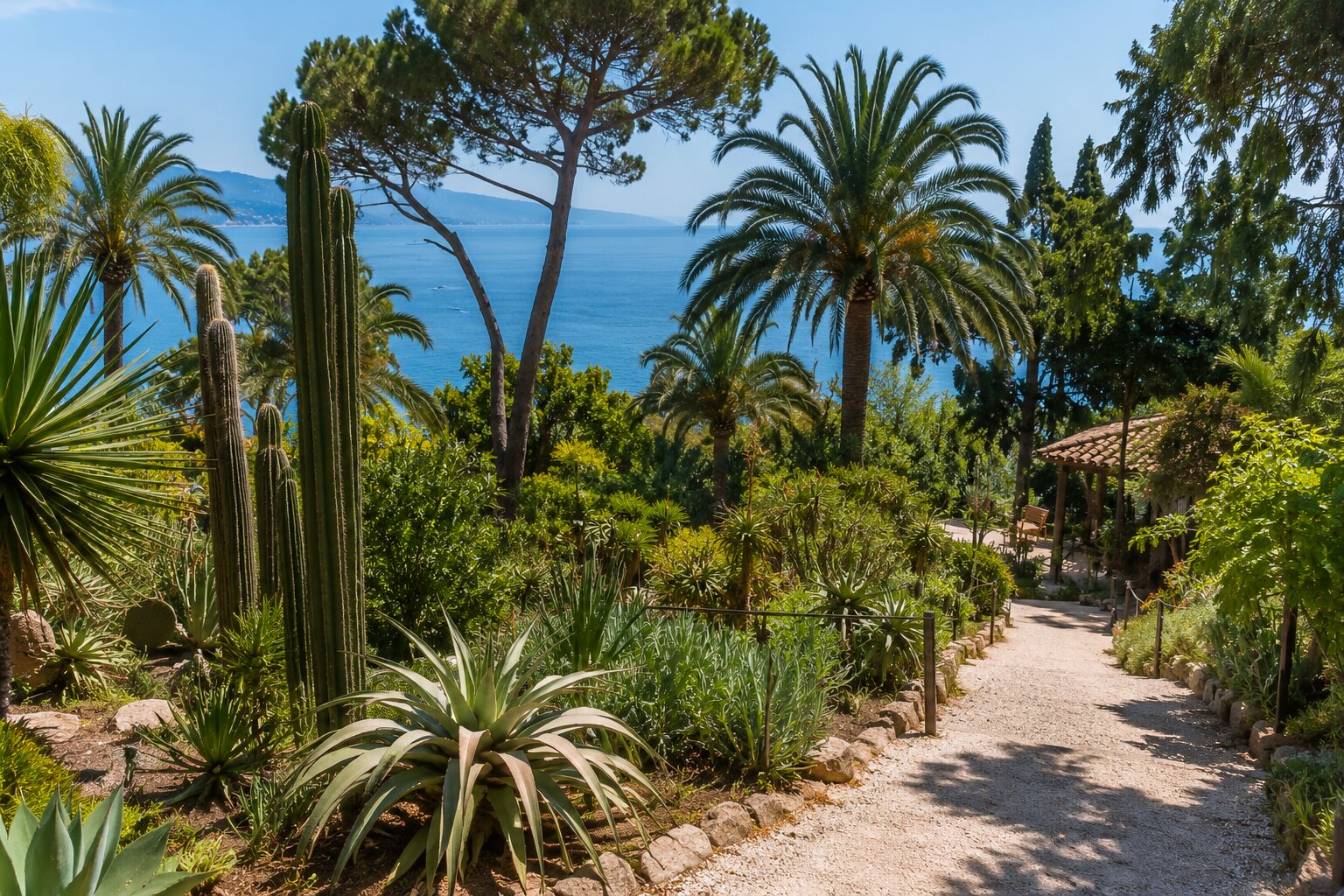
garden
garden
Jardin Botanique Val Rahmeh
A botanical stop to consider for garden lovers and slower itineraries.
Avenue Saint-Jacques, 06500 Menton
Check current hours before visiting
8. How long should you allow?
These are planning allowances rather than field-measured walking times. The precise route should be chosen according to terrain, weather and any access restrictions. The walk deliberately avoids treating a private historic property as an open attraction.
| Version | What to include | Time |
|---|---|---|
| Short literary visit | Menton-Garavan, public Isola Bella context, waterfront | 45–75 min |
| Fuller literary walk | Garavan hillside section, literary context, waterfront | 1.5–2 hours |
| Literary and garden afternoon | Garavan walk plus Val Rahmeh, if open | 2.5–3.5 hours |
9. What to read before visiting
You don't need to carry several books to enjoy the route, but three texts provide a particularly rewarding introduction.
In the Memorial Room, Janet Frame
Begin with the novel itself. Its opening situation is enough to establish the connection between the fictional fellowship, the memorial room and the town. You can read it as a black comedy about literary life, but there's more beneath the humour. Frame is interested in how language, reputation and institutional expectations shape a writer's identity.
The Daughters of the Late Colonel, Katherine Mansfield
This celebrated short story is closely associated with Mansfield's time at Villa Isola Bella. It's a useful introduction to her distinctive fiction: the subtle observations, strained relationships and extraordinary significance of seemingly ordinary details. Reading it before visiting Garavan creates a connection with the writer whose memory eventually inspired the fellowship.
Katherine Mansfield's letters and journals
Mansfield's own writings provide a different kind of evidence. Unlike a later memorial, they record her observations and concerns during her lifetime. They offer glimpses of her working conditions, health, daily routines and the landscape around her. They also remind us that literary history is made from incomplete surviving records, not perfect reconstructions.
For readers wanting to go further
Academic studies of In the Memorial Room have explored Frame's relationship with Mansfield, the pressure of literary influence and the satire of commemoration. Janet M. Wilson's research is particularly relevant to these themes. These critical sources can enrich a second reading, but they're not necessary preparation for enjoying the novel or the walk.
10. Why this is more than a novel set in Menton
Many novels use beautiful places as attractive backgrounds. In the Memorial Room does something more interesting. Menton provides the conditions for the novel's central problem. The writer has been invited here because another writer once lived here. The place is meant to inspire creativity because of its connection with a celebrated literary predecessor.
But that same history creates a network of expectations. Harry Gill is expected to respect the deceased poet, appreciate the honour and justify the institution's confidence in him. The beauty of the town doesn't remove those pressures. In fact, the contrast makes them more visible. Frame's Menton is therefore not simply a holiday destination. It's a place where a living artist must negotiate the weight of somebody else's reputation.
And that's what makes the book such a rewarding companion to a real visit. You begin by looking for the places. You may end up thinking about how we remember the people who lived in them.
Frequently asked questions
Is In the Memorial Room set in Menton?
Yes. The novel is set in Menton, where its protagonist Harry Gill arrives for a literary fellowship honouring a deceased poet.
Did Janet Frame actually live in Menton?
Yes. She held the Katherine Mansfield Fellowship in 1974 and spent time in Menton, where she wrote the novel.
Is Harry Gill based on Janet Frame?
The fictional situation draws on Frame's experience of a Menton literary residency, but Harry Gill is not a straightforward biographical portrait. The book transforms real circumstances into satire and literary experimentation.
Who is Margaret Rose Hurndell?
She is a fictional deceased poet whose memory is commemorated by the fellowship in the novel. Her role echoes that of Katherine Mansfield in the historical residency.
What is Villa Isola Bella?
A historic villa in Menton's Garavan district where Katherine Mansfield lived and worked in 1920–1921. A memorial writing room later became associated with the Katherine Mansfield Fellowship.
Did Katherine Mansfield write in the Memorial Room?
No. The room associated with the fellowship was a later memorial adaptation, not her original working room.
Can you visit the Memorial Room?
Regular independent public access has not been confirmed for this guide. Visitors should not assume entry is permitted and must respect private-property restrictions.
When was In the Memorial Room published?
The novel first appeared posthumously in 2013. Text Publishing released its Text Classics edition in 2015.
Is the guide spoiler-free?
Yes. It discusses the novel's premise, historical background and principal themes without revealing major plot developments or the ending.
Is the walk worth doing if I haven't read the book?
Yes. The route offers a literary introduction to Garavan, Menton's historic winter-villa district and the lives of two significant New Zealand writers.
Final thoughts: the writer, the room and the town
Janet Frame came to Menton to write. The fellowship commemorated Katherine Mansfield, who had lived and worked in the same town more than fifty years earlier. A room was prepared to connect the two writers across time. But that connection was never as simple as a preserved desk or a commemorative plaque might suggest. The room was not Mansfield's original study.
Frame's own working conditions were imperfect. And the novel she produced became a darkly comic examination of the very idea of literary commemoration. That makes In the Memorial Room a particularly intriguing book to bring to Menton. Walk through Garavan, look towards the villas and enjoy the Mediterranean views. Remember that these were real places where writers worked, worried, corresponded and tried to make ordinary life possible.
Then consider how much of their experience a building can actually preserve. The answer isn't straightforward. Janet Frame knew that. It's one of the reasons her Menton novel remains so interesting.
Sources and further reading
Contemporary report on Frame's fellowship and departure, National Library of New Zealand
James McNeish: Janet Frame Memorial Lecture, New Zealand Society of Authors
Janet Frame, In the Memorial Room: Text Classics, Text Publishing
Janet Frame: Official Career Timeline
National Library of New Zealand: Katherine Mansfield Menton Fellowship
Katherine Mansfield Fellowship Recipients, Te Ara
Janet M. Wilson: The Anxiety of Influence, Janet Frame and Katherine Mansfield
Brigid Magner: Writing from the Cellar, Revisiting Villa Isola Bella
Menton Tourist Office: Belle Époque Route and Garavan
Literary and historical research reviewed on 31 October 2026. The walking itinerary is an original editorial route, not a scene-by-scene reconstruction of the novel. Villa Isola Bella and its Memorial Room do not have confirmed regular public visiting hours. Always respect private property and check attraction opening conditions before travelling.