A murder investigation beneath the holiday sunshine
The French Riviera is not where you expect to find Inspector Maigret.
He's more naturally associated with rainy Paris streets, smoky cafés, cheap hotels and the complicated lives of people who rarely appear in tourist brochures.
But in Georges Simenon's Liberty Bar, Maigret arrives in Antibes.
There's sunshine everywhere.
The railway station is full of people carrying holiday luggage. White clothes, tennis rackets and palm trees complete the picture of fashionable Mediterranean leisure.
It seems almost too bright for a murder investigation.
Then Maigret begins to look beneath the surface.
The victim, William Brown, is a wealthy Australian with a complicated private life. He has been murdered near Antibes, and his movements lead the inspector west towards Cannes.
There, far from the respectable world of luxurious villas and expensive hotels, Maigret discovers Liberty Bar.
It's a shabby, intimate establishment whose regulars have little in common with the glamorous visitors enjoying the Côte d'Azur.
Yet this forgotten corner of the Riviera may reveal more about Brown than the elegant world he inhabited.
Published in 1932, Liberty Bar is a short, atmospheric novel about divided lives, loneliness and the limits of judging people by their social position.
It's also a fascinating way to explore two real Riviera towns.
This guide follows Maigret's geographical journey from Antibes to Cannes, separates the novel's fictional establishments from real locations and proposes a literary day trip from Menton.
You won't find a reconstructed crime scene or a surviving bar with a guaranteed connection to the story.
Instead, you'll discover two sides of the French Riviera that Simenon understood remarkably well.
1. Discover Liberty Bar by Georges Simenon
Original title: Liberty Bar
Author: Georges Simenon (1903–1989)
First published: 1932, Fayard
Series: Inspector Maigret
Genre: Detective fiction, psychological crime novel
Principal locations: Antibes, Cap d'Antibes and Cannes
Alternative English title: Maigret on the Riviera
English translation: David Watson, Penguin Classics
The novel opens with Maigret arriving in Antibes to investigate the death of William Brown.
Brown's circumstances are unusual.
He had money, complicated domestic relationships and a habit of disappearing for several days at a time.
As the inspector examines the dead man's life, he discovers that Brown inhabited two very different social worlds.
One was associated with wealth and respectable appearances.
The other existed around a modest bar in Cannes.
The investigation gradually becomes less about luxury and more about the people who lived outside it.
Why read it?
Liberty Bar is a particularly good introduction to Simenon's ability to create atmosphere with very little description.
The novel is short, but its characters feel unusually complete.
Maigret is interested in their habits, disappointments and emotional attachments as much as in the formal evidence of the crime.
Instead of treating the Riviera as an ideal holiday destination, Simenon uses it to explore a contradiction.
A beautiful place can contain lives that are anything but beautiful.
Where to find the book
The English Penguin Classics paperback edition contains 160 pages.
Readers looking for older English editions may encounter the alternative title Maigret on the Riviera. It refers to the same novel.
In French, look for Liberty Bar in Simenon's Maigret series.
2. Antibes: where the investigation begins
Maigret's arrival in Antibes is one of the novel's most memorable contrasts.
He steps off the train into a world of Mediterranean sunshine and fashionable visitors.
For someone accustomed to working in Paris, the atmosphere seems almost incompatible with the serious purpose of his journey.
But the holiday setting quickly loses its innocence.
The death of William Brown
Brown is a wealthy Australian who has been living on the Riviera for years.
His personal circumstances are complicated, involving family money, relationships and a lifestyle that doesn't fit neatly into conventional respectability.
He has been killed in Antibes, and Maigret is sent to investigate.
The police investigation begins in an environment where the visible signs of wealth conceal a less orderly private existence.
The Antibes of the 1930s
By the early twentieth century, Antibes and neighbouring Juan-les-Pins were attracting international visitors, including wealthy Europeans and Americans.
The region was becoming increasingly fashionable as a summer destination.
Private villas, grand hotels, beaches and leisure facilities helped create the glamorous atmosphere associated with the Côte d'Azur.
But Antibes was also a working Mediterranean town.
Its port, historic streets and ordinary businesses existed alongside the expanding resort economy.
That contrast is essential to Liberty Bar.
Simenon's fictional characters inhabit different parts of the same social landscape.
3. Gare d'Antibes: begin where Maigret arrives
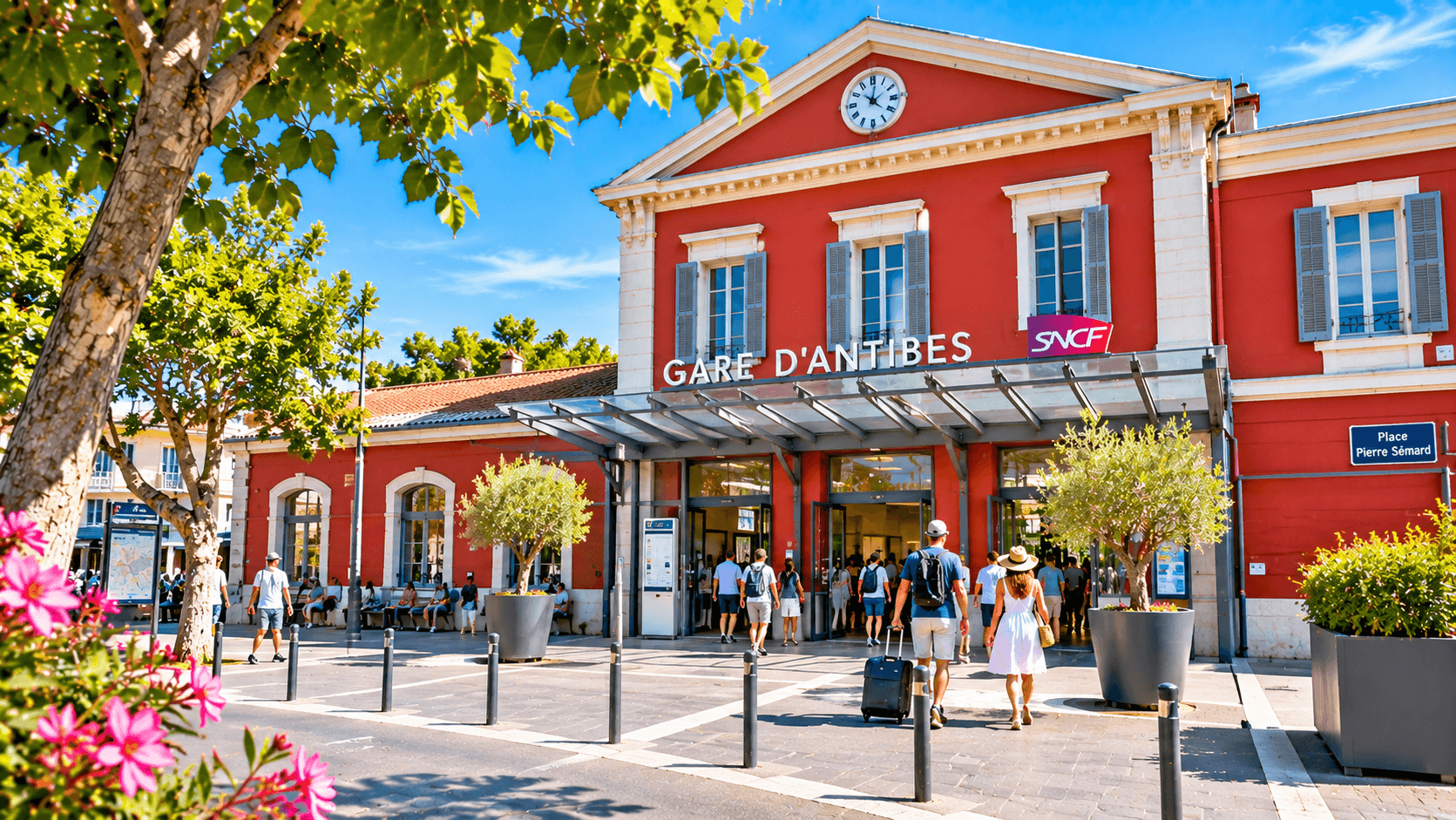
Location: Gare d'Antibes.
For a literary visit from Menton, the railway station is an appropriate starting point.
It's also one of the clearest geographical connections with the novel.
The opening description establishes Maigret's arrival by train in Antibes, immediately confronting him with the atmosphere of a Mediterranean holiday resort.
What should you look for?
Don't expect the present station to be an unchanged reconstruction of the 1932 setting.
Railway buildings, platforms, passenger facilities and surrounding streets have been altered over time.
The point is to experience the same kind of arrival.
You step off a train from the east and enter a town where holiday travel and ordinary life coexist.
A small literary exercise
Before leaving the station, notice the people around you.
Some may be travelling for work.
Others are on holiday.
Some are arriving for a few hours, while others live locally.
A railway station brings different lives together without revealing much about them.
Simenon uses precisely that contrast when introducing Maigret to the Riviera.
Practical note: The station is a working railway facility. Follow normal passenger routes and don't enter restricted railway areas to reproduce historical perspectives.
station
station
Gare d'Antibes
Practical railway arrival for the literary walk, not an unchanged 1932 set. Check actual trains and passenger access; no platform or step-free guarantee.
Antibes
4. Vieil Antibes: the town behind the resort
Suggested stop: The historic streets of central Antibes.
From the station, continue towards the old town.
The narrow lanes, small squares, shops and pedestrian passages offer a very different atmosphere from the large hotels and expensive waterfront properties.
Why include the old town?
Because Liberty Bar is interested in the difference between public appearance and ordinary reality.
Simenon rarely allows a beautiful setting to stand for the whole truth about its inhabitants.
Walking through the old town provides a useful reminder that Antibes existed long before it became an international resort.
Its residents worked, shopped, argued, raised families and dealt with everyday concerns.
The wealthy holiday population formed only one part of that environment.
Is this a specific scene location?
Not in the sense of a precisely identified fictional doorway or street corner.
The novel names Antibes, but the available bibliographic and publisher sources don't establish a complete modern address-by-address itinerary.
Vieil Antibes is included as a historical and thematic stop.
That makes it worthwhile without inventing a direct connection to a particular paragraph.
What to do
Explore the streets without rushing.
Notice how quickly the atmosphere changes between busy commercial areas and quiet residential passages.
Take a coffee break or explore the food shops.
It's a good introduction to the Riviera beyond its luxury image.
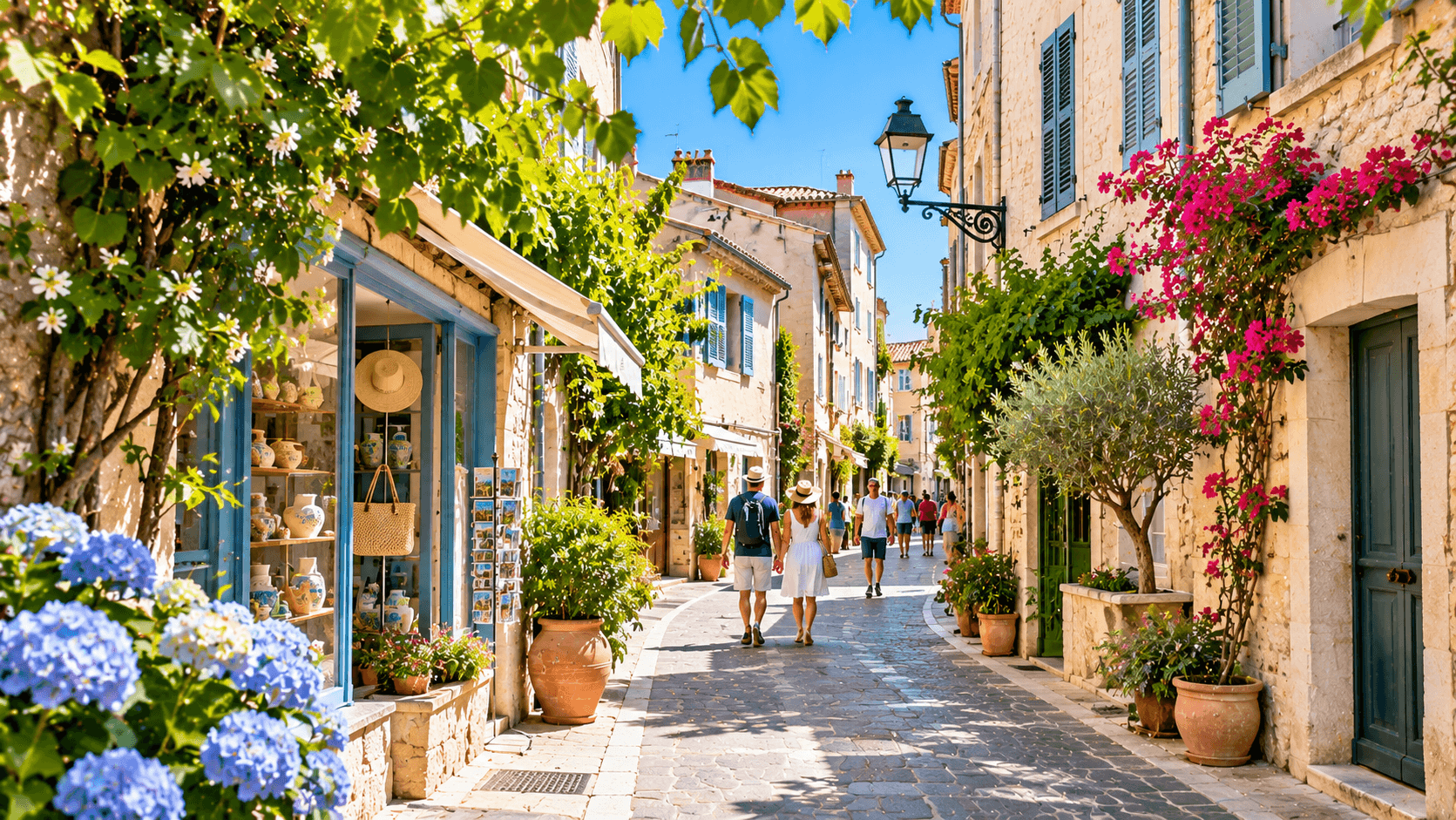
neighbourhood
neighbourhood
Vieil Antibes
Historic streets and everyday town life: a thematic stop, not a verified doorway from Liberty Bar. Use public streets and respect residents.
Antibes
5. Port Vauban: wealth and work beside the same water
Location: Port Vauban, Antibes.
Antibes' harbour provides a particularly effective visual comparison.
Today, Port Vauban is associated with spectacular yachts and modern marina facilities.
But it also belongs to a much older maritime landscape.
The contrast
Look towards the large yachts.
Then consider the ordinary work required to maintain a busy port.
Boats must be repaired, supplied, cleaned and operated.
The people who own them and the people who work around them may inhabit very different economic worlds.
This isn't presented as a specific scene from Liberty Bar.
It's a way to explore the novel's recurring interest in the difference between wealth and the lives surrounding it.
What has changed since Maigret's time?
The modern marina, particularly its facilities for very large yachts, is not a preserved image of Antibes in 1932.
Port development, tourism and changes in the maritime economy have transformed the waterfront.
Use the harbour as a place to compare past and present, not as a literal reconstruction of the novel.
Practical visit
Walk through publicly accessible waterfront areas.
Enjoy the views over the harbour and historic fortifications.
Respect restricted docks and working facilities.
The port is an excellent place for a short pause before continuing towards Cannes.
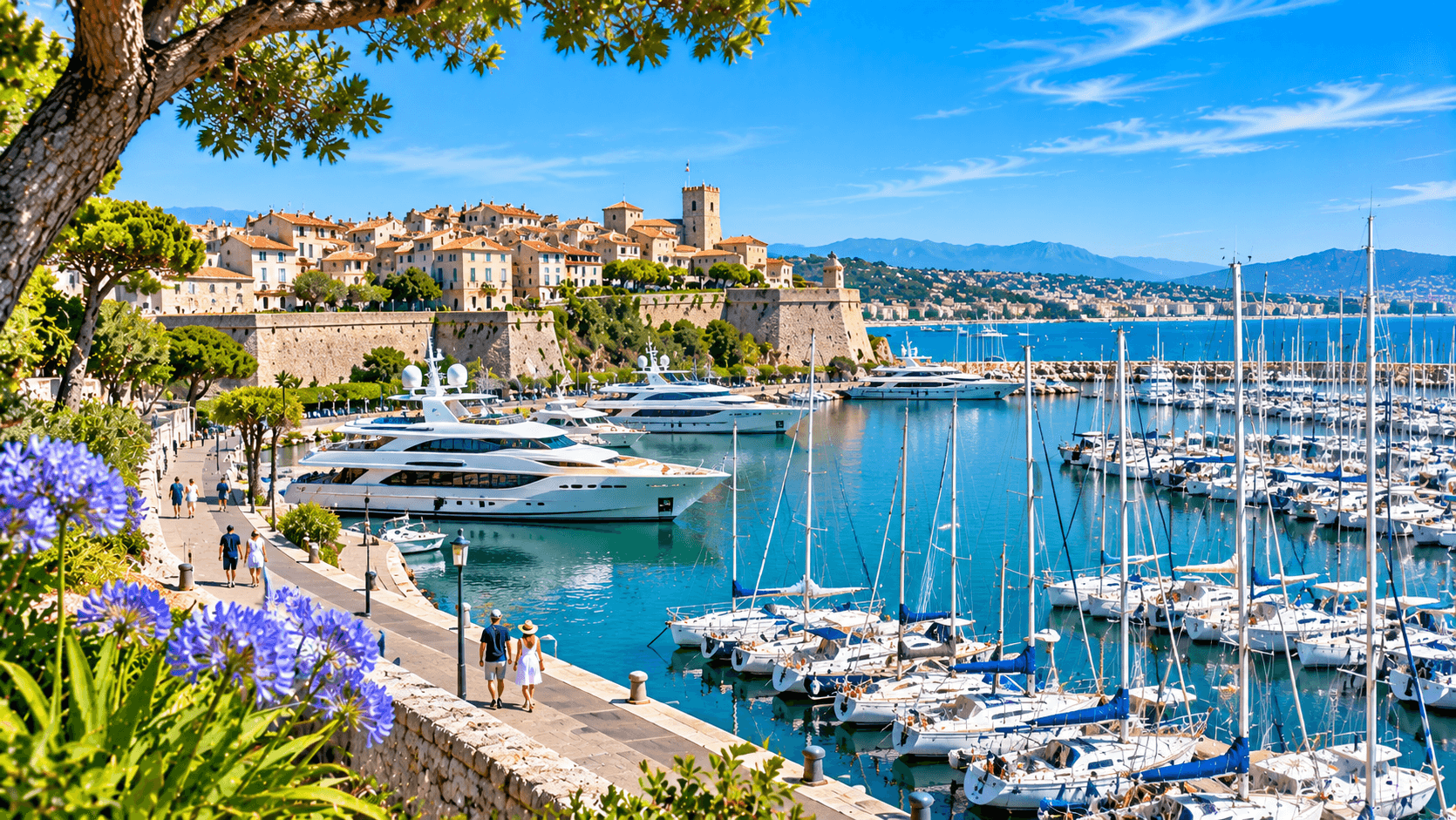
port
port
Port Vauban
Modern marina and maritime work beside the old town; thematic comparison, not a confirmed novel scene. Public areas only; docks and working zones may be restricted.
Antibes
6. Cap d'Antibes: the privileged world surrounding the victim
The investigation also connects with the residential landscape of Cap d'Antibes.
The peninsula is known for large private villas, pine trees, gardens and beautiful stretches of coastline.
During the early twentieth century, it became particularly attractive to wealthy international residents.
Why does it matter?
The peninsula provides historical context for Brown's privileged lifestyle.
Its geography illustrates the kind of private Riviera world that was increasingly associated with wealth and international leisure.
But Simenon's interest lies in what that world fails to explain.
A luxurious home can reveal how someone lived publicly while concealing much of their private life.
Can you visit the relevant house?
The published sources used for this guide don't establish a specific independently verified property that visitors can identify as Brown's fictional residence.
Don't enter private estates or search for a supposed crime scene.
If you want to explore Cap d'Antibes, choose public beaches or appropriate coastal paths as a separate extension.
For a one-day literary itinerary that also includes Cannes, it's better to keep the Antibes visit compact.
7. Cannes: the other side of the investigation
The second major destination is Cannes.
Maigret follows Brown's movements and discovers a social world very different from the prestigious surroundings of Antibes.
Here, the Liberty Bar provides a refuge for people who don't belong to the Riviera's polished public image.
What kind of place is Liberty Bar?
The official Simenon synopsis describes a modest drinking establishment where people gather to smoke, drink, play games and spend time together.
Its central figures include Jaja, who runs the bar, and Sylvie, a younger woman under her protection.
The relationships among its customers are complicated, sometimes affectionate and often painful.
This is the human world Maigret tries to understand.
Why Cannes?
Because Cannes provides the perfect contrast.
By the 1930s, it already had an international reputation as a fashionable Mediterranean resort.
Elegant hotels, promenades and private leisure existed alongside ordinary neighbourhoods and less prosperous lives.
Simenon brings both worlds into the same narrative.
Is the Liberty Bar still there?
No reliable present-day address for the fictional establishment has been established in the sources reviewed for this guide.
It would be misleading to direct visitors to a currently operating bar and present it as Jaja's establishment.
The name belongs to the novel.
The history of Cannes' ordinary streets and cafés provides the useful real-world context.
8. La Croisette: the Riviera that sells the dream
Location: Boulevard de la Croisette, Cannes.
Begin the Cannes section with its best-known promenade.
La Croisette is an international symbol of Riviera glamour.
Luxury hotels, expensive shops and the Mediterranean create a setting designed for visitors to admire.
Why include it?
Because the novel's central contrast becomes clearer when you begin with the public image of Cannes.
The city is beautiful, wealthy and associated with leisure.
Yet Maigret's investigation leads towards a much less glamorous corner of its social life.
What to notice
Look at the scale of the hotels and the relationship between the promenade and the beach.
Consider the difference between the city's visible luxury and the lives that remain largely absent from tourist photographs.
A historical caution
The present-day Croisette is not identical to its 1932 appearance.
Much of the urban landscape has been renovated or redeveloped.
Nor should the modern Cannes Film Festival be projected back onto the novel's setting: the festival began after the Second World War.
The Cannes of Liberty Bar belongs to an earlier tourist era.
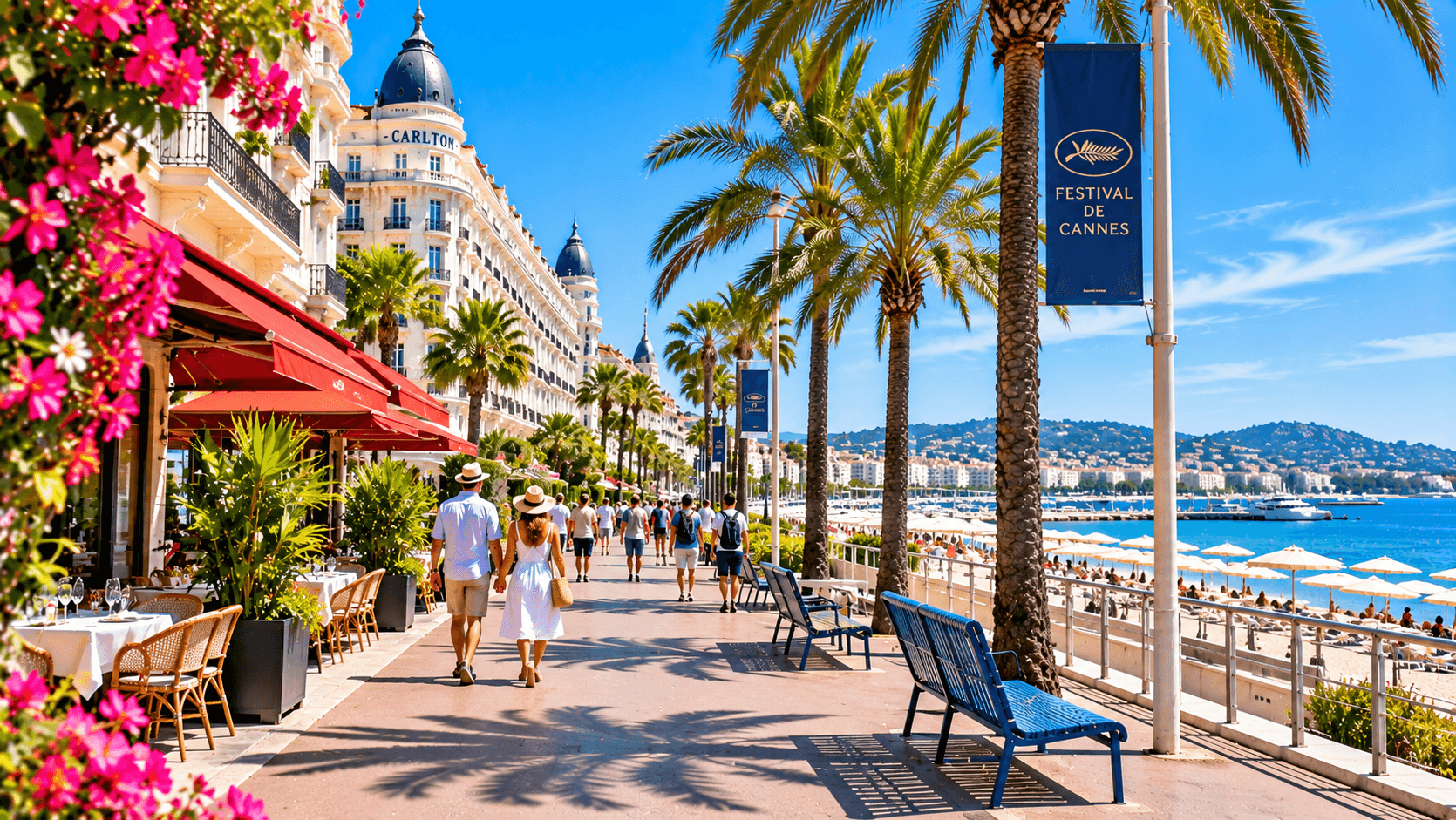
walk
walk
La Croisette
Public seafront and luxury-hotel context, not an exact Liberty Bar scene. Modern development and the post-war film festival differ from the 1932 setting. Check event restrictions.
Cannes
9. Rue Meynadier: a different Cannes
Location: Rue Meynadier, Cannes.
From the Croisette and central shopping district, continue towards Rue Meynadier.
This historic commercial street offers a useful contrast with the more luxurious waterfront.
Its pedestrian environment is associated with food shops, local businesses and everyday trade.
Why visit?
Because it's a place where the life of the city becomes more visible.
People buy groceries, talk to shopkeepers and move through practical spaces rather than exclusively through places designed for visitors.
This is closer to the social perspective that makes Maigret such a distinctive fictional detective.
Is Liberty Bar on Rue Meynadier?
There is no verified evidence supporting that identification.
Rue Meynadier is a thematic stop, not a claimed address from the novel.
The goal is to explore different sides of Cannes, not invent a surviving crime-fiction landmark.
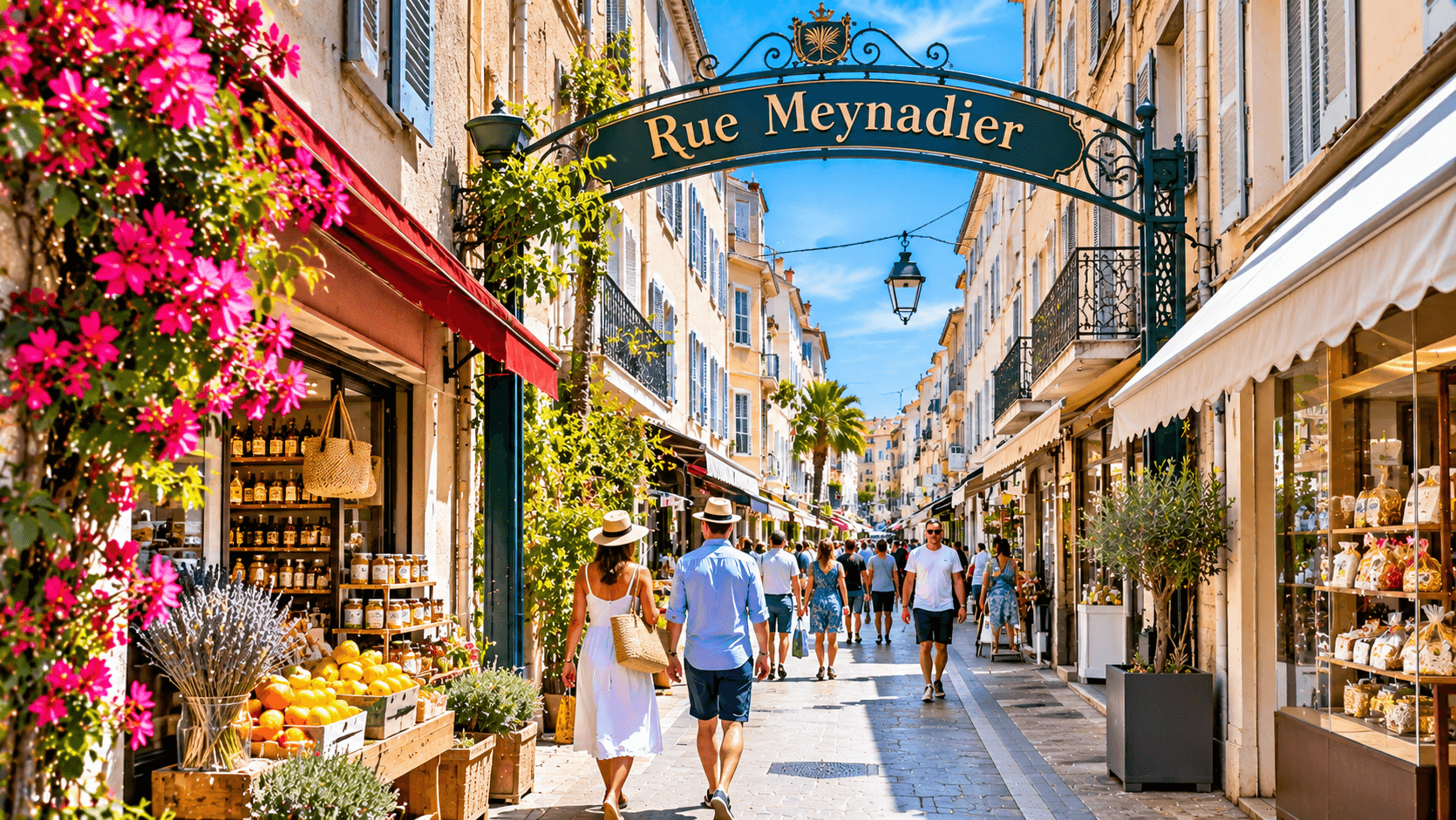
walk
walk
Rue Meynadier
Pedestrian shopping street towards Le Suquet: everyday-life context, not the verified address of Jaja's fictional bar. Individual shop hours vary.
Cannes
10. Vieux Port and Le Suquet: Cannes beyond the grand hotels
Locations: Vieux Port de Cannes and Le Suquet.
Finish the day in the historic part of Cannes.
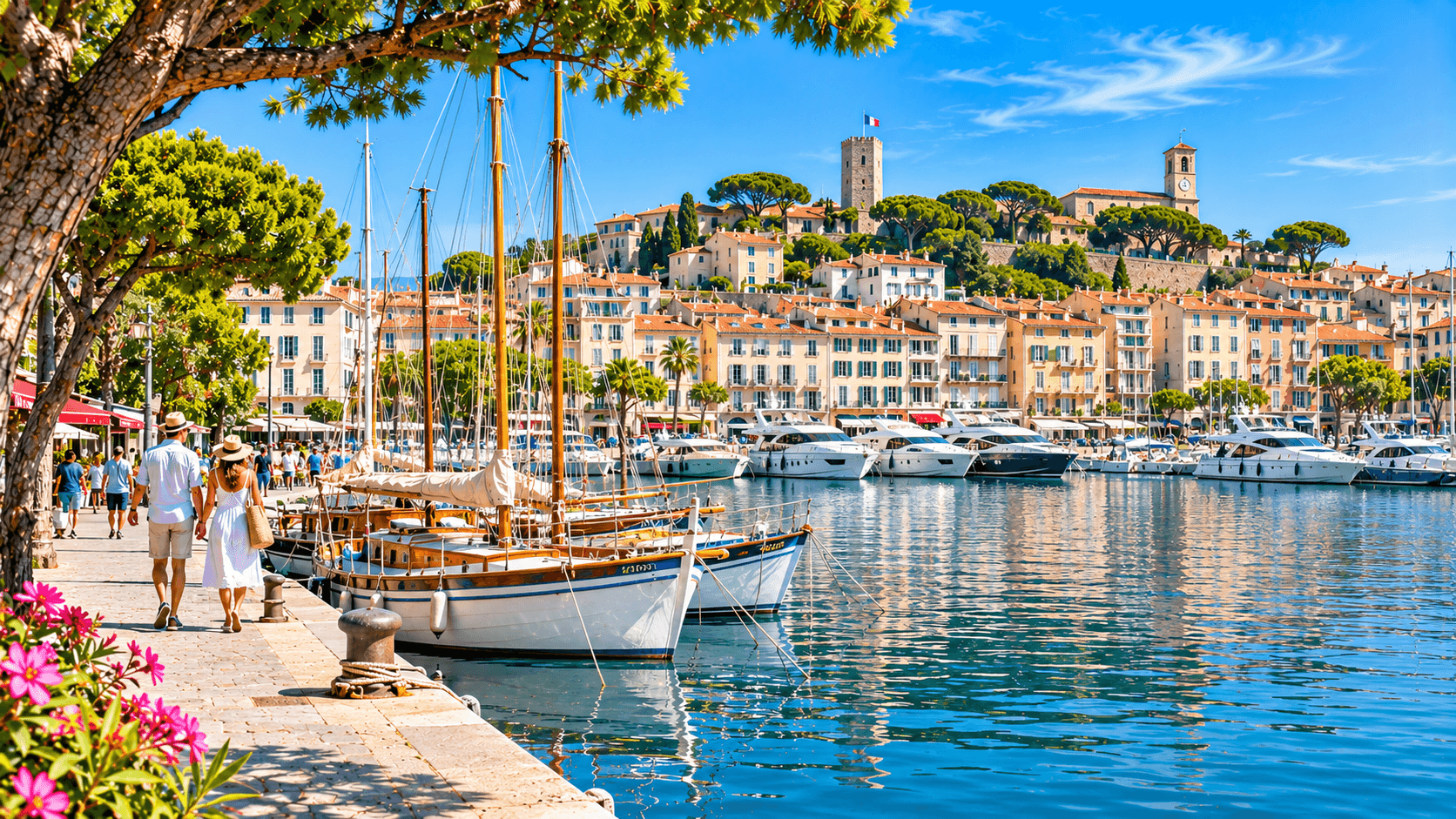
The old port remains one of the city's most recognisable maritime areas.
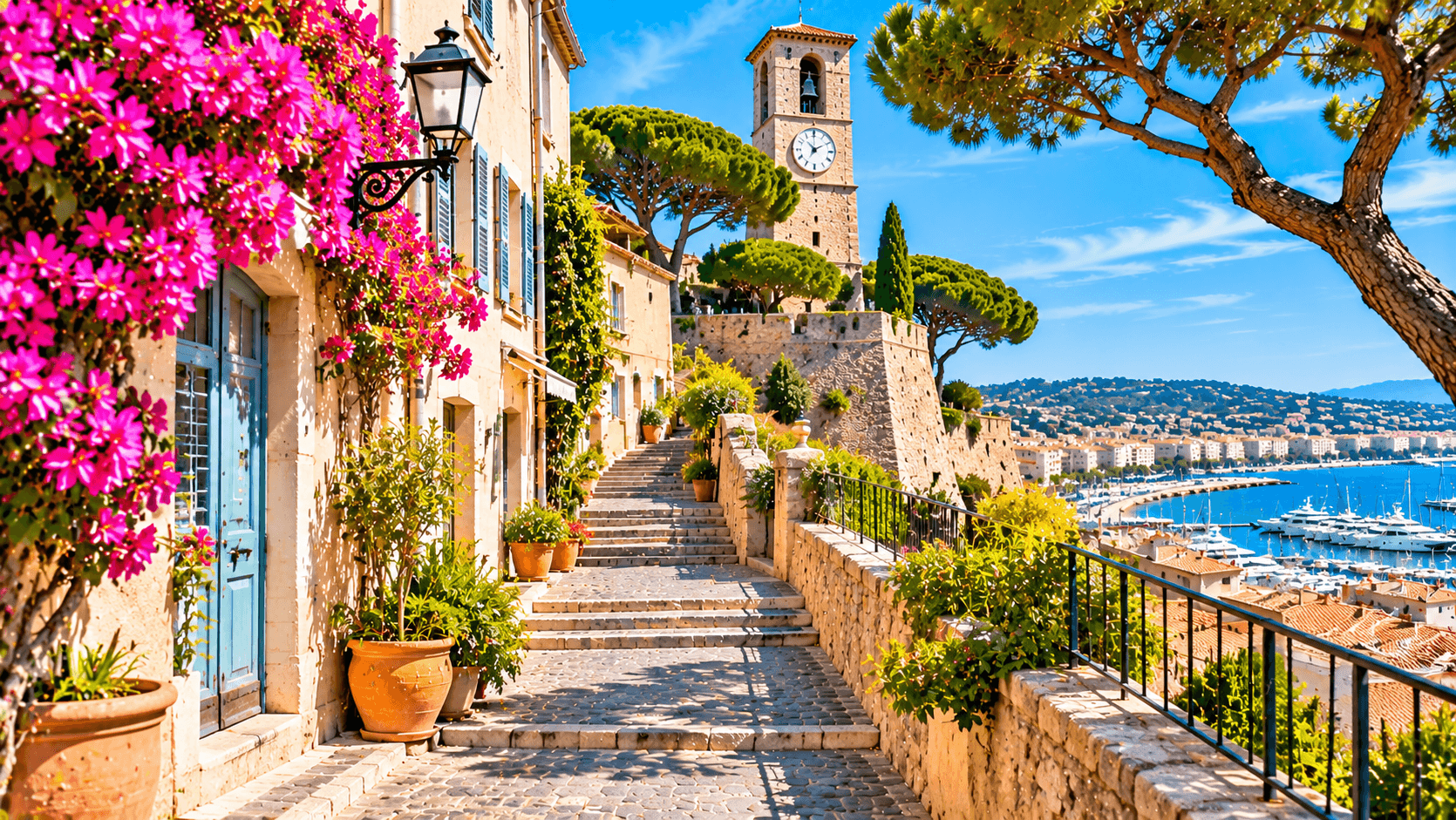
Above it rises Le Suquet, the historic hillside quarter.
Two perspectives
From the port, Cannes appears as a place of boats, travel and Mediterranean commerce.
From the older streets above, you see a town whose history extends well beyond luxury hotels and cinema.
These places provide a useful counterpoint to the Croisette.
They also fit the broader spirit of Maigret's investigation.
The inspector is interested in people who inhabit the edges of respectable society.
He doesn't assume that the wealthiest person has the most important story.
Visiting information
The port can be enjoyed through public waterfront routes.
Le Suquet involves uphill streets and steps.
If you're tired after a day of travelling, it's perfectly reasonable to remain near the harbour rather than climbing to the upper viewpoints.
Important distinction
Neither Vieux Port nor Le Suquet is presented here as the confirmed exact position of the fictional Liberty Bar.
They are public locations that help visitors understand Cannes beyond its most fashionable image.
port
port
Vieux Port de Cannes
Historic maritime setting below Le Suquet, not the established site of Liberty Bar. Follow permitted waterfront routes; events, works and marina security can limit access.
Cannes
neighbourhood
neighbourhood
Le Suquet
Historic hillside quarter: thematic extension, not a located fictional bar. Slopes and steps; staying by the port is an alternative. No step-free or museum-entry promise.
Cannes
11. A realistic Maigret day trip from Menton
Antibes and Cannes are both accessible by regional train from Menton.
But attempting to explore both thoroughly in one day can become tiring.
The best plan is to choose a few meaningful stops.
Morning: Antibes
Take a confirmed morning TER from Menton to Antibes.
Allow roughly 65–75 minutes as an indicative planning range, not a promise for your date. The SNCF page available during this review displayed 30 October 2026, not the day of your proposed visit.
Begin at the railway station, as Maigret does in the novel.
Walk towards Vieil Antibes.
Explore the historic centre and continue to Port Vauban if time permits.
Have an early lunch or a coffee break.
Early afternoon: Cannes
Take a regional train from Antibes to Cannes.
The earlier published SNCF examples show roughly 10–15 minutes between Antibes and Cannes on those trains; this is not a current departure guarantee. Check your actual service.
Begin with La Croisette.
Then explore Rue Meynadier and the area around the old port.
If you enjoy historic streets and have enough energy, continue towards Le Suquet.
Late afternoon: return to Menton
Allow time to reach Cannes railway station.
Allow roughly 75–90 minutes as an indicative planning range and check the actual Cannes-to-Menton direction. The linked outward SNCF page displayed 28 October 2026 during review; it does not establish a current return train.
Check the actual return train rather than assuming that a frequent daytime service implies convenient late-evening departures.
Total time
Allow approximately 8–10 hours from leaving Menton to returning, including train travel, walking and meals.
The itinerary is possible without a car and doesn't require paid museum admission.
Its main costs are rail tickets, food and any optional activities.
12. The slower alternative: two separate literary visits
If you have more time in Menton, this may actually be the better choice.
Day one: Antibes
Explore the railway arrival, historic centre and harbour.
Add Cap d'Antibes only if you're comfortable with the extra travel and walking.
Day two: Cannes
Begin at La Croisette.
Explore Rue Meynadier, Vieux Port and Le Suquet.
Take time for a long lunch or an ordinary neighbourhood café.
This two-day approach gives you space to experience the contrast between glamorous and everyday Riviera life without racing between towns.
It's especially useful for longer-stay visitors.
13. What did Simenon understand about the Riviera?
The central strength of Liberty Bar is its refusal to equate beautiful surroundings with happy lives.
Simenon was interested in the ways people divide themselves between different social environments.
Someone might have money, reputation and comfort yet seek companionship in a humble drinking establishment.
Another person might appear insignificant to polite society while playing an essential emotional role in someone else's life.
Maigret's distinctive method
Maigret is not simply interested in collecting clues.
He spends time observing people.
He listens.
He examines habits and relationships.
He tries to understand the environment in which a person's actions become possible.
This approach makes Liberty Bar particularly atmospheric.
The crime takes place in a wealthy resort.
But the investigation is ultimately concerned with ordinary human needs.
The less glamorous Riviera
Luxury tourism often encourages visitors to see the coast through hotels, yachts and beautiful villas.
Simenon reminds us that the same region also contains loneliness, economic inequality and complicated personal relationships.
The sunshine doesn't remove those realities.
It simply makes the contrast more striking.
14. Novel, reality and adaptation: three different questions
Liberty Bar has also been adapted for television.
That creates a distinction similar to other guides in our Books & Films collection.
The novel's geographical setting doesn't automatically establish where a television adaptation was filmed.
Nor does a modern café become Liberty Bar simply because it resembles the fictional establishment.
The supplied research identifies television versions starring Jean Richard and Bruno Cremer. The University Côte d'Azur record was unavailable during this check, so their broadcast dates and production locations are not independently verified here.
Both belong to the wider history of Maigret on screen.
A filming-location guide would need to investigate those productions separately.
| Layer | What it establishes |
|---|---|
| 1932 novel | Antibes and Cannes are part of the fictional investigation |
| Historical Riviera | The real geography and social environment of those towns |
| Television adaptations | Actual locations selected by filmmakers, which require separate verification |
15. What should you read before visiting?
For this route, the obvious choice is Liberty Bar itself.
It's short enough to read during a holiday.
The opening chapters are especially useful before arriving in Antibes.
Pay attention to the contrast between the railway-station atmosphere and the purpose of Maigret's visit.
Then notice how the social environment changes as the investigation moves towards Cannes.
Other Maigret novels
If you enjoy Simenon's approach, you may want to continue with other novels in the series.
You don't need to read them in strict publication order.
Maigret's methods, personality and interest in human behaviour are established clearly enough for Liberty Bar to work independently.
Other Riviera fiction
Tender Is the Night by F. Scott Fitzgerald offers a very different view of the wealthy international population along the coast.
Bonjour Tristesse by Françoise Sagan explores the emotional tensions beneath a privileged summer.
The Long Afternoon by Giles Waterfield examines the private world of British expatriates in Menton.
The books differ in genre and period, but they share a recurring question.
What happens behind the beautiful façades of the Riviera?
16. Who will enjoy Liberty Bar?
Readers of classic detective fiction will appreciate the compact investigation and the importance of human observation.
Readers interested in psychological fiction may find Maigret's attention to emotional motives more compelling than elaborate clue-solving.
Travellers interested in Riviera history will enjoy the contrast between international luxury and ordinary town life during the early 1930s.
Fans of Simenon will recognise the author's characteristic economy of description and his sympathy for flawed, vulnerable people.
And visitors who want a precise address-based literary trail should understand the limitation: the cities are real, but not every fictional place can be located or visited today.
Frequently asked questions
Is Liberty Bar set in Menton?
No. The novel's main Riviera settings are Antibes and Cannes. Menton is a convenient starting point for a regional literary day trip.
When was Liberty Bar published?
It was first published in French by Fayard in 1932.
Who wrote Liberty Bar?
Belgian novelist Georges Simenon, creator of Inspector Maigret.
Is Maigret on the Riviera a different novel?
No. It is an alternative English title used for Liberty Bar.
What is the book about?
Maigret investigates the murder of a wealthy Australian living in Antibes. His inquiries lead to Cannes and a bar frequented by people outside the fashionable resort world.
Is the Liberty Bar a real establishment?
The sources reviewed don't establish a surviving real bar with a verified connection to the fictional establishment. This guide does not claim one.
Can you follow Maigret's exact route?
You can visit the real towns and some relevant historic environments, but a precise chapter-by-chapter modern address route has not been independently established.
How far are Antibes and Cannes from Menton?
Regional trains generally take around 65–75 minutes to Antibes and 75–90 minutes to Cannes, depending on the service.
Can you visit both in one day?
Yes, with a selective itinerary and a confirmed return train. Separate visits are more relaxed.
Were there television adaptations?
Yes. The novel has been adapted for television, including versions starring Jean Richard and Bruno Cremer.
Does this guide reveal the murderer?
No. The article discusses the investigation's premise, settings and themes without revealing the solution.
Final thoughts: the Riviera beyond the postcard
The French Riviera is very good at presenting a beautiful image of itself.
Grand hotels.
Elegant beaches.
Expensive yachts.
White buildings against blue water.
In Liberty Bar, Simenon begins with that familiar image and gradually reveals the lives hidden behind it.
Antibes provides the sunny opening.
Cannes reveals a different social world.
And Maigret moves between them, interested less in appearances than in understanding the people who inhabit each place.
For travellers staying in Menton, following that geographical journey offers a rewarding day trip.
You can discover Antibes' historic streets and harbour, then continue to Cannes and explore beyond the Croisette.
The actual Liberty Bar may remain fictional.
But the contrast Simenon describes is still worth looking for.
Not every interesting Riviera story happens behind the gates of a beautiful villa.
Some unfold in ordinary places, among people who never expected anyone to write about them.
Sources and further reading
Official Georges Simenon Website: Liberty Bar
University Côte d'Azur: Liberty Bar Literary Record
Bibliographic Research: Liberty Bar, First Edition and Composition
SNCF Connect: Menton to Antibes
SNCF Connect: Menton to Cannes
Antibes Juan-les-Pins Tourist Office
Explore More AzurMenton Guides
Sources checked on 5 November 2026. The literary geography is based on publisher descriptions, the official Simenon synopsis and bibliographic records. The original linked Simenon event and university record were unavailable; an alternative official Simenon archive synopsis was found. The suggested stops are an original thematic itinerary, not a verified reconstruction of every fictional scene. The actual address of Liberty Bar has not been established, and train schedules should be checked for the date of travel.
Additional checked sources: official Simenon archive synopsis, Cannes walking map, Vieux Port, Antibes historical views.
This is a research-based thematic itinerary, not a claim of a fresh complete-text or adaptation-location audit. The supplied cover is an artistic composition: its pictured book is not a verified published edition, and its café is not evidence for the fictional bar's real address. Use public routes only; access can change with works and events. No precise map markers are guessed before coordinate review.