Menton to Monaco
Often one of the simplest options, especially during busy event periods.
Useful links
Menton to Nice
Good for museums, events, Jazz Fest, Carnival and airport access planning.
Useful links
Menton to Ventimiglia / Italy
A practical choice for markets, Italian food and a short cross-border trip.
Useful links
A longer history of the coast
Today, the French Riviera seems almost inseparable from its tourist identity.
The beaches of Nice. The luxury of Monaco. The colourful houses of Menton. The villas of Cap d'Antibes. The yacht-filled harbours and famous gardens.
It's tempting to imagine that the coast has always been a place where wealthy visitors came to enjoy the Mediterranean.
But the Riviera's history is much older, more complicated and frequently less glamorous.
Long before the first luxury hotels, the coast was inhabited by prehistoric communities, connected to the ancient Mediterranean world and contested by rulers whose names have largely disappeared from modern travel guides.
Borders changed repeatedly.
Towns belonged to different states.
Religious and dynastic conflicts reshaped the region.
Revolutions and wars transformed everyday life.
And only relatively recently did the Riviera become an internationally recognised destination for leisure.
This longer perspective is the subject of The French Riviera: A History, by Michael Nelson.
Published in 2016, the book offers an accessible history of the wider region, beginning with its prehistoric inhabitants and continuing through the development of the modern tourist coast.
For visitors staying in Menton, it's an especially useful companion.
The town's position near Monaco and Italy makes it an ideal starting point for understanding the Riviera as a place where different political and cultural worlds have long met.
This guide introduces Nelson's book, explains its main historical themes and suggests real places to visit while reading it.
It is not a substitute for the book or a complete history of the region.
Think of it instead as a way to connect the history on the page with the places outside your window.
1. Discover the book
The French Riviera: A History
Author: Michael Nelson
Publisher: Matador / Troubador Publishing
Publication date: 28 October 2016
ISBN: 9781785898334
Language: English
Genre: Regional history / Popular history
Edition: the English paperback identified by the ISBN above; check the seller's edition-specific pagination.
Michael Nelson was a Reuters executive and wrote several books about the Riviera. This introduction uses the publisher's synopsis and the author's bibliographic material, not a complete page-by-page reading.
He has written extensively about the Riviera.
His earlier books include Queen Victoria and the Discovery of the Riviera and Americans and the Making of the Riviera.
Those works examine particular aspects of the region's international history.
The French Riviera: A History attempts something broader: a chronological account of the territory itself.
What does the book cover?
It begins with prehistoric settlement around Nice, including Terra Amata.
It follows the arrival of Greeks and Romans and the political transformations of medieval Provence.
It explores the region's changing rulers and its relationship with France, Savoy and neighbouring territories.
Later sections address the French Revolution, nineteenth-century changes, the two World Wars and the development of modern tourism and technology.
Nelson concludes his broad historical narrative with the emergence of Sophia Antipolis as an important technology centre in the 1970s.
Where to find it
The French Riviera: A History — official publisher's page
The publisher lists the paperback at £13.99. Prices, stock and delivery conditions may change.
Michael Nelson's author website also provides further information, reviews and background material.
2. Five historical questions to take on your trip
A book covering several thousand years can feel overwhelming if you try to remember every ruler, treaty and date.
A more useful approach is to read with a few questions in mind.
Who controlled the coast?
The modern border between France and Italy is relatively recent.
Different parts of today's Riviera belonged at different times to Provence, Savoy, Monaco and other political entities.
The history of Menton, for example, cannot be understood solely through the history of France.
Why did people come here?
The region attracted settlers, traders, soldiers, religious communities and political rulers long before tourists arrived.
The motivations changed over time.
So did the relationship between newcomers and existing residents.
How did transport change the region?
For much of its history, travel along the coast was difficult.
Mountains, cliffs and uncertain roads made individual towns less connected than they are today.
Road building and the arrival of the railway transformed that situation.
When did the Riviera become fashionable?
International winter tourism developed mainly during the eighteenth and nineteenth centuries, with British visitors playing a particularly important role.
The popular summer-resort culture associated with American expatriates developed later.
What lies behind the beautiful buildings?
A villa, hotel or garden can reveal the ambitions of its owner.
It can also reveal changes in the economy, labour, technology and social relationships.
The most interesting historic buildings are often those that tell more than one story.
These five questions provide a useful framework for reading Nelson and exploring the Riviera.
3. Prehistory: the coast before cities and borders
One of the book's starting points is Terra Amata in Nice.
This prehistoric site is associated with some of the earliest known evidence of human occupation in the region.
The site's traditional dating places activity hundreds of thousands of years ago, although interpretations and chronological estimates have been refined as archaeological research has developed.
What does this change about our understanding of the Riviera?
Quite a lot.
Modern visitors tend to think of the Mediterranean coast through its towns, hotels and architecture.
But human activity here predates all those familiar structures by an extraordinary length of time.
The landscape mattered long before tourism existed.
Its climate, resources and geography helped make it attractive to successive populations.
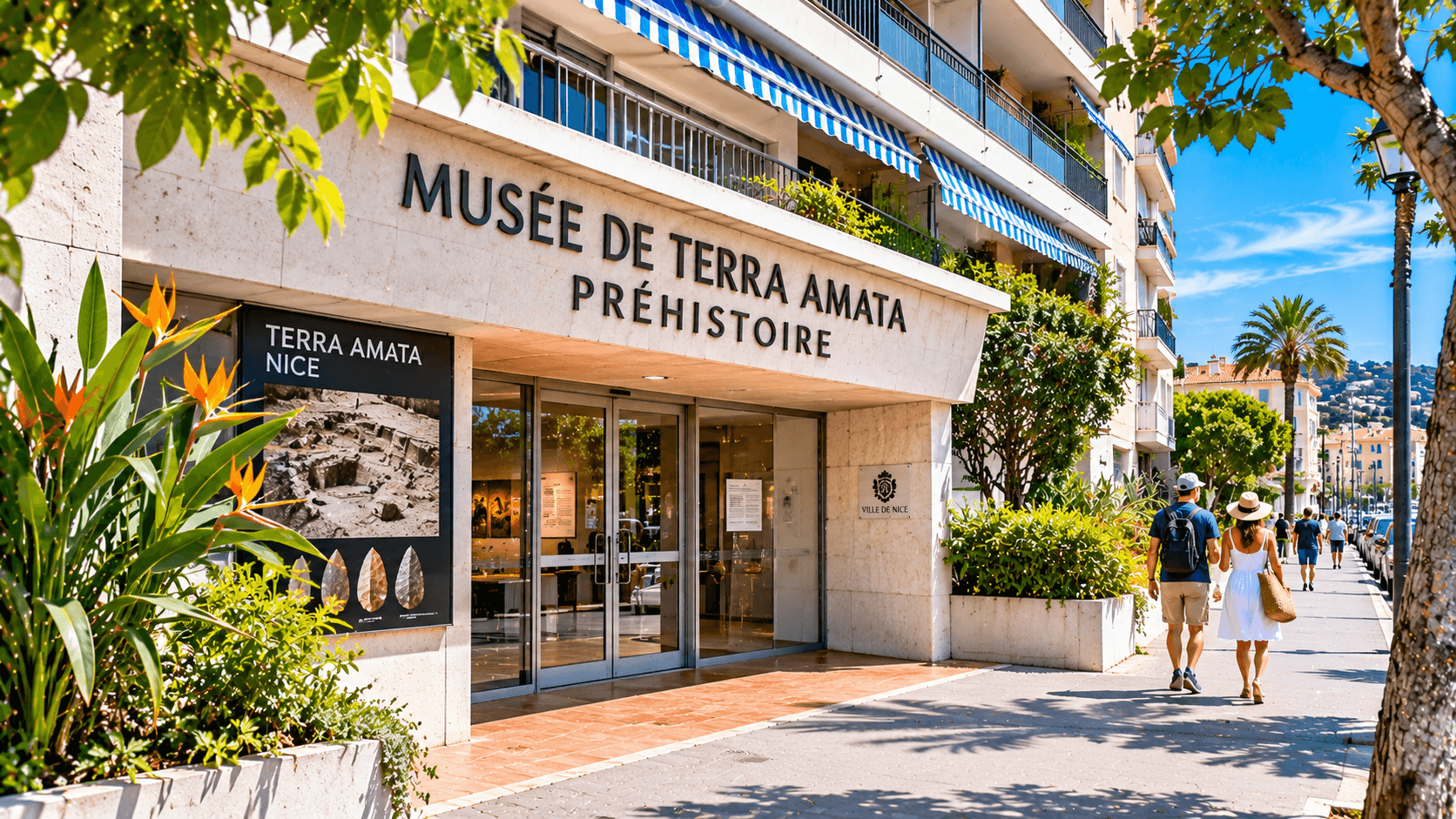
Visit: Musée de Préhistoire de Terra Amata, Nice
The museum presents the prehistoric occupation of the site and its archaeological significance.
It is a useful stop for readers who want to begin their exploration at the earliest chronological point.
Where: 25 Boulevard Carnot, Nice.
Checked 5 November 2026: the City of Nice still lists the museum as closed for accessibility works since 15 April. It mentions autumn 2026 but gives no confirmed reopening date. Do not plan an interior visit until reopening is explicitly confirmed; the ordinary hours shown below that notice do not override the closure. Use Cimiez as the museum alternative.
A useful reading question
How much of what we call “the Riviera” is a product of human history, and how much belongs to the much older physical landscape?
museum
museum
Musée de Préhistoire de Terra Amata
Prehistory museum on its excavation site. Checked 5 November 2026: City of Nice still lists closure since 15 April and only an autumn reopening intention. Ordinary hours do not override that notice. Use Cimiez as an alternative.
25 boulevard Carnot, 06300 Nice
Closed for accessibility works; no confirmed reopening
Source checked:
4. Greeks, Romans and the ancient Mediterranean
The Riviera was part of a much larger Mediterranean network long before modern national borders existed.
Greek settlements, Roman administration and commercial routes connected coastal communities with territories far beyond present-day France.
Nelson's account places the region within that wider political and cultural world.
What survives today?
Ancient remains are distributed across the coast and inland.
Some are preserved in museums.
Others can still be seen within modern towns.
The difficulty for visitors is that the ancient Riviera rarely survives as one complete cityscape.
Instead, it appears through fragments.
A Roman monument.
A road alignment.
Archaeological remains beneath later buildings.
A museum collection preserving objects from a vanished settlement.
Visit: Cimiez, Nice
The archaeological area of Cimiez provides one of the most useful introductions to the Roman history of the region.
The site includes remains of the Roman city of Cemenelum, with baths and an amphitheatre.
The neighbouring Musée d'Archéologie de Nice-Cimiez offers further context.
Where: Avenue des Arènes de Cimiez, Nice.
The museum's official visitor page lists winter opening from 10 a.m. to 5 p.m., closed Tuesdays and specified holidays; last ticket sales are 30 minutes before closing. Only part of the archaeological site is described as accessible. Check exceptional changes before travel. The museum address is 160 avenue des Arènes de Cimiez.
A useful reading question
How did ancient trade and administration connect communities that modern travellers now experience as separate destinations?
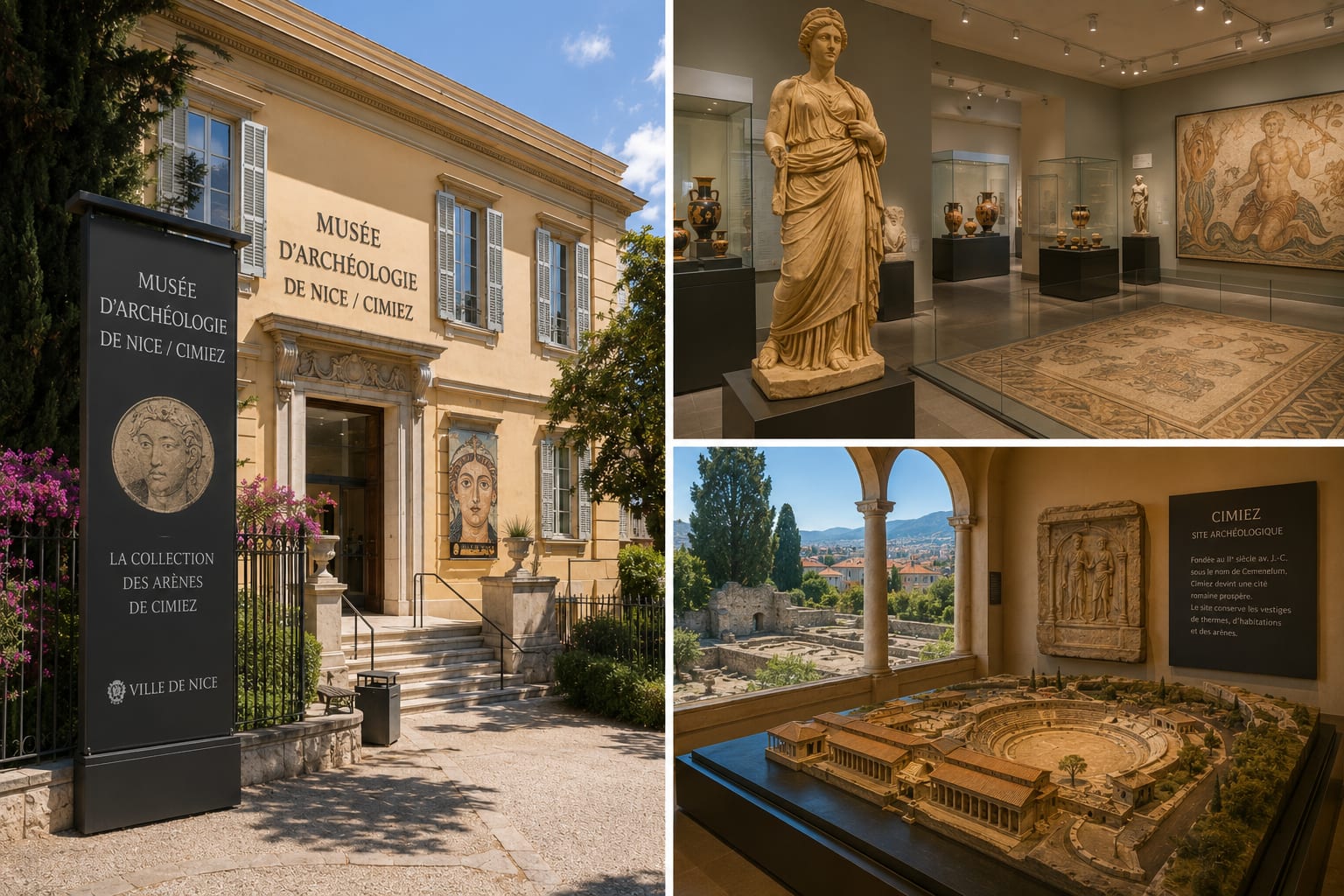
museum
museum
Musée d'Archéologie de Nice / Cimiez
A Cimiez archaeology museum on the Roman site of Cemenelum, useful with Musée Matisse.
160 Avenue des Arènes de Cimiez, 06000 Nice
Check current hours before visiting
5. The medieval Riviera: competing rulers and changing loyalties
The medieval history of the Riviera is complicated.
This is one of the reasons a regional overview can be so valuable.
Rather than looking at each town as an isolated tourist destination, Nelson follows the wider political transformations of Provence and neighbouring territories.
Different dynasties claimed authority.
Religious institutions acquired influence.
Towns developed their own economic and political relationships.
Why is this important for Menton?
Because Menton's historical identity cannot be explained through a simple narrative of continuous French rule.
The town became associated with the Grimaldi family and Monaco in the fourteenth century.
Its later relationship with France emerged through treaties, political upheavals and changes in sovereignty.
Visit: Menton's old town
Begin in Rue Longue and climb towards the Basilica of Saint-Michel-Archange.
The steep street pattern, enclosed passages and relationship between the hillside settlement and the sea provide a useful introduction to Menton's older urban geography.
But don't assume that every building you see is medieval.
The town contains layers of later construction and renovation.
Saint-Michel Basilica, for example, belongs principally to the baroque period.
The old town is valuable precisely because its long history is visible through overlapping periods.
A useful reading question
When we describe a place as “French”, how far back does that identity actually extend?
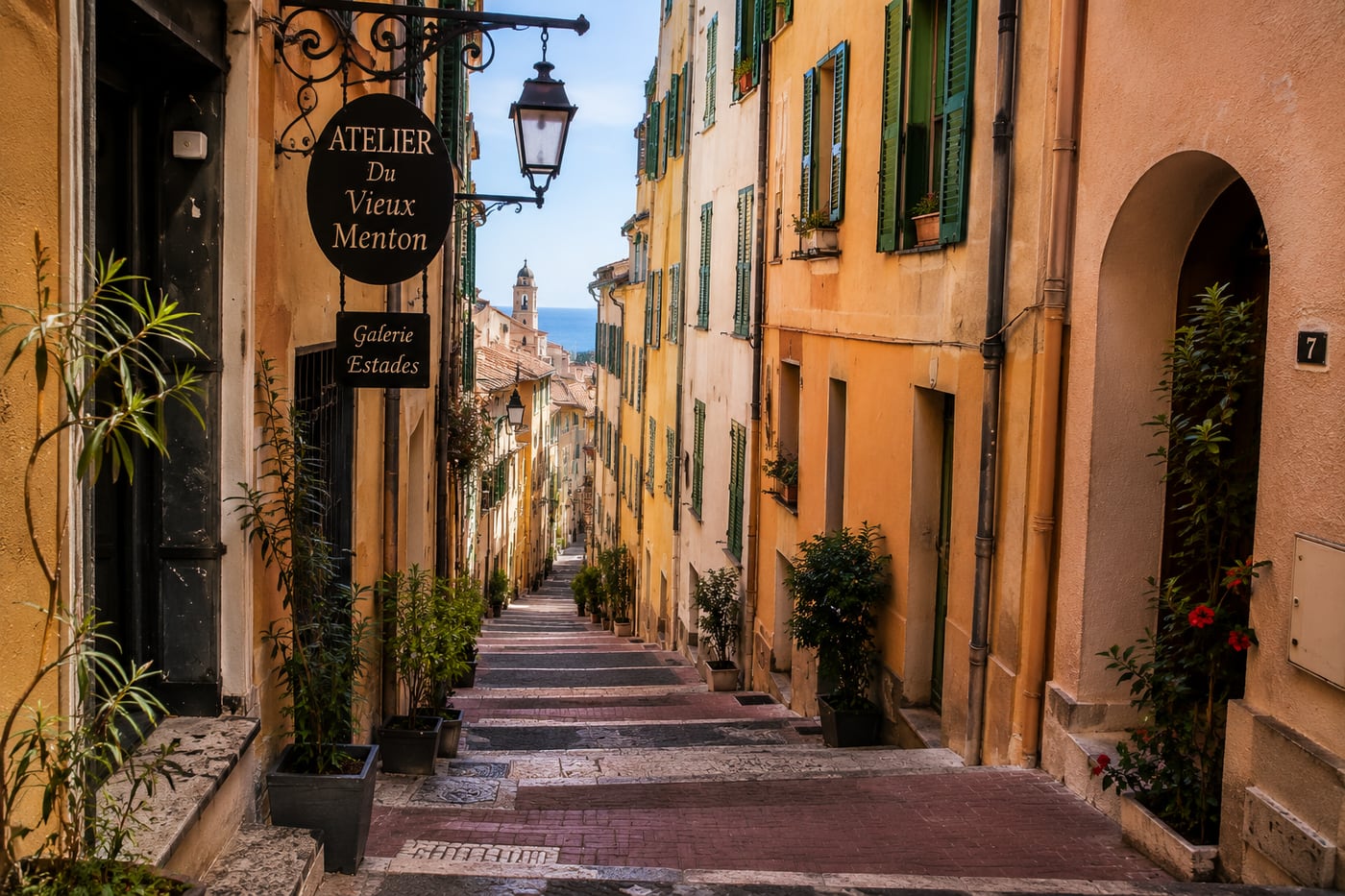
neighbourhood
neighbourhood
Rue Longue
A narrow old-town street with warm facades and steep visual rhythm; a useful stop on the Menton-on-screen walk.
Rue Longue, 06500 Menton
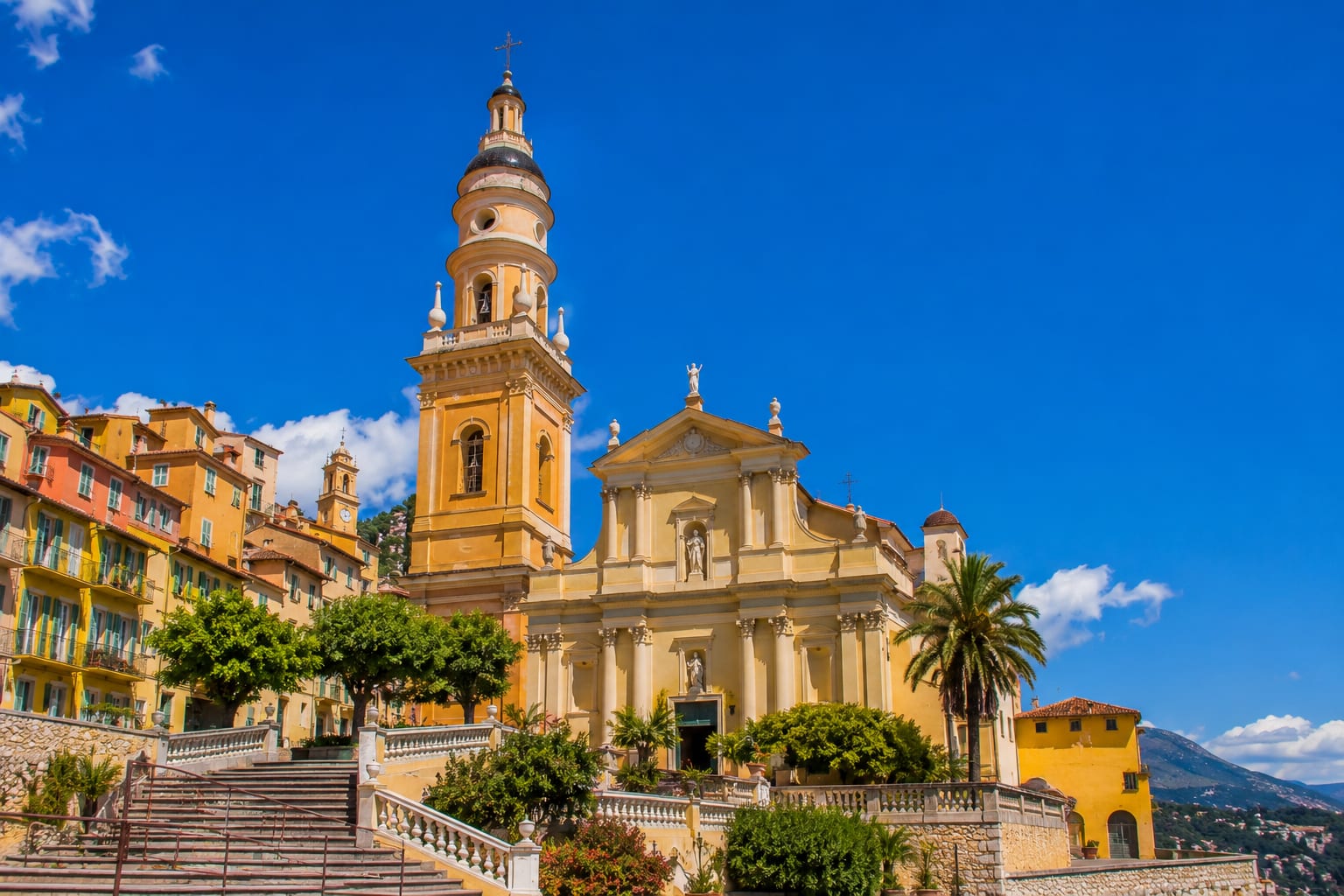
civic
civic
Basilica Saint-Michel-Archange
Menton's old-town landmark above the sea, useful for classic views, music-video mood and visual walks.
Place de l'Eglise, 06500 Menton
6. Monaco, Menton and the problem of modern borders
This is one of the most interesting subjects to explore while staying in Menton.
Today, travelling between France, Monaco and Italy can take only minutes.
Yet the political history of these territories is anything but simple.
Menton and Monaco
Menton became associated with Charles Grimaldi in 1346.
For centuries, its history was linked with the Principality of Monaco.
During the French Revolution, Monaco's territory was incorporated into revolutionary France.
The Grimaldi dynasty was later restored.
In 1848, Menton and Roquebrune declared themselves free towns under Sardinian protection.
Menton finally became part of France through the Treaty of Paris in 1861.
Why this matters
These events remind us that the present national border is the result of history, not an eternal geographical fact.
The languages, architecture and local traditions of the eastern Riviera still reflect its relationships with Italy and Monaco.
Visit: Menton, Monaco and Ventimiglia
For a contemporary traveller, the three destinations provide an excellent illustration of the region's international character.
You can explore Menton's historic centre, visit Monaco and continue towards Italy on separate short excursions.
These are thematic journeys across a historically connected region, not a reconstruction of one route described by Nelson.
A useful reading question
How did political boundaries change while everyday cultural and commercial connections continued?
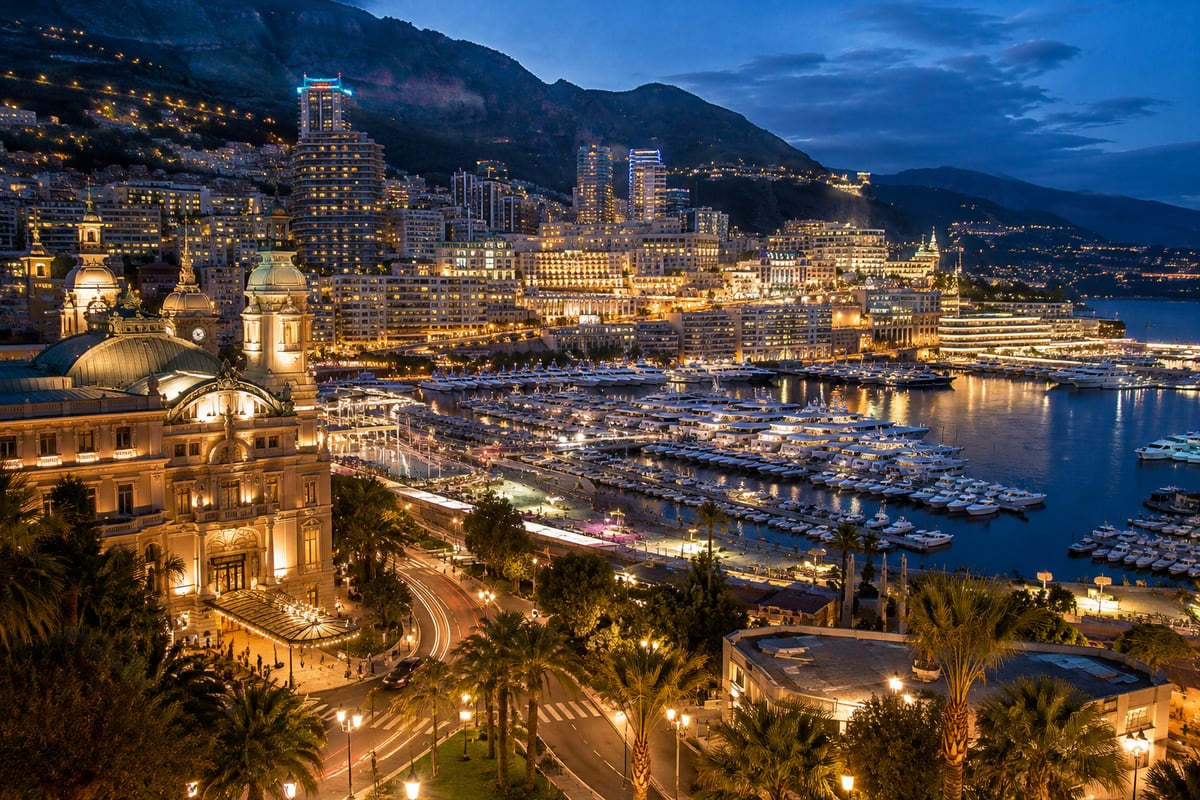
neighbourhood
neighbourhood
Monaco and Monte-Carlo
A close autumn day or evening trip from Menton for harbour views, concerts, casino architecture and Riviera events.
Monaco
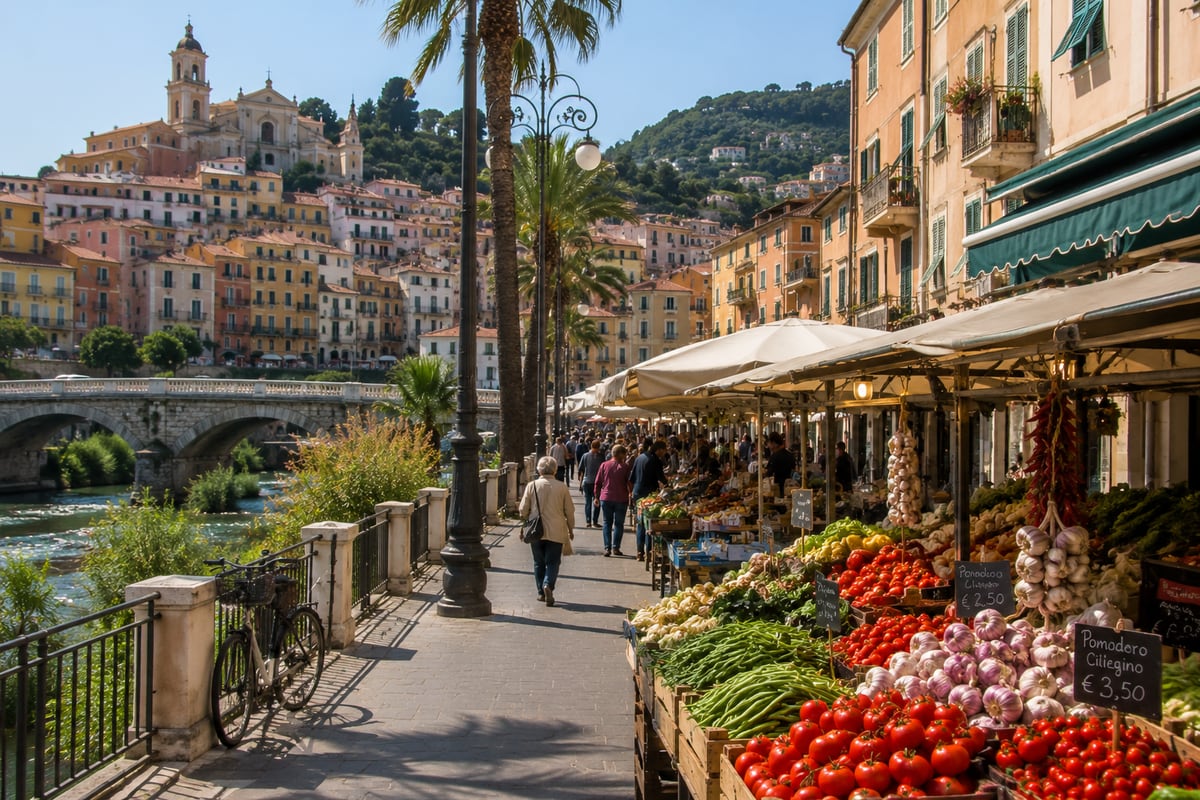
market
market
Ventimiglia
The closest Italian rail stop from Menton, useful for markets, Ligurian food and an easy cross-border walk day.
Italian Riviera
7. Revolution and the nineteenth century: a coast transformed
The French Revolution and the political developments of the nineteenth century brought major changes to the region.
The relationship between Nice, Savoy and France shifted.
Menton's status changed.
Infrastructure development began to transform previously difficult journeys.
The railway changes everything
The railway reached Menton in December 1869.
This was a decisive moment in the town's development.
The Mediterranean coast became much more accessible to visitors from northern Europe.
The French rail network and its connections helped turn the Riviera into an international winter destination.
Before the railway
Travel along the coast was slow and sometimes difficult.
Roads had to negotiate cliffs, hills and mountain streams.
Sea travel presented its own challenges.
The railway dramatically reduced the cost in time and effort of reaching the coast.
Visit: Menton station and the Belle Époque district
The current station is not an untouched nineteenth-century time capsule.
But it provides a useful place to consider the transport revolution that transformed the town.
From there, explore the nearby grand hotels and residential buildings associated with Menton's development as a fashionable resort.
The transformation becomes visible in the scale of the architecture.
A useful reading question
Would the Riviera have become an international holiday destination without modern rail transport?
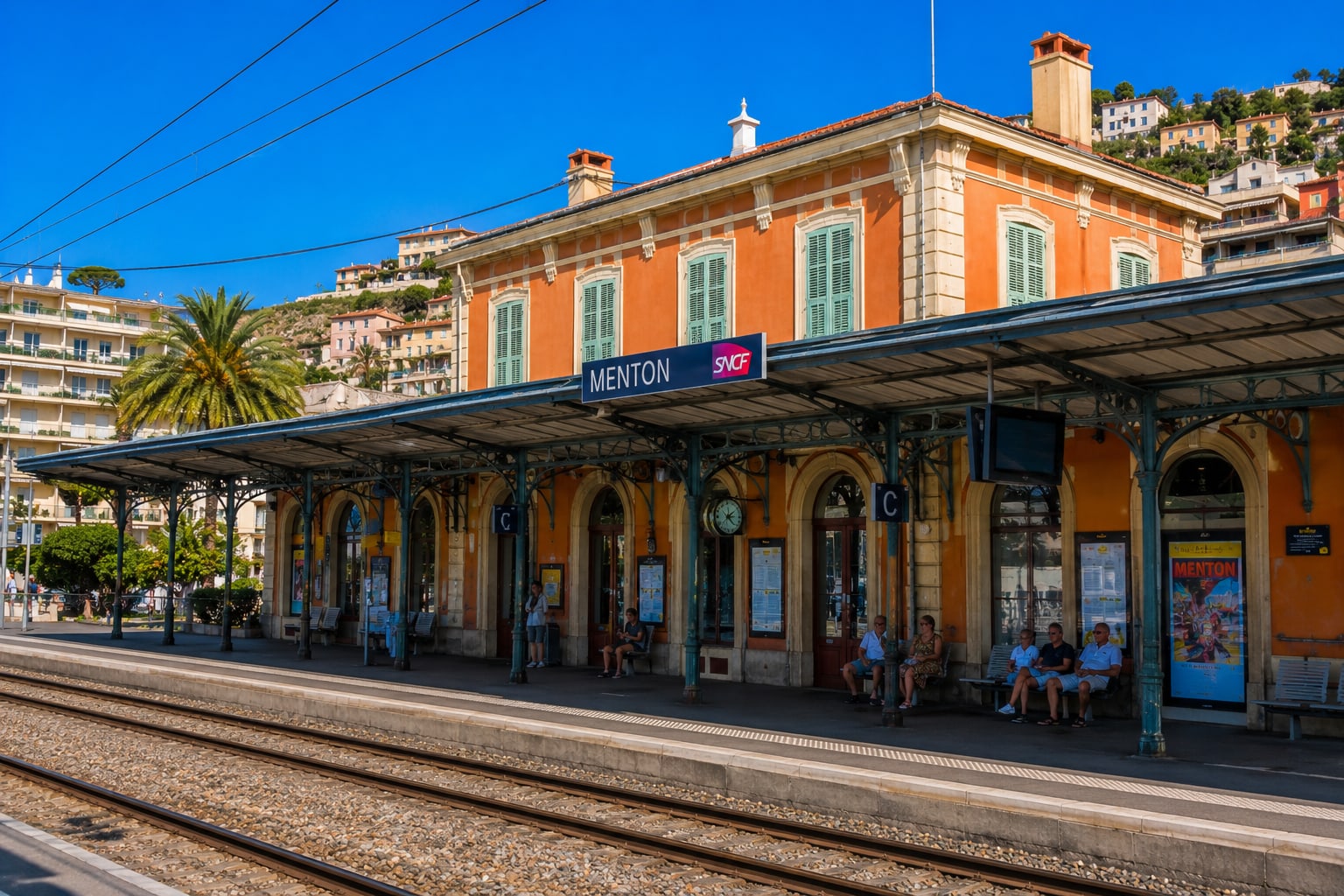
station
station
Menton Station
Main Menton station for TER trains to Monaco, Nice, Ventimiglia and airport-side connections.
Avenue de la Gare, 06500 Menton
Check current hours before visiting
8. The British winter Riviera
The Riviera was not always primarily a summer destination.
For much of the nineteenth century and into the early twentieth, its international reputation was built around winter stays.
Visitors from Britain and northern Europe came for the climate.
Some were seeking relief from illness.
Others wanted social life, leisure or simply an escape from colder cities.
Why British visitors mattered
They helped develop the infrastructure and culture of international tourism.
Their presence contributed to the construction of villas, churches, hotels, gardens and leisure facilities.
They also influenced the way the Mediterranean landscape was described and promoted abroad.
This is one of the subjects Nelson explored in greater depth in his earlier book, Queen Victoria and the Discovery of the Riviera.
Visit: Menton's Belle Époque architecture
Explore the former grand hotels along the waterfront and the historic residential buildings in areas such as Garavan.
Buildings including the Royal Westminster and the former Winter Palace provide useful architectural context.
Many are now hotels or private residences.
Don't assume they are public museums.
What should you notice?
Large windows, balconies, gardens, formal entrances and buildings designed for long seasonal stays.
These weren't simply places where visitors slept for a weekend.
They were part of a social world in which people might spend several months each year on the coast.
A useful reading question
How did international visitors change the local economy and the architecture of towns that already had their own communities and traditions?
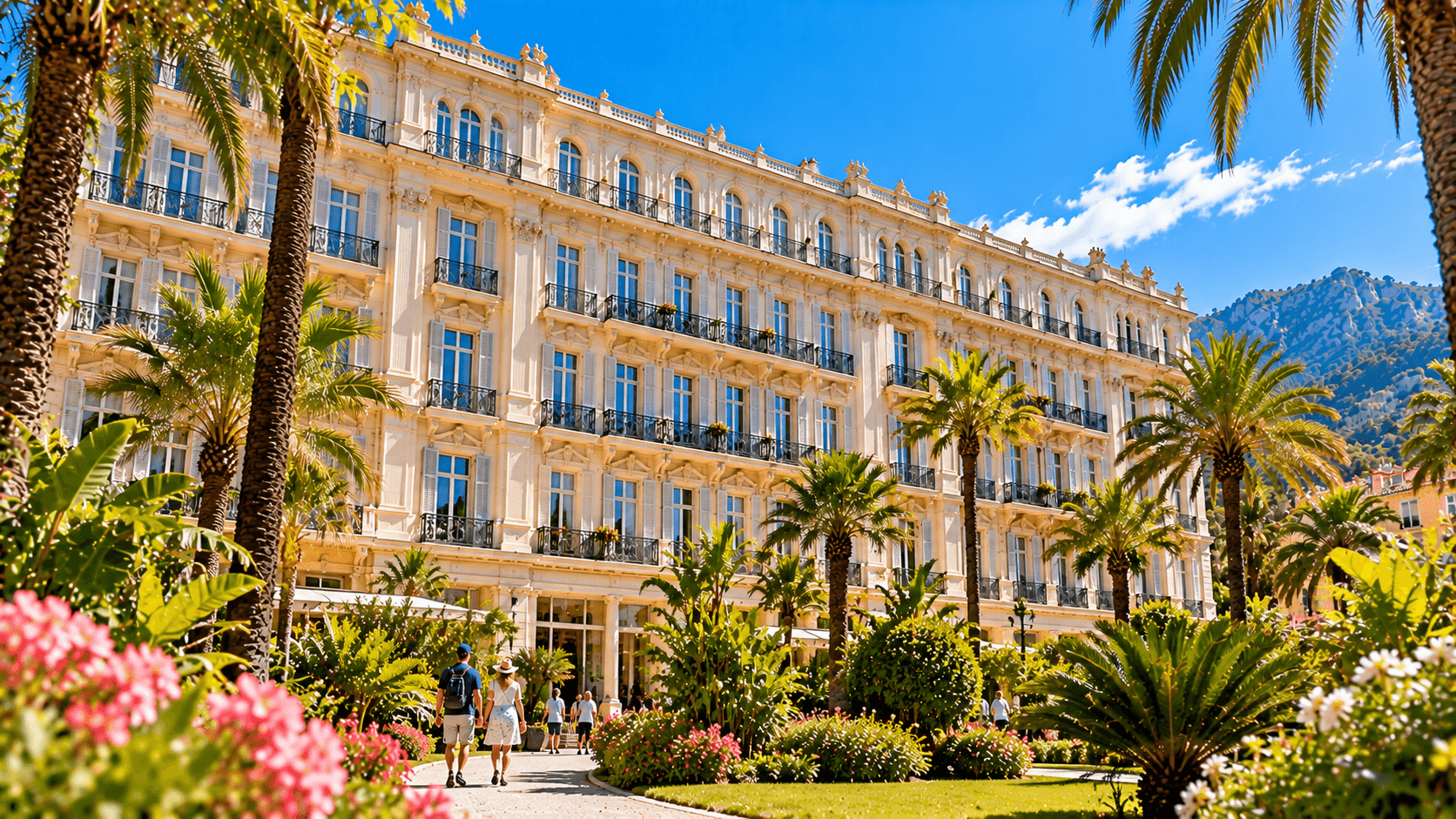
civic
civic
Royal Westminster
Historic seafront hotel still operating. Interior, garden and restaurant access follows the hotel's customer policies.
28 Avenue Félix Faure, 06500 Menton
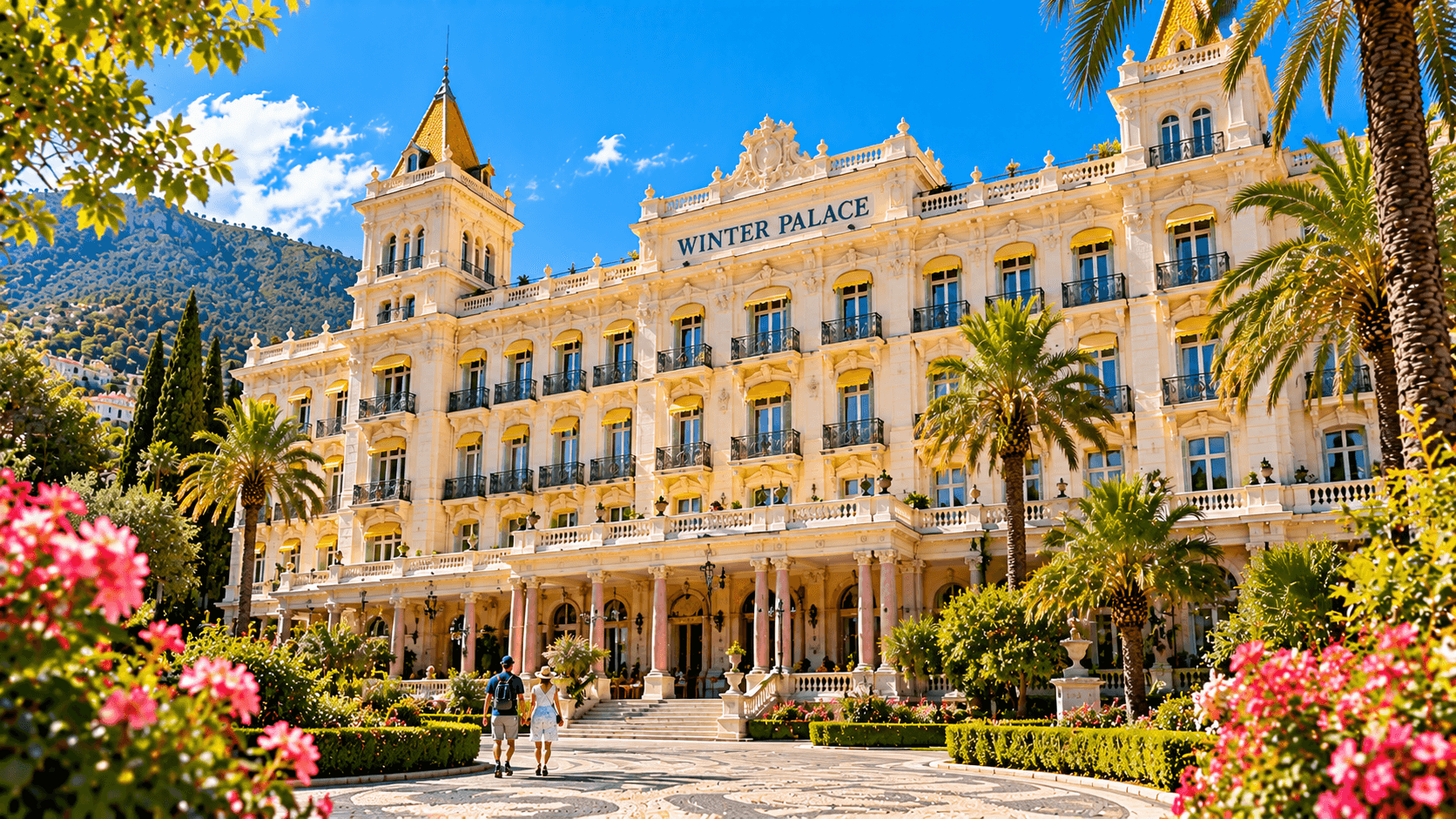
civic
civic
Winter Palace
Former palace hotel converted into private apartments. Uphill exterior stop; interiors and gardens require permission.
20B Avenue Riviera, 06500 Menton
9. The American summer Riviera and the Jazz Age
During the 1920s, a different form of international tourism became increasingly fashionable.
Wealthy Americans, artists and writers helped popularise summer life on the Mediterranean.
Juan-les-Pins and Cap d'Antibes became important centres of the Jazz Age Riviera.
The emphasis shifted towards beaches, swimming, outdoor leisure and a less formal social atmosphere.
The American connection
Gerald and Sara Murphy, F. Scott and Zelda Fitzgerald, Cole Porter and other figures contributed to the region's cultural reputation.
Their private lives and social networks later became part of the mythology of the Riviera.
But the wider transformation involved much more than a handful of famous personalities.
Transport, entertainment, hotels and changing attitudes towards leisure all played a role.
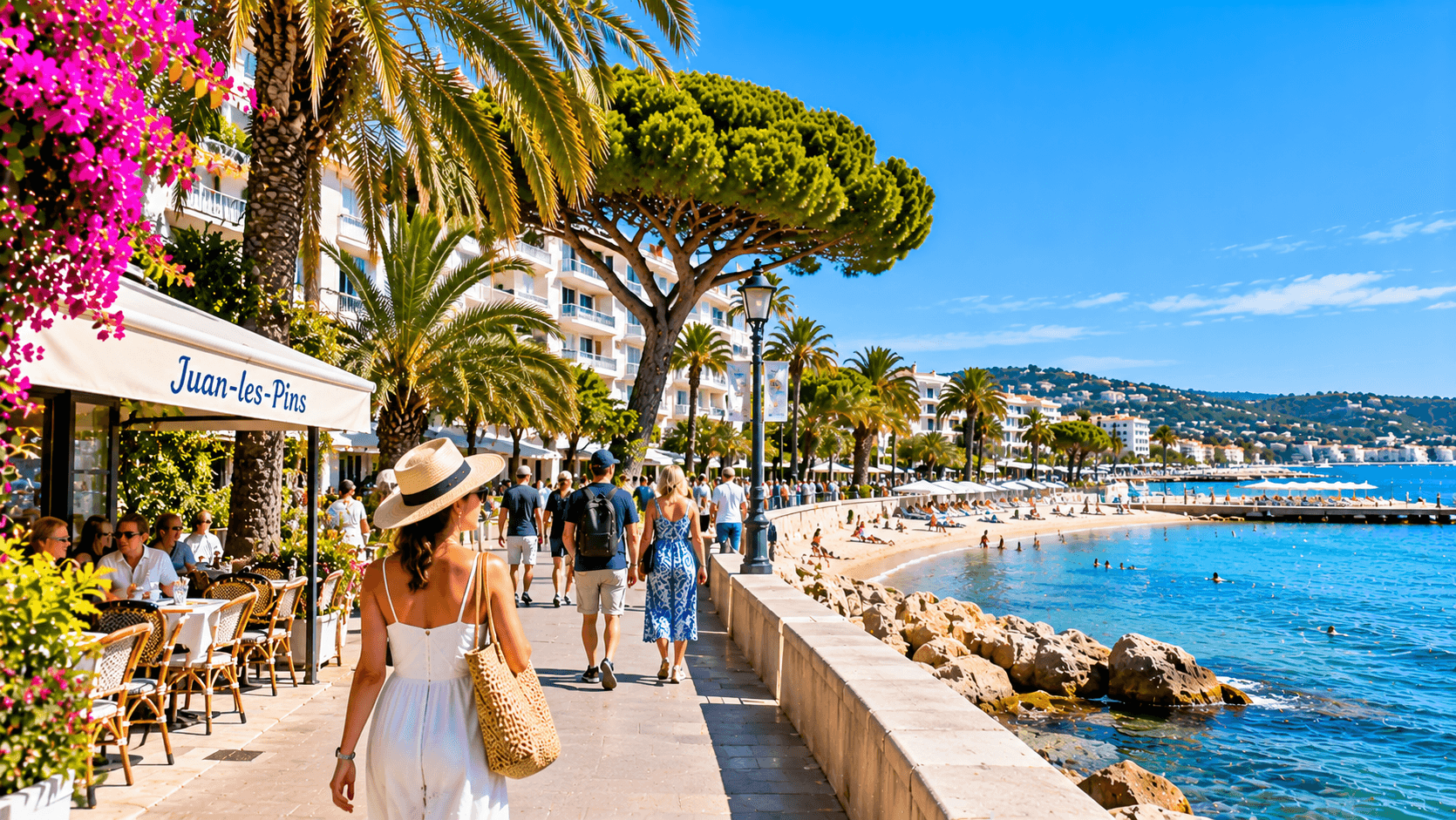
Visit: Juan-les-Pins
A walk around Juan-les-Pins and its waterfront offers an introduction to this later chapter in Riviera tourism.
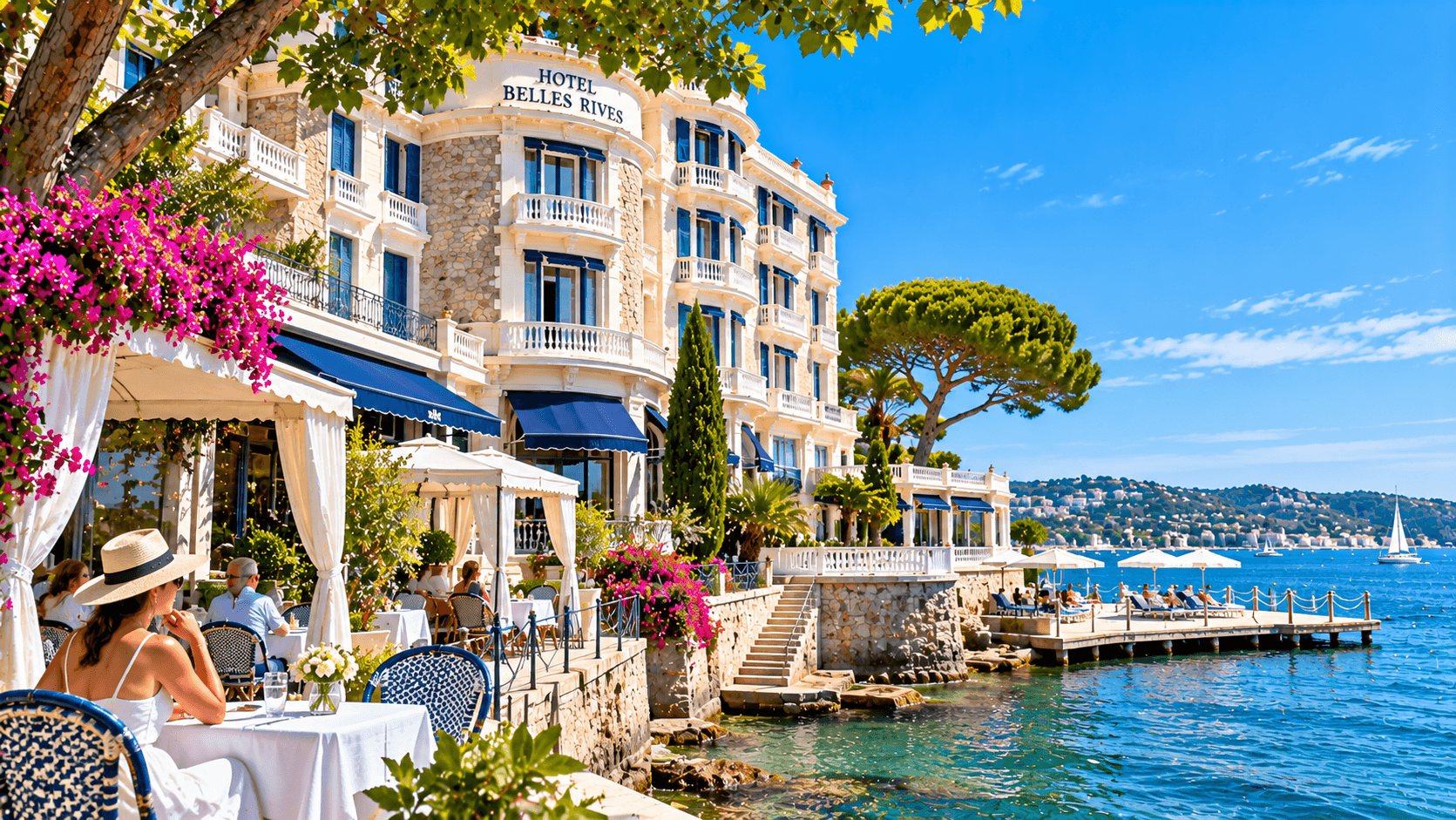
Hôtel Belles Rives, formerly Villa Saint-Louis, is particularly significant because Scott and Zelda Fitzgerald lived there in 1926.
The building is now a private operating hotel.
Enjoy the public waterfront and check the hotel's policies before entering any commercial spaces.
A useful reading question
How did the Riviera change when summer became fashionable alongside its established winter season?
viewpoint
viewpoint
Hôtel Belles Rives / Villa Saint-Louis
The Fitzgeralds' documented 1926 Villa Saint-Louis, now a private hotel. View the context from authorised public areas; confirm bar or restaurant reservations. Beach and pontoon are not unrestricted public facilities.
33 Boulevard Edouard Baudoin, 06160 Juan-les-Pins
walk
walk
Juan-les-Pins public seafront
Public waterfront context for the resort's 1920s summer culture. Choose public sections; private beach concessions and hotel facilities have separate access rules. Not a claim that each fictional beach scene has been located.
Front de mer, Juan-les-Pins, Antibes
10. Two World Wars and a less comfortable history
It's easy to present the Riviera's twentieth century entirely through glamour, art and tourism.
Nelson's history offers a wider perspective.
The region experienced the First World War, political upheaval, the Second World War and occupation.
The lives of residents were affected by military events and changing political circumstances.
Why this matters
Tourist destinations often emphasise continuity.
Historic hotels remain elegant.
Gardens are restored.
Restaurants reopen.
Yet the communities surrounding them may have experienced profound disruption.
A building can look peaceful today while having survived years of uncertainty.
The Second World War
The Riviera's wartime history includes occupation, resistance activity, persecution and liberation.
Nelson's publisher highlights an anecdote involving Jean Moulin's use of an art gallery in Nice as cover for resistance activity.
Such stories are valuable entry points, but they should be explored through dedicated historical sources before being presented as complete accounts of wartime operations.
Visit: local museums and memorials
For this period, choose museums and memorials with documented collections.
A general walking route through attractive streets is not a substitute for historical interpretation.
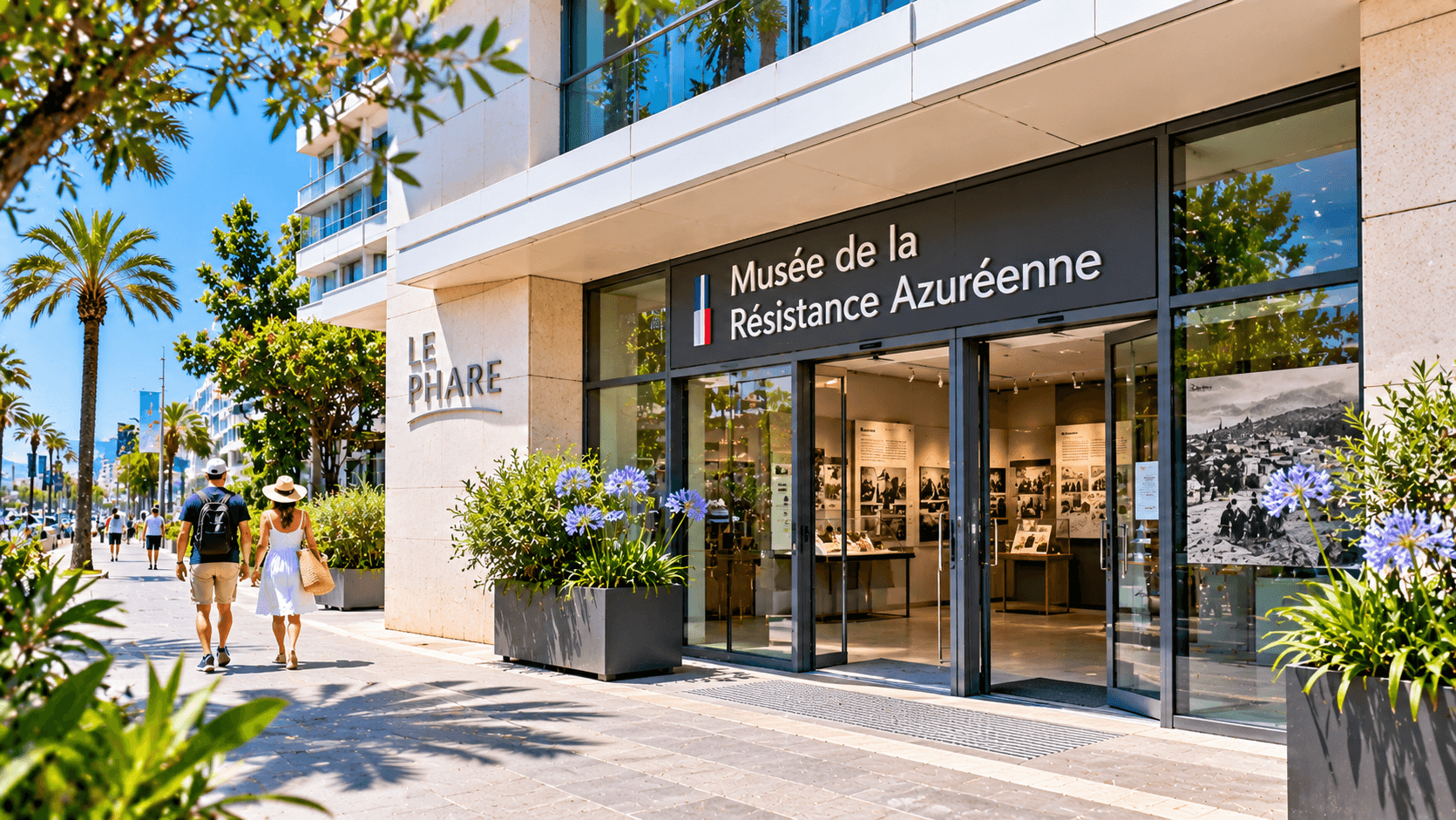
In Nice, the Musée de la Résistance Azuréenne offers a more appropriate starting point. The official tourism listing places it in Le Phare, place des Mosaïques, Arénas, at 455 promenade des Anglais, near Parc Phoenix, not beside the old town. It publishes weekday afternoons, 2–4:30 p.m., for its current November periods, with weekends closed and 11 November excluded. Confirm arrangements directly before travelling; do not assume those hours apply to every future date.
A useful reading question
What parts of a holiday town's history become less visible when its identity is built around beauty and pleasure?
museum
museum
Musée de la Résistance Azuréenne
Resistance history near Parc Phoenix, not in the old town. Official tourism listing checked 5 November 2026; weekends closed in current November periods. Confirm reception for your date; no verified step-free assessment.
Le Phare, place des Mosaïques, 455 promenade des Anglais, 06000 Nice
11. The modern Riviera: from seaside resort to technology region
Nelson's chronological account does not end with the glamorous interwar years.
It also considers the region's postwar transformation.
Tourism continued expanding, and coastal development accelerated.
New industries emerged.
One of the most significant was Sophia Antipolis. Its official history dates the founding association to 21 July 1969 and the arrival of the first company to 1974. The publisher's synopsis uses 1974 as the endpoint of the book's account: that is not the founding date.
Why is Sophia Antipolis important?
The technology park represents a different kind of international Riviera.
Its economy is associated with research, education and business rather than primarily tourism.
It illustrates how the region continued reinventing itself.
Should you visit?
Sophia Antipolis is a working business and research area.
It isn't a conventional sightseeing destination.
For most visitors staying in Menton, understanding its historical significance is more useful than organising a casual excursion through office campuses.
Those with a professional interest in technology, urban development or regional economics may find the subject particularly rewarding.
A useful reading question
Is the Riviera still primarily a holiday destination, or has its identity become more diverse?
12. How to turn the book into three real outings from Menton
You don't need to travel across the entire historical geography of Nelson's book to benefit from it.
For visitors staying in Menton, three carefully chosen outings provide a useful introduction.
Outing one: Menton, Monaco and the changing border
Main themes: Medieval history, political identity, nineteenth-century change.
Suggested duration: One relaxed day, or two shorter excursions.
Begin in Menton's old town.
Explore Rue Longue and the Saint-Michel area.
Continue towards the waterfront and consider how the town expanded beyond its original historic centre.
On a separate short trip, visit Monaco.
The two places offer a useful opportunity to think about their former political relationship.
If you have time, explore the modern border with Italy as another distinct excursion.
What this outing explains: The eastern Riviera's identity developed through changing political relationships rather than a single uninterrupted national history.
Outing two: Nice through three historical periods
Main themes: Prehistory, Roman settlement and international tourism.
Suggested duration: One full day, or two days for museum lovers.
Begin with Cimiez while Terra Amata remains marked closed. Add Terra Amata only after an explicit reopening announcement; its location is historical context, not a promised open museum stop.
Continue towards Cimiez for the Roman archaeological remains and museum.
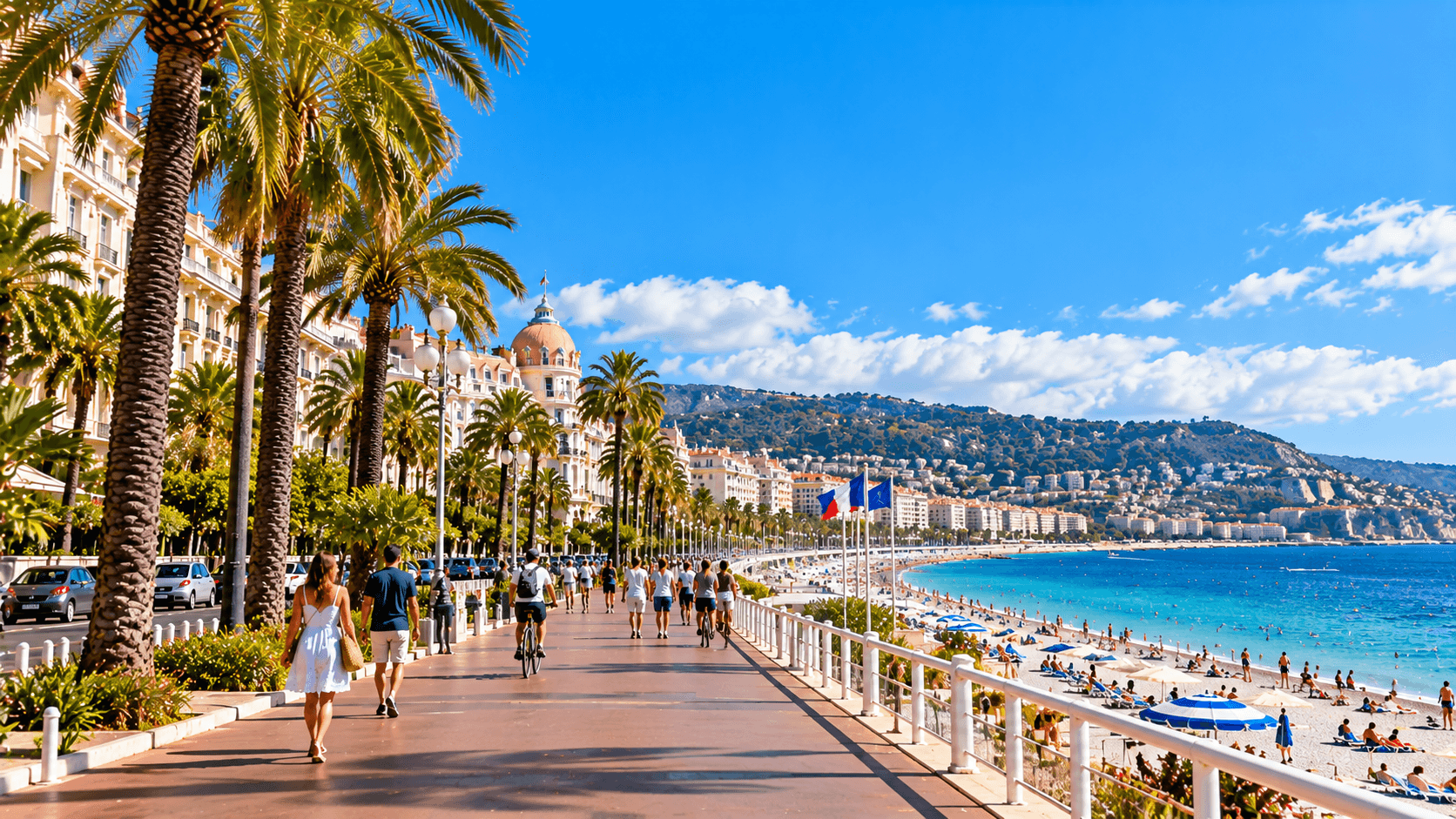
If time permits, finish near the Promenade des Anglais, where the nineteenth-century international resort developed.
This is a substantial itinerary.
Use local transport between the more distant stops rather than attempting to walk everything.
What this outing explains: A single city can contain evidence of dramatically different historical periods.
Outing three: Antibes and the invention of the summer Riviera
Main themes: Ancient and medieval town history, international tourism and the Jazz Age.
Suggested duration: One day.
Travel from Menton to Antibes or Juan-les-Pins by regional train.
Explore the historic centre of Antibes and its waterfront.
Then continue towards Juan-les-Pins to discover the beaches and hotel environment associated with the American expatriate world of the 1920s.
You don't need to enter private estates.
The public streets and coastline provide plenty of historical context.
What this outing explains: The Riviera's present summer identity is the result of a relatively recent transformation.
walk
walk
Promenade des Anglais
Nice's public seafront and a contextual finish for the Gary walk. Choose a manageable section; a seaside route is not a certification of uninterrupted step-free access or current conditions.
Promenade des Anglais, Nice
neighbourhood
neighbourhood
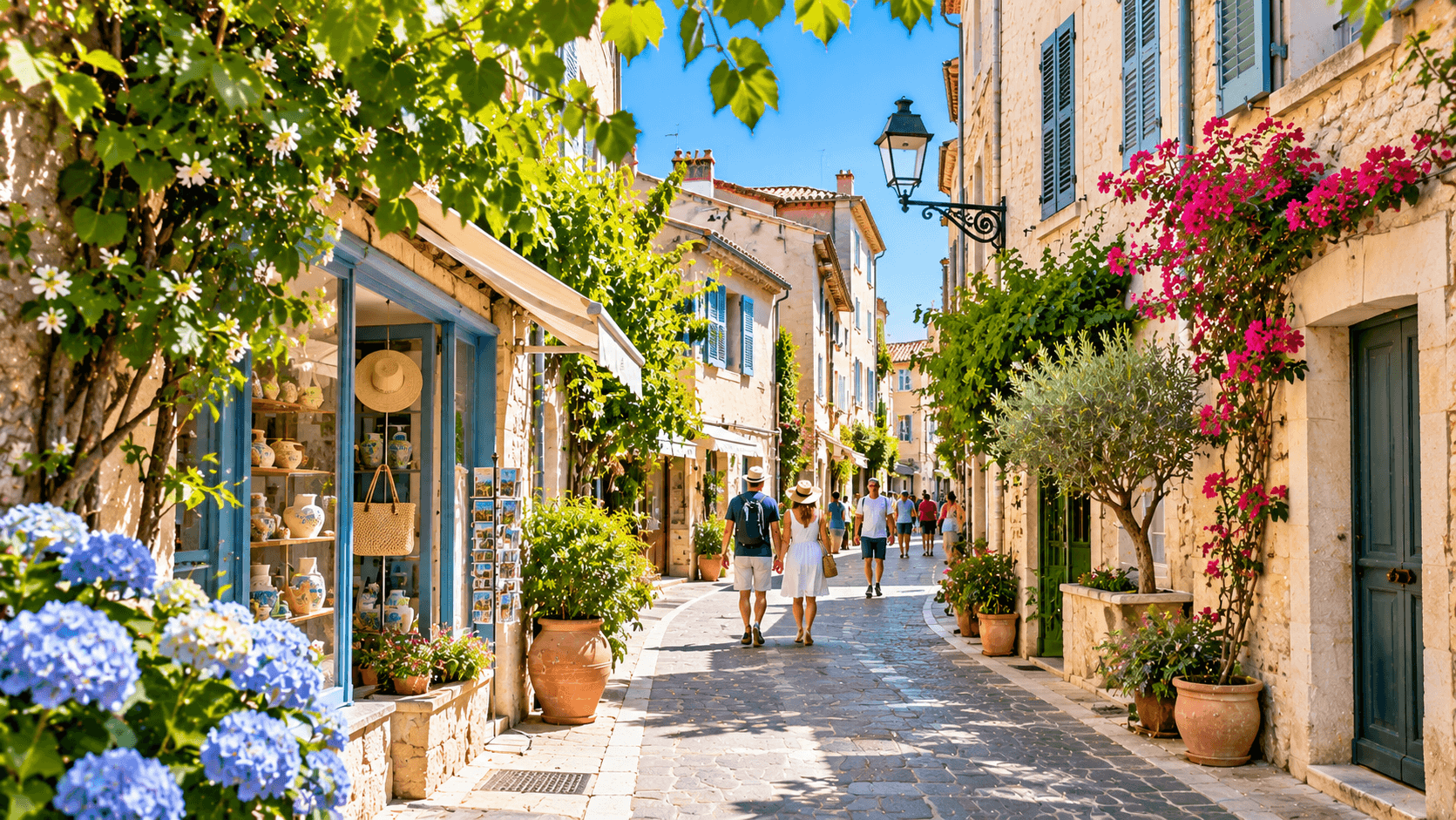
Vieil Antibes
Historic streets and everyday town life: a thematic stop, not a verified doorway from Liberty Bar. Use public streets and respect residents.
Antibes
port
port
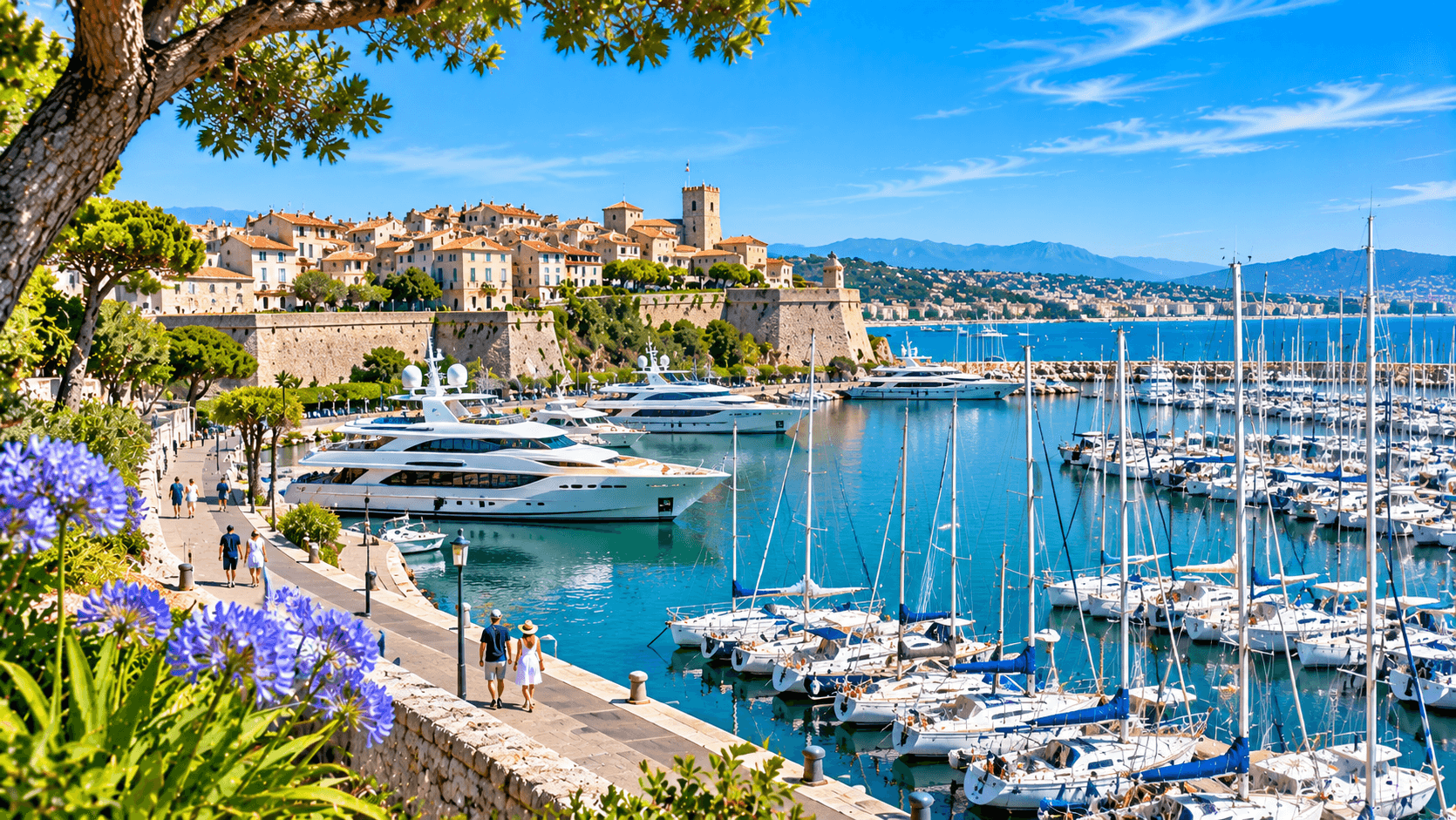
Port Vauban
Modern marina and maritime work beside the old town; thematic comparison, not a confirmed novel scene. Public areas only; docks and working zones may be restricted.
Antibes
13. A comparison: what each destination teaches you
These are original AzurMenton travel recommendations organised around the book's historical themes. They aren't presented as an itinerary supplied by Michael Nelson.
| Destination | Main historical theme | Useful places |
|---|---|---|
| Menton | Changing borders and winter tourism | Old town, Saint-Michel, Belle Époque buildings |
| Monaco | Sovereignty and dynastic continuity | Monaco-Ville and historic public spaces |
| Nice | Prehistory, Roman history and resort development | Terra Amata currently marked closed, Cimiez, Promenade des Anglais |
| Antibes | Historic coastal town and maritime life | Old town, harbour and fortifications |
| Juan-les-Pins | American influence and summer tourism | Beaches, seafront, Belles Rives context |
| Sophia Antipolis | Postwar economic transformation | Research and technology district, mainly of specialist interest |
14. What the book does particularly well
The most useful characteristic of Nelson's work is its breadth.
Many popular books about the Riviera concentrate on one glamorous period.
The Belle Époque.
The Jazz Age.
The arrival of artists and writers.
Hollywood and the Cannes Film Festival.
Nelson places these familiar episodes within a much longer history.
He reminds readers that the region had already experienced many centuries of migration, warfare, political change and cultural exchange.
That wider perspective makes even familiar places more interesting.
A beautiful villa is no longer simply a beautiful villa.
It belongs to a particular stage in the economic and social development of the coast.
A modern national border becomes the outcome of earlier political decisions.
A railway station becomes evidence of a transformation in accessibility.
A question worth keeping in mind
Who benefits when a place is reinvented?
The Riviera's development brought new investment, infrastructure and cultural institutions.
It also changed land use, housing, employment and the relationship between visitors and local communities.
Understanding those effects is part of understanding the region.
15. Where readers should be cautious
A compact regional history cannot explore every historical debate in depth.
Nelson's book is best understood as an accessible overview rather than an exhaustive academic reference.
The geographical scope is broad
The author uses an expansive definition of the Riviera, including parts of Provence beyond what many visitors would ordinarily call the Côte d'Azur.
That makes his account useful for understanding wider historical connections.
But readers should avoid treating every episode in Provençal history as if it happened directly in Menton or Nice.
Cosmopolitanism is an interpretation
Nelson emphasises the region's long history of connections with different peoples and cultures.
This is a valuable organising idea.
However, historians may disagree about how far cosmopolitanism provides the best explanation for the region's development.
The linked French History review could not be retrieved during this check. Its arguments are therefore not quoted or adopted here; consult the review itself before attributing a particular judgement to it.
Colourful anecdotes need context
The book includes memorable historical episodes.
Those can encourage further reading, but individual anecdotes shouldn't be lifted from a popular history and used as definitive evidence without examining their sources and historical circumstances.
Dates can be simplified
The Riviera's political history is complicated.
For example, Nice joined France in 1860, while Menton's definitive incorporation followed in 1861.
These distinctions matter when explaining individual towns.
A broad regional narrative shouldn't erase local differences.
16. Who will enjoy The French Riviera: A History?
First-time visitors who want to understand what they are seeing beyond the usual tourism information.
Longer-stay travellers who have time to explore the region through several themed outings.
History enthusiasts looking for an accessible introduction before moving on to more specialised books.
Readers of Riviera fiction who want to understand the historical background of authors such as Fitzgerald, Sagan and Simenon.
Visitors interested in architecture and gardens who want to connect individual historic buildings with the development of tourism and international settlement.
The book is less suitable for someone looking for a detailed walking guide with precise routes, opening hours and transport instructions.
That's where a separate contemporary guide becomes useful.
17. What to read next
Once you have a general historical framework, individual books can bring particular periods to life.
Queen Victoria and the Discovery of the Riviera, Michael Nelson
For readers interested in the development of the international winter resort and the influence of British visitors.
Americans and the Making of the Riviera, Michael Nelson
For a more detailed exploration of American visitors and the rise of summer tourism.
Tender Is the Night, F. Scott Fitzgerald
For a fictional portrait of wealthy American expatriate society during the Jazz Age.
The Long Afternoon, Giles Waterfield
For a novel inspired by the history of a British family and its villa in Menton.
Liberty Bar, Georges Simenon
For a detective novel revealing a less glamorous side of Antibes and Cannes during the 1930s.
The Houses That Remember, Anton Biletskyi-Volokh
For eight narrative nonfiction stories about historic Riviera homes and the people whose lives shaped them.
Together, these works offer a useful balance between regional history, biography and fiction.
They shouldn't be treated as equivalent kinds of evidence.
A historical overview establishes broad context.
A documented biography explores individual lives.
A novel reveals how writers imagine and interpret the region.
Frequently asked questions
What is The French Riviera: A History about?
Michael Nelson presents a broad historical account of the Riviera, from prehistoric settlement through ancient and medieval history, political change, tourism, the World Wars and modern economic development.
Who is Michael Nelson?
A British historian and former Reuters executive who has written several books about the history of the French Riviera.
When was the book published?
It was published by Matador, an imprint of Troubador Publishing, on 28 October 2016.
Is it mainly about wealthy tourists?
No. The history of international tourism is important, but the book also covers prehistory, ancient settlement, political conflicts, revolutions and wars.
Does it focus on Menton?
It covers a much wider geographical region. Menton appears within that broader history but is not the sole subject.
Is this a guidebook?
No. It is a popular regional history. This AzurMenton companion adds practical suggestions for places to explore.
Is it suitable for readers unfamiliar with French history?
Yes. Its compact format makes it an accessible starting point, although the history of different dynasties and territories can sometimes require additional context.
Can I follow the book's history from Menton?
Yes, in part. Menton provides a convenient base for visits to Monaco, Nice, Antibes and Juan-les-Pins. Other parts of the book's geography require longer journeys.
Does the book cover the Jazz Age?
Yes, within its broader treatment of international tourism and the development of the Riviera.
Is it an academic history?
It is best understood as popular history rather than an exhaustive academic reference. The academic review linked below was not accessible during this check; this guide does not claim to summarise its assessment.
Is there a French translation?
The identified edition is in English. The material checked does not establish current French-translation availability; check catalogues rather than treating that uncertainty as proof that none exists.
Final thoughts: a different way to look at the coast
The French Riviera is remarkably good at making the present seem permanent.
The sea has always been blue.
The mountains have always been there.
And the old towns appear to have grown naturally into the places we know today.
But human history is much less stable than the landscape.
Rulers changed.
Borders moved.
Roads and railways altered the relationship between towns.
Foreign visitors created new industries.
Wars interrupted everyday life.
And modern technology brought new economic activity to a region once celebrated primarily for its climate.
Michael Nelson's The French Riviera: A History offers a useful introduction to that longer story.
Read it before your trip, and Menton's historic streets may look different.
Visit Nice, and you'll begin to notice the distance between ancient settlement and modern tourism.
Travel to Antibes, and the Jazz Age becomes one small chapter in a much older history.
The coast will still be beautiful.
But you'll have more reasons to stop and look.
Sources and further reading
The French Riviera: A History — Troubador Publishing
Michael Nelson Books — Author's Website
French History — Academic Review of Michael Nelson's Book
City of Menton — Official Historical Overview
Regional Heritage Inventory — Menton as a Historic Seaside Resort
Terra Amata: City of Nice closure notice
Nice-Cimiez: museum visitor information
Musée de la Résistance Azuréenne: official tourism listing
Sophia Antipolis: official history
Research checked on 5 November 2026 against the publisher, author's website, municipal history, museum and tourism pages and Sophia Antipolis history. The regional inventory page required a browser challenge and the academic review was inaccessible; neither was independently revalidated. This guide is not a full-text, chapter-by-chapter analysis of Nelson's book. Individual local history details and contemporary visitor recommendations were researched separately. Routes are original AzurMenton suggestions, not itineraries supplied by the author. The cover is a project illustration, not the verified publisher's cover or a documentary photograph.