Menton to Monaco
Often one of the simplest options, especially during busy event periods.
Useful links
Menton to Nice
Good for museums, events, Jazz Fest, Carnival and airport access planning.
Useful links
Menton to Ventimiglia / Italy
A practical choice for markets, Italian food and a short cross-border trip.
Useful links
Sunshine, roulette and chance
The French Riviera looks magnificent in Jacques Demy's La Baie des Anges.
The Mediterranean stretches beyond elegant promenades. Hotels, casinos and sunlit streets provide the setting for people who have come south in search of something.
Pleasure, perhaps.
Freedom.
Money.
Or the feeling that life might suddenly change.
For Jean Fournier, a modest young bank employee played by Claude Mann, that change begins at a roulette table.
He discovers gambling almost by accident.
An early success convinces him to travel to Nice, where he meets Jackie, played by Jeanne Moreau.
She is glamorous, impulsive and completely absorbed by the world of gambling.
Their attraction is immediate.
But the relationship becomes inseparable from the excitement, uncertainty and emotional instability of the casino.
Released in 1963, La Baie des Anges is one of Demy's most distinctive films.
Unlike the colourful musicals for which he later became internationally famous, this story is filmed in luminous black and white.
Its Riviera is beautiful but far from carefree.
And the film's locations offer an unusual way to explore the region.
Nice and Monte Carlo provide important parts of the actual production geography. Casinos in Cannes and Juan-les-Pins contributed additional settings, while some interiors were filmed much farther away.
For visitors staying in Menton, this creates an opportunity to discover the Riviera behind Demy's images without confusing the film's fictional geography with the places where the cameras actually stood.
1. Discover La Baie des Anges
Original title: La Baie des Anges
English title: Bay of Angels
Director and screenwriter: Jacques Demy
French theatrical release: 1 March 1963
Principal cast: Jeanne Moreau, Claude Mann, Paul Guers, Henri Nassiet
Cinematography: Jean Rabier
Music: Michel Legrand
Production design: Bernard Evein
Costumes for Jeanne Moreau: Pierre Cardin
Genre: Romantic drama / Psychological drama
Format: Black and white
Running time: 84 minutes in the CNC and Criterion records; Ciné-Tamaris lists 79 minutes and the departmental cultural portal 90. The catalogues disagree; check the edition rather than assuming one uniform duration.
The film was shot in autumn 1962 and released the following March.
It was Demy's second feature film, following Lola (1961) and preceding The Umbrellas of Cherbourg (1964).
That position in his career is important.
La Baie des Anges already contains several elements that became associated with Demy's cinema: music, chance encounters, intense emotions, stylised composition and characters who pursue dreams that may not be good for them.
But here those ideas are presented with unusual directness.
What is the film really about?
Demy was less interested in explaining casino gambling than in exploring the mechanism of obsession.
The film's relationship is driven by the constant possibility of winning or losing.
The roulette wheel offers a perfect visual expression of that uncertainty.
People wait.
They make decisions.
They hope.
They lose control.
The same rhythm begins to shape Jean and Jackie's relationship.
Where to watch
Ciné-Tamaris provides production information and MK2 Films is listed as the current distributor by the CNC. Criterion describes a restored edition; availability depends on your country and edition.
La Baie des Anges — Ciné-Tamaris
Bay of Angels — The Criterion Collection
Availability varies by country and edition.
2. What makes Demy's Riviera different?
Many classic films present the French Riviera as a place where beautiful people enjoy an enviable lifestyle.
Demy uses that image, but he also undermines it.
The sea is bright.
The streets are attractive.
The casinos appear elegant.
Yet the characters are repeatedly drawn into enclosed rooms where the outside world seems to disappear.
The contrast between sunshine and obsession
The Mediterranean offers openness and movement.
The casino creates enclosure and repetition.
A roulette table becomes a small universe in which the same possibilities are endlessly rearranged.
The film moves between these worlds.
That contrast is central to its emotional effect.
Why black and white?
Demy's decision was deliberate.
The film's costumes, spaces and visual compositions were planned around an exceptionally luminous black-and-white aesthetic.
Jeanne Moreau's platinum-blonde appearance and white costumes stand out against casino interiors, hotel rooms and the bright Riviera landscape.
The Cinémathèque française has explained how the restoration sought to preserve the film's unusual treatment of natural light, bright exteriors and high-contrast interiors.
The result is a Riviera that looks glamorous and strangely exposed at the same time.
Michel Legrand's music
Legrand's score contributes strongly to the film's sense of movement and emotional momentum.
It connects scenes and intensifies the impression that events are carrying the characters forward.
The music doesn't simply decorate the scenery.
It becomes part of the film's rhythm.
3. Where was La Baie des Anges filmed?
The most useful starting point is the production information published by Ciné-Tamaris, the film's rights holder.
It identifies location shooting in Nice, Monte Carlo and Paris between 17 September and 28 October 1962.
It also records cooperation from casinos in Cannes, Monte Carlo and Juan-les-Pins.
The casino at Juan-les-Pins was used to represent the casino at Enghien-les-Bains, near Paris.
Independent location catalogues provide additional details, but not every entry is equally well documented.
Filming geography at a glance
This distinction matters because La Baie des Anges creates a continuous fictional world from locations that are not necessarily geographically adjacent.
A viewer may see a casino interior and assume it belongs to the building shown in the previous exterior.
In reality, the two images may have been recorded in different towns.
| Location | Production connection | Confidence |
|---|---|---|
| Nice, Promenade des Anglais | Actual Riviera exterior footage | Confirmed |
| Nice, urban streets | Exterior sequences and period settings | Confirmed at city level |
| Monte Carlo | Casino and urban sequences | Confirmed |
| Juan-les-Pins casino | Represents Enghien-les-Bains casino in the film | Confirmed |
| Cannes casino | Identified as participating in the production | Confirmed at production level |
| Enghien-les-Bains casino | Identified for casino interior scenes in location records | Further scene-level verification useful |
| Villefranche-sur-Mer | Suggested in wider regional associations, but not established by primary production records reviewed here | Unconfirmed |
4. Nice: the real heart of the film's Riviera
For a visitor staying in Menton, Nice is the strongest destination for a Demy-inspired outing.
The title itself refers to the famous bay around which Nice developed.
Its sweep of coastline and long promenade have become central to the city's identity.
The film uses the city as both a real setting and a carefully composed visual environment.
The Promenade des Anglais
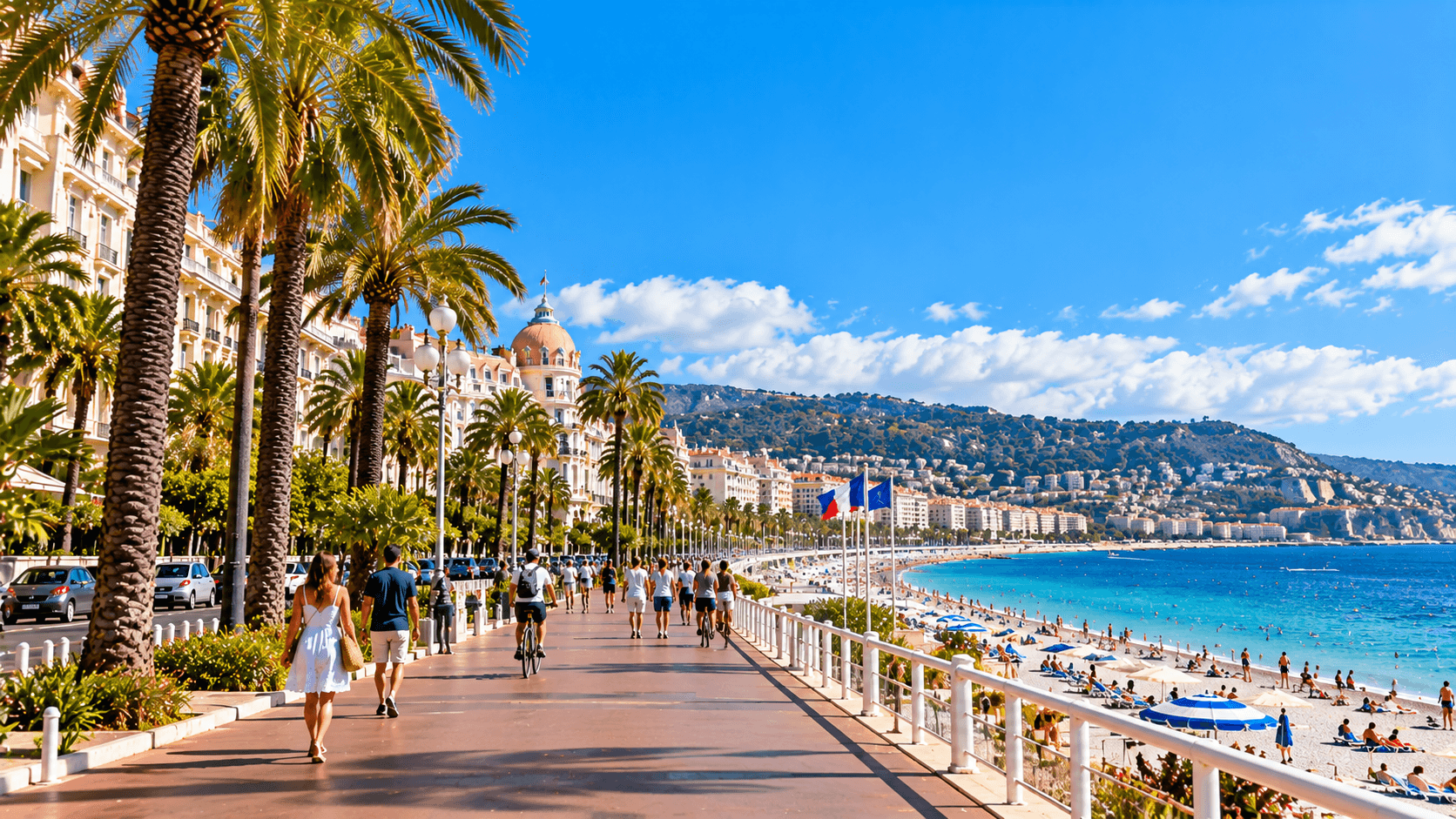
Start with Nice's most recognisable waterfront.
The wide promenade follows the curve of the Baie des Anges, with the Mediterranean on one side and historic hotels on the other.
This landscape appears in the film's visual language and in the celebrated opening sequence.
The Cinémathèque française's restoration account describes the work undertaken on the film's opening tracking shot overlooking the bay.
What should you look for?
The curve of the coastline.
The relationship between the road, promenade and seafront buildings.
The brightness of the Mediterranean.
The way architectural forms repeat along the boulevard.
These elements help explain Demy's choice of location.
But today's promenade is not identical to the one filmed in 1962.
Road arrangements, public spaces, hotel fronts and surrounding buildings have changed.
A useful comparison
Watch the opening sequence before your visit.
Then stand somewhere safe on the public promenade and observe the relationship between the sea and city.
Don't attempt to reproduce a camera position from a traffic lane.
The purpose is to understand the visual composition, not to recreate a moving film shot under unsafe conditions.
walk
walk
Promenade des Anglais
Nice's public seafront and a contextual finish for the Gary walk. Choose a manageable section; a seaside route is not a certification of uninterrupted step-free access or current conditions.
Promenade des Anglais, Nice
5. The casino world: glamour and confinement
Casinos are central to La Baie des Anges.
They provide the spaces where Jean discovers gambling and where his relationship with Jackie develops.
Yet the film's casino geography is more complex than the story suggests.
Juan-les-Pins: a casino playing another casino
Published production records confirm that the Juan-les-Pins casino helped represent Enghien-les-Bains near Paris.
This is an excellent example of cinematic substitution.
The viewer sees a casino that belongs to the fictional story's northern French geography.
The real production location was on the Mediterranean coast.
Monaco: the great casino environment
The Casino de Monte-Carlo provided one of the most important real Riviera settings.
Its architecture and international reputation made it a natural choice for a story about gambling and desire.
However, the screen version may combine location footage with separately recorded interiors.
Cannes: another production connection
The former Casino Municipal de Cannes is identified in specialist location research.
That historical building was demolished in 1979.
It cannot be visited today as a surviving film location.
Visitors should not confuse it with current casino establishments in Cannes.
Why this matters
The screen location is not always the physical location.
A casino can appear in a film under one name while the footage comes from another town.
A surviving modern casino may occupy an entirely different building from the one used during production.
For a filming-location guide, those distinctions are more important than simply listing famous casinos.
6. A film-inspired walk along Nice's Baie des Anges
This is the main itinerary we recommend from Menton.
It combines a confirmed filmed waterfront with nearby public spaces that provide historical and cinematic context.
It is not presented as a reconstruction of every movement Jean and Jackie make.
Stop 1. Promenade des Anglais
Film connection: Confirmed Riviera filming location.
Begin along the seafront.
Take time to appreciate the open horizon and the long curve of the bay.
The film's extraordinary light becomes easier to understand when you see how sunshine reflects from the water and pale buildings.
This is also a good place to think about the contrast between the freedom of the open coast and the enclosed spaces of the casino.
Suggested time: 20–30 minutes.
Stop 2. Jardin Albert 1er
Connection: Thematic architectural and urban stop; no specific shot confirmed.
Continue towards central Nice.
The gardens provide a landscaped transition between the waterfront and the city.
They are useful for understanding Nice as a resort destination with parks, promenades and places to gather.
The area has changed over time, so it should not be treated as an unchanged 1962 film set.
The City of Nice lists the garden bandstand as closed 2–9 November 2026 for marathon preparation. This is not a closure notice for the whole garden; events and installation work may change the pedestrian route.
Suggested time: 15–20 minutes.
Stop 3. Place Masséna
Connection: City context, not an independently verified individual filming position.
Place Masséna provides a striking example of Nice's formal urban architecture.
Its buildings, colours and open spaces differ from the close interiors that dominate the casino scenes.
The square offers an opportunity to look at the relationship between public urban life and the private world of luxury establishments.
Suggested time: 15–20 minutes.
Stop 4. Old Nice
Connection: Confirmed wider production area, but exact street address requires additional research.
Production accounts describe the use of a seventeenth-century building in Vieux Nice for a room shared by the central characters.
Costa-Gavras, who worked as an assistant director, helped locate suitable spaces.
This doesn't establish that every historic lane in Vieux Nice appears in the film.
Instead, explore the neighbourhood's real architecture and consider how old buildings could be adapted for Demy's visual world.
Suggested time: 30–45 minutes.
Stop 5. Quai des États-Unis and the waterfront
Connection: Thematic conclusion alongside the filmed Baie des Anges.
Finish with another view of the sea.
The contrast with the city streets helps reproduce the feeling, rather than the exact geography, of Demy's film.
The Mediterranean seems open and limitless.
The characters' choices are anything but.
Suggested time: 20–30 minutes.
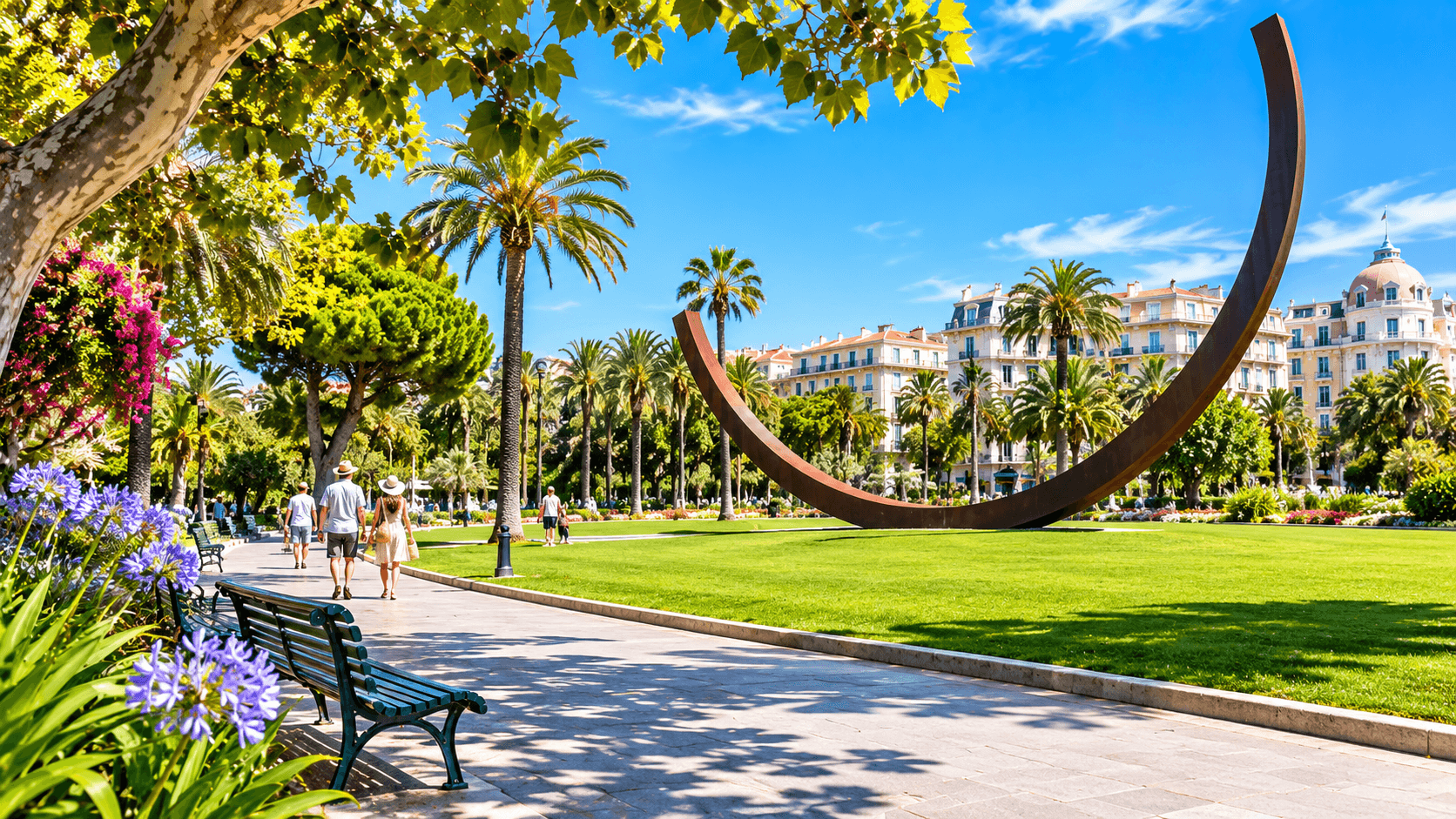
garden
garden
Jardin Albert Ier
Public garden linking the seafront and central Nice; a thematic Demy stop, not a verified shot. The bandstand is listed closed 2–9 November 2026 for marathon preparation, not the whole garden. Check event restrictions.
Place Masséna / Avenue de Verdun, Nice
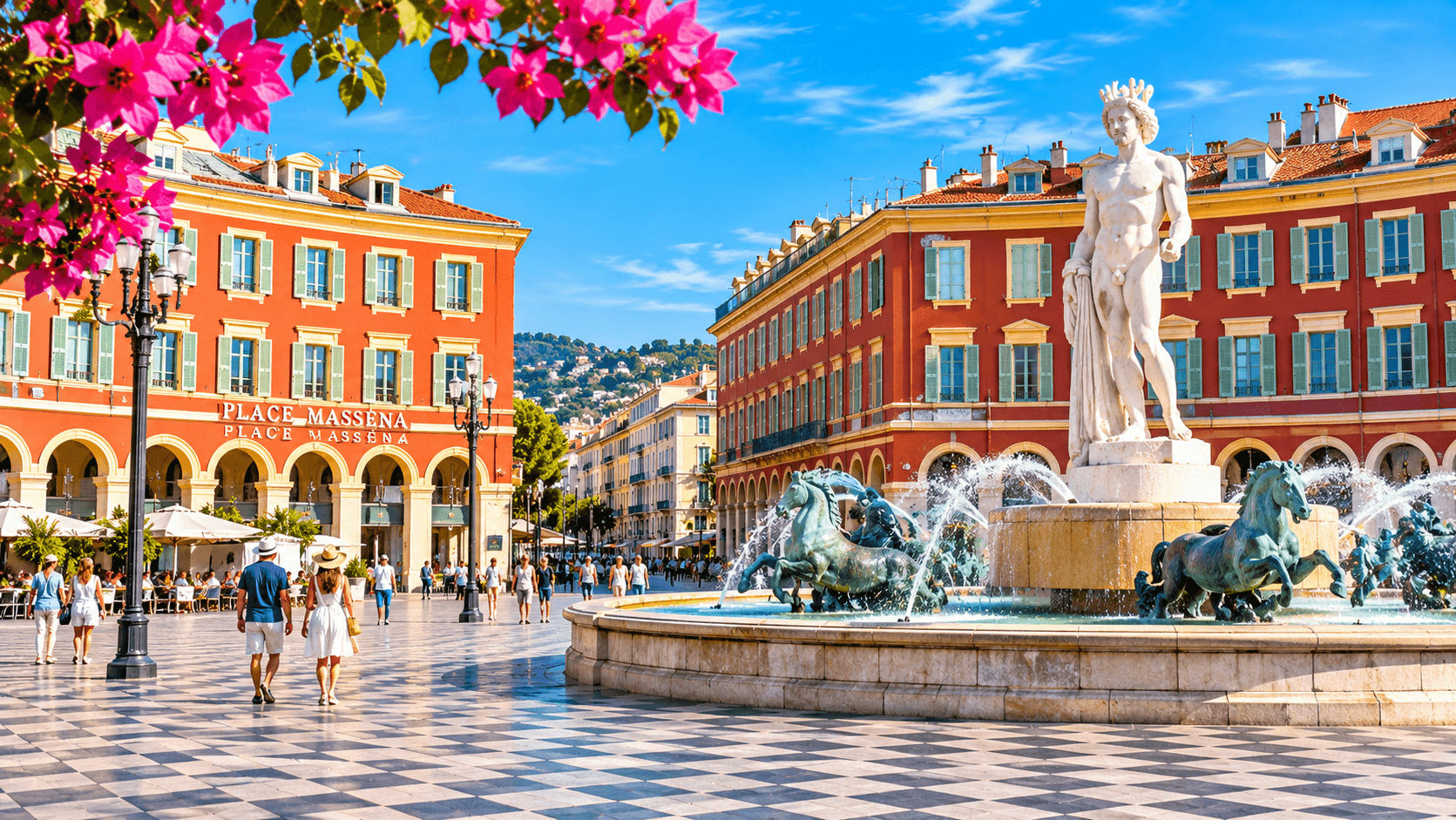
civic
civic
Place Masséna
Central public square for urban and architectural context, not an authenticated La Baie des Anges camera position. Tramways and event layouts require attention.
Place Masséna, Nice
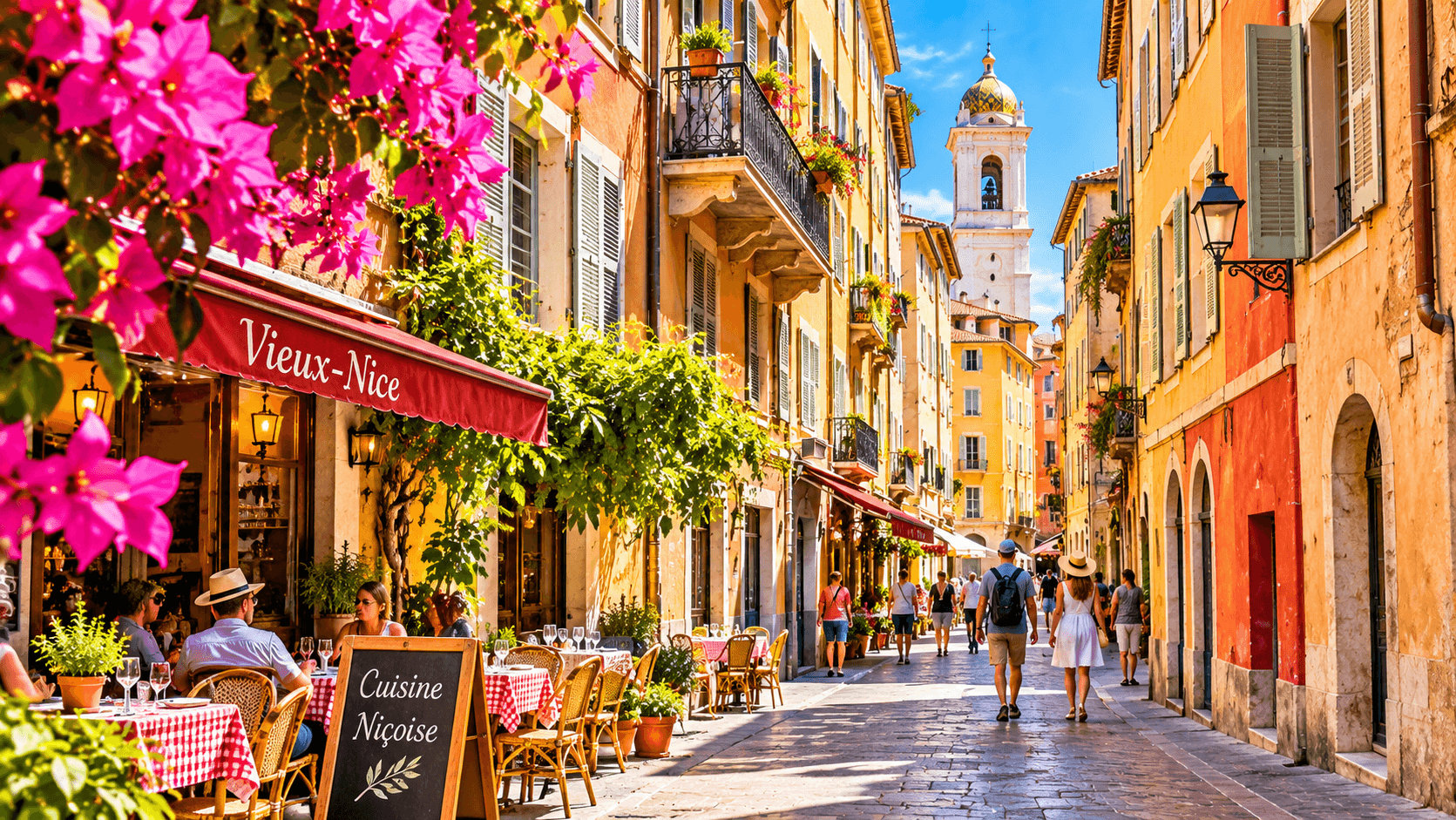
walk
walk
Vieux-Nice
Historic neighbourhood, not one filming doorway. The exact building used for Demy's room scenes is not established here. Expect varied paving, narrow lanes and possible steps; not assessed as continuously step-free.
Vieux-Nice, Nice
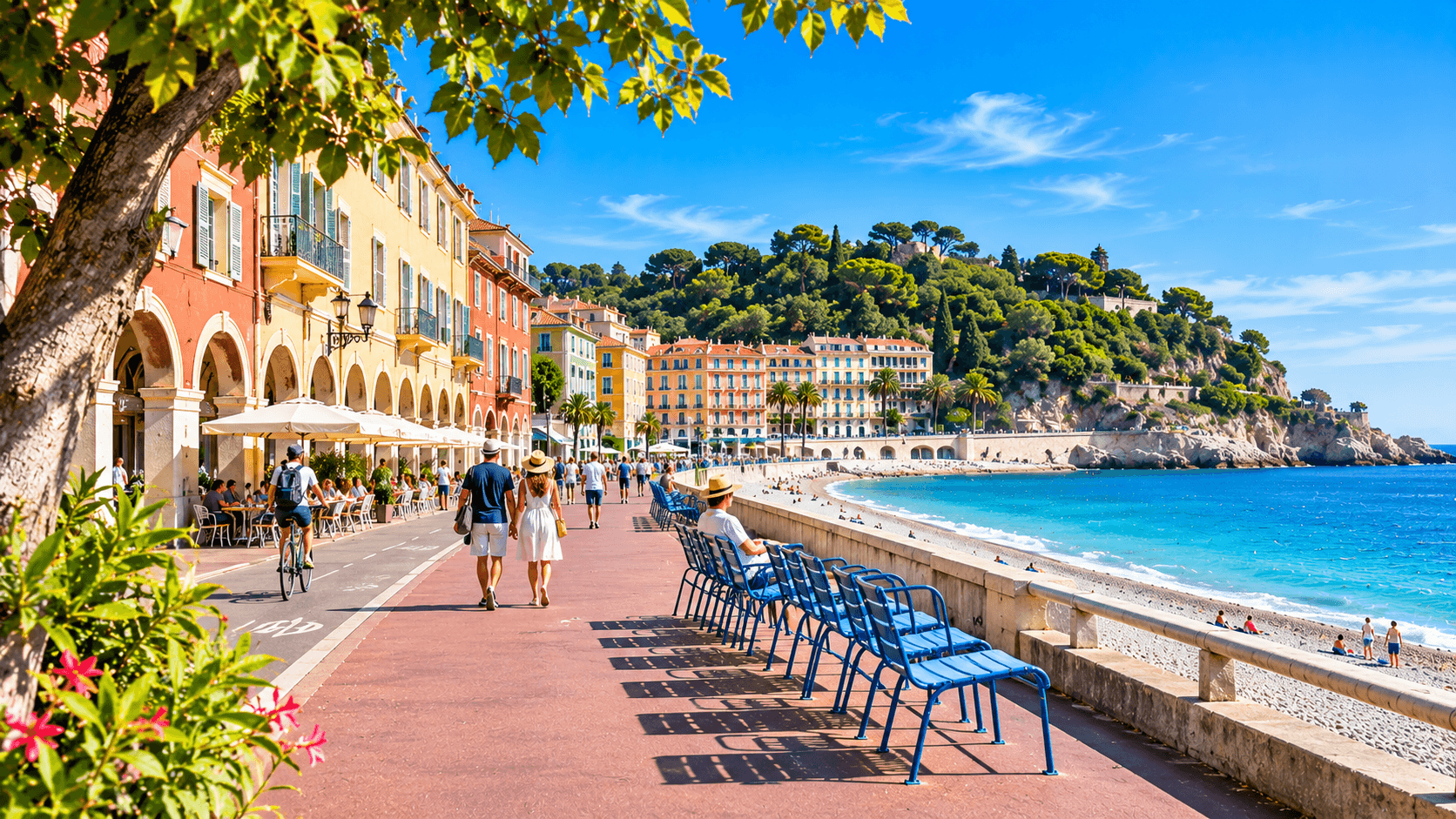
walk
walk
Quai des États-Unis
Public waterfront beside Old Nice: a thematic conclusion to the walk, not a verified individual film shot. Follow current pedestrian arrangements and weather restrictions.
Quai des États-Unis, Nice
7. Monte Carlo: the second major film outing
If you have another half-day, Monaco is the natural continuation.
The film's production records confirm shooting in Monte Carlo, including casino-related sequences.
Casino de Monte-Carlo
Location: Place du Casino, Monaco.
The casino is one of the region's most historically significant entertainment buildings.
Its architecture communicates wealth, prestige and the international resort culture of Monte Carlo.
For Demy's film, that makes it an appropriate setting for Jackie's obsession with gambling.
What can visitors see?
The exterior of the casino and the surrounding public square.
The neighbouring historic buildings, including Hôtel de Paris.
The landscaped spaces around the resort district.
Entry to the casino's interior is subject to current rules, admission arrangements, age restrictions and dress requirements.
You don't need to gamble or enter the gaming rooms to appreciate the film connection.
A filming-history detail
The production team obtained permission to film in the Principality.
Contemporary accounts identify the casino's influence on Demy's conception of the story.
But a detailed guide to individual interior shots would require a separate frame comparison.
Suggested visit
Allow approximately 1–2 hours around Casino Square, excluding any indoor visit or meal.
From Menton, Monaco is an easy separate train excursion.
Check the actual services and walking route from Monaco-Monte-Carlo station.
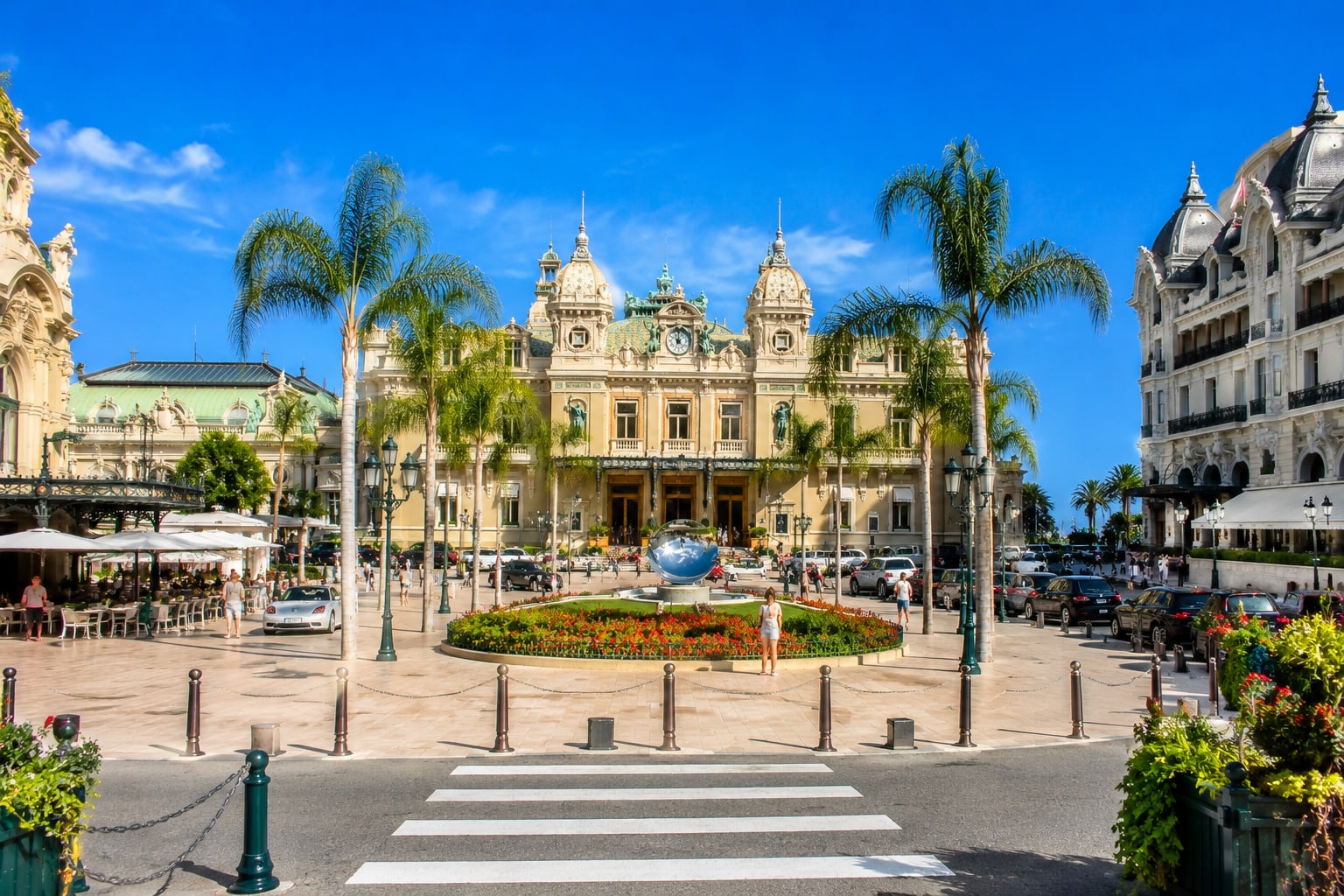
viewpoint
viewpoint
Casino Square Monaco
The public square around Monaco's casino, hotels and evening terraces.
Monte-Carlo
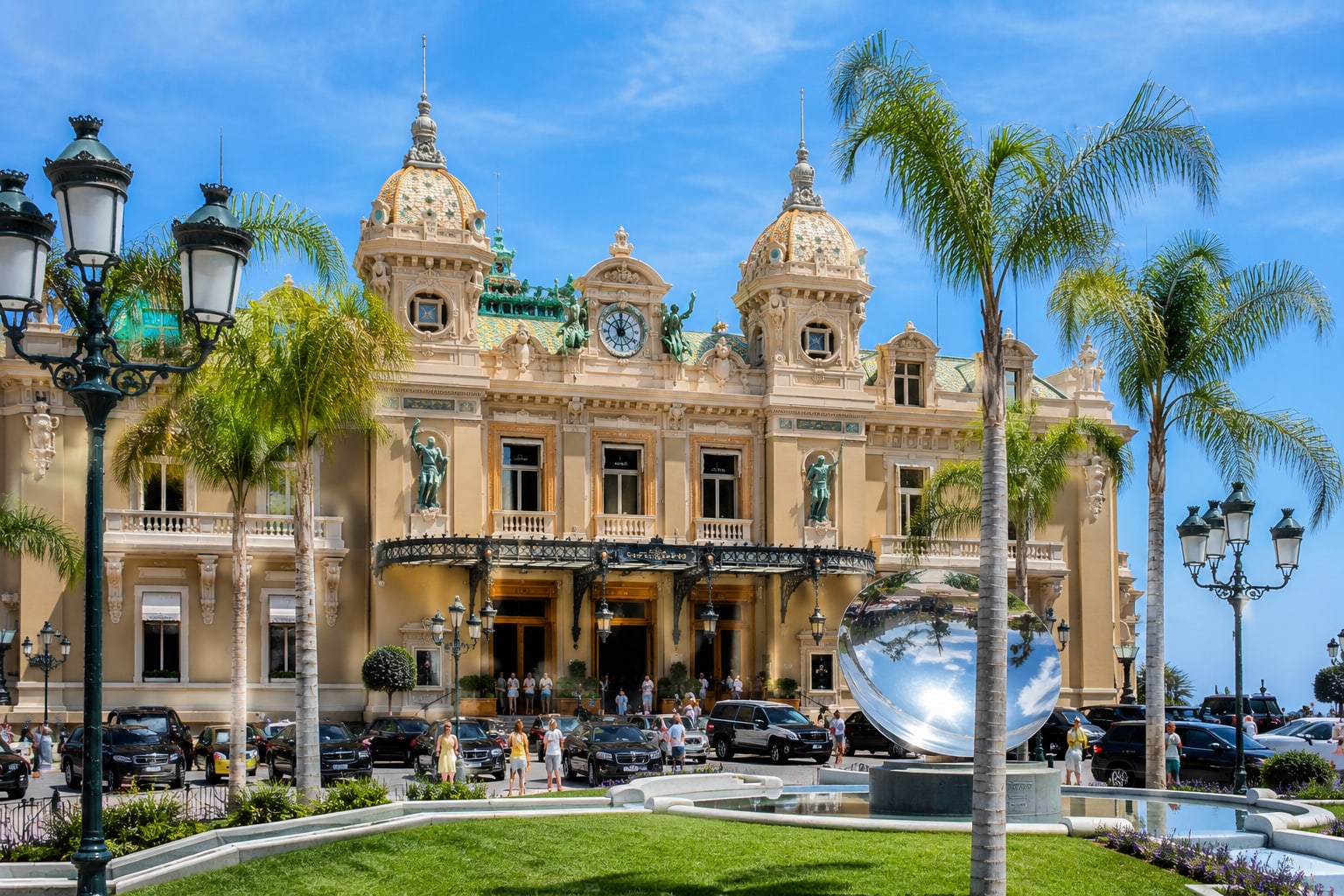
casino
casino
Casino de Monte-Carlo
The classic Monaco casino for architecture, atmosphere and a formal Riviera evening.
Place du Casino, 98000 Monaco
Check current hours before visiting
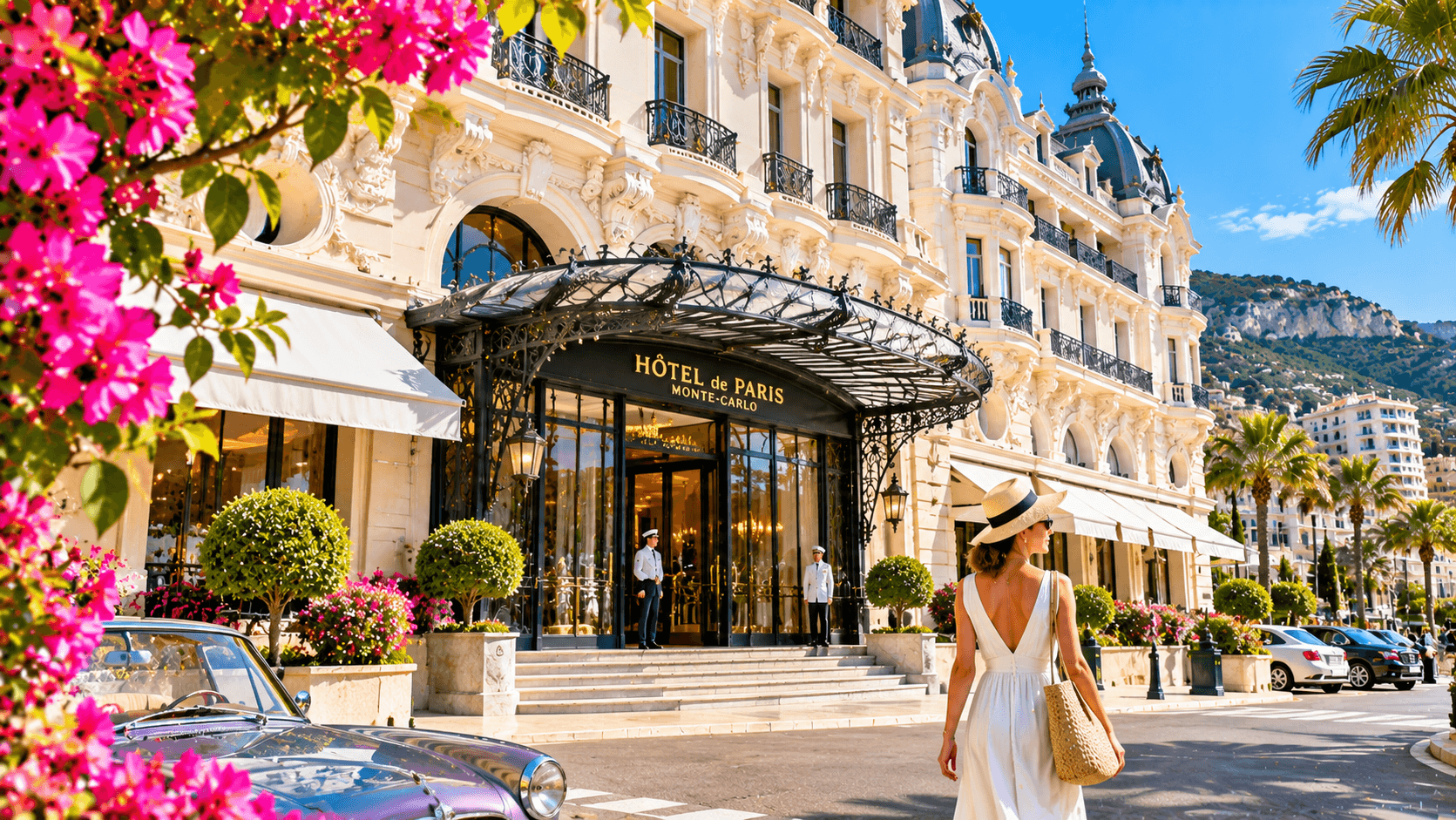
viewpoint
viewpoint
Hôtel de Paris Monte-Carlo
Historic hotel opened in 1864, viewed from the public square for this literary walk. Not a confirmed model for Rebecca's fictional Hôtel Côte d'Azur. Interior, restaurant and dress conditions need direct confirmation; it is not a free public museum.
Place du Casino, 98000 Monaco
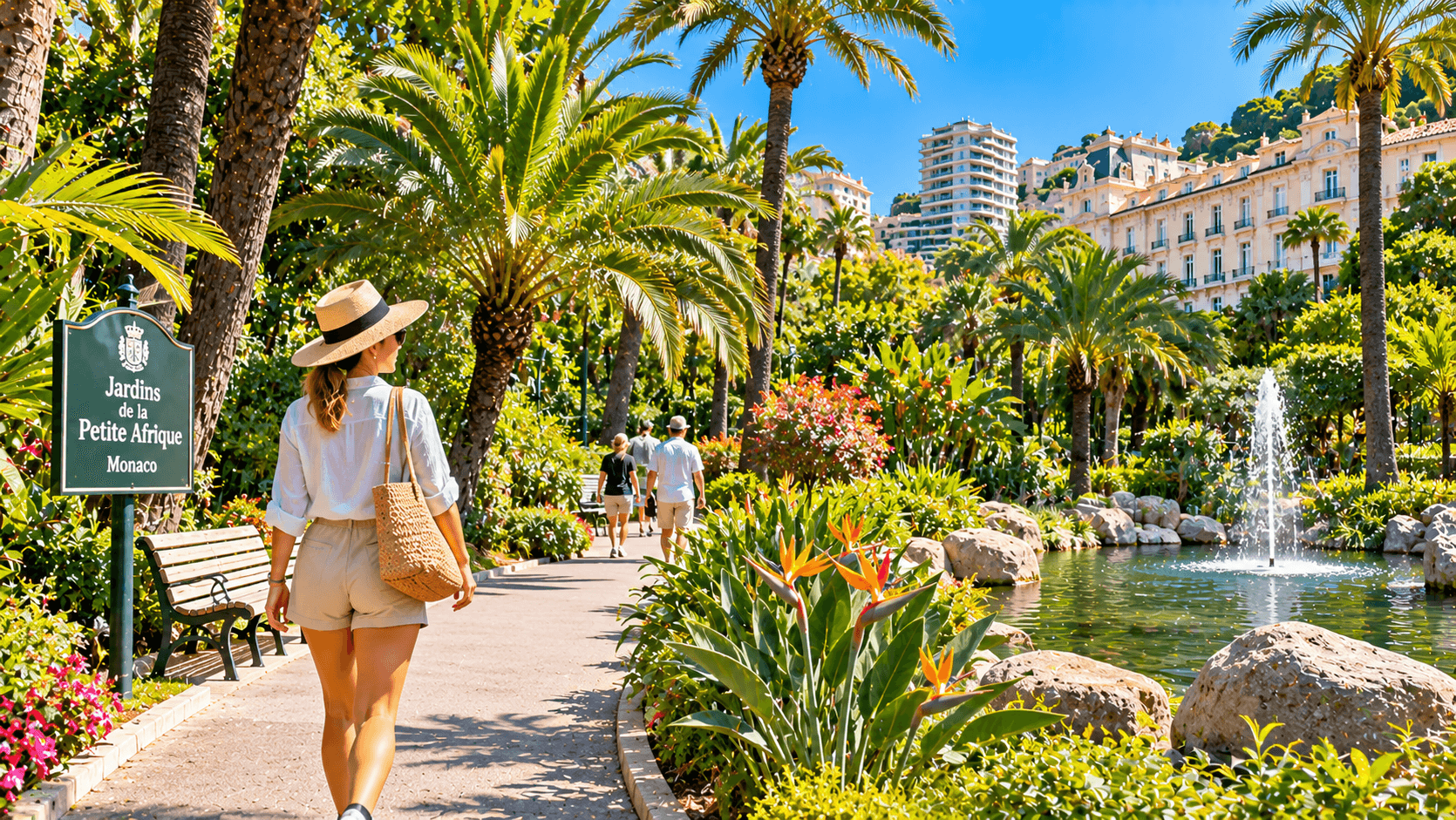
garden
garden
Jardins de la Petite Afrique, Monaco
Subtropical part of the casino gardens and a thematic pause for the Rebecca walk, not a verified novel scene. Use open public paths and respect maintenance or event closures; the tourism listing is not a same-day access inspection.
Casino Gardens, Place du Casino, 98000 Monaco
8. What about Villefranche-sur-Mer?
Villefranche-sur-Mer is one of the Riviera's most attractive historic harbour towns.
It's also a wonderful place for anyone interested in the cinematic landscape of the coast.
However, its direct filming connection with La Baie des Anges remains unverified in the primary production records reviewed for this guide.
Why include it at all?
Because its proximity to Nice and its historic harbour make it an appealing cultural excursion.
But it should not be introduced as a confirmed film location without stronger evidence.
For this article, Villefranche is an optional thematic extension.
A short Villefranche itinerary
Arrive by TER from Menton.
Explore the old town and Rue Obscure.
Walk down to Quai de l'Amiral Courbet.
Enjoy a relaxed lunch overlooking the harbour.
If open, visit the Chapel of Saint Peter, decorated by Jean Cocteau.
Return by train.
This provides a rewarding introduction to the artistic Riviera of the twentieth century, even though it is not a verified Demy filming route.
What would change its editorial status?
A production document naming Villefranche.
A reliable crew or location photograph.
Or a precise film frame matched independently with an identifiable site in the town.
Until one of those becomes available, we should keep the distinction visible.
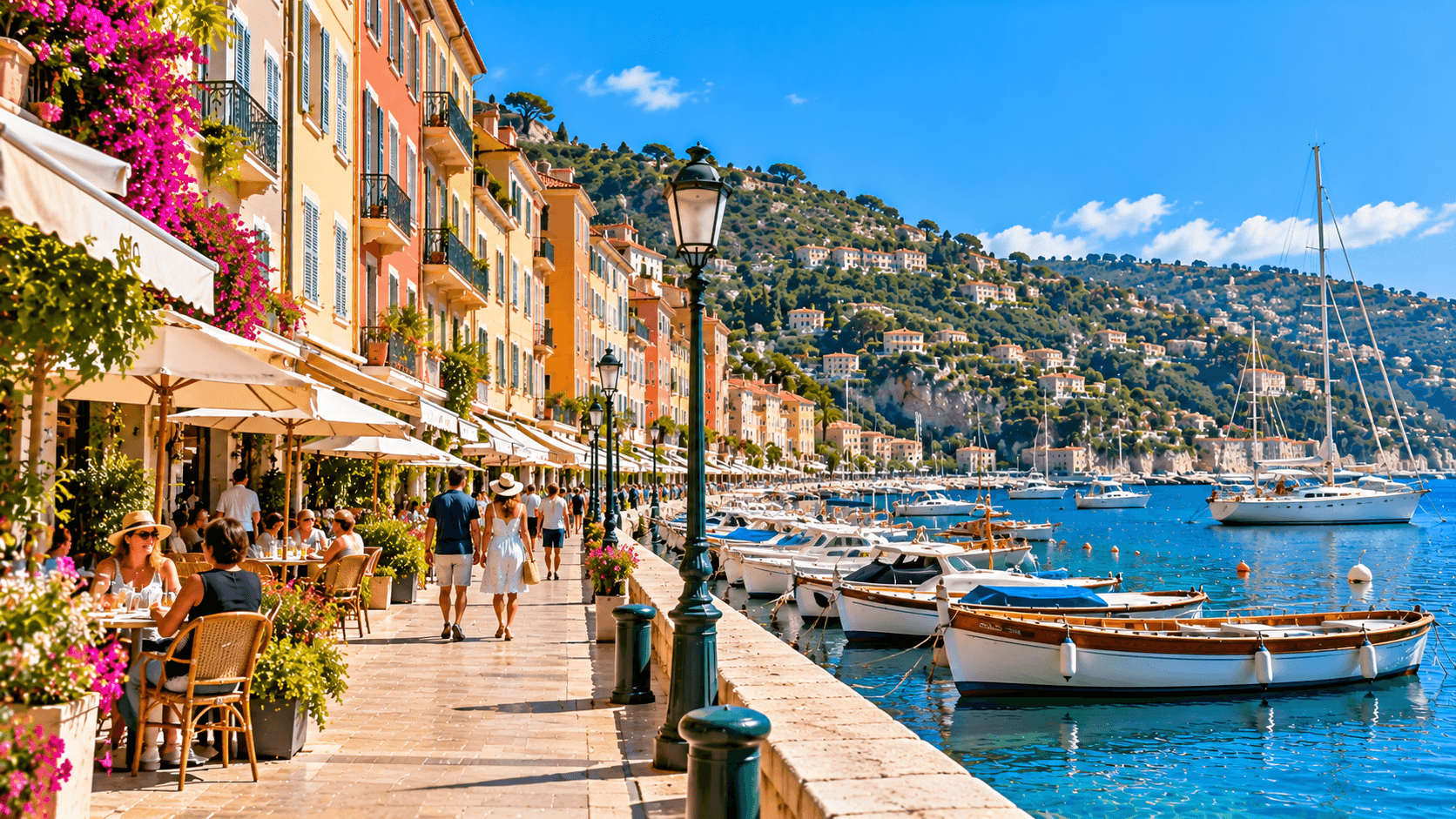
walk
walk
Quai de l'Amiral Courbet
Villefranche waterfront identified by regional tourism for Largo's yacht scenes in Never Say Never Again. A different film setting from the Darse warehouse; public-quay context, not yacht or interior access.
Quai de l'Amiral Courbet, 06230 Villefranche-sur-Mer
walk
walk
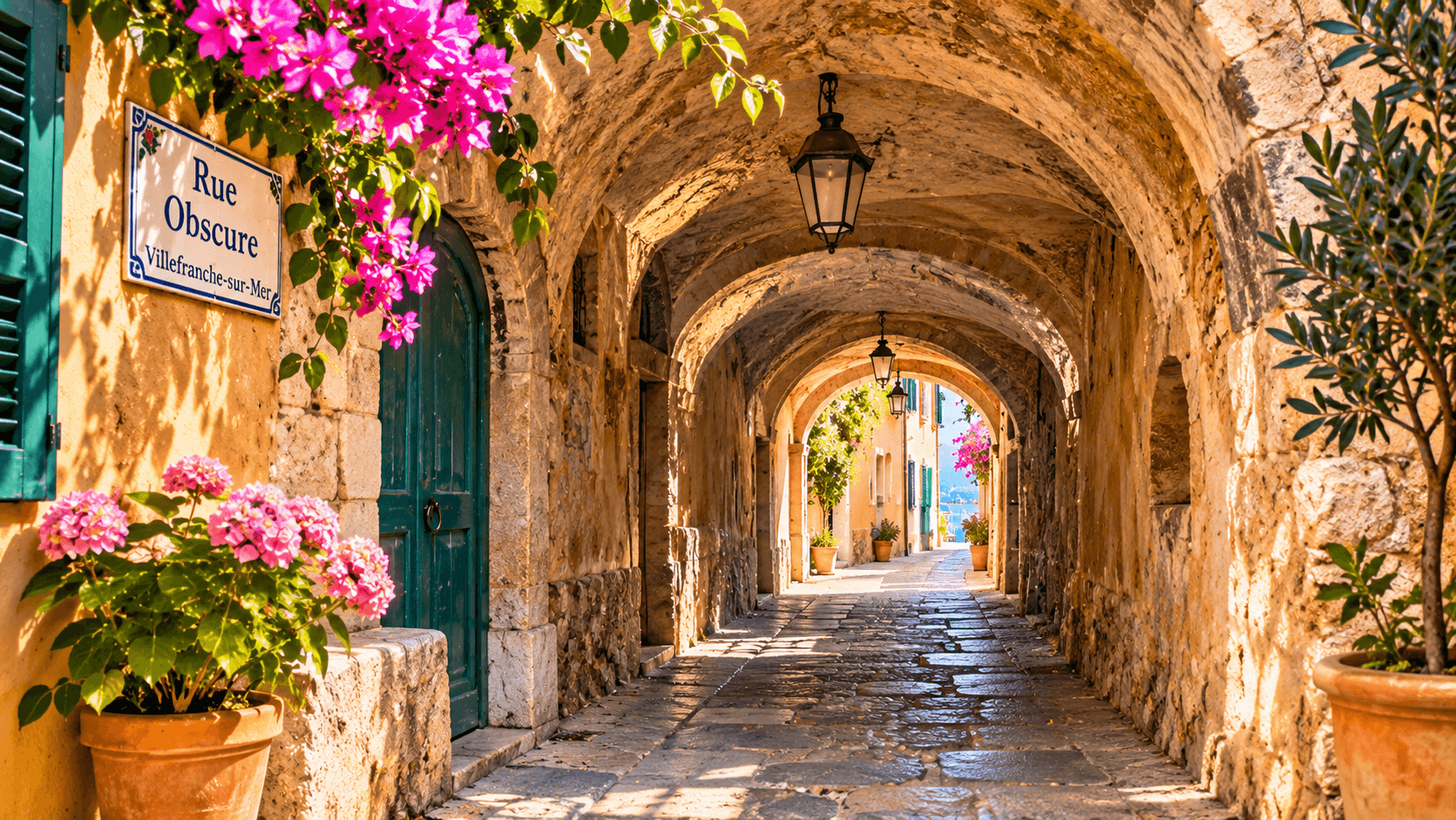
Rue Obscure
Covered historic passage beside the first rampart. Official 2026 listing gives free daily access, subject to temporary restrictions; not a confirmed To Catch a Thief scene or a step-free audit.
Rue Obscure, 06230 Villefranche-sur-Mer
museum
museum
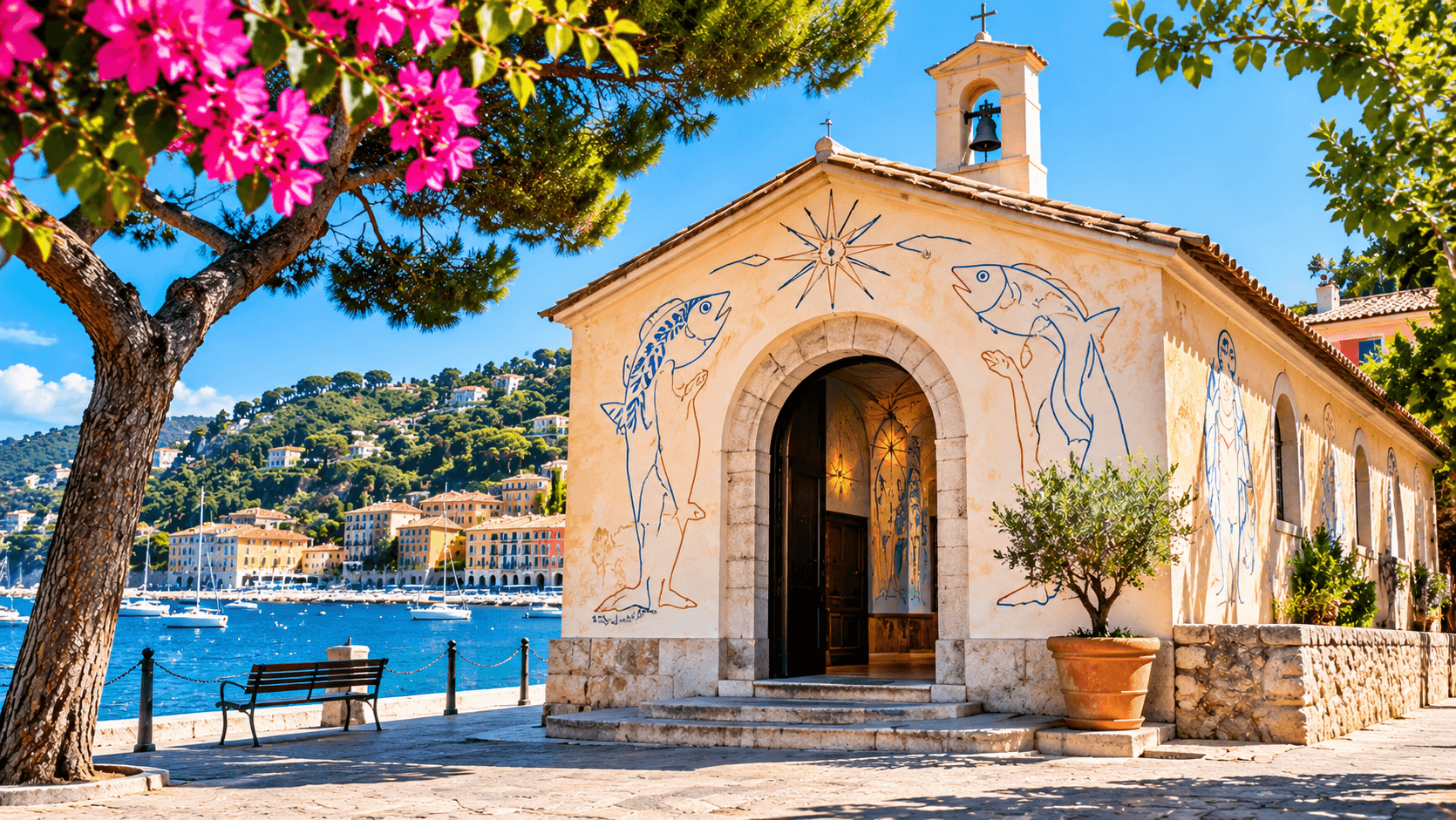
Chapelle Saint-Pierre / Jean Cocteau
Cocteau-decorated fishermen's chapel, a cultural stop not a confirmed Hitchcock scene. Ticketed interior; official listing states mid-November–mid-December closure and no wheelchair access. Confirm exact dates.
4 Quai Courbet, 06230 Villefranche-sur-Mer
9. Why the Riviera in La Baie des Anges is not a postcard
The most interesting aspect of the film is the way Demy uses beautiful surroundings without making the story feel comfortable.
Nice and Monaco are internationally associated with pleasure.
They offer hotels, casinos, promenades and sea views.
Yet the film's characters become trapped in repetitive emotional behaviour.
Gambling as a way of life
The roulette wheel offers immediate excitement but no lasting certainty.
Jean begins to organise his choices around that possibility.
Jackie has already built much of her life around it.
Their relationship becomes difficult to separate from the desire to keep playing.
Jeanne Moreau's Jackie
Jackie is memorable because she combines glamour with vulnerability.
She seems independent.
She makes decisive choices.
But her behaviour is increasingly shaped by an activity she cannot easily control.
The character's platinum-blonde appearance and striking costumes form part of the film's visual design.
They should not distract from the emotional instability behind them.
Demy's view of romance
The film is interested in the relationship between love and chance.
Its characters repeatedly believe that the next decision may change everything.
The Mediterranean scenery creates the illusion of freedom, but their behaviour becomes increasingly restricted.
That's what makes the film darker than its glamorous setting suggests.
10. How the film connects with Demy's later work
La Baie des Anges stands between Lola and The Umbrellas of Cherbourg.
Those films are often more widely discussed, particularly because of their musical form and colour.
But the earlier film shares many of their concerns.
Chance encounters.
Unexpected emotional attachments.
People trying to escape their circumstances.
The possibility that a romantic dream may become destructive.
Black and white as a deliberate choice
The film isn't black and white simply because colour was unavailable.
Its visual identity was carefully designed.
Jean Rabier's cinematography, Bernard Evein's production design and Moreau's Pierre Cardin costumes work together to create strong contrasts.
The restoration
Ciné-Tamaris and the Cinémathèque française restored the film using a 2K digital process.
The work included recovering the appearance of the opening sequence and preserving the balance between bright exterior light and darker interior spaces.
For film enthusiasts, this makes the restored edition particularly worthwhile.
The film's visual design is easier to appreciate when seen in a well-preserved version.
11. A realistic day from Menton
For visitors based in Menton, Nice should be the primary destination.
Suggested schedule
Allow roughly 5–7 hours including transportation and breaks, depending on your pace.
This is a suggested itinerary, not a confirmed rail timetable.
Getting there
Allow roughly 35–45 minutes for an ordinary direct TER journey between Menton and Nice as a planning estimate, not a dated timetable. SNCF currently advertises overnight interruptions between Nice and Ventimiglia, 22:00–06:00 Sunday–Thursday until 10 December 2027. Check date-specific disruptions and the last return.
From Nice-Ville, continue on foot or by tram towards central Nice and the waterfront.
Check the actual train timetable and return departure for your date.
A shorter option
If you don't want a full-day excursion, focus on the Promenade des Anglais, Place Masséna and nearby Old Nice.
You can experience the main geographical and visual themes of the film within a manageable area.
An additional Monaco visit
If you're staying in Menton for several nights, make Monaco a separate half-day excursion.
There's little benefit in trying to combine every confirmed production city in one rushed day.
| Time | Plan |
|---|---|
| Morning | Take a regional train from Menton to Nice |
| Late morning | Explore the Promenade des Anglais and Baie des Anges |
| Before lunch | Jardin Albert 1er and Place Masséna |
| Lunch | Choose a café or restaurant in central Nice |
| Early afternoon | Explore Vieux Nice |
| Later afternoon | Return to the waterfront, then travel back to Menton |
12. Film geography versus the real Riviera
One of the most useful things this film can teach visitors is that the screen rarely follows a perfect real-world map.
For example, a casino representing Enghien-les-Bains could be filmed in Juan-les-Pins.
An interior might be recorded in a different building from its exterior.
And a walk through Nice may connect shots made in several separate places.
The editing creates continuity.
The real locations retain their own histories.
This distinction is particularly useful for the AzurMenton Books & Films collection, where the same region often represents different fictional places.
| Layer | What it means |
|---|---|
| Story geography | Where the characters are supposed to be |
| Production geography | Where the footage was actually recorded |
| Visitor geography | Which locations are publicly accessible and practical to visit today |
13. Which places are confirmed, and which need further verification?
For frame comparisons, start with the best-documented Nice and Monaco scenes.
Villefranche should remain a research candidate rather than a confidently labelled filming stop.
| Location or claim | Status |
|---|---|
| Nice filmed for La Baie des Anges | Confirmed by Ciné-Tamaris |
| Monte Carlo filmed for the production | Confirmed by Ciné-Tamaris |
| Paris and nearby locations used | Confirmed |
| Casino at Juan-les-Pins represented Enghien-les-Bains | Confirmed |
| Cannes casino participated in the production | Confirmed |
| Promenade des Anglais associated with the film's exterior imagery | Supported by tourist-office and location sources |
| Specific building in Vieux Nice used for room scenes | Reported in production accounts; exact address not established |
| Villefranche-sur-Mer filmed for the final release | Not independently confirmed |
| Rue Obscure, Villefranche, appears in the film | Not established |
| Present-day casino interiors match those shown in 1963 | Not established |
14. What should you watch before visiting?
The complete film is relatively short.
Watching the restored edition before your trip is the best preparation.
Pay attention to three elements.
The opening view of Nice
Observe how the camera introduces the coastline.
Notice the scale of the bay and the relationship between the city and the sea.
The casino sequences
Look at the contrast between the bright Riviera outside and the repetitive, enclosed world of the gaming rooms.
Try to distinguish establishing views from interiors.
Jackie and Jean's movement through the city
Observe how Demy connects streets, hotel spaces, gambling rooms and the waterfront.
The transitions are part of the film's design.
You don't need to identify every doorway to appreciate how the geography supports the story.
Frequently asked questions
What is La Baie des Anges about?
It follows a young bank employee who discovers gambling and falls in love with Jackie, a woman whose life revolves around the roulette table. The film explores love, risk and obsession.
Who directed La Baie des Anges?
Jacques Demy, who later directed The Umbrellas of Cherbourg and The Young Girls of Rochefort.
Who stars in the film?
Jeanne Moreau plays Jackie Demestre, and Claude Mann plays Jean Fournier.
When was it released?
The film opened in France on 1 March 1963. Its location shooting took place in autumn 1962.
Was La Baie des Anges filmed in Nice?
Yes. Nice is one of the principal confirmed filming locations.
Was it filmed in Monaco?
Yes. Production records confirm shooting in Monte Carlo and cooperation from the casino.
Was it filmed in Cannes?
The Cannes casino is named in production information, although the precise contribution of each individual scene requires further verification.
Was it filmed in Villefranche-sur-Mer?
A specific Villefranche-sur-Mer scene has not been independently established in the primary sources reviewed for this guide. The town is therefore treated as an optional cultural excursion rather than a confirmed location stop.
Is the film in colour?
No. It was deliberately filmed in black and white, with a highly stylised visual approach.
Is La Baie des Anges a musical?
No. Music by Michel Legrand is central to the film, but it is a romantic psychological drama rather than one of Demy's later sung-through musicals.
Can you follow the locations without a car?
Yes. Nice and Monaco are accessible by regional train from Menton, with local walking or public transport for the final connections.
Is this guide spoiler-free?
Yes. It covers the premise, themes and production history without discussing the ending in detail.
Final thoughts: the Riviera beyond the roulette wheel
La Baie des Anges captures the French Riviera at its most beautiful.
Its coastline seems endless.
Its streets are bright.
Its casinos promise excitement and the possibility of sudden fortune.
But Jacques Demy uses that beauty to tell a story that isn't particularly reassuring.
The characters are drawn towards risk.
Their relationship becomes entangled with gambling.
And the glamorous landscape offers no protection from their choices.
For visitors staying in Menton, the film provides an unusual reason to explore Nice and Monte Carlo.
You can follow the real geography of the confirmed production locations.
You can appreciate the architectural and cultural history of the coast.
And you can discover the difference between the Riviera as a beautiful travel image and the more complicated world Demy created on screen.
It's a reminder that a film doesn't need dark streets or bad weather to tell a troubling story.
Sometimes all it needs is sunlight, the Mediterranean and a roulette wheel.
Sources and further reading
La Baie des Anges — Ciné-Tamaris, official production information
La Baie des Anges — Cinémathèque française
Restoration of La Baie des Anges — Cinémathèque française
La Baie des Anges — The Criterion Collection
La Baie des Anges — Alpes-Maritimes Cultural Heritage Portal
La Baie des Anges — L2TC filming-location catalogue
Nice Côte d'Azur Tourist Office: Nice as a Film Set
SNCF Connect: Menton–Nice trains
Explore More AzurMenton Guides
Research checked on 4 November 2026 against the linked production and visitor sources; no claim of a personal location survey or complete frame-by-frame verification. Ciné-Tamaris confirms the broad production geography; the restoration article was available through search extraction but direct access returned 503. The casino operator's page returned 403, so current admission, prices and indoor access are not independently confirmed here. An earlier Criterion URL was incorrect and has been replaced. Villefranche remains unconfirmed. The supplied colour cover is an artistic evocation, not a film still, documentary photograph or proof of a camera position.
Film release and duration — CNC
Casino de Monte-Carlo — current operator information
Jardin Albert Ier — City of Nice