Discover the fruit beyond the festival
Every February, Menton celebrates its most famous fruit with enormous citrus sculptures, colourful parades and thousands of visitors. But the real story of the Menton lemon begins long before the festival. It starts on steep agricultural terraces above the Mediterranean, where growers care for citrus trees, harvest fruit by hand and preserve a tradition that has shaped the region for centuries. And you don't have to visit during the Lemon Festival to discover it.
You can explore a working orchard, meet a producer, learn how citrus fruit is cultivated, taste artisan preserves or simply enjoy a slice of lemon tart in the old town. The important thing is knowing the difference between visiting a grower, tasting locally made products and shopping for lemon-themed souvenirs. They're all enjoyable experiences, but they're not interchangeable. Here's how to discover Menton's citrus culture beyond the festival.
1. What makes the Citron de Menton special?
The Citron de Menton isn't simply any lemon sold in Menton. It has held European Protected Geographical Indication status, known in French as IGP (Indication Géographique Protégée), since 2015. This designation protects a geographically defined agricultural product and the conditions associated with its production. The growing area includes Menton, Castellar, Gorbio, Roquebrune-Cap-Martin and Sainte-Agnès. The combination of a mild maritime climate, sheltered hillsides and traditional terraced cultivation helps give the fruit its distinctive character.
Menton lemons are particularly appreciated for their fragrant peel, aromatic oils, juiciness and balanced acidity. The official product description also highlights their lack of bitterness and the fact that the fruit is not waxed or chemically treated after harvest. That makes the peel especially interesting in cooking, where its aroma can be just as important as the juice.
When are Menton lemons in season?
Harvesting generally begins around December, with January becoming an important period of activity. The broader winter-to-spring period offers the strongest opportunity to encounter freshly harvested local fruit. However, availability varies according to weather, individual growers, production volumes and the stage of the harvest. Products made from preserved lemons, jams and other processed ingredients are available throughout much more of the year.
A useful distinction: You can taste Menton lemon products in July without expecting to see a winter harvest happening in an orchard.
2. Three ways to discover Menton's lemon culture
Before choosing where to go, decide what kind of experience you're looking for.
A farm visit is the best choice if you want to understand the agricultural tradition. An artisan workshop is ideal if you're more interested in food production. A walk through the old town is the simplest option if you have limited time. And the festival is a separate cultural event rather than a substitute for any of these experiences.
| Experience | What you actually do | Booking | Time needed |
|---|---|---|---|
| Visit a citrus grower | Explore a working orchard, learn about cultivation and sometimes taste products | Usually required | 1–2 hours, plus travel |
| Visit an artisan producer | Learn how jams or other local foods are made, with possible demonstrations and tastings | Depends on the visit | 30–60 minutes |
| Explore lemon shops and cafés | Taste and buy food, drinks and gifts in central Menton | Usually not required | 1–2 hours |
| Attend the Lemon Festival | Enjoy parades, citrus sculptures and seasonal celebrations | Tickets required for some events | Half a day or longer |
3. Domaine Gannac: a working citrus orchard you can visit
Address: 2970 Route de Super Garavan, 06500 Menton
Domaine Gannac is one of the most accessible ways to discover Menton's citrus-growing tradition directly at its source. The family business, Maison Gannac, cultivates organic citrus fruit and produces a range of local specialities. Its hillside estate combines an orchard, citrus nursery, visitor facilities and opportunities to taste products. Unlike a shop in the old town, this is a genuine agricultural setting.
What can you experience?
The estate currently advertises two principal formats.
The operator states that €15 of the admission price can be deducted from on-site purchases under its published terms. Children under eight are admitted free under the current pricing information. Guided visits are currently advertised at 9 a.m. and 1 p.m. on operating days, generally Monday, Tuesday and Thursday to Saturday. Schedules may change seasonally, so confirm a specific slot before departure.
How to book
Visit the official Domaine Gannac page. Guided reservations are handled through the Menton Riviera & Merveilles tourist office booking system. The estate's main published opening hours are 9 a.m.–noon and 1–5 p.m. on operating days, with special arrangements for nursery access on Wednesdays.
The tourist-office offer currently lists dates only through 31 October 2026 and slightly different shop hours. For later visits, confirm directly with the estate rather than assuming this particular offer has been renewed. For the guided tasting, make a reservation rather than assuming that a place will be available when you arrive.
Getting there
The estate is uphill from central Menton, on Route de Super Garavan. The tourist office describes an approach using Zest bus line 6 to Baousset, followed by approximately twenty minutes on foot. A car or taxi may be more practical for visitors who want to avoid the uphill approach. There is parking at the estate.
Important: The orchard is steep and isn't suitable for visitors with reduced mobility. Wear comfortable walking shoes, carry water in warm weather and allow time for the journey.
Who should choose this experience?
Domaine Gannac is our strongest all-round recommendation for visitors who want to combine citrus cultivation, a working agricultural estate and tasting in one visit.
| Visit | Published adult price | What's included |
|---|---|---|
| Self-guided visit | €15 | Access to the estate and associated visitor facilities |
| Guided visit with tasting | €25 | Introduction to the estate, citrus cultivation, orchard visit and product tasting |

garden
garden
Domaine Gannac
Working hillside citrus estate with orchard visits and tastings. Separate from Maison Gannac's town-centre shop; the operator says the steep orchard route is unsuitable for reduced mobility. Confirm the current visit programme.
2970 Route de Super Garavan, 06500 Menton
Check current hours before visiting
4. Emilie et les Citrons de Pépé: a seasonal grower visit
Address: 2743 Corniche des Serres de la Madone, 06500 Menton
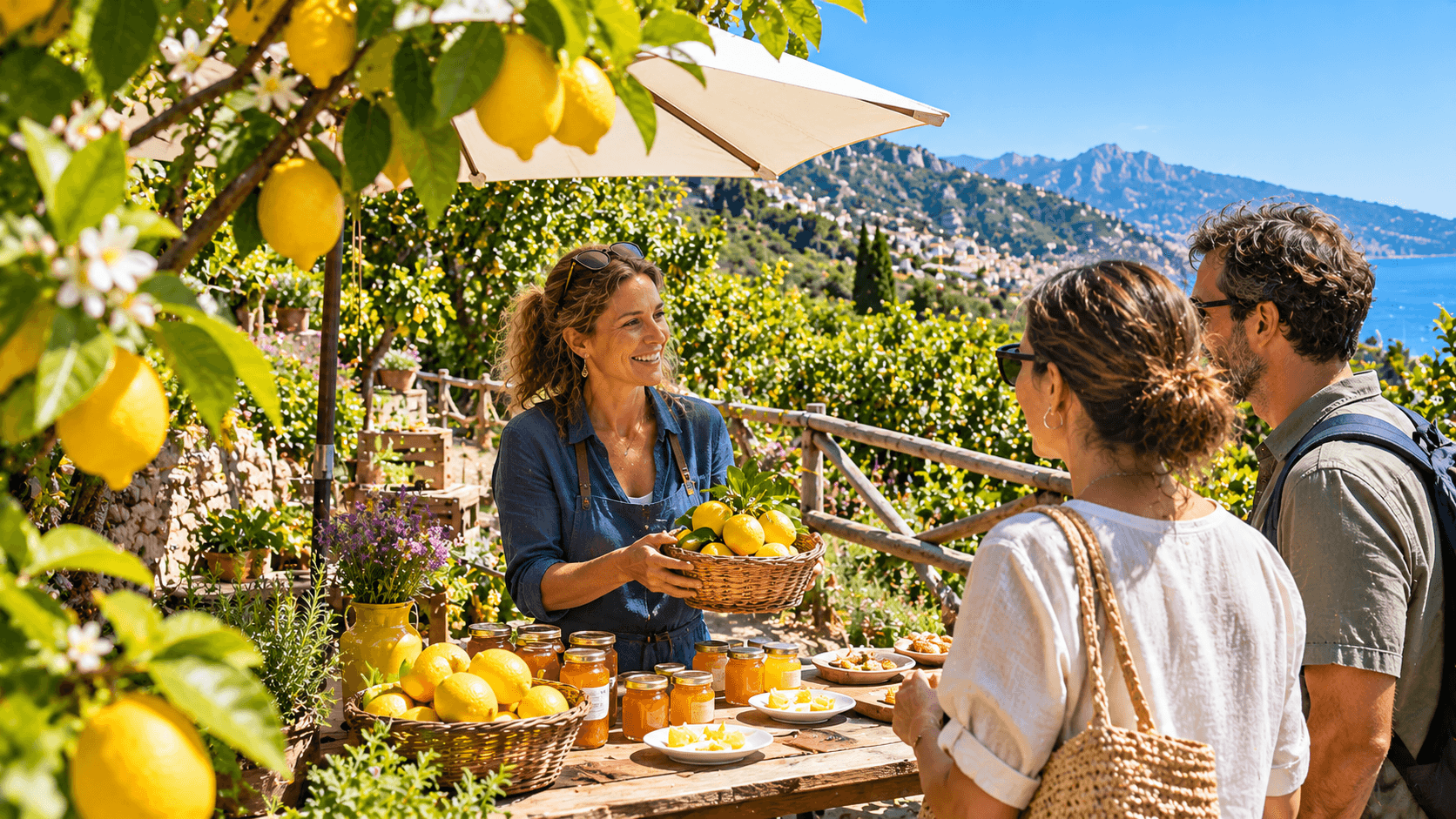
For travellers particularly interested in the growing season, Emilie et les Citrons de Pépé offers another approach. The tourist office lists visits to this Menton lemon producer during the agricultural production season. The experience includes a guided introduction and tasting, with opportunities to discover citrus fruit and locally produced specialities.
When can you visit?
The tourist office lists visits by appointment from December through March or April. For the upcoming season, its published visitor period runs from 1 December 2026 to 30 April 2027, with access by prior appointment rather than open daily admission. Don't interpret the listed date range as permission to arrive at any time.
What to expect
Depending on the season and availability, visitors may encounter lemons, mandarins, oranges, citrus jellies and other locally produced items. This is a particularly interesting choice if you're visiting in winter or early spring and want to see citrus cultivation connected to the actual agricultural calendar.
Booking and access
Use the tourist office's producer listing to arrange an appointment. The property is in the hills above Menton. Confirm the precise meeting point, parking arrangements, route and walking conditions directly with the organiser. There is no published fixed adult ticket price in the listing, so request the current rate when enquiring.
garden
garden
Emilie et les Citrons de Pépé
Seasonal lemon-grower visits and tastings by appointment. The tourist-office period is not permission for daily walk-in access; confirm price, meeting point and terrain.
2743 Corniche des Serres de la Madone, 06500 Menton
Check current hours before visiting
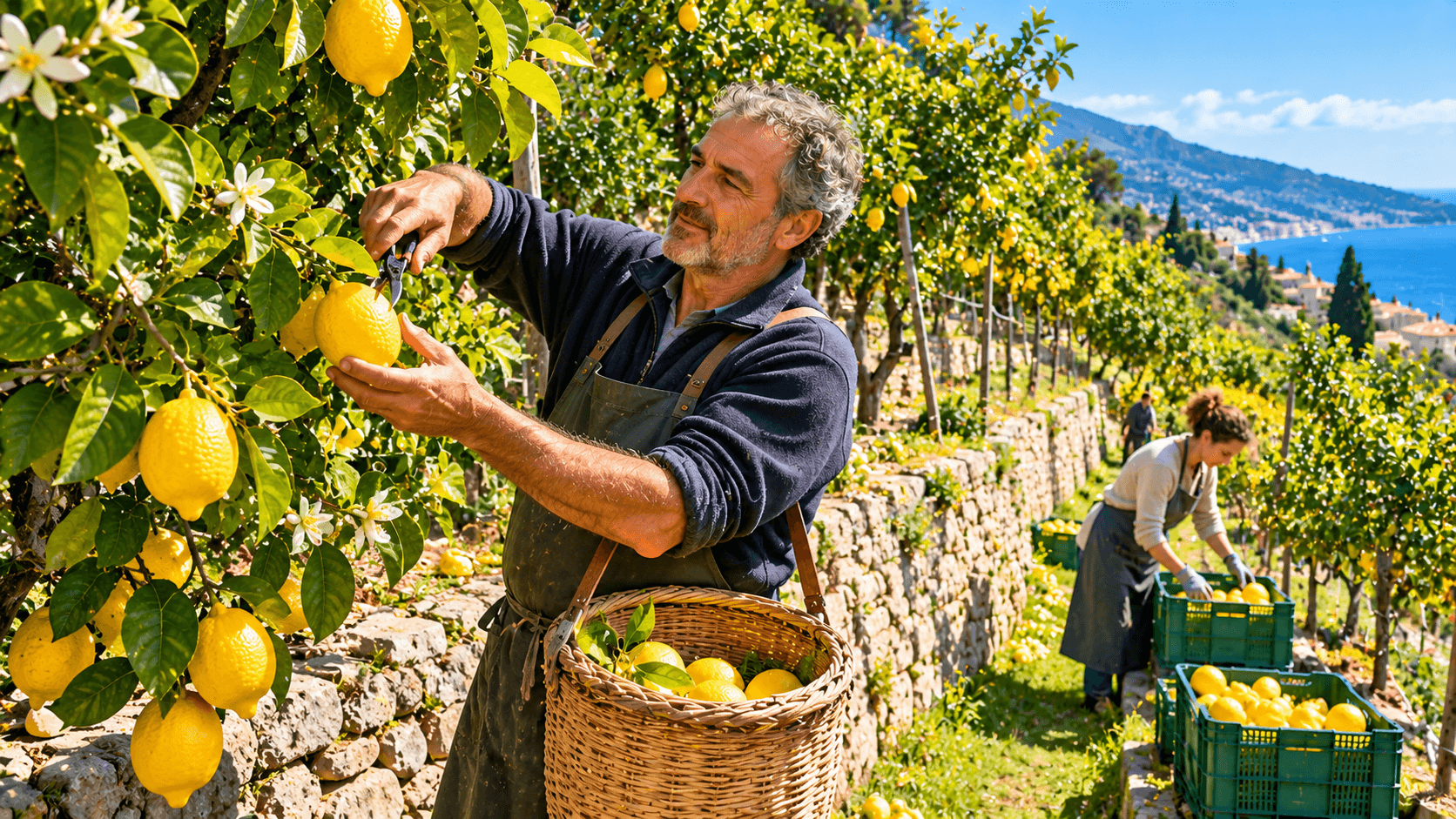
5. Christophe and Christelle Sacchelli: learn more about cultivation
Address: Villa les Mimosas, 1548 Avenue de Prades, 06500 Menton
Christophe and Christelle Sacchelli are organic citrus growers offering educational visits and workshops related to Menton's lemon-growing tradition. Their activities may include citrus cultivation, aromatic plants, preserves and locally produced ingredients. This is especially interesting for visitors who want to ask practical questions about how the trees are grown and maintained.
Booking details
Visits and workshops are organised by reservation. The tourist office lists activities throughout the year, but visits aren't available during the Fête du Citron period. Prices aren't consistently published, so confirm the cost and format when booking. The property offers parking, and the tourist office indicates that wheelchair access may be possible, although a short grassy passage is involved. For guests with mobility requirements, confirm the precise arrangements before travelling. Official producer information
garden
garden
Christophe et Christelle Sacchelli
Organic growers offering visits and workshops by reservation, unavailable during the Lemon Festival period. The official listing notes a grassy passage; confirm individual access needs and prices.
Villa les Mimosas, 1548 Avenue de Prades, 06500 Menton
Check current hours before visiting
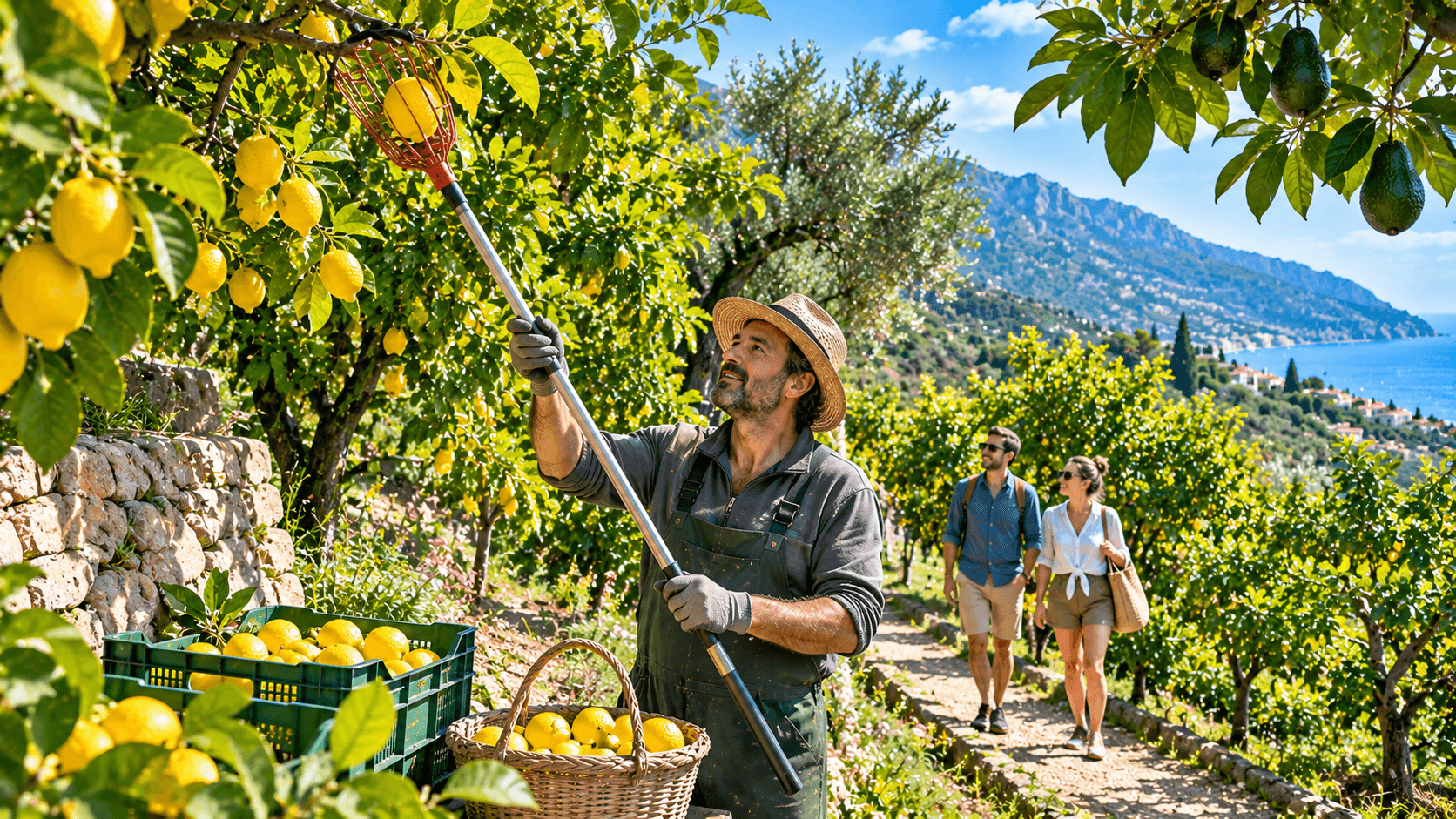
6. La Ferme des Citrons: orchard visits and local food
Another option worth investigating is La Ferme des Citrons, an estate dedicated to Menton's citrus culture. The official Route du Citron includes the farm among the producers welcoming visitors by reservation. Its experiences focus on the orchard, the people growing the fruit and the agricultural setting. Some packages may include a lemon-inspired picnic.
Because the programmes, dates and included activities can change, choose an actual bookable offer rather than assuming that a picnic or tasting is available every day. You can explore current information through La Ferme des Citrons and the official Menton tourist office booking platform. For any farm visit, confirm the exact meeting point, transport arrangements, walking conditions and language of the tour.
garden
garden
La Ferme des Citrons
Working lemon farm welcoming the public by reservation only. Book the actual offer and confirm whether a visit, tasting or meal is included; no daily walk-in or free meal is implied.
Menton hills; confirm the meeting point
Check current hours before visiting
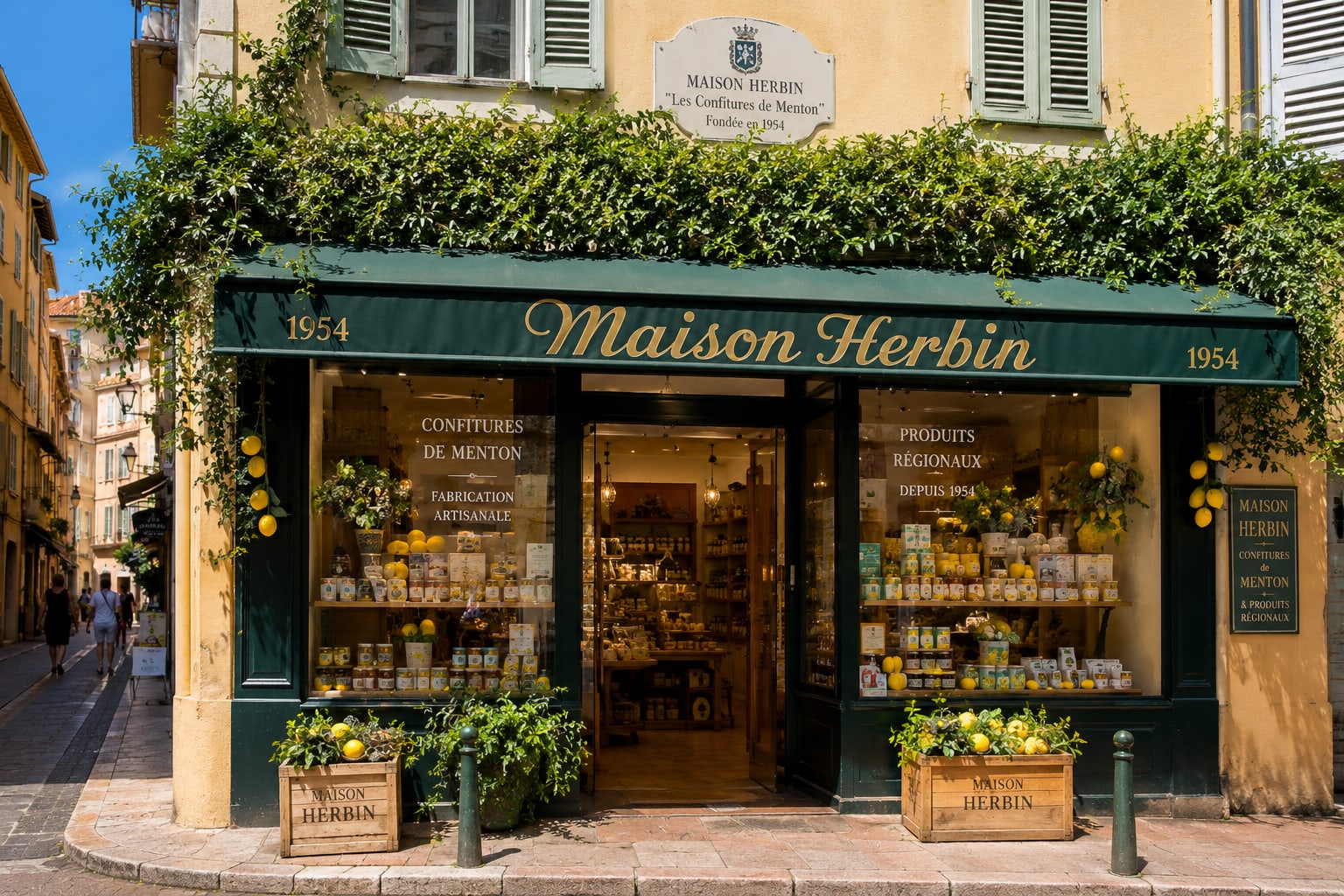
7. Maison Herbin: discover how Menton's preserves are made
Shop address: 2 Rue du Vieux Collège, 06500 Menton
Not every lemon experience needs to take place on a hillside. Maison Herbin is a well-established artisan jam producer in Menton. Its range includes citrus preserves and other traditional fruit preparations. For visitors interested in what happens after the fruit leaves the orchard, Maison Herbin offers a particularly accessible experience.
Visit the jam-making workshop
The producer advertises free visits to its artisan production workshop, where visitors can learn about traditional preserve-making techniques. The experience includes a demonstration and tasting. Current published arrangements include:
Individual self-guided visits on weekdays.
Guided visits on Monday, Wednesday and Friday mornings, generally at 10:30 a.m.
Approximately 30–45 minutes for a visit.
Group tours by prior reservation.
English-language guided visits available by arrangement.
Admission is free, but it's worth confirming your intended visit, especially if you want an English-language explanation or a live demonstration. For bookings, contact Maison Herbin on +33 4 93 57 20 29 or use its official workshop visit page. Check the actual workshop meeting address when reserving rather than assuming it is identical to the retail shop.
This is an excellent option for a rainy day or for visitors who don't want a steep orchard excursion.
market
market
Maison Herbin
A well-known Menton stop for artisanal jams, marmalades and citrus products close to the market and old-town streets.
2 Rue du Vieux Collège, 06500 Menton
Check current hours before visiting
8. Taste Menton's lemons without leaving the old town
If you only have an hour or two, a self-guided tasting walk is a good alternative. The official Route du Citron begins at the Menton tourist office and connects several artisan food businesses in the town centre. It combines local flavour with a relaxed walk through central streets.
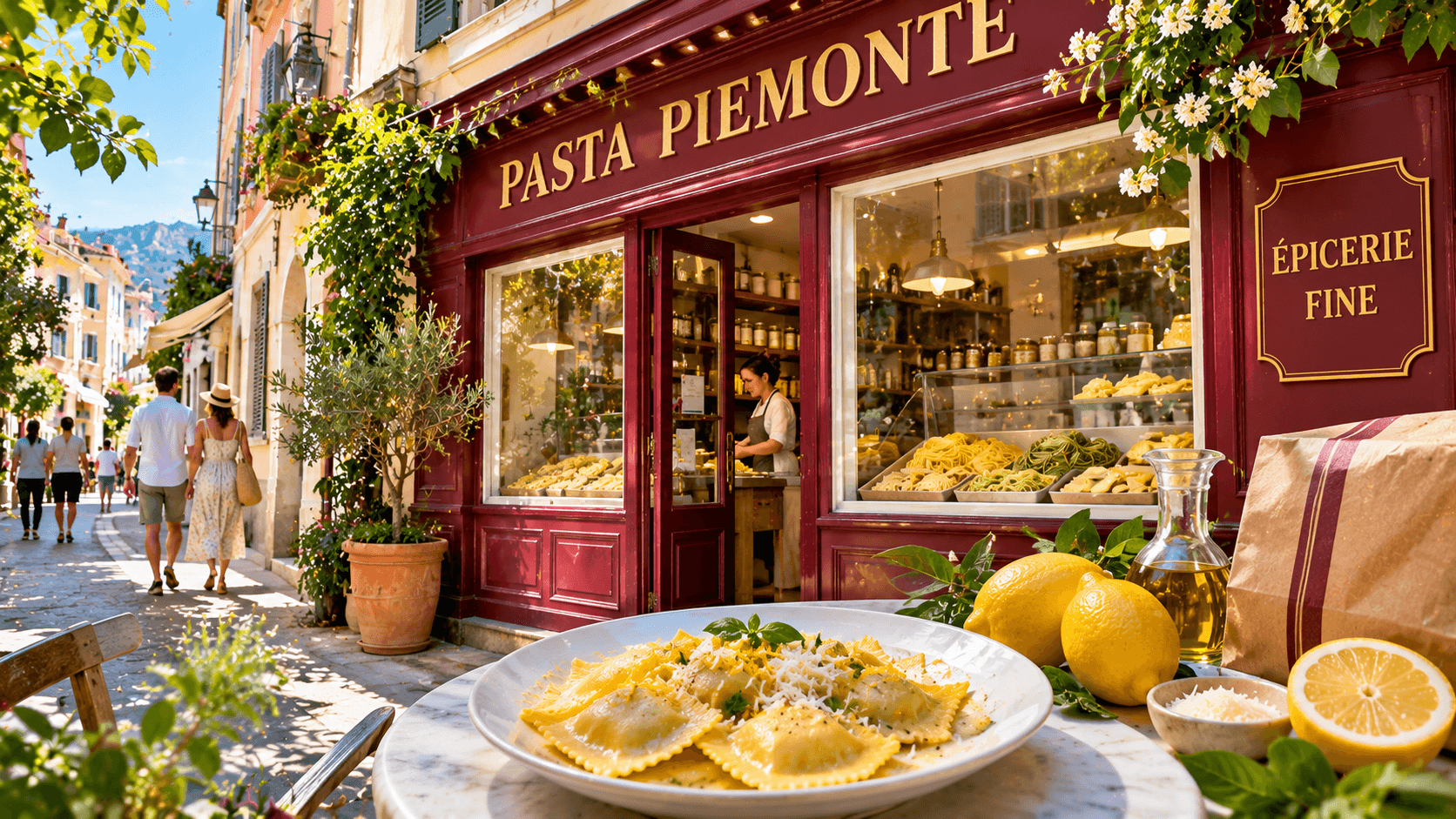
Stop 1: Pasta Piemonte
34 Rue Partouneaux Pasta Piemonte is known for artisan fresh pasta, including preparations featuring Menton lemon. It's a useful reminder that citrus isn't only a dessert ingredient. Try lemon ravioli if available, and ask how the fruit is used in the filling or seasoning.
Stop 2: Maison Herbin
2 Rue du Vieux Collège Explore artisan jams and marmalades. If you can, compare a classic lemon preserve with a more complex citrus combination. Pay attention to sweetness, bitterness, peel texture and aroma.
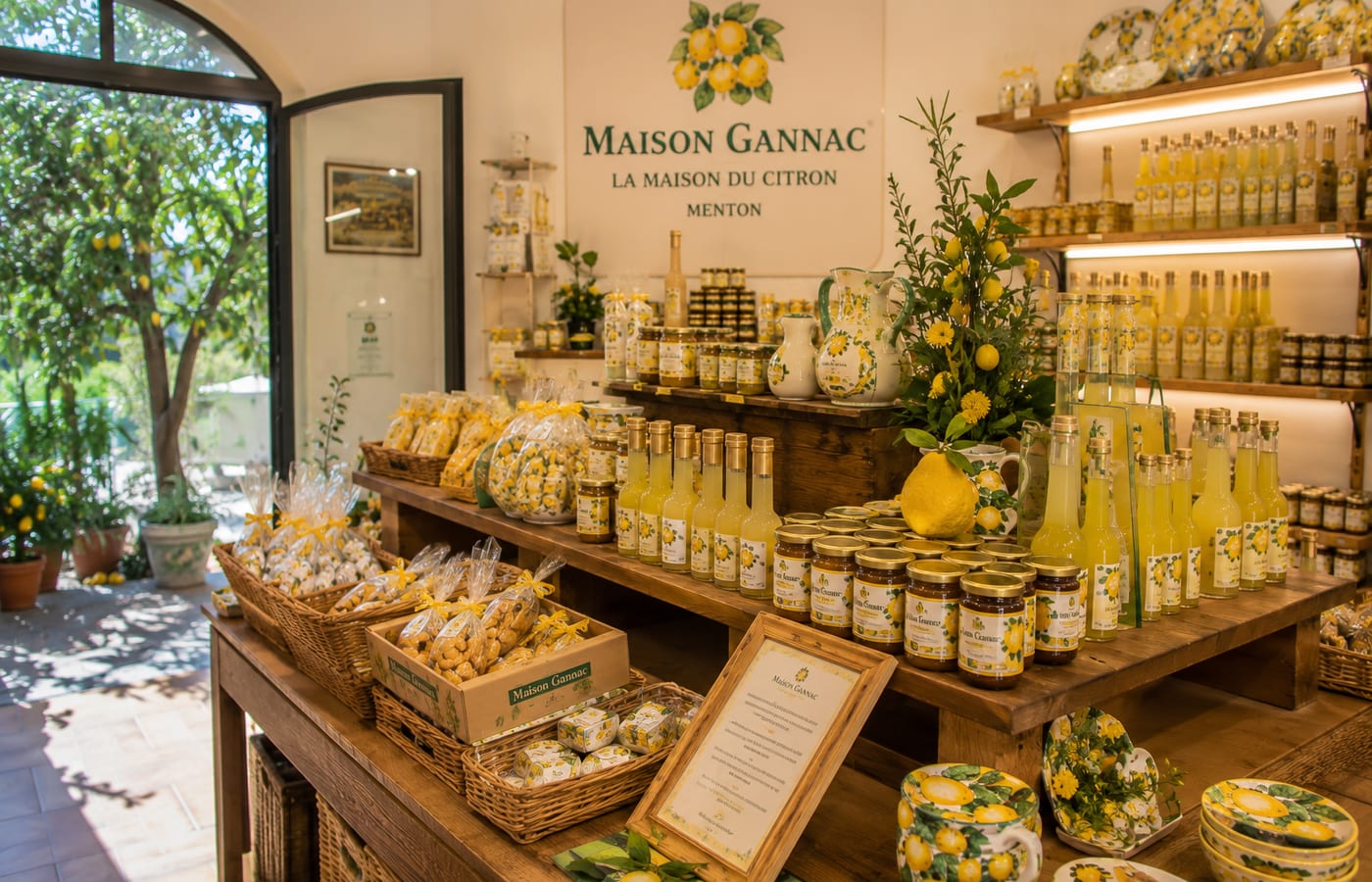
Stop 3: Maison Gannac boutique
10 Rue Saint-Michel This is the central retail address associated with the Gannac family. It's useful if you want to discover the producer's products without travelling up to the orchard. The shop and the hillside estate are separate experiences. A purchase in town doesn't include an orchard visit.
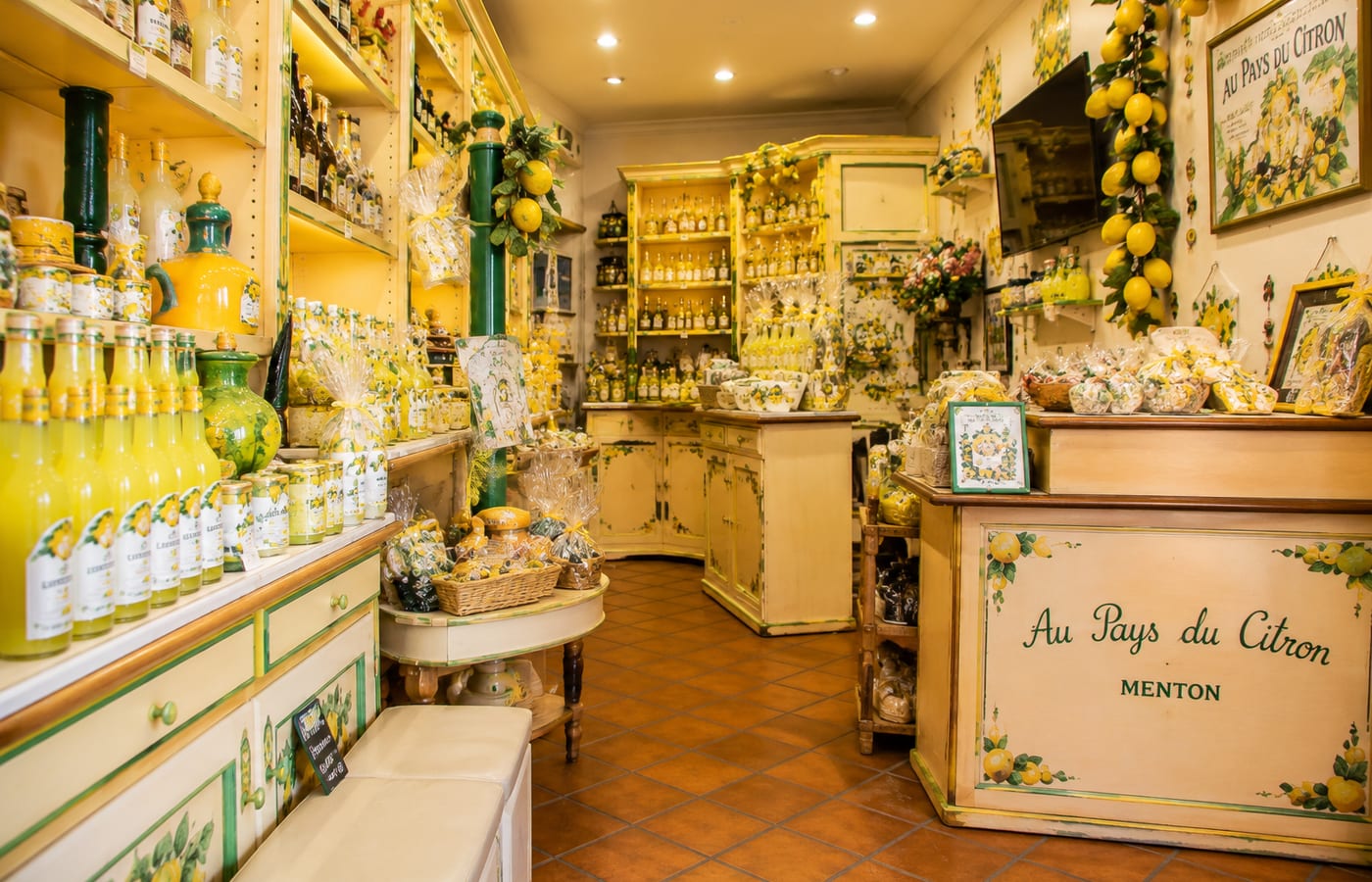
Stop 4: Au Pays du Citron
22 Rue Saint-Michel Au Pays du Citron specialises in lemon-based regional products, including food, confectionery, drinks and gifts. The shop advertises tastings of its product range. It's an easy place to explore different ways lemon flavours appear in Menton's local food culture. The store currently publishes opening hours of 10 a.m.–7 p.m. daily, with extended summer hours. Visit its official website for current details.
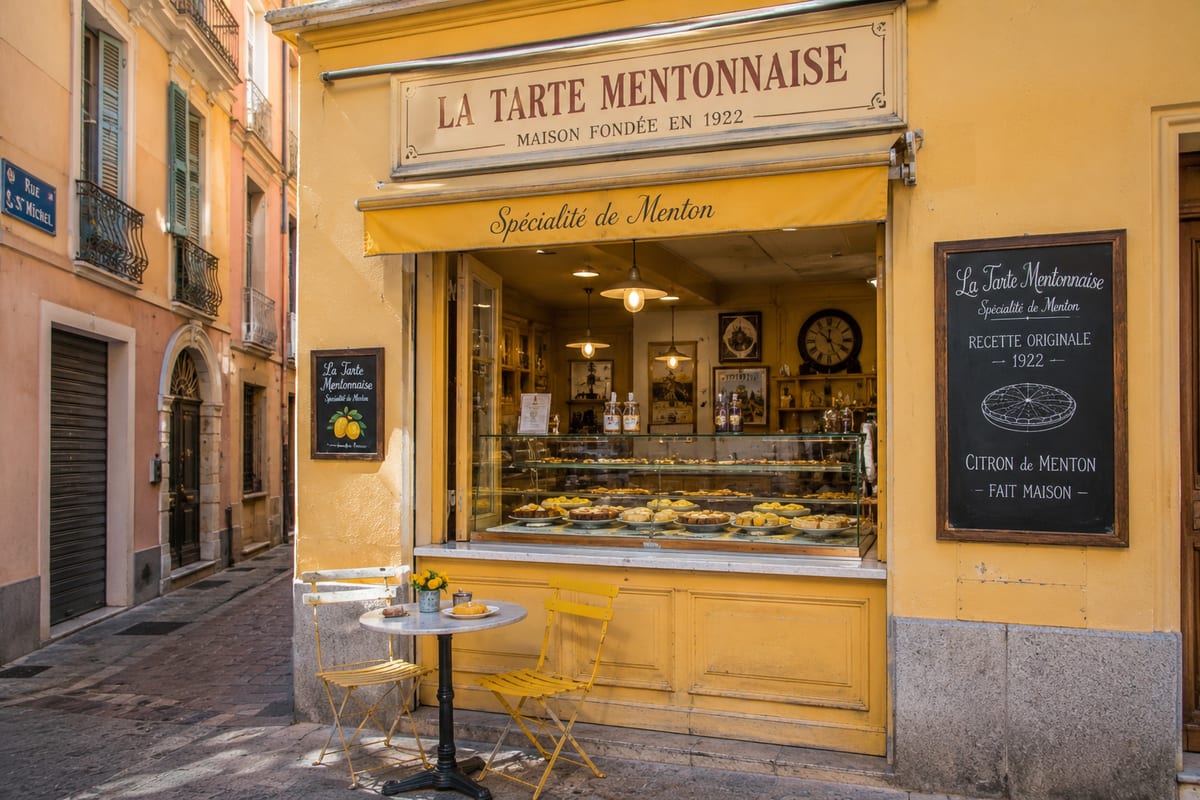
Stop 5: A slice of lemon tart
Finish with a lemon tart, preferably somewhere you can enjoy it with coffee. The official Route du Citron identifies La Tarte Mentonnaise near Rue Saint-Michel as one possibility. A good lemon tart should balance a fragrant citrus filling with sweetness and pastry texture. It's a pleasant way to finish the walk, whether or not you're particularly interested in agricultural history.
Time required: Approximately 90 minutes to two hours, excluding a longer factory visit or restaurant meal.
market
market
Pasta Piemonte
Artisan fresh-pasta producer on the Route du Citron, known for Menton-lemon ravioli. Ask about the day's range and availability; a shop visit does not include a farm tour.
34 Rue Partouneaux, 06500 Menton
Check current hours before visiting
market
market
Maison Gannac / La Maison du Citron
A producer-led citrus stop for organic Menton lemon products, jams, limoncello and a deeper local lemon story.
10 Rue Saint-Michel, 06500 Menton
Check current hours before visiting
market
market
Au Pays du Citron
A focused Menton lemon souvenir stop for limoncello, citrus products, gift boxes and lemon-themed local gifts.
22 Rue Saint-Michel, 06500 Menton
Check current hours before visiting
market
market
La Tarte Mentonnaise
A small Rue Saint-Michel pastry boutique built around Menton's signature lemon tart.
24 Rue Saint-Michel, 06500 Menton
Check current hours before visiting
9. What should you taste?
You could spend an afternoon sampling different citrus products without repeating the same experience. Here's what we'd prioritise.
A product labelled with the word “Menton” isn't automatically made exclusively from certified Menton lemons. Read the ingredients, check the claims on the packaging and ask the seller about origin. For alcohol-based products, tastings are only for adults of legal drinking age. Non-alcoholic citronnade and preserves are easy alternatives.
| Product | Why try it | What to look for |
|---|---|---|
| Fresh Citron de Menton IGP | Experience the fruit itself | Origin, aroma, acidity and fragrance of the peel |
| Lemon marmalade | Discover how citrus peel changes a preserve | Balance between sweetness, acidity and bitterness |
| Lemon curd | A richer, smoother citrus preparation | Texture, freshness and flavour intensity |
| Lemon tart | A classic pastry application | Pastry, filling and citrus balance |
| Lemon ravioli | Savoury regional interpretation | Whether citrus complements rather than overwhelms the filling |
| Lemonade or citronnade | Refreshing non-alcoholic tasting | Fresh citrus flavour and sweetness |
| Lemon olive-oil preparation | Useful culinary souvenir where available | Clear ingredient origin and suggested uses |
| Candied citrus peel | Traditional confectionery | Texture, sweetness and bitterness |
| Limoncello | A familiar citrus liqueur | Aroma, sweetness and ingredient provenance |
10. What should you ask a lemon grower?
One of the best parts of visiting a working orchard is being able to talk to the person who grows the fruit. You don't need specialist botanical knowledge. A few thoughtful questions can make the experience more rewarding. About the fruit:
What distinguishes a Citron de Menton IGP from an ordinary supermarket lemon?
When does the harvest begin, and how do you decide when a fruit is ready?
Which other citrus varieties do you grow?
How does the taste change through the season?
About cultivation:
Why are so many citrus groves planted on steep terraces?
How do you manage irrigation in dry periods?
What are the biggest challenges facing local lemon growers?
How do you protect the trees during unusually cold or hot weather?
About local products:
Which products use your own fruit?
Is this particular product made with certified Citron de Menton IGP?
How do you use the peel?
Which fresh or preserved product would you recommend for home cooking?
Ask before picking fruit, touching equipment or photographing workers. An orchard is a working farm, not simply a decorative garden.
11. How to recognise authentic Citron de Menton IGP
If authenticity matters to you, start with the designation. The official European IGP label and the protected product name are more meaningful than lemon-themed packaging alone. The protected fresh fruit is grown within the defined geographical area and must meet the relevant production specification. The French agricultural authorities describe it as aromatic, juicy, unwaxed and not treated after harvest.
But there's a distinction between a certified fresh lemon and a processed product containing Menton lemon as one ingredient. When buying jam, sweets, liqueurs or sauces, ask: “Does this product contain Citron de Menton IGP, and can you tell me which ingredients come from the local harvest?” A producer may also use other excellent citrus varieties. That doesn't make the product inferior. It simply means you should understand what you're buying.
The goal isn't to reject anything without an IGP label. It's to distinguish verified local agricultural origin from general Riviera branding.
12. When is the best time for lemon experiences?
These are general planning windows. Exact harvest dates and visitor programmes are not identical across farms. For the strongest chance of seeing harvesting activity, winter to early spring is the most logical choice. For a summer visit, choose an estate that explicitly offers summer tours rather than assuming that every grower is open to visitors.
| Season | What you'll find | Best experience |
|---|---|---|
| December–February | Main harvest activity, fresh local fruit, active agricultural season | Grower visit and fresh-lemon tasting |
| March–April | Continued seasonal harvesting at some farms, spring growth | Orchard visits and citrus discovery |
| May–June | Gardens, foliage, preserved products, artisan shops | Garden visits and food workshops |
| July–August | Summer visitor programmes, drinks, preserves and artisan products | Bookable estate tour, citronnade and old-town tasting |
| September–November | Quieter tourism period, orchard maintenance, year-round products | Artisan visits and pre-booked farm experiences |
13. The Lemon Festival is a different experience
It's worth clearing up a common misunderstanding. The huge sculptures and decorative floats of the Fête du Citron are not built from the rare IGP lemons grown around Menton. The festival needs enormous quantities of citrus fruit, far beyond what local growers could reasonably supply. According to the official tourism information, citrus for these displays is brought from Spain. That makes sense. The festival celebrates Menton's identity, creativity and history.
The local IGP lemon is a protected agricultural product with a much smaller production base. Both are important, but for different reasons.
You don't have to choose the festival to discover the real fruit. And attending the festival doesn't automatically include access to a working orchard.
| If you want to... | Choose... |
|---|---|
| Watch spectacular parades | Fête du Citron |
| See huge citrus sculptures | Fête du Citron |
| Meet someone who grows Menton lemons | A producer visit |
| Learn about terraced citrus cultivation | A guided orchard tour |
| Watch artisan jam-making | Maison Herbin |
| Taste and buy lemon specialities | Producer boutiques and old-town shops |
| Buy verified fresh IGP lemons | A producer or retailer with traceable stock |
14. A practical half-day lemon itinerary
For a visitor with limited time, we recommend choosing one main experience and building the rest of the day around it.
Option A: the producer experience
Reserve a guided visit at Domaine Gannac or another operating orchard. Allow approximately two hours on site and additional time for transport. Ask questions, discover the trees and enjoy the tasting. Return to Menton for lunch or an afternoon at the beach. Avoid trying to squeeze a second hillside farm visit into the same morning unless both reservations and travel arrangements have been confirmed.
Option B: the tasting walk
Start near the tourist office and follow the central Route du Citron through Pasta Piemonte, Maison Herbin, Maison Gannac's boutique and Au Pays du Citron. Try something savoury, something sweet and a refreshing citrus drink. This is a flexible outing, with no need to commit to an orchard tour.
Option C: citrus and gardens
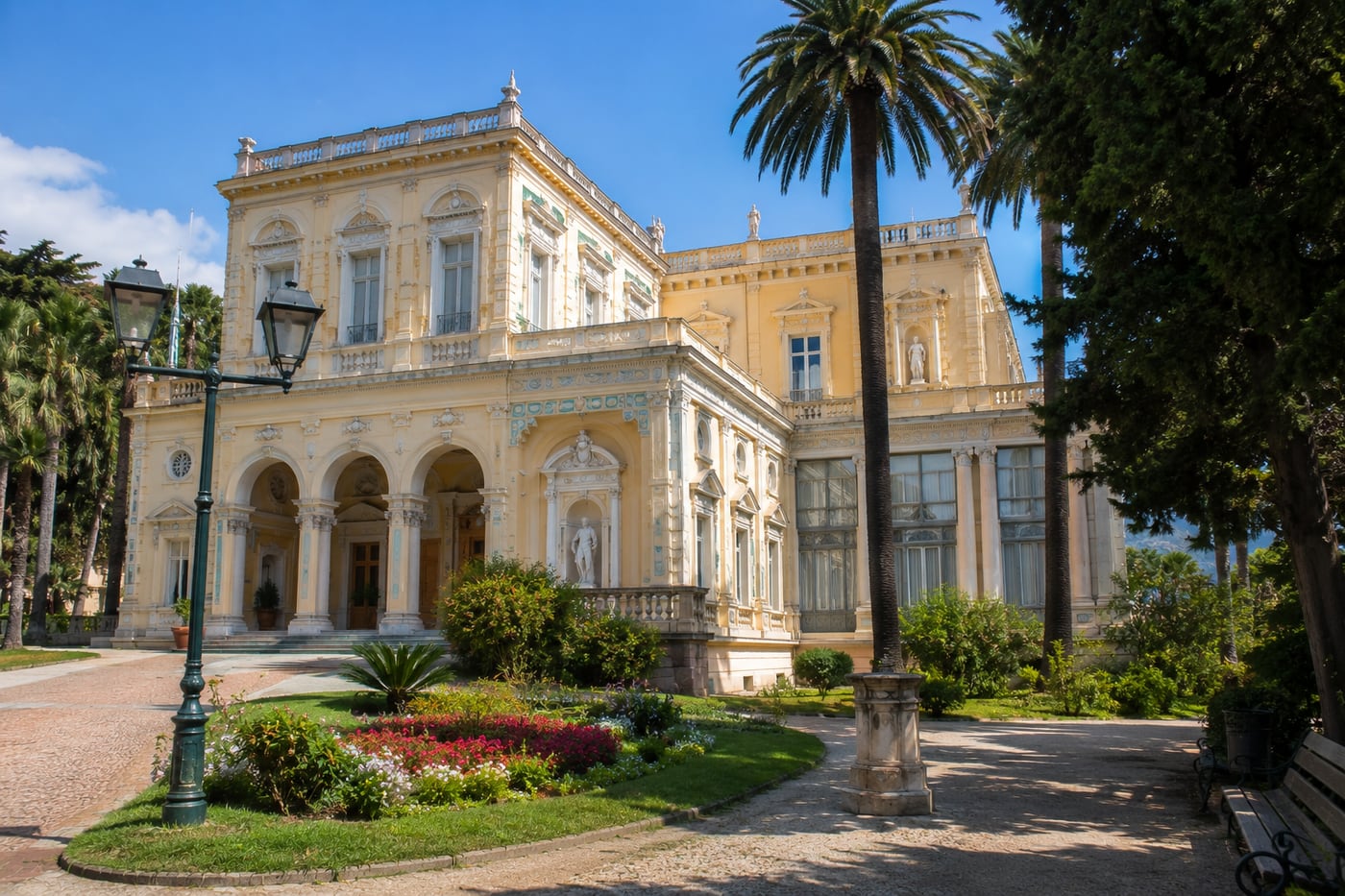
Combine a citrus-focused stop with a visit to the garden of Palais Carnolès, known for its historic citrus collection. Alternatively, reserve an orchard visit and dedicate the rest of the day to the botanical heritage of Menton. Browse our Menton guides for further garden and cultural stops, and check each property’s booking arrangements.
museum
museum
Palais Carnolès
A historic Menton palace and garden complex, used as a screen stand-in for a railway station in Poirot: The Mystery of the Blue Train.
Avenue de la Madone, 06500 Menton
Check current hours before visiting
15. Booking checklist: avoid a wasted journey
Before heading uphill to an orchard, confirm the following with the organiser:
The exact date and starting time of your visit.
Whether the tour is guided or self-guided.
Whether tasting is included, optional or unavailable that day.
The total admission price and cancellation conditions.
The precise entrance and any parking or public transport instructions.
Whether the tour is available in English.
Walking difficulty, steps and accessibility.
Whether fresh IGP lemons are available to buy in your travel period.
This is particularly important for small producers. An appointment-only farm is not a shop where visitors can arrive unannounced.
Frequently asked questions
Can you visit a lemon orchard in Menton?
Yes. Producers such as Domaine Gannac offer orchard experiences, while other growers arrange visits during specific seasons or by appointment.
Do lemon producers offer tastings?
Some do. Domaine Gannac advertises a guided visit with tasting, and Emilie et les Citrons de Pépé lists seasonal visits with tastings. Confirm what's included when booking.
When are Menton lemons harvested?
The main harvesting period begins around December and continues through the winter, with some production extending into spring depending on conditions.
Are all lemons sold in Menton locally grown?
No. Menton is both a tourist destination and a working town, and shops may sell citrus products from different origins. Look for verified Citron de Menton IGP labelling if you specifically want certified local fruit.
Is the Lemon Festival made using Menton lemons?
No. The festival's large displays require imported citrus fruit. The rarer local IGP harvest is primarily destined for food and culinary uses.
Can you visit a grower in summer?
Yes, where a producer operates summer visitor programmes. Domaine Gannac is one option. But summer doesn't automatically mean that you'll see harvesting.
Can you discover Menton's lemons without a car?
Absolutely. Central shops and the artisan tasting route are easy to explore on foot. Hilltop orchards require more planning, with transport arrangements depending on the property.
Which lemon experience should you choose with children?
A suitable guided farm experience can be rewarding for older children interested in nature and food. For an easier outing, choose a central artisan demonstration or a lemon-tasting walk. Check minimum ages and walking difficulty before booking.
Final thoughts: there's more to Menton's lemons than the festival
The Fête du Citron may be what first brings Menton's lemons to your attention. But the most interesting discoveries often happen away from the parades. On a hillside terrace, a grower explains why the fruit develops its particular aroma. In a small artisan workshop, citrus peel becomes a fragrant preserve. In the old town, a familiar dessert suddenly tastes different because you understand where its ingredients come from.
These experiences reveal a side of Menton that exists throughout the year. Whether you have an hour, an afternoon or a whole day, choose the experience that interests you most. And if you can, meet someone who actually grows the fruit. It's a wonderful way to understand why Menton has made the lemon its symbol.
Continue exploring Menton
Best Souvenir Shops in Menton: Lemon Gifts and Local Specialities
All Menton Food, Garden and Cultural Guides
Official Menton Lemon Festival
Citron de Menton IGP: French National Institute of Origin and Quality
Original research dated 27 October 2026; principal operator and tourist-office links reviewed on 31 October 2026. Agricultural seasons, visits, admission prices and tastings are subject to change. Always confirm appointments and transport before visiting a working farm.