A beautiful villa and an unsettling film
The French Riviera has always made an excellent setting for stories about people with something to hide.
Its elegant hotels, secluded villas and magnificent coastal views suggest money, privacy and the freedom to live almost any life one chooses.
But those qualities can also make it a convincing setting for psychological suspense.
In Claude Miller's 1983 film Mortelle Randonnée, known internationally as Deadly Circuit or Deadly Run, the Riviera becomes part of a journey through obsession, deception and murder.
The film stars Michel Serrault as a private detective known as L'Œil, or “The Eye”.
He's following a mysterious young woman played by Isabelle Adjani.
She moves between identities, relationships and luxurious environments, leaving behind a trail of violence.
The detective gradually becomes convinced that the woman might be his long-lost daughter.
His investigation turns into something far more personal.
Among the film's memorable locations is Villa Cypris, an extraordinary early twentieth-century property on the rocky coast of Roquebrune-Cap-Martin, near Menton.
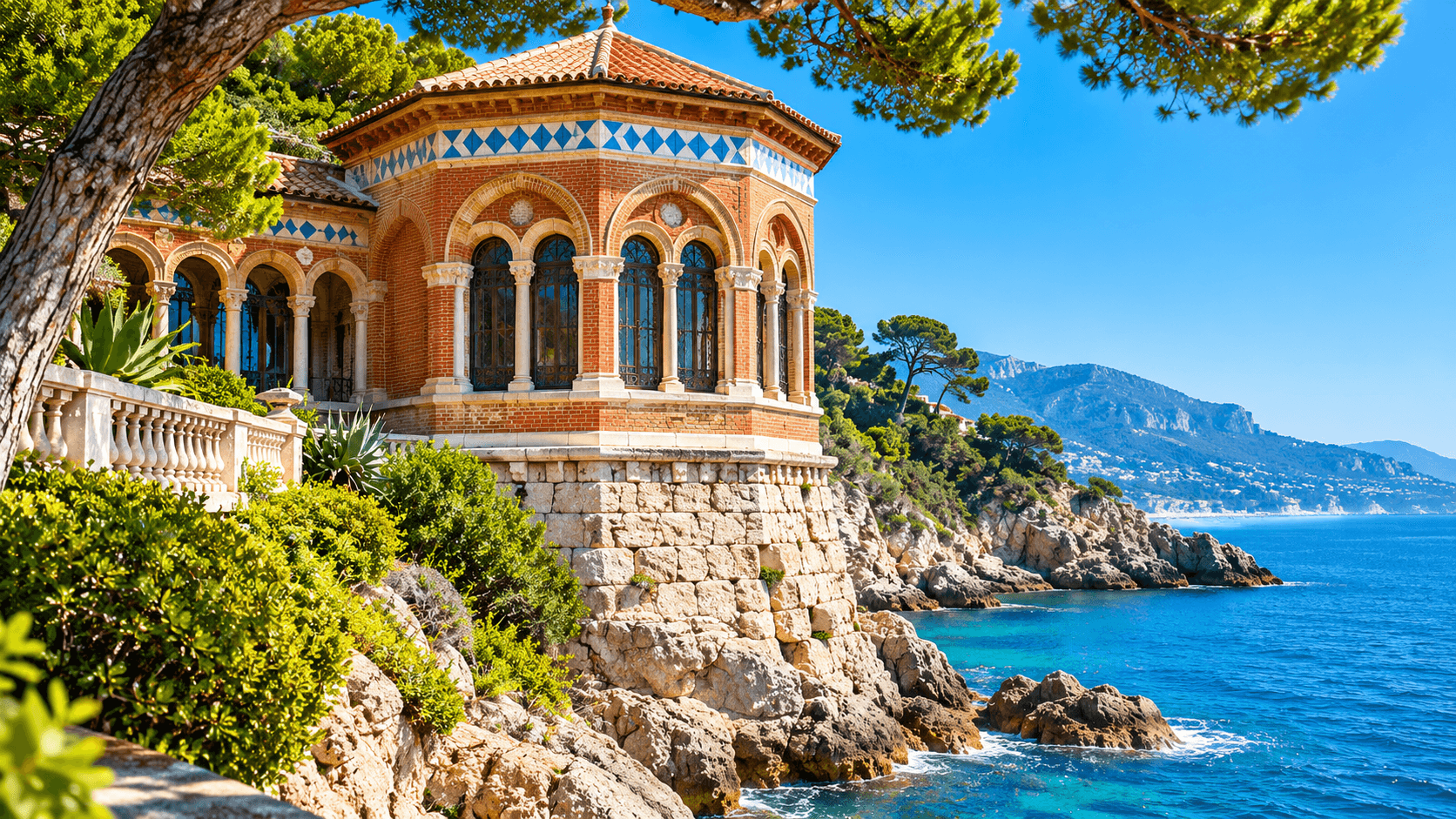
The villa's brick arcades, richly decorated architecture and gallery overlooking the Mediterranean provide an ideal setting for the film's mixture of elegance and unease.
And unlike some inaccessible Riviera film locations, one of its most distinctive architectural features can be appreciated from an authorised public coastal path, subject to the path being open.
This guide explores the film, the real building behind the screen and how to experience the location respectfully.
It is deliberately centred on one confirmed historic villa, rather than inventing a long itinerary of unrelated attractions.
1. Discover the film: Mortelle Randonnée
Original title: Mortelle Randonnée
International titles: Deadly Circuit, Deadly Run
French theatrical release: 9 March 1983
Director: Claude Miller
Screenplay: Michel Audiard and Jacques Audiard, adapted from Marc Behm's novel Eye of the Beholder
Principal cast: Michel Serrault, Isabelle Adjani, Guy Marchand, Sami Frey, Stéphane Audran, Geneviève Page and Macha Méril
Cinematography: Pierre Lhomme
Music: Carla Bley
Genre: Psychological thriller / Crime drama
The film follows a private detective through a succession of European locations as he observes a young woman who repeatedly changes identity.
What begins as surveillance becomes an increasingly disturbing emotional relationship.
L'Œil is haunted by the disappearance of his daughter. The resemblance he perceives between the woman he follows and the child he lost begins to overwhelm his professional judgement.
The film combines crime and suspense with an exploration of grief, projection and emotional obsession.
Why is the film unusual?
It's not simply a detective story about finding a murderer.
The audience knows much more about the young woman's behaviour than an ordinary whodunit might reveal at the beginning.
The tension comes from the relationship between observer and observed.
The detective becomes fascinated by someone he should be investigating objectively.
And the film moves through a succession of stylish European environments that contrast sharply with the violence and personal despair beneath the surface.
Claude Miller uses architecture, hotel interiors, gardens and private residences to reinforce that contrast.
Different versions of the film
Official catalogues do not all describe the same edition. Quebec's classification register lists 120-minute and 96-minute editions, while the CNC record lists 101 minutes with a 1994 visa. Do not treat those records as one uniform running time.
That matters for anyone researching filming locations.
A timestamp taken from one edition may not identify the same scene in another.
For this guide, the villa's identity is supported by location records, but exact shot timestamps have not been independently verified against both versions.
Where to watch
Mortelle Randonnée — Cinémathèque française film record
Use legitimate cinema, rental or disc catalogues to find an edition. The ARTE link in the supplied research could not be reliably opened at this check; no current streaming availability is confirmed. Availability depends on territory, licensing and the particular edition.
2. Villa Cypris: the real house behind the fictional residence
Location: Avenue Douine, Roquebrune-Cap-Martin.
Villa Cypris stands within the historic Cap Martin estate, on the rocky Mediterranean coastline between Menton and Monaco.
It's an unusually distinctive building.
Its architecture combines pale stone, warm red brick, ornamental arches and decorative details influenced by Byzantine traditions.
The property belongs to the wave of ambitious private villas developed on Cap Martin in the early twentieth century.
But unlike the more conventional Belle Époque houses built nearby, Cypris has an architectural language that is immediately recognisable.
Who commissioned it?
The villa was built shortly after 1904 for Madame Robert Douine, wife of the director of the Grands Magasins du Louvre department store in Paris.
The architect was Édouard Arnaud.
The surrounding gardens were designed by Raffaële Maïnella, an Italian painter and landscape designer born in Benevento in 1858.
The French Ministry of Culture identifies the villa as Byzantine-inspired and documents the elaborate garden composition.
A protected historic monument
Villa Cypris was registered as a French historic monument on 19 September 1990.
Its protected elements include the buildings, entrance gates, pavilions, paths, stairs, pools, fountains, decorative structures and historic garden ornaments.
This heritage status recognises the importance of the property as an architectural and landscape ensemble.
It does not make the estate an ordinary public museum.
civic
civic
Villa Cypris
Private historic estate, not a public museum. Regional tourism confirms Mortelle Randonnée filming; exact shots remain unverified. Observe only from the authorised public coastal trail when open. The location search identifies the estate, not a visitor entrance. Do not enter gardens, driveways or gallery, or bypass barriers.
Avenue Douine, 06190 Roquebrune-Cap-Martin, France
3. What role does Villa Cypris play in Mortelle Randonnée?
The regional tourism authority identifies Villa Cypris as a filming location for Mortelle Randonnée.
Further location research associates it with the villa of Ralph Forbes, played by Sami Frey.
Forbes is a character whose personal circumstances become connected with the detective's pursuit of the mysterious woman.
The villa provides a distinctive setting for part of that story.
Which scenes were filmed here?
Published filming-location research identifies several sequences associated with Villa Cypris:
Scenes involving Ralph Forbes's residence.
Interior sequences involving L'Œil, the detective played by Michel Serrault.
A sequence featuring the gallery overlooking the sea.
A scene associated with an underground drainage or passage environment.
These identifications appear in the specialist L2TC location catalogue.
However, the catalogue's individual scene entries are community-contributed, and a complete comparison with the film's available versions has not yet been performed for this article.
Consequently, the villa itself is a confirmed filming location, while exact camera positions and some interior identifications require additional verification.
Why does the house work so well on screen?
Its appearance is almost theatrical.
A decorative gallery stands above the rocks.
Arched openings frame the Mediterranean.
Dense vegetation partly conceals the buildings.
The property combines extraordinary beauty with an atmosphere of separation from the outside world.
In a psychological thriller, such a setting can become ambiguous.
Is the house a refuge?
A private sanctuary?
Or a place where dangerous relationships are hidden behind beautiful architecture?
The film makes good use of that uncertainty.
4. The most recognisable architectural feature: the seaside gallery
The coastal gallery is one of Villa Cypris's defining architectural elements.
It projects above the rocky shoreline, combining a stone base with warm brickwork and arched openings.
Its design has decorative affinities with Byzantine and Mediterranean architecture.
From the sea-facing side, the structure appears almost like a small pavilion suspended above the water.
Why is the gallery important?
The Ministry of Culture describes the garden's main descending perspective as leading towards a covered colonnade silhouetted against the sea.
This is a carefully designed visual effect.
The visitor's eye is guided down through the property towards an architectural feature that frames the Mediterranean.
The relationship between garden design and sea view was intentional.
Architecture becomes cinematography
This arrangement makes the villa particularly useful to filmmakers.
Arches provide strong visual frames.
The rocky coast creates a dramatic change in elevation.
The sea introduces brightness and movement beyond the still architecture.
And the contrast between enclosed spaces and open views can be used to suggest separation, freedom or vulnerability.
It is an ideal location for a film in which appearances and private emotions are constantly at odds.
5. The garden that mixed Mediterranean and Byzantine influences
Villa Cypris isn't simply an interesting house.
Its gardens are an important part of the original architectural project.
Raffaële Maïnella designed a landscape that combined formal structure with decorative references to several cultural traditions.
Among the documented features is a pergola supported by sixteen marble pillars and brick arches.
The French heritage description compares the effect with a ruined mosque.
Other features include garden passages, ornamental water structures, sculptures and terraced compositions.
A designed world rather than a natural wilderness
The property may appear lush and spontaneous, but its landscape was deliberately organised.
The owner and designers sought to create a sequence of architectural experiences.
Passages lead from one setting to another.
Arches mark transitions.
Water and vegetation create contrasts.
The Mediterranean provides a distant background.
Why that matters for film
A director doesn't always need to construct an elaborate set when a historic villa already offers strong architectural compositions.
Cypris contains real visual contrasts that can support suspense.
But the film's fictional story should not be confused with the original family's history.
The property's architecture and gardens existed long before Claude Miller arrived.
The characters and their actions belong to cinema.
6. Can visitors enter Villa Cypris?
Villa Cypris remains private property.
The heritage record concerns a private estate; no regular ticketed public interior or garden visiting programme was verified during this research.
The fact that the building is a registered historic monument doesn't imply general public access.
What is not permitted without authorisation?
Entering the private garden, following driveways towards the house, approaching residential entrances or attempting to access the historic gallery from inside the estate.
A closed gate is not an invitation to investigate.
Visitors should also avoid flying drones over private residential areas without appropriate permissions.
What can you see legitimately?
Unlike many hidden Riviera villas, Cypris has an architectural relationship with the public coastal path.
The officially described Sentier du Littoral passes beside the villa's distinctive gallery.
That creates an opportunity to appreciate part of the real architecture without entering the estate.
The exact amount visible will depend on vegetation, route conditions and any temporary closures.
7. A safe filming-location visit on the Sentier du Littoral
The Sentier Le Corbusier, also known as the Cap Martin coastal path, follows the rocky shoreline of the peninsula.
The regional tourism route describes 4.7 km one way from Carnolès towards Roquebrune-Cap-Martin station. A separate tourist-office sheet describes an approximately five-kilometre coastal outing. These are different route descriptions, not a guaranteed short return walk to the villa.
One of the features encountered along the route is the gallery of Villa Cypris.
This is the most useful visitor connection for the film.
Where should you begin?
For visitors based in Menton, a practical starting point is the Carnolès side of Cap Martin, subject to current path access.
The regional tourism route describes an approach from Carnolès towards Avenue Winston Churchill and the coastline.
From there, the public coastal trail continues around the peninsula. Carnolès is a possible starting area, not a promise that your train stops there: check the dated outward and return services. SNCF also announces Nice–Ventimiglia night works from 22:00 to 06:00 Sunday–Thursday nights through 10 December 2027; favour a daylight outing rather than relying on a late train.
What to expect
The route follows a rocky coast.
It includes areas of shade beneath trees and more exposed sections overlooking the sea.
Although the tourist office describes the path as relatively manageable, it is not a completely flat paved promenade.
Wear appropriate shoes and allow for uneven surfaces and steps.
Finding the villa's gallery
Follow the authorised public coastal trail.
The published route description specifically identifies the pergola or gallery of Villa Cypris as a landmark along the path.
You may see the brick arches and decorative structure as you pass.
It's important to remember that the architectural feature belongs to the private estate even when viewed from a public right of way.
Stay on the designated path. Do not leave it to enter the property or obtain a closer photograph.
How long does it take?
Allow approximately 45–90 minutes for a shorter coastal outing, depending on the chosen start, your pace and the time spent stopping.
This is an editorial estimate, not a field-measured walking time from a specific railway station to the gallery.
For the complete coastal trail, allow a longer outing and confirm your return transport.
Weather and closures
The tourist-office sheet describes free access subject to favourable weather, not a live confirmation that every section is open. No date-specific opening guarantee was established for the Cypris section on 4 November 2026. Check municipal notices and on-site signs before setting out.
Sections may close during dangerous weather, high seas, rockfall risk or maintenance works.
Do not bypass barriers.
If the route is closed, postpone the filming-location visit rather than attempting to reach the gallery from private roads.
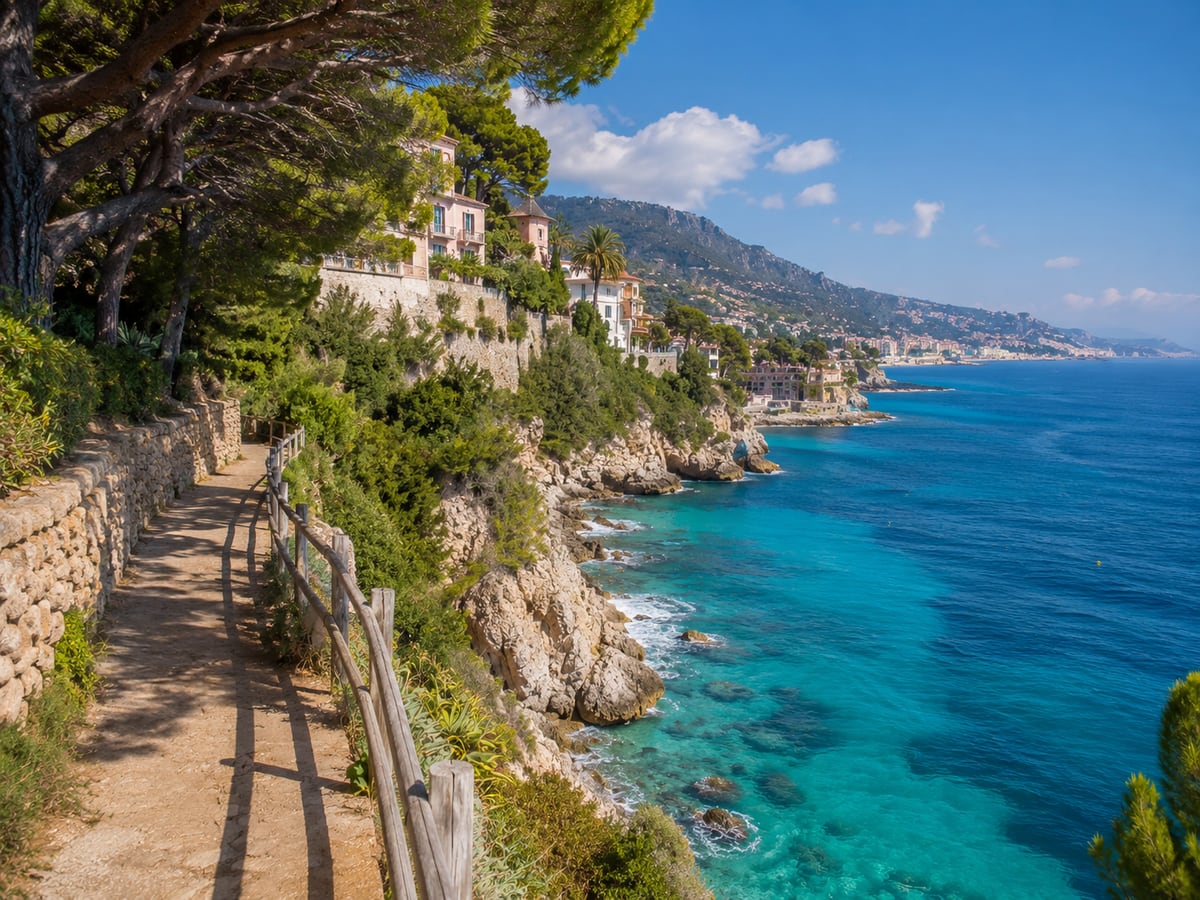
walk
walk
Roquebrune-Cap-Martin Coastal Walk
A classic Riviera coastal route linking beaches, cliffs, pine trees, villas and train access back to Menton.
between Menton and Cap Martin
8. What should you compare with the film?
A strong filming-location visit doesn't require reproducing the fictional character's movements.
It requires identifying architectural features that survive.
The gallery and arches
Look at the proportions of the brick arcades and their relationship with the sea.
If you're comparing the film with a modern photograph, architectural geometry is more dependable than vegetation or surface colour.
The stone base
The gallery's substantial stone structure and relationship with the coastal rocks help establish its position.
The surrounding landscape
Notice the contrast between the enclosed property and the sea beyond.
This relationship is part of the original design and a significant reason why the villa works cinematically.
What still needs verification?
Exact timestamps, camera angles and which portions of the film's interior scenes were recorded within Cypris rather than elsewhere.
A reliable Then & Now comparison should use a legitimately sourced frame from the same film edition and a modern photograph taken from an authorised public position.
9. Why the Riviera looks different in Mortelle Randonnée
Many films use the French Riviera as shorthand for pleasure.
The sun, gardens and beautiful villas imply freedom and luxury.
Mortelle Randonnée uses those familiar elements for a more unsettling purpose.
The settings are beautiful, but the characters are often isolated.
Wealth and elegant surroundings don't guarantee safety.
The detective moves through a world where outward appearances provide little information about private intentions.
The detective's gaze
L'Œil spends much of the film observing other people.
His job requires distance.
But his emotional identification with the young woman makes objectivity increasingly difficult.
That tension between looking and understanding is reflected in the film's use of locations.
A spectacular villa may look comprehensible from the outside.
But the life taking place within it remains hidden.
Villa Cypris as an architectural metaphor
The house's grand exterior and elaborate garden create an impression of order.
Its rooms, paths and partially enclosed structures also suggest privacy.
For a story about unreliable identity and emotional projection, those qualities become particularly powerful.
The setting is not merely attractive.
It helps express the film's central psychological concerns.
10. A useful comparison: Villa Torre Clementina
Cap Martin has another extraordinary filming location nearby.
Villa Torre Clementina appears in René Clément's Les Félins (Joy House, 1964), starring Alain Delon and Jane Fonda.
Both villas belong to the luxurious residential history of Cap Martin.
Both use elaborate decorative architecture.
Both were developed in the early twentieth century.
And both were chosen for psychological thrillers in which magnificent private homes conceal troubled relationships.
But they are separate properties with different histories.
The two properties make a fascinating pair for readers interested in architectural history.
However, their separate film connections should not be confused.
And their protected status doesn't turn them into public museums.
| Villa Cypris | Villa Torre Clementina | |
|---|---|---|
| Film | Mortelle Randonnée (1983) | Les Félins / Joy House (1964) |
| Director | Claude Miller | René Clément |
| Architect | Édouard Arnaud | Lucien Hesse |
| Garden design | Raffaële Maïnella | Raffaële Maïnella |
| Historic-monument registration | 1990 | 1991 |
| Public access | No regular estate visits verified | No regular estate visits verified |
| Distinctive feature | Seaside gallery with brick arches | Tower and elaborate Venetian-inspired arcades |
11. An optional second location: Villa Ephrussi de Rothschild
Another published filming-location catalogue identifies Villa Ephrussi de Rothschild in Saint-Jean-Cap-Ferrat as a location used in Mortelle Randonnée.
The L2TC entry associates it with a party sequence involving the film's characters. This is a user-contributed identification, not a production-confirmed scene claim; a detailed visual audit is still needed.
Why mention it?
It offers an interesting contrast with Villa Cypris.
Villa Ephrussi is a public museum and historic garden with ordinary admission arrangements.
Check its official access page and exceptional closures, including the announced closure on 14 December 2026. No admission is included in this guide.
Cypris is private.
Both have spectacular architecture and gardens, but their visitor access is completely different.
Should you combine them in a single outing?
Not necessarily.
Saint-Jean-Cap-Ferrat lies west of Monaco, while Villa Cypris is on Cap Martin.
For a normal visitor, travelling between them adds time and transport complexity.
It's better to treat Ephrussi as a separate optional filming-location excursion, not part of a short Cypris walk.
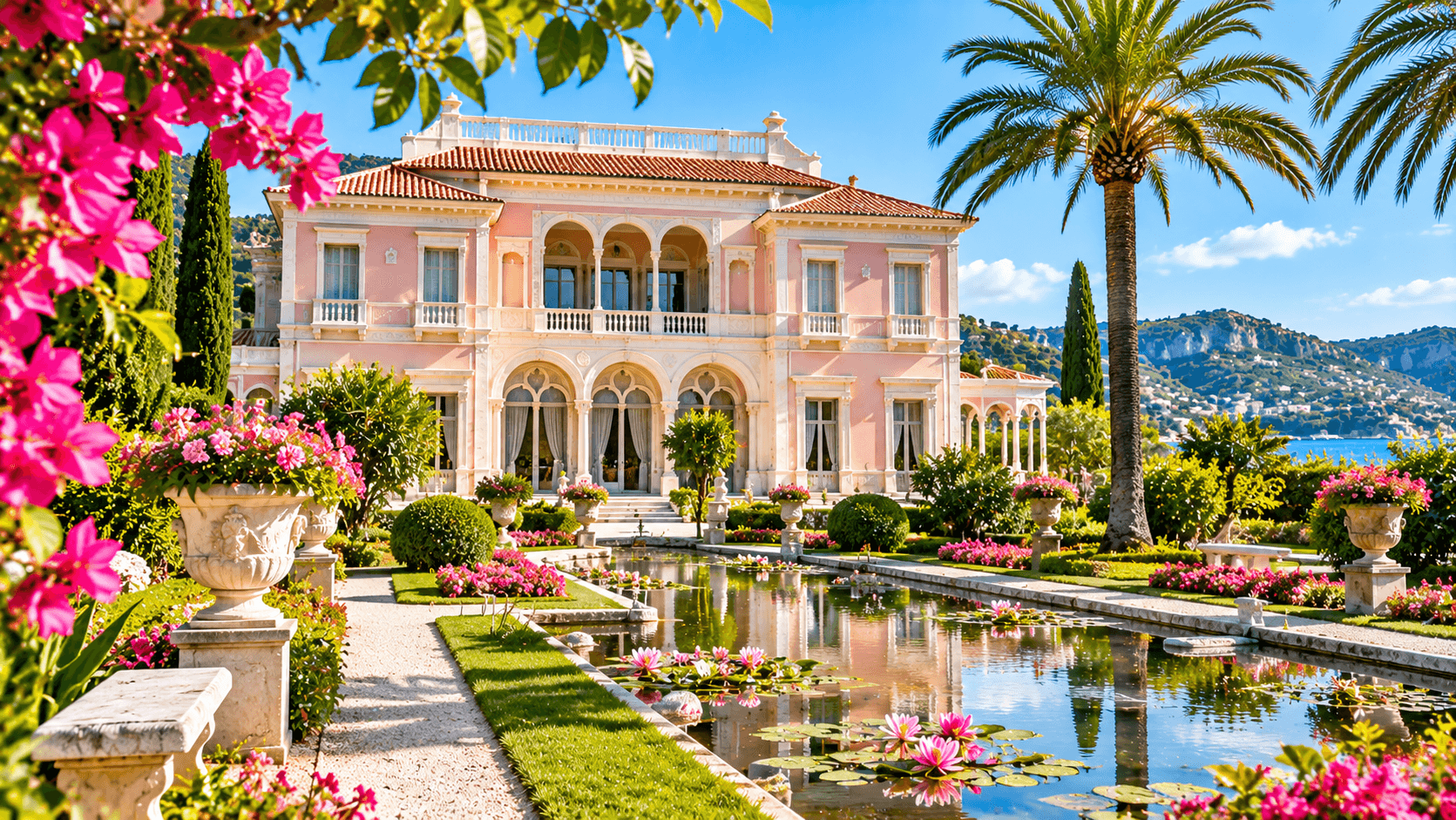
museum
museum
Villa Ephrussi de Rothschild
Béatrice Ephrussi de Rothschild's collections and themed gardens. Public ticketed visit with seasonal hours; exceptional closure announced for 14 December 2026.
Saint-Jean-Cap-Ferrat
Check current hours before visiting
12. A compact visitor plan from Menton
The essential experience
Travel towards the Cap Martin coastal area.
Check that the relevant section of the Sentier du Littoral is open.
Walk along the marked path towards the Villa Cypris gallery, following the official trail description.
Observe the seaside architecture from the public route.
Continue only as far as you're comfortable, then return or use a confirmed onward connection.
This gives you the strongest combination of cinematic interest and practical accessibility.
If you're interested mainly in architecture
Spend longer examining the relationship between the historic villas and the landscape.
The coastal path offers a different view of Cap Martin from the inland roads.
The buildings are often partly hidden behind vegetation, which helps explain why privacy was such an important part of the estate designs.
If you're interested mainly in the film
Watch Mortelle Randonnée before your visit.
Pay attention to the villa sequences involving Ralph Forbes.
Then compare the architecture with the public views of the real property.
Do not assume that every filmed interior remains accessible or unchanged.
If the path is closed
Choose another public coastal walk and postpone the Cypris-specific visit.
There is no reason to enter private land or approach the property through an unsafe access point.
13. Is this location worth visiting without seeing the film?
Yes, particularly for visitors interested in architecture.
Villa Cypris is significant independently of Claude Miller's thriller.
Its Byzantine-inspired design, coastal gallery and historic gardens form part of Cap Martin's architectural heritage.
The film provides an additional layer of meaning.
It shows how a real private residence can become a fictional psychological environment.
But the history of the building belongs to more than one production.
An architect designed it.
A landscape artist shaped the gardens.
An owner commissioned it.
Later generations adapted and maintained it.
Then the cameras arrived.
The film is one chapter in a longer story.
Frequently asked questions
Was Mortelle Randonnée filmed at Villa Cypris?
Yes. The regional Provence-Alpes-Côte d'Azur tourism authority identifies Villa Cypris as a filming location for Claude Miller's 1983 film.
What does Villa Cypris represent in the film?
It is identified in filming-location records as the villa of Ralph Forbes, played by Sami Frey.
Which scenes were filmed there?
Specialist location records associate Cypris with sequences involving Forbes's residence, the detective and the seaside gallery. Exact shots and timestamps still need independent verification.
Is Mortelle Randonnée the same as Deadly Circuit?
Yes. Mortelle Randonnée was distributed internationally under titles including Deadly Circuit and Deadly Run.
Who directed the film?
Claude Miller, with a screenplay by Michel Audiard and Jacques Audiard based on Marc Behm's work.
Who plays the detective?
Michel Serrault plays the private detective known as L'Œil, or “The Eye”.
Who designed Villa Cypris?
Architect Édouard Arnaud. Its gardens were designed by Raffaële Maïnella.
When was the villa built?
Shortly after 1904, when the private Cap Martin estate was subdivided.
Can visitors enter Villa Cypris?
No regular public visiting programme was verified. It remains private property.
Can you see the villa from a public path?
The official coastal walking route passes the villa's distinctive seaside gallery, subject to temporary path access restrictions.
Is the coastal path suitable for wheelchairs?
The full coastal trail contains uneven terrain and steps. It should not be treated as a continuously step-free route.
Is Villa Torre Clementina the same building?
No. Torre Clementina is another historic private villa on Cap Martin, associated with the 1964 film Les Félins.
Can I visit both villas in one day?
Their histories can be explored together, but neither property offers confirmed regular public entry. Use authorised public routes and avoid assuming that all buildings will be clearly visible.
Does the guide contain spoilers?
No major plot developments or the film's ending are revealed.
Final thoughts: a darker story behind a beautiful façade
Villa Cypris is an extraordinary piece of Riviera architecture.
Its brick arcades, decorative details and seaside gallery belong to a world of private estates designed to be both beautiful and secluded.
In Mortelle Randonnée, that beauty becomes part of a much darker story.
Claude Miller uses the elegant environment to heighten the contrast between luxury and emotional instability.
The villa appears reassuring from a distance.
The lives unfolding within it are anything but simple.
For visitors to Cap Martin, the real building offers an unusual connection between cinema and architectural history.
You can appreciate its remarkable coastal gallery from the authorised public path, when open.
You can learn about the architect and landscape designer who created it.
And you can discover how a private residence became part of one of French cinema's most unsettling thrillers.
The film is fiction.
The building is real.
And the relationship between them is what makes Villa Cypris worth understanding.
Sources and further reading
Film record — Cinémathèque française
French release and edition record — CNC
Edition runtimes — Quebec classification register
Filming connection — regional tourism authority
Scene identifications — L2TC, user-contributed
Villa Cypris — Ministry of Culture
Villa Cypris — heritage protection record PA00080958
Torre-Clementina — Ministry of Culture
Coastal itinerary and Cypris gallery — regional tourism
Sentier Le Corbusier — tourist office
Villa Ephrussi — access information
Checked 4 November 2026. Regional tourism documents the Cypris filming connection, and heritage records document the architecture. Individual scenes come from user-contributed research, not a full frame-by-frame viewing. Villa Cypris is private; recommendations concern authorised public paths only, with no live opening or station-service guarantee. The 45–90 minutes is an editorial allowance for a short selected outing, not a measured station-to-villa route. The supplied cover and villa image are artistic illustrations, not documentary photographs, film stills, verified camera positions or proof of public access.