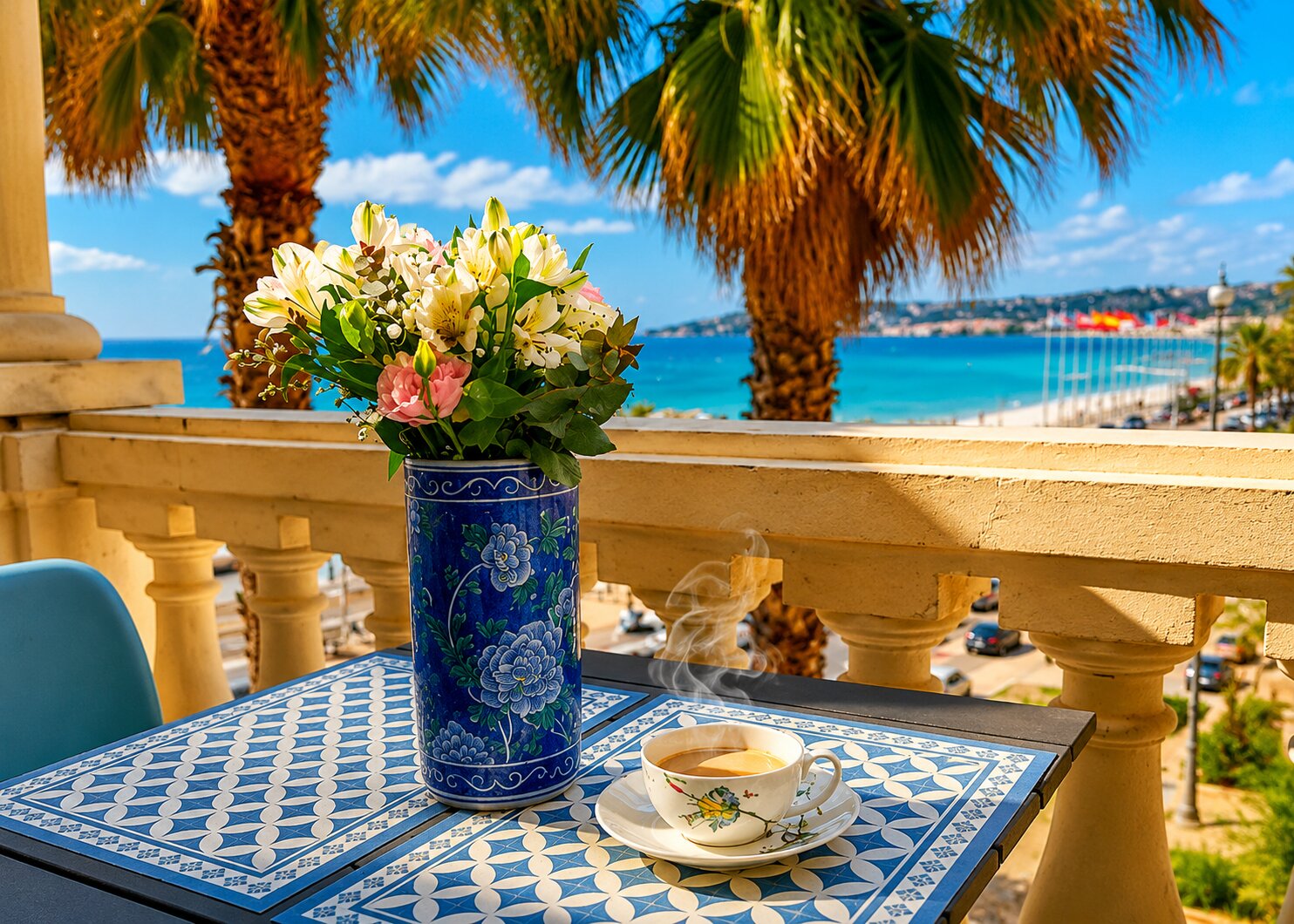
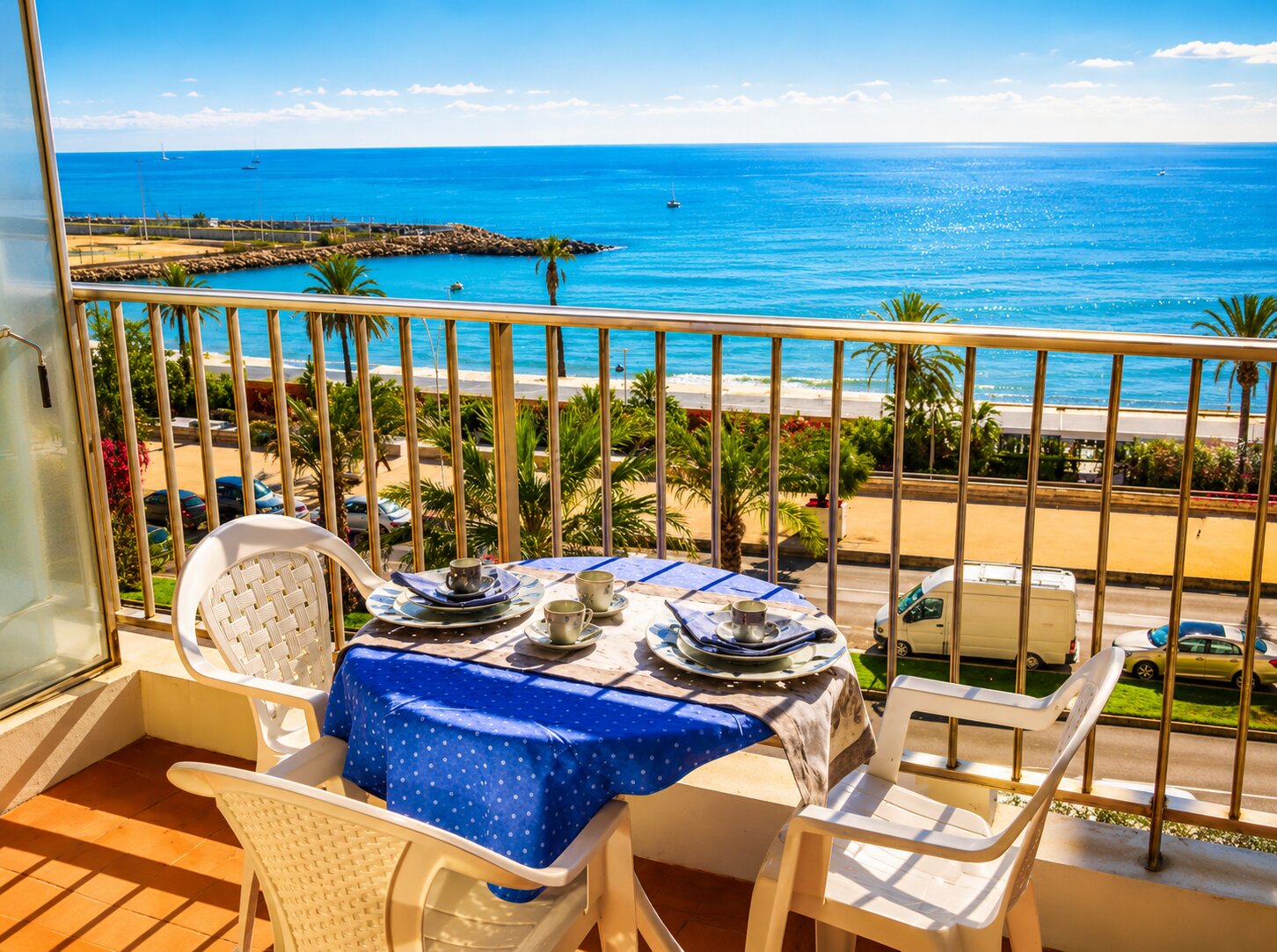
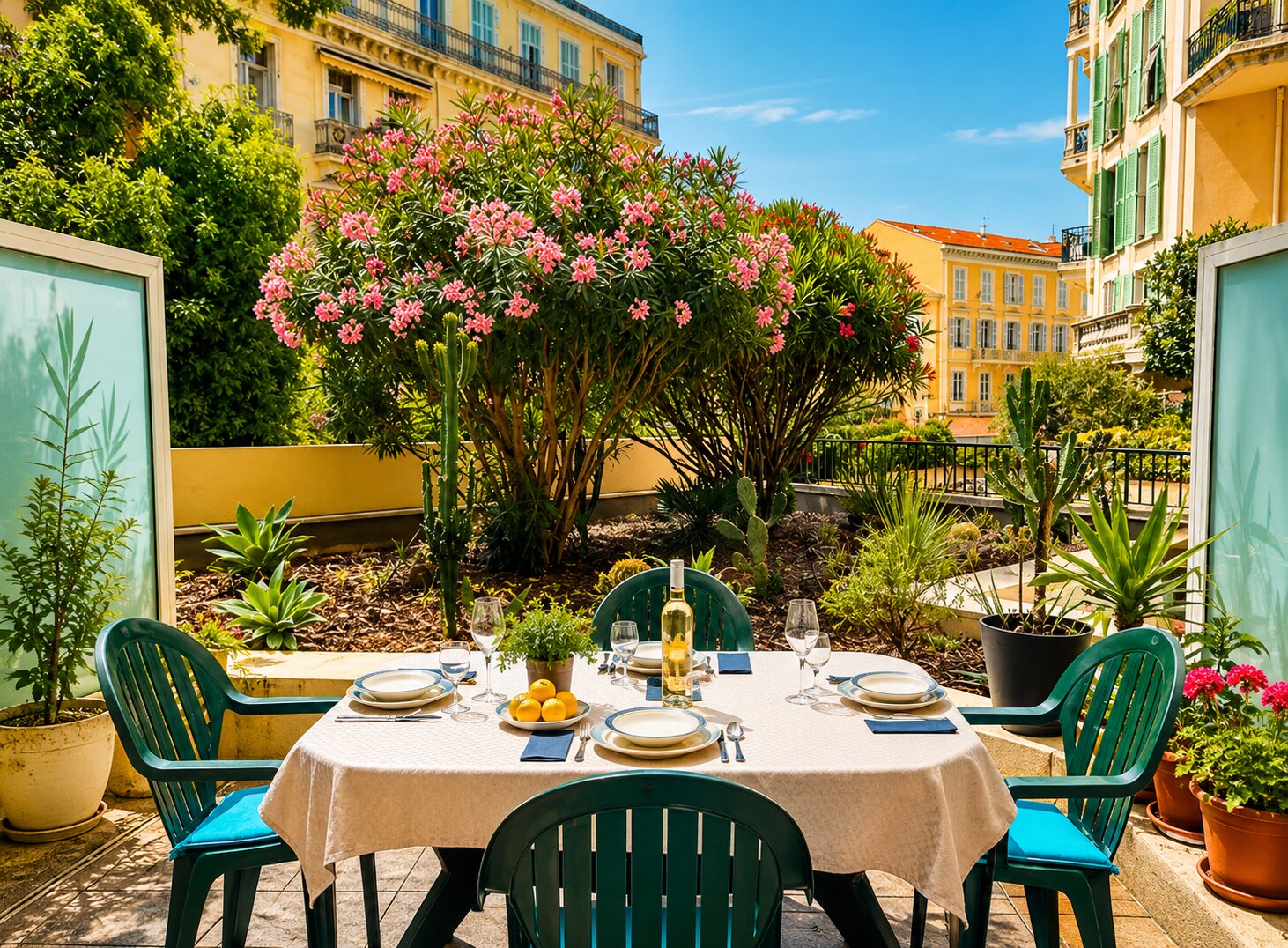
A beautiful house is not necessarily a happy one
In the early twentieth century, Menton attracted a particular kind of visitor.
They came from Britain and other parts of northern Europe, often bringing with them money, domestic expectations, servants, furniture and the reassuring belief that life beside the Mediterranean might be rather easier than life at home.
Some stayed for a few weeks.
Others returned every winter.
And some bought villas, planted gardens and gradually stopped thinking of Menton as a holiday destination at all.
That vanished world provides the setting for The Long Afternoon, the debut novel by Giles Waterfield.
Published in 2000, the novel follows Henry and Helen Williamson, a young British couple who settle on the French Riviera in the 1930s.
Henry has been forced to retire from the Indian Civil Service because of ill health. Together, the couple discover Lou Paradou, a beautiful property where they hope to create a peaceful life.
They build a domestic world around the house, garden and rituals of expatriate society.
But the surrounding world is changing.
The apparent permanence of their Mediterranean refuge becomes increasingly difficult to sustain.
The Long Afternoon is a novel about marriage, privilege, belonging and the fragile distinction between finding sanctuary and withdrawing from life.
It is also unusually closely connected to the real history of Menton.
Waterfield drew on the experiences of his own grandparents, who lived at Le Clos du Peyronnet in Garavan.
That garden still exists.
And while the fictional Lou Paradou cannot simply be identified with every detail of the historic property, visiting Garavan provides a fascinating way to understand the world from which the novel emerged.
1. Discover the book: The Long Afternoon
The Long Afternoon
By Giles Waterfield (1949–2016)
First published in 2000
Winner of the 2001 McKitterick Prize
Literary fiction / Historical family novel
Set on the French Riviera during the decades surrounding the Second World War.
Giles Waterfield was an art historian, museum director, curator and novelist. He directed London's Dulwich Picture Gallery from 1979 to 1996 and worked extensively on the history of museums, historic houses and their preservation.
His first novel brings those interests into fiction.
The house is not simply a backdrop.
Its rooms, grounds and social rituals help define the lives of the people inside it.
And as the characters become increasingly absorbed in their private world, the changing political landscape of Europe grows harder to ignore.
The novel is thoughtful, atmospheric and often unsettling beneath its elegant surface.
It also asks a question that feels particularly relevant when visiting the great villas of the Riviera:
What does it mean to build a perfect life in a place that cannot protect you from the wider world?
Where to find the book
The Long Afternoon: Official Hachette UK edition
The novel was originally published in 2000. Later print and electronic editions have also appeared. Check the publisher or bookseller for availability in your country.
2. When Menton was a British winter home
Before Menton became widely associated with summer holidays, beaches and the Lemon Festival, it was an international winter resort.
Its sheltered climate attracted visitors who found northern winters uncomfortable, unhealthy or simply inconvenient.
British residents became an important part of this world.
Some were recovering from illness. Others were retired civil servants, wealthy families, writers, artists or people whose circumstances allowed them to spend months abroad.
A substantial community formed around houses, churches, gardens, hotels and regular social gatherings.
More than a holiday destination
The distinction matters.
A short holiday is built around arrival and departure.
A long winter residence involves ordinary life.
Someone must manage the house, employ or organise domestic help, maintain the garden, arrange meals, pay bills and prepare for the next season.
There are routines, responsibilities and relationships.
Over time, the beautiful foreign setting can become as familiar as any other home.
The fictional Williamsons belong to this world.
Their life on the Riviera is not simply a prolonged sightseeing trip.
It is an attempt to construct a permanent domestic order in a place associated with leisure and escape.
What can you still see?
Much of the architectural landscape survives.
Garavan retains historic villas, garden walls, terraces and streets developed during Menton's international resort period.
Some estates are still private homes.
Others have become public gardens, apartments or institutions.
The original social world has largely disappeared, but its physical setting remains remarkably legible.
For a visitor who enjoys history, this is one of Menton's most rewarding neighbourhoods.
3. From fiction to family history: the Waterfields
The connection between The Long Afternoon and Menton is not speculative.
Accounts of Giles Waterfield's life describe the novel as drawing on the experience of his grandparents, Derick and Barbara Waterfield, members of the British community on the Riviera.
The couple acquired Le Clos du Peyronnet in Garavan in the early twentieth century.
They were part of a generation of British residents who established homes and gardens on Menton's hillside above the sea.
But a novel is not a family archive.
Henry and Helen Williamson are fictional characters.
Their house, Lou Paradou, is a fictional setting.
The author's family history supplied material, atmosphere and emotional concerns, which he transformed into a literary work.
What is historically established?
The Waterfield family owned Clos du Peyronnet for generations.
The property became associated with English garden design, Mediterranean horticulture and the preservation of a family estate.
Family members continued transforming the garden long after the period depicted in the novel.
What should remain within the novel?
The precise conversations, motives, domestic episodes and inner lives of Henry and Helen Williamson.
Even where fictional events resemble documented family history, the novel should not be presented as a verbatim historical record.
For readers interested in the actual Waterfield family, contemporary documents and heritage records provide a different type of evidence.
Both sources are valuable, but for different reasons.
4. Le Clos du Peyronnet: the real garden behind the story
Location: Boulevard de Garavan, Menton
Le Clos du Peyronnet is among the most extraordinary historic private gardens in Menton.
The property stands between the hillside boulevard and the Mediterranean, in a sheltered setting that has supported a remarkable collection of plants.
The original villa dates from the late nineteenth century.
Derick and Barbara Waterfield acquired the property in 1912 (the date given by the garden website).
Over subsequent decades, three generations of the family contributed to its development.
The garden as a family project
The grounds are famous for their carefully structured terraces, pergolas, arches, exceptional planting and a sequence of reflecting pools descending towards the sea.
The design combines formal architectural elements with dense subtropical vegetation.
One of its most striking characteristics is the way the garden borrows views from the surrounding landscape.
At certain points, the sea becomes part of the composition.
Elsewhere, the vegetation creates an almost enclosed world.
A crucial historical distinction
The garden visible today is not identical to the one known to Derick and Barbara Waterfield.
After wartime damage, their son Humphrey Waterfield undertook an ambitious redesign, particularly from the late 1940s onwards.
His work gave the garden much of its celebrated later structure.
William Waterfield continued developing the collection after 1976.
The garden has therefore changed substantially over its lifetime.
That makes it even more interesting as a historical place.
It does not simply preserve one moment from the past.
It contains several generations of decisions about what should be kept, altered and created.
What does this have to do with the novel?
The Long Afternoon is especially concerned with the idea of a house and garden as a constructed private world.
Clos du Peyronnet provides a real historical context for that theme.
The garden's physical boundaries, carefully arranged spaces and relationship with the surrounding coastline help us imagine how important a home could become to a family living abroad.
But the site should be approached as the family's historic estate, not as an exact surviving model of the fictional Lou Paradou.
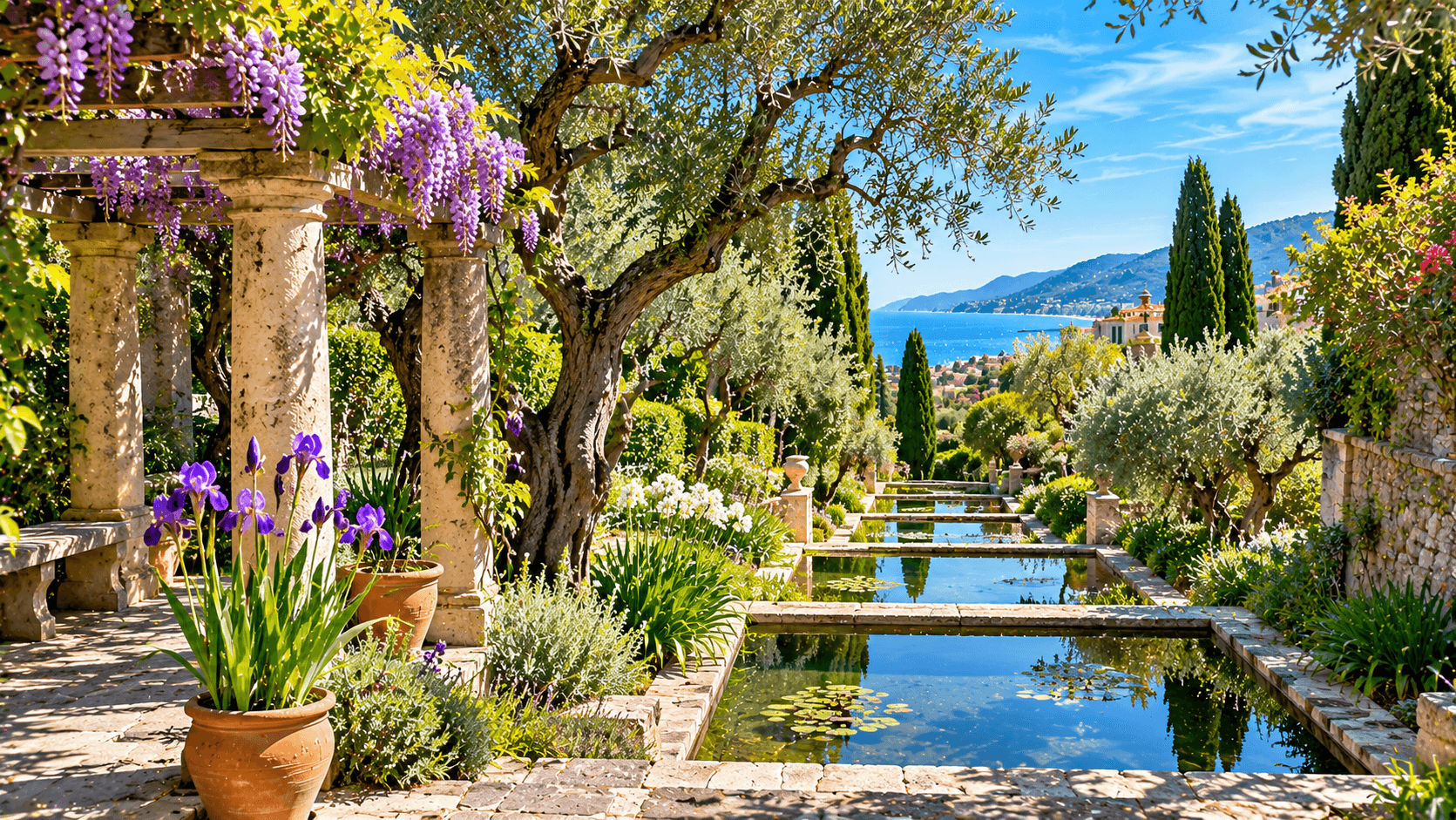
garden
garden
Le Clos du Peyronnet — Waterfield Garden
Private Waterfield family garden behind the historical context of The Long Afternoon, not a literal reconstruction of fictional Lou Paradou. Checked 6 November 2026: tourism lists temporary closure; the garden's September–October programme does not confirm November access. Follow organiser-confirmed meeting instructions; other listings use different street numbers.
Upper tour meeting point: 64 boulevard de Garavan, 06500 Menton; confirm with organiser
Authorised reservation only. Stairs and climbing; operator cannot accommodate wheelchairs or reduced mobility on the described tour.
Source checked:
5. Can you visit Clos du Peyronnet?
Le Clos du Peyronnet is private property.
It is not an ordinary public park where visitors can enter whenever they wish.
The garden has offered organised guided visits, but these require advance reservation.
Published visiting arrangements
The garden website describes a September–October Friday programme at 3 p.m. Those months have now passed; this is not confirmation of a bookable November tour.
The published tour lasts approximately 90 minutes.
The website lists €20 per adult and €14 per child or student for that seasonal programme; reconfirm both price and availability before booking.
Tours are described as bilingual, in English and French, with a maximum of 20 participants.
Current access warning
The official Riviera tourism listing currently marks the garden as temporarily closed.
Because this differs from the seasonal arrangements described on the garden website, do not assume that a tour is available simply because it is Friday.
Obtain confirmation for your intended date before arranging the visit.
The garden's official contact for tour enquiries is:
Email: jardinsdexception@ville-menton.fr
Telephone: +33 7 49 18 29 16
Official Waterfield Garden visitor information
Where do guided tours begin?
The garden's official visitor instructions identify the upper entrance at 64 Boulevard de Garavan, near the Peyronnet bus stop.
The garden website mentions Zest line 8 and the Peyronnet stop. This transport reference has not been independently revalidated against a current timetable; check the operator before relying on it.
Walking difficulty
The garden occupies several levels.
Expect stairs, slopes and significant changes in elevation.
The operator states that the guided tour is unsuitable for wheelchair users and visitors with reduced mobility.
Wear appropriate walking shoes.
Do not attempt to enter the grounds outside an authorised visit.
6. The gardens we see are not the gardens they knew
One of the most rewarding ways to read The Long Afternoon is to think about how gardens change.
A building can retain a recognisable façade for centuries.
A garden is more fragile.
Plants grow, age and die.
Storms damage trees.
Water systems need maintenance.
Owners change their plans.
New species are introduced, and old features disappear.
Clos du Peyronnet offers an unusually clear example.
The family's early twentieth-century garden was later extensively transformed by Humphrey and William Waterfield.
The celebrated landscape visible today contains features and planting that developed long after the novel's historical setting.
Why that matters
It would be tempting to photograph the current garden and label it “the garden of The Long Afternoon”.
But that would confuse literary inspiration, family history and later horticultural design.
A more accurate interpretation is also a more interesting one.
The garden survived because subsequent generations continued to work on it.
Its present beauty is evidence not only of the original owners' ambitions but also of the decisions made by their successors.
The house remained.
The garden evolved.
And the family's story continued beyond the fictional world of the novel.
7. A literary walk through Garavan
You don't need access to Clos du Peyronnet to appreciate the landscape behind the book.
Garavan is worth exploring in its own right.
The following walk is an original AzurMenton route inspired by the novel and the Waterfield family's real historical setting.
It is not a reconstruction of the fictional Williamsons' movements.
Stop 1. Menton-Garavan: entering the old winter-resort landscape
Begin near Menton-Garavan railway station.
This is the eastern part of Menton, close to Italy.
Look towards the hillside.
The vegetation, historic villas and terraced plots reveal a neighbourhood that developed around a very different idea of tourism from today's short city break.
Visitors came to stay for long periods.
They wanted gardens, views, sunlight and privacy.
And some created homes that remained in their families for generations.
Stop 2. Boulevard de Garavan: the architecture of a vanished community
Continue towards an appropriate public section of Boulevard de Garavan.
The boulevard extends along the hillside above the coast.
It is associated with historic villas, lush gardens and Mediterranean views.
The buildings vary in style, but many share features that reveal their original purpose.
Large windows, balconies and terraces connect the interiors with the climate and landscape.
Garden walls create privacy.
Trees and vegetation help separate the villas from the public street.
What should you look for?
Rather than concentrating on one spectacular house, observe how the neighbourhood works as a whole.
The villas were designed for people who wanted both isolation and participation in the social world of Menton.
A private garden could offer peace and independence.
Yet the same community depended on neighbours, domestic workers, shops, local services and wider social connections.
That tension between retreat and society is central to The Long Afternoon.
Stop 3. Clos du Peyronnet: the historical anchor
The estate's upper entrance lies on Boulevard de Garavan.
Visit only if you have a confirmed guided booking.
Otherwise, treat the property as a private historic site and continue along public streets.
Don't look for a way through gates or attempt to access the garden from adjoining private paths.
If you have booked a guided tour, let it become the main event of the day.
The planting, architecture and history deserve time.
Stop 4. The Garavan waterfront: looking back at the hillside
Finish with a walk along the publicly accessible waterfront around Promenade Reine Astrid.
From below, look towards the villas and gardens above the coast.
The Mediterranean may seem timeless.
But the social world that created many of these houses was anything but permanent.
It depended on inherited wealth, international mobility, domestic labour and political conditions that changed dramatically during the twentieth century.
This is a useful place to think about the difference between the Riviera as a beautiful landscape and the Riviera as a lived historical environment.
How long does the walk take?
Allow approximately 60–90 minutes for a short public-street exploration, depending on the route and your walking pace.
With a confirmed Clos du Peyronnet guided visit, allow approximately three hours or more including access, waiting and breaks.
The hillside contains slopes and some less convenient pedestrian sections. This is not a certified step-free route.

station
station
Menton Garavan Station
Eastern Menton station useful for Garavan, the port and some Italian Riviera train plans.
Garavan, 06500 Menton
Check current hours before visiting
viewpoint
viewpoint
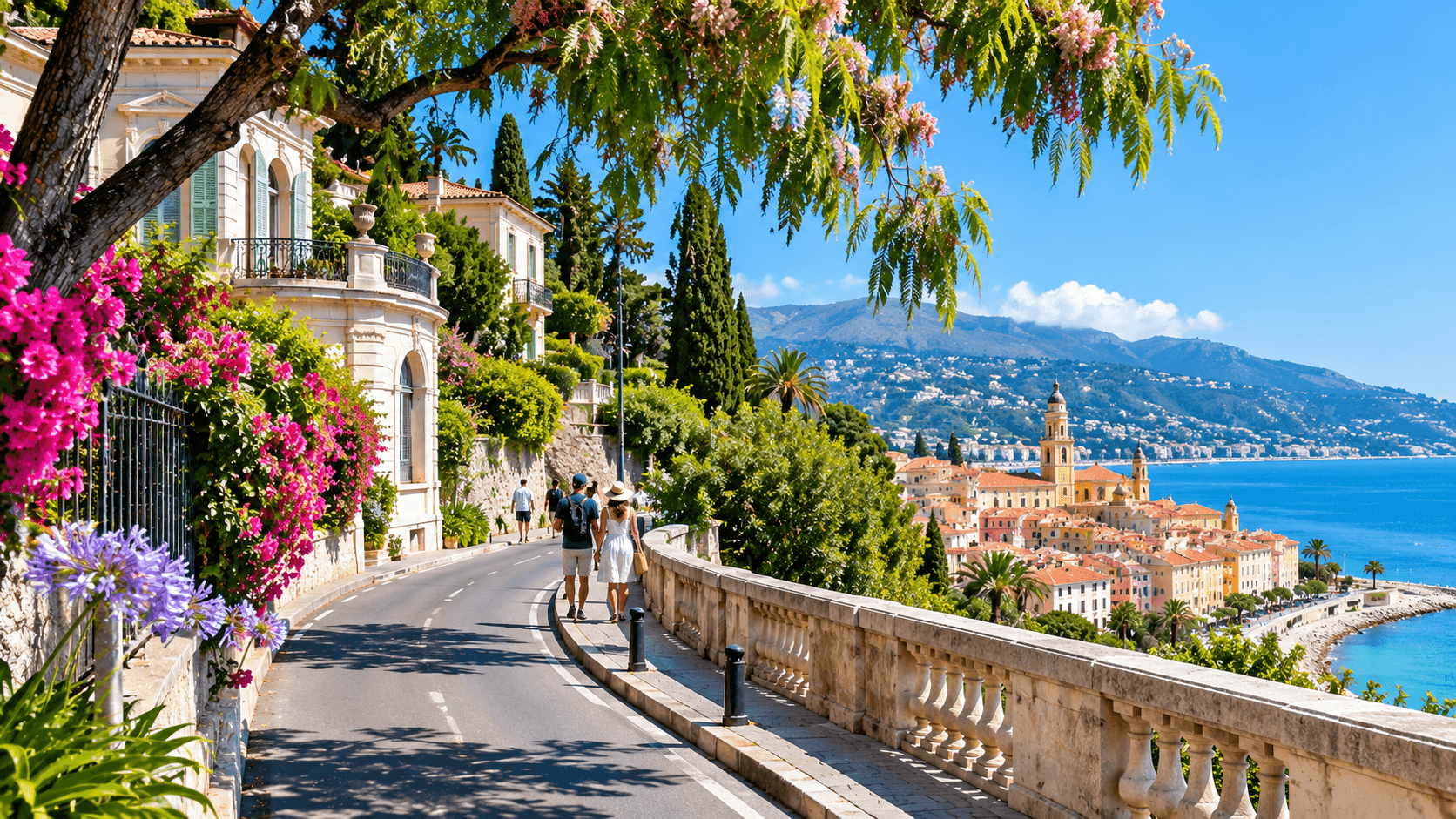
Boulevard de Garavan
Historic hillside boulevard above Garavan, with villas and bay views. Slopes, traffic and variable pedestrian space: choose a suitable public section, not an assumed step-free route. Villa grounds remain private.
Boulevard de Garavan, 06500 Menton

cycle route
cycle route
Promenade Reine Astrid
Scenic Garavan-side promenade used by the official local cycling route toward the border.
Garavan seafront
8. A longer stay changes how you see Menton
One of the book's most interesting themes is the experience of living on the Riviera rather than simply visiting.
The Williamsons' world was built around continuity.
Meals, social calls, garden maintenance and the arrangements of domestic life gradually became the structure of their days.
Modern visitors won't recreate that privileged expatriate world, and there is no reason to romanticise all of it.
But the distinction between visiting and living remains relevant.
A weekend in Menton is about discovery.
A month or two is more likely to become about routine.
You find a favourite café.
You begin shopping at the same market.
You notice changes in the garden and weather.
You discover that the practical details of accommodation matter more than the initial view.
What can modern visitors take from the novel?
Perhaps a better understanding that a beautiful place is not enough on its own.
A home also needs relationships, purpose and a connection with the world beyond its walls.
The Williamsons' story raises questions about the risks of retreating too far into an idealised domestic life.
Those questions remain surprisingly modern.
9. What the novel reveals about British Menton
The British community played a significant role in Menton's transformation into a fashionable winter resort.
Its members contributed to the development of villas, gardens and social institutions.
But it is important not to confuse the experiences of wealthy expatriates with those of the town's wider population.
The privileges enjoyed by some visitors depended on social and economic inequalities.
Their comfortable lives required the work of people who often remain less visible in historical accounts.
The world beyond the garden wall
While wealthy residents built Mediterranean retreats, local people worked in commerce, horticulture, construction, hospitality and domestic service.
The town also experienced the effects of international economic pressures and the growing instability of Europe.
The private villa could seem protected from these changes.
In reality, no wall could completely separate it from them.
This is part of what gives The Long Afternoon its historical depth.
The novel presents a world that appears stable while larger forces gather beyond its boundaries.
10. Three ways to experience this story
Option A. Read the novel and explore Garavan
Best for: Readers, photographers and travellers without a garden reservation.
Read the opening chapters before visiting.
Explore the public streets of Garavan and enjoy the waterfront.
Look at the architecture of the hillside villas.
Keep the literary context in mind without searching for exact fictional addresses.
Time: Around 1–2 hours.
Option B. Plan around Clos du Peyronnet
Best for: Garden enthusiasts and visitors especially interested in the Waterfield family.
Confirm an official guided tour.
Make the garden the central activity of your afternoon.
Use the visit to understand how the property evolved across generations.
Finish with a short coastal walk.
Time: Approximately half a day.
Option C. Explore Menton's wider British garden heritage
Best for: Visitors spending several days in Menton.
Combine a confirmed visit to Clos du Peyronnet with separate visits to other historic gardens, such as Val Rahmeh or Fontana Rosa, only after checking their current opening programmes. Val Rahmeh has a published closure from 2 to 27 November 2026; do not plan a visit during that period.
These gardens have their own histories and should not be presented as locations from Waterfield's novel.
But together, they reveal the remarkable importance of gardens in Menton's international winter-resort culture.
Allow separate days if access arrangements and walking conditions make that more comfortable.
garden
garden
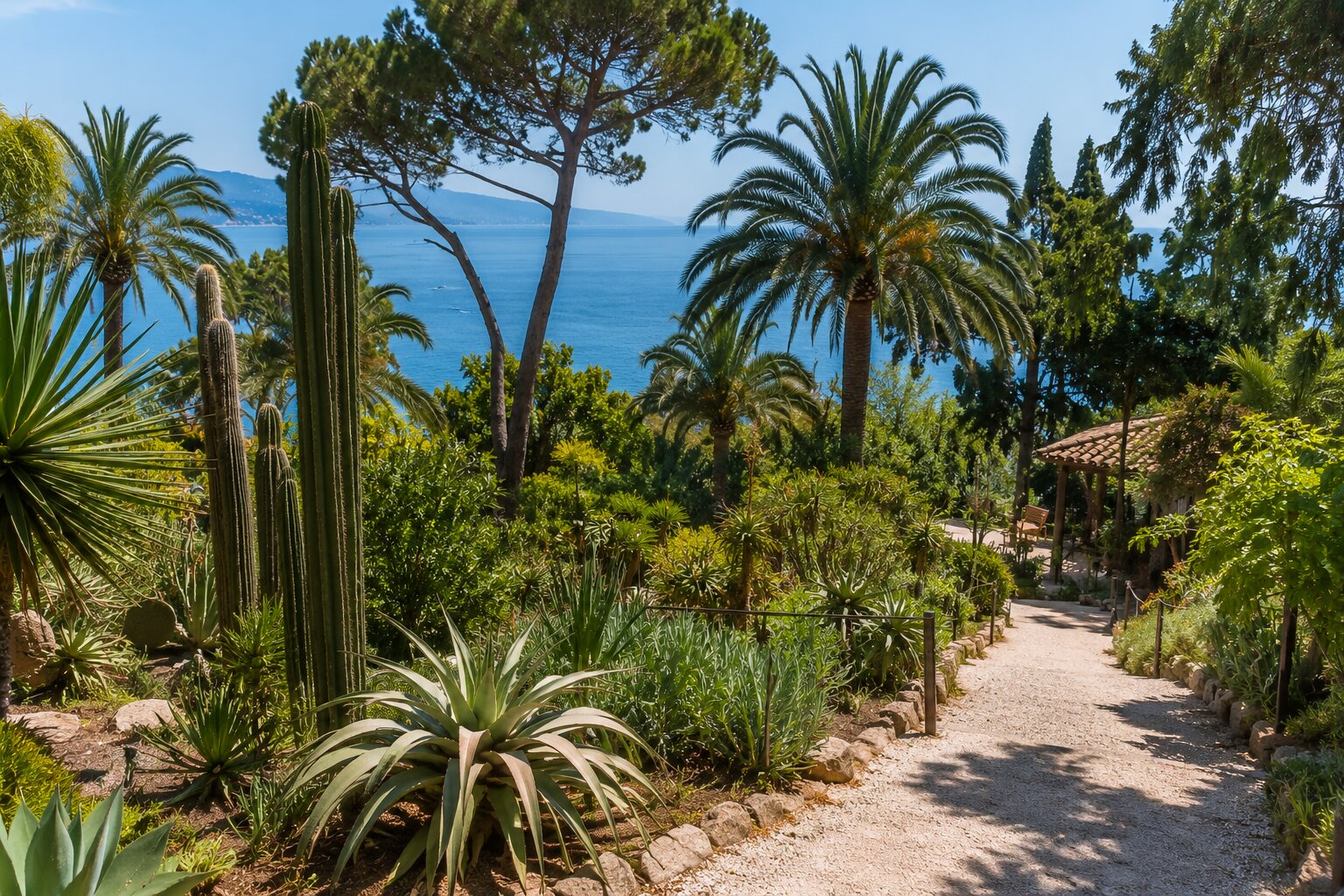
Jardin Botanique Val Rahmeh
A botanical stop to consider for garden lovers and slower itineraries.
Avenue Saint-Jacques, 06500 Menton
Check current hours before visiting
garden
garden
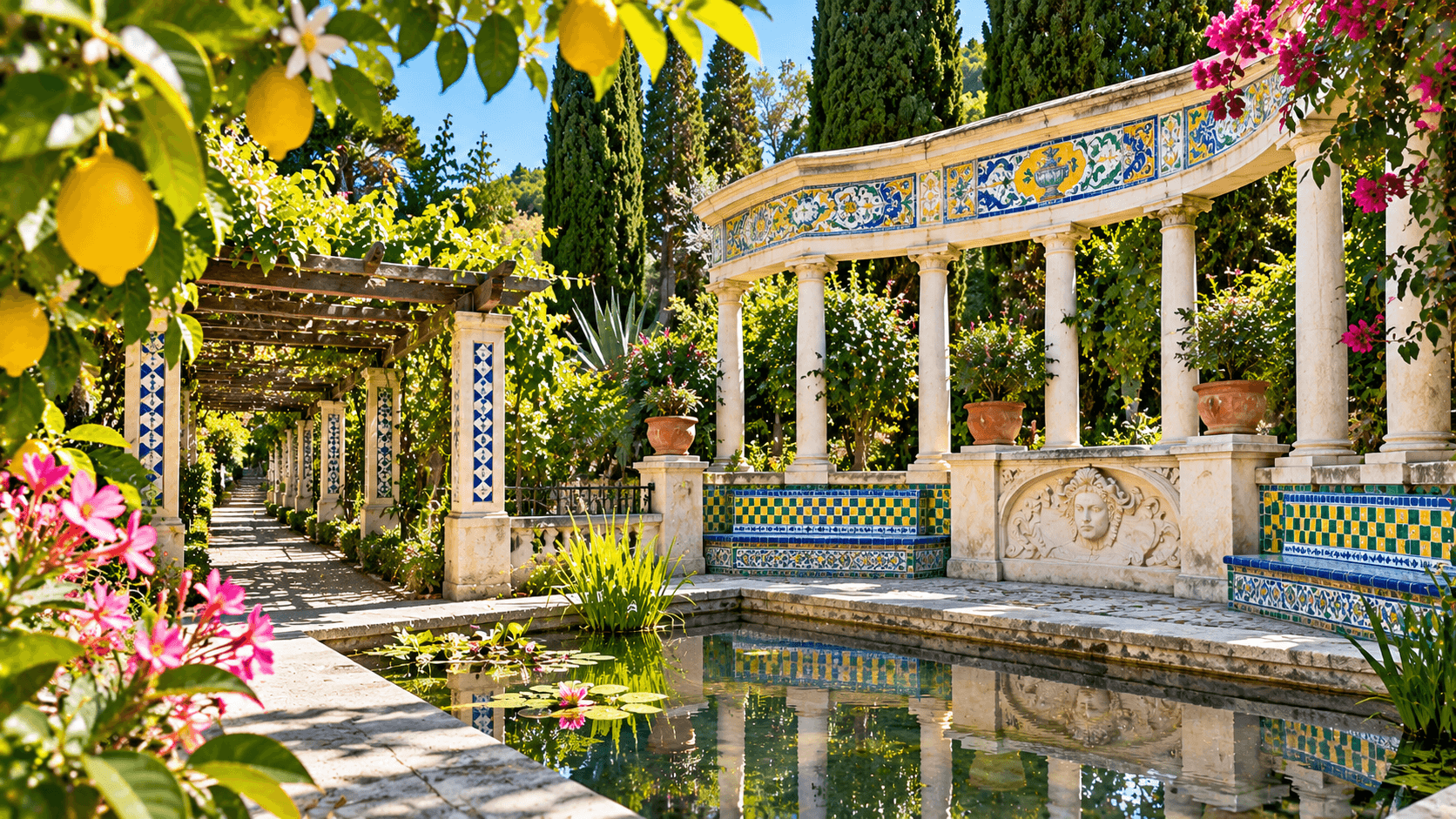
Jardin Fontana Rosa
Vicente Blasco Ibáñez's Garden of the Novelists, with ceramics and literary monuments. Organised guided visits, not unrestricted garden admission; confirm the booked session and language.
Avenue Blasco Ibáñez, 06500 Menton
Check current hours before visiting
11. What to read alongside The Long Afternoon
The Long Afternoon, Giles Waterfield
Begin with the novel itself.
Its fictional characters and carefully constructed domestic world provide the emotional centre of this literary route.
Clos du Peyronnet historical records
For the real family history, consult the official garden website and French heritage inventory.
These provide information on the property's acquisition, design and later development.
They are particularly useful for understanding how the present garden differs from its earlier forms.
Historical accounts of the British Riviera
For wider context, explore research into Menton's development as a winter resort, including its expatriate communities, historic hotels and private villas.
This helps situate the fictional Williamsons within a much larger social and economic history.
The Houses That Remember, Anton Biletskyi-Volokh
For another approach to the relationship between homes and their inhabitants, discover The Houses That Remember, an AzurBooks collection of eight narrative nonfiction stories set along the French Riviera.
It explores historic houses, gardens, artists and the often complicated process of preserving their legacy.
The two books are different: Waterfield's is a novel inspired by family history, while The Houses That Remember is documentary historical storytelling.
Read together, they offer complementary ways to think about the places that survive us.
Frequently asked questions
Is The Long Afternoon set in Menton?
Yes. The novel is set on the French Riviera, specifically drawing on the British expatriate world of Menton during the first half of the twentieth century.
Is The Long Afternoon based on a true story?
The novel draws on Giles Waterfield's family history, particularly the experiences of his grandparents in Menton. However, it is fiction, not a documentary biography.
Is Lou Paradou a real villa?
Lou Paradou is the fictional house of Henry and Helen Williamson. Its literary background is closely connected with the Waterfield family's history at Clos du Peyronnet, but the fictional property should not be treated as an exact architectural reconstruction.
What is Clos du Peyronnet?
A historic private garden in Garavan, Menton, developed by several generations of the Waterfield family. It is known for its terraces, pools, pergolas and exceptional plant collections.
Can you visit Clos du Peyronnet?
Only through confirmed authorised visits. The garden is private, and the official tourism listing currently marks it as temporarily closed. Contact the organiser before travelling.
How long does a guided tour take?
The garden's published guided visit lasts approximately 90 minutes.
Is the garden accessible to wheelchair users?
No. The official visitor information describes substantial stairs, climbing and changes in level.
Was the present garden created during the novel's historical period?
Not entirely. Much of its celebrated later design was developed by Humphrey Waterfield after the Second World War and continued by William Waterfield.
Can you enjoy the literary walk without reading the novel?
Yes. Garavan's villas, garden history and coastal landscape are interesting independently. The novel adds another perspective on the social world that created them.
Does this guide reveal the ending?
No. The guide introduces the book's premise, themes and historical setting without recounting its final developments.
Final thoughts: beyond the garden wall
The French Riviera has always been good at making beautiful lives appear effortless.
A villa above the Mediterranean.
A garden filled with flowers.
A long afternoon in the sunshine.
From the outside, such a world can seem almost perfect.
But The Long Afternoon reminds us that beautiful surroundings do not remove ordinary human difficulties, nor can a private retreat indefinitely protect its inhabitants from history.
The Waterfield family's real garden at Clos du Peyronnet gives this story a particularly tangible setting.
It survives as a remarkable horticultural achievement, shaped by several generations and transformed by time.
The people who created its earliest world are gone.
The garden remains.
And the novel allows us to imagine something of the lives, expectations and uncertainties that once existed behind its walls.
If you visit Garavan, look beyond the elegant villas and lush greenery.
Think about the people who made their homes here.
About what they hoped to preserve.
And about how much can change during one long afternoon.
Sources and further reading
The Long Afternoon, Hachette UK
Giles Waterfield: Books and Author Information
The Art Newspaper: Giles Waterfield Obituary
The Guardian: Giles Waterfield Obituary
Clos du Peyronnet: Official Garden History
Clos du Peyronnet: Visiting Information
French Regional Heritage Inventory: Clos du Peyronnet
Menton Tourist Office: Belle Époque Route
Regional tourism: current access notice
Publication checks: 6 November 2026. The book discussion is based on the supplied editorial manuscript, publisher and author descriptions and biographical sources, not a claim of a complete independent reading. The supplied cover is an artistic composition, not the actual publisher cover or a documentary view of the garden. This is a spoiler-free literary guide, not a biographical reconstruction of the novel's characters. Clos du Peyronnet is private property and public tours require current confirmation. Walking times are editorial estimates rather than field measurements.