A portraitist, a revolutionary and a town between worlds
Imagine arriving in Menton in 1789.
There are no grand Belle Époque hotels, no railway along the coast and no palm-lined Promenade du Soleil.
The town is smaller, its streets narrower, its economy shaped by agriculture, maritime trade and its position between larger political powers.
And, most importantly, Menton is not yet part of France.
It's a town associated with the Principality of Monaco, ruled by the Grimaldi dynasty.
Far away in Paris, the French Revolution is beginning to overturn the old order.
What might happen if someone connected to the royal court sought refuge in this small Mediterranean town?
That is the starting point of Les Derniers Feux de la royauté, a historical romance by French author Virginie Platel.
Its heroine, Jeanne Mercier, is a talented portrait painter associated with Marie Antoinette's court.
As revolutionary unrest threatens her familiar world, Jeanne leaves Paris and arrives in Menton.
There she encounters Gabriel, a local man whose political sympathies are very different from her own.
He is drawn to revolutionary ideas.
She has reason to fear them.
Their encounter places two conflicting worlds within the same Mediterranean landscape.
The resulting novel combines romance, personal danger and historical upheaval, while introducing readers to a much less familiar chapter of Menton's past.
This guide explores the historical setting behind the fiction, the real city that inspired it and a short literary walk through streets that still preserve traces of the pre-modern Riviera.
You don't need to read the novel before visiting Menton.
But the book offers a way to imagine the town before it became the international seaside resort we know today.
1. Discover the book
Les Derniers Feux de la royauté
By Virginie Platel
Publisher: Harlequin
Collection: Aliénor
First published: 1 July 2020
Genre: Historical romance
Language: French
Length: 352 pages
Available formats: Paperback and eBook
Discover Les Derniers Feux de la royauté on the publisher's website
The novel belongs to Harlequin's Aliénor collection, which places love stories within the historical and regional settings of France.
Platel uses the revolutionary period to create a contrast between two characters shaped by different social experiences.
Jeanne belongs to the artistic world surrounding the French royal court.
Gabriel is connected with the life of the Mediterranean region and sympathetic to political change.
For readers, the attraction lies not only in the developing romance but also in the historical and cultural distance separating the two.
The book is fiction, however, not a historical transcript.
The characters' thoughts, conversations and personal decisions should be understood as part of the author's narrative.
2. Why did Virginie Platel choose Menton?
The author has a personal connection with the town.
Virginie Platel was born in Valenciennes, in northern France, but moved to Menton with her family when she was around ten years old.
She attended local schools before studying communication and audiovisual techniques at the University of Nice.
She also studied violin in Menton and Nice and worked professionally as an orchestral musician.
Later, she developed a career as a screenwriter, contributing to French television comedies and programmes for younger audiences.
Her background helps explain the novel's interest in vivid scenes, dialogue and atmosphere.
But her choice of setting was also personal.
When the City of Menton presented Les Derniers Feux de la royauté in October 2020, Platel explained that she wanted to celebrate the town in which she had grown up.
She wanted readers to experience its colours, scents, flavours and history.
A novelist researching local history
The municipal article provides another significant detail.
Platel consulted the Octobon collection, made available through Menton's municipal library, L'Odyssée, while researching eighteenth-century life.
She acknowledged the assistance of the library's director, Rose-Marie Matton.
This is an important distinction.
The author didn't simply take a modern photograph of Menton and imagine eighteenth-century characters walking through it.
She sought historical material to reconstruct the town's earlier atmosphere.
But historical research and historical accuracy are not identical.
The archives provide a foundation.
The novel turns that material into an imagined story.

civic
civic
L'Odyssee Bibliotheque municipale
Menton's municipal library at the Palais de l'Europe, with a catalogue, reading areas and cultural activities. Ask directly about short-stay borrowing eligibility.
Palais de l'Europe, 8 Avenue Boyer, 06500 Menton
3. Menton in 1789: a town that wasn't French
This is the most important historical fact to understand before reading the novel.
Today, Menton is a French town in the Alpes-Maritimes department.
That wasn't its political status when the Revolution began.
Since the fourteenth century, Menton had been associated with Monaco and the Grimaldi dynasty.
By the late eighteenth century, the Principality included Monaco, Menton and Roquebrune.
Its ruler was Prince Honoré III.
France was an influential neighbouring power, but the Principality retained its own political identity.
A short historical timeline
This history complicates the usual image of the French Revolution spreading from Paris into an already unified French country.
Menton occupied a politically distinctive position.
Its inhabitants were influenced by events in France, but they also had their own relationships with Monaco, neighbouring Italian territories and the Grimaldi administration.
Why this matters for the novel
Jeanne arrives from a world in which loyalty to the monarchy is central to her identity and security.
Gabriel represents a different relationship with revolutionary change.
Their conflict becomes more interesting when we remember that the events were not taking place in an ordinary French provincial town.
The political future of the entire region was uncertain.
| Year | What happened |
|---|---|
| 1346 | Menton became associated with Charles Grimaldi, Lord of Monaco |
| 1641 | The Treaty of Péronne established French protection over Monaco |
| 1789 | The French Revolution began; Menton was still part of the Principality |
| 1790 | Political reform movements reached Monaco, Menton and Roquebrune |
| 1793 | The Principality's territory was incorporated into revolutionary France |
| 1814 | The Grimaldi dynasty was restored after the Napoleonic period |
| 1848 | Menton and Roquebrune declared themselves free towns under Sardinian protection |
| 1861 | Menton was formally incorporated into France |
4. Revolution beyond Paris: Monaco and the borderlands
The French Revolution is often remembered through Parisian events: the Bastille, the royal family, the National Assembly and the fall of the monarchy.
But revolutionary ideas didn't stop at the city limits.
They spread through correspondence, trade, military movements and political debate.
The small states and territories along the Mediterranean frontier were affected in different ways.
The position of Honoré III
Prince Honoré III governed Monaco during the revolutionary era.
His position was increasingly difficult as demands for political reform spread.
Municipal reforms were introduced in 1790, but the relationship between the prince, his subjects and revolutionary developments remained unstable.
By 1793, the political order governing Menton had changed decisively.
Was Menton simply a refuge from the Revolution?
Not entirely.
For a person fleeing Paris, Menton might have appeared geographically distant from the centre of revolutionary unrest.
But distance didn't guarantee safety or political neutrality.
The region had its own tensions, political loyalties and social divisions.
That is precisely what makes it an effective setting for a historical romance.
A character might escape immediate danger without escaping the questions that caused it.
5. An artist at the end of the royal world
Jeanne Mercier is presented as a portrait painter connected with Marie Antoinette's court.
That gives her a distinctive place in the novel's historical imagination.
She is not simply a noblewoman fleeing political unrest.
Her position is connected with artistic skill and professional work.
Portraiture mattered enormously in eighteenth-century European court culture.
Paintings helped present the identities, status and authority of rulers and aristocrats.
Portrait artists worked within networks of commissions, patronage and personal reputation.
Art and political change
The Revolution challenged the institutions that supported much court culture.
For an artist whose income and identity were closely connected with royal patronage, political upheaval could threaten both professional and personal security.
Jeanne's fictional circumstances allow the novel to explore this vulnerability.
But readers should distinguish the fictional character from historical artists who worked for Marie Antoinette.
In particular, Jeanne Mercier should not be confused with the celebrated real portraitist Élisabeth Vigée Le Brun.
Both belong to the broader subject of art and aristocratic patronage, but they are not the same person.
A useful question while reading
What happens to an artist when the world that once valued their work begins to disappear?
This question gives the story a cultural dimension beyond the romantic plot.
6. Lemons, markets and everyday eighteenth-century Menton
Menton's citrus heritage is one of its most familiar characteristics today.
But lemons were important to the local economy long before the modern Lemon Festival existed.
The region's climate allowed citrus cultivation alongside other Mediterranean agriculture.
The contrast between courtly society and everyday local life offers a useful reading lens. The accessible publisher and municipal descriptions do not independently verify Gabriel's precise occupation; this guide does not assign him one.
Avoiding a modern misconception
Today's Fête du Citron is a twentieth-century celebration.
Its elaborate citrus sculptures and parade culture should not be projected backwards into 1789.
The eighteenth-century town knew lemons as agricultural products and elements of regional trade, not as the centrepiece of today's tourist festival.
What about the market?
Menton's present municipal covered market is an attractive place to explore local food culture.
But the existing market building belongs to a much later period.
It is not the market structure Jeanne would have encountered in the fictional eighteenth-century setting.
A visit can still be worthwhile.
Just understand it as a modern connection with the town's continuing food traditions rather than a preserved scene from the novel.
7. The literary walk: looking for eighteenth-century Menton
The following walking route is inspired by the novel's historical setting.
It is not a reconstruction of Jeanne's movements or a claim that specific fictional scenes occurred at these precise addresses.
The available publisher and municipal descriptions establish Menton as an important setting, but they do not provide a reliable chapter-by-chapter map.
This itinerary instead focuses on historic streets, architecture and public spaces that help visitors imagine the city before its great nineteenth-century expansion.
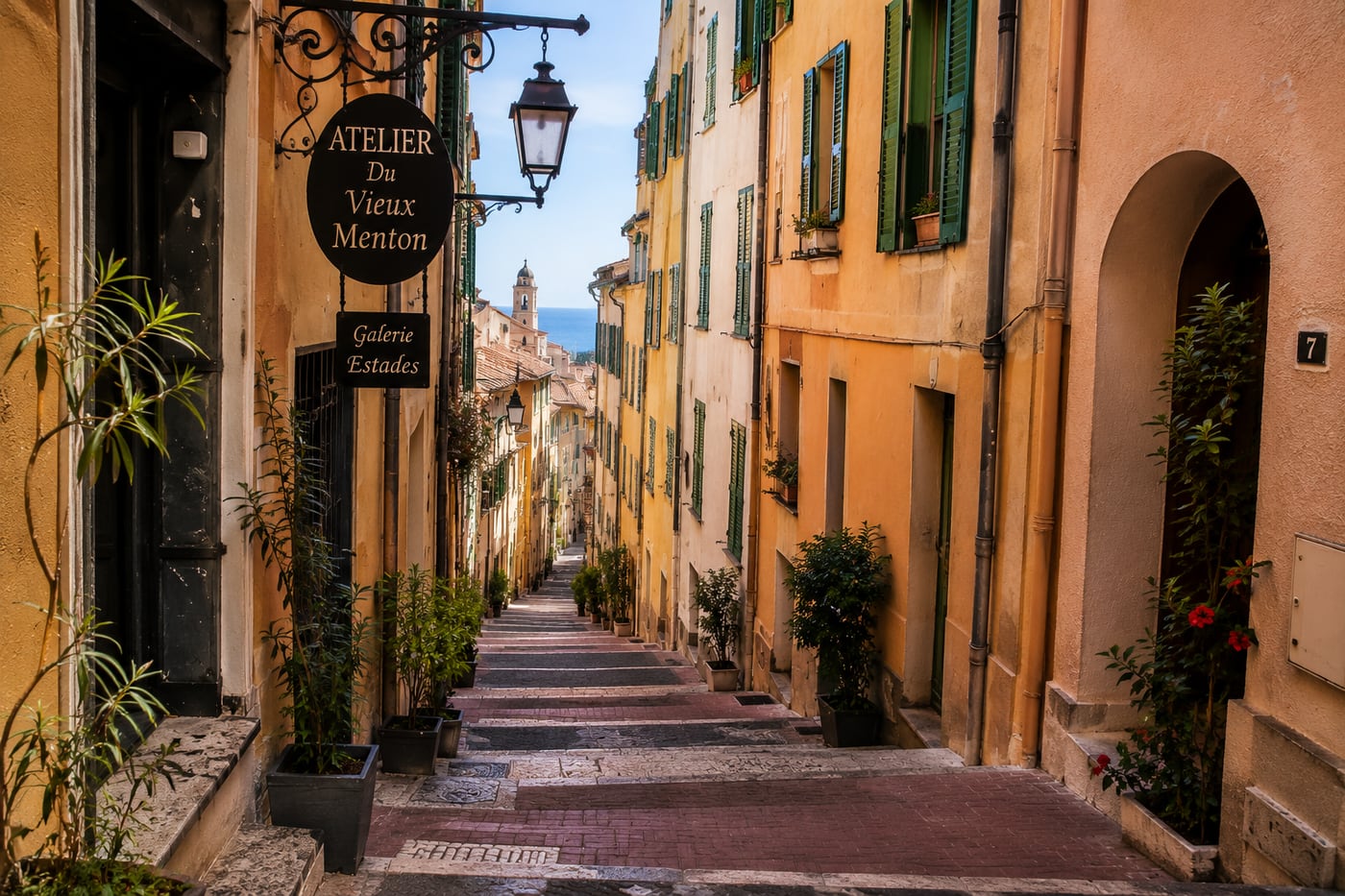
Stop 1. Rue Longue: entering the older town
Location: Rue Longue, Menton's historic centre.
Begin among the narrow streets of the old town.
This is the part of Menton where its pre-modern urban character is most apparent.
The buildings stand close together, with passages, stairways, small openings and changing views of the surrounding hills and sea.
These streets are more useful for imagining eighteenth-century Menton than the grand seafront hotels built much later.
What to notice
Look at the scale of the streets.
Notice how buildings are arranged around pedestrian circulation rather than modern car traffic.
Look at the walls, stairs, shutters and passages.
Not every visible feature dates from the eighteenth century. Buildings have been renovated, façades altered and streets adapted.
But the old-town layout preserves something of the compact Mediterranean settlement.
Literary connection: The contrast between the courtly world Jeanne leaves behind and the smaller town where she seeks refuge.
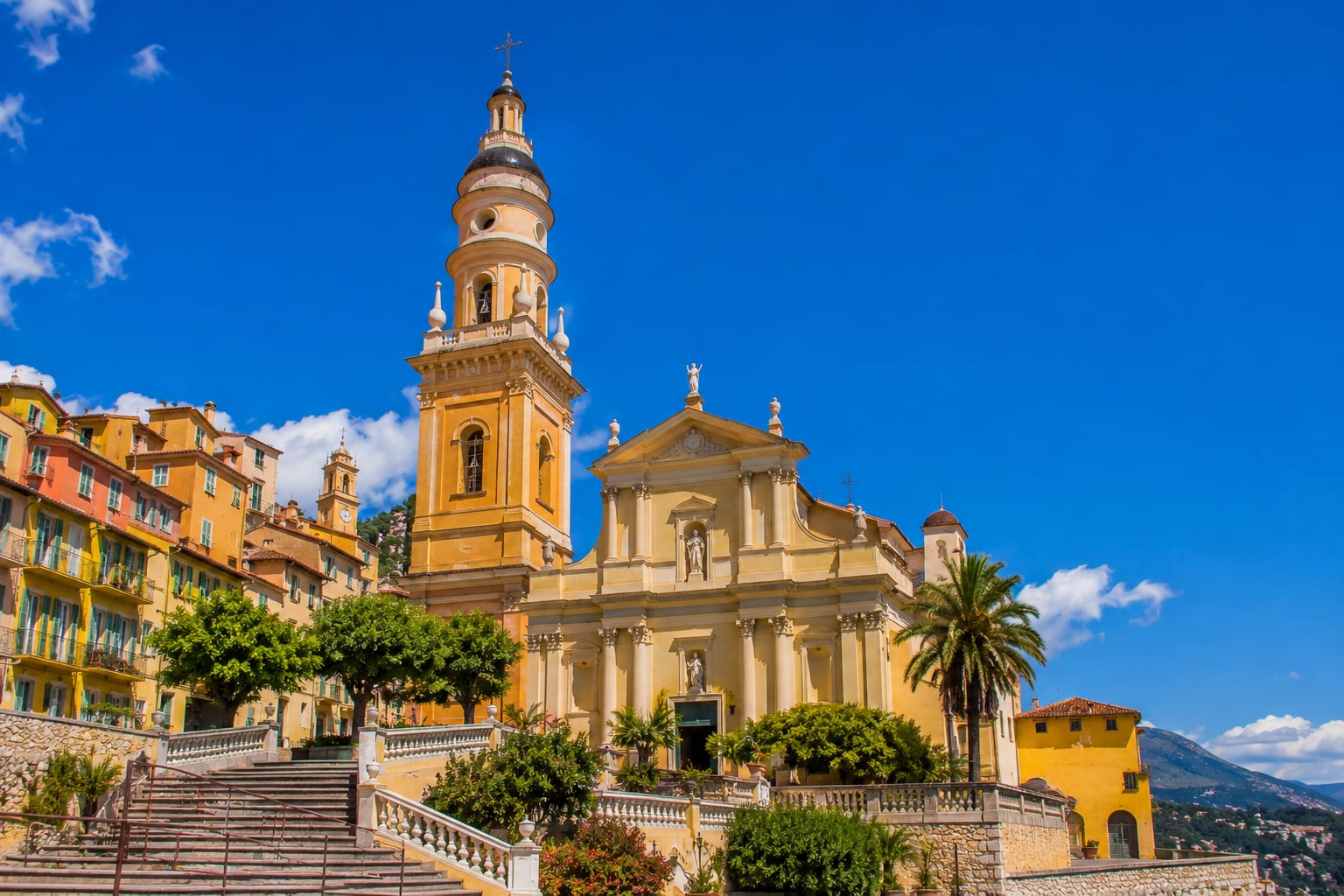
Stop 2. Basilique Saint-Michel-Archange: the town before the Revolution
Location: Parvis Saint-Michel.
Climb through the historic lanes towards the Basilica of Saint-Michel-Archange.
This is one of the most useful surviving landmarks for understanding Menton before the French Revolution.
The church was opened for worship in 1653 and consecrated in 1675.
Its great bell tower was begun in 1701, well before the novel's setting. Official descriptions differ on the completion year, so this guide does not select a precise end date.
These elements already belonged to the town's landscape by 1789.
However, the façade was completed in its later form in 1819, so the building visible today is not an unchanged eighteenth-century monument.
What to do
Visit the square and admire the architecture.
If the church is open, explore the interior respectfully.
The square also provides a remarkable view across the old town and Mediterranean.
Practical information
The municipal page publishes visiting times of Monday–Friday 15:00–17:00 and Saturday 10:00–12:00 and 15:00–17:00. Sunday 11:00 is a Mass, not an ordinary sightseeing slot. Services and exceptional closures may change access.
Check current arrangements before travelling.
The climb involves steep steps and slopes.
Literary connection: A historic religious landmark that genuinely existed in the period around the novel's setting, although later architectural changes must be recognised.
Stop 3. The lower old town: everyday life beyond the palace
Descend towards the pedestrian streets below the basilica.
Rather than searching for a specific fictional house, use this part of the walk to think about ordinary eighteenth-century urban life.
Menton wasn't Versailles.
Its residents depended on agriculture, trade, services, crafts and networks of exchange with neighbouring territories.
The difference between social classes was significant.
For someone accustomed to court life, the experience of living in a smaller Mediterranean town could involve profound changes in daily routine, work and status.
This makes an interesting lens through which to interpret Jeanne's fictional circumstances.
Literary connection: The shift from aristocratic patronage towards the practical requirements of survival and independence.
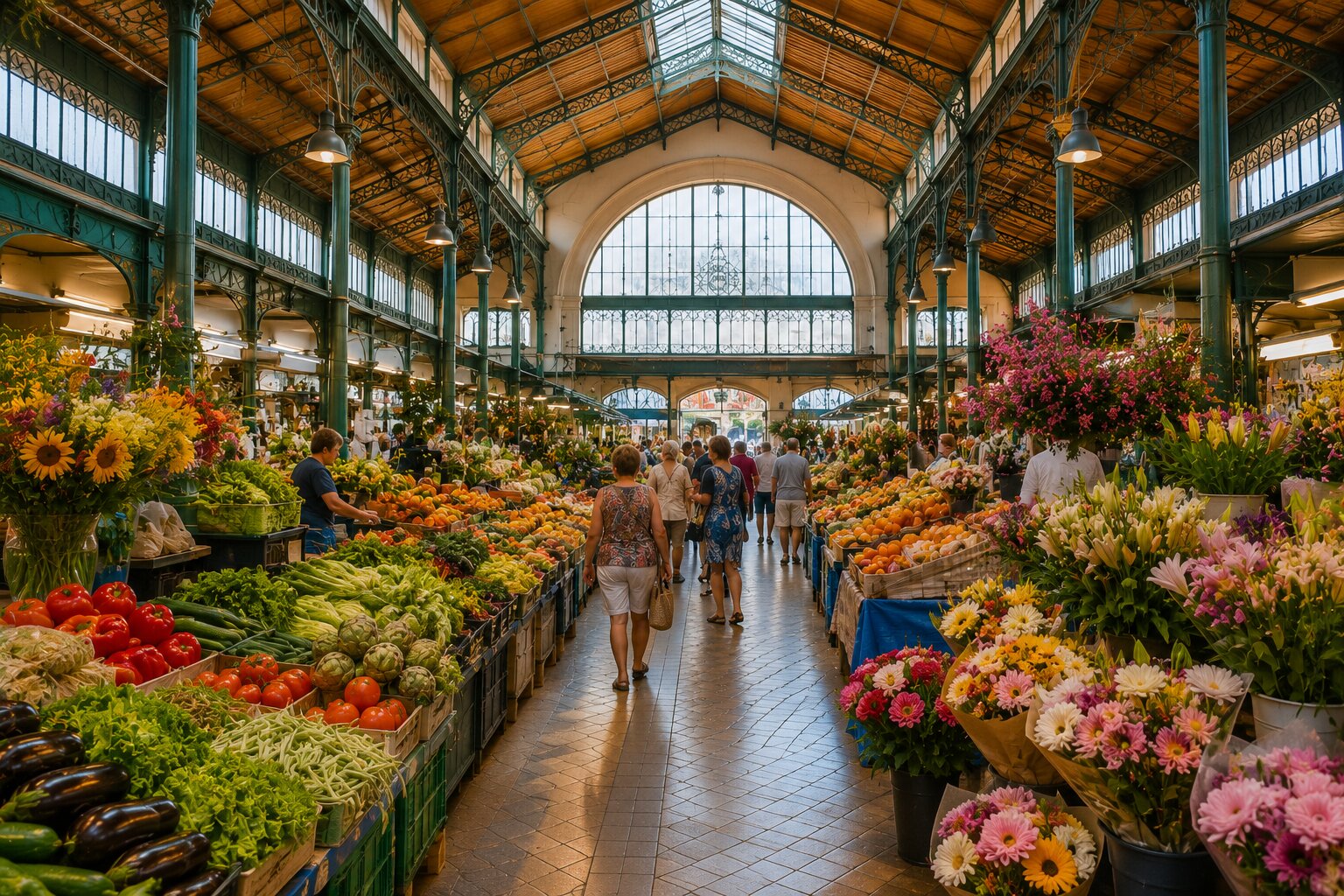
Stop 4. Marché des Halles: the continuity of local food culture
Location: Quai de Monléon.
Continue to Menton's covered municipal market.
The present building is not an eighteenth-century monument, but it offers a lively introduction to the area's food traditions.
Look for fruit, vegetables, olives, citrus products, cheese and other regional ingredients.
The sensory experience helps connect the modern town with a much older Mediterranean agricultural culture.
What not to assume
The traders, stalls and current market building cannot be directly identified with the fictional market described in the novel.
Nor is the modern tourist economy a reconstruction of the 1789 town.
Think of this as a thematic stop, not an archaeological one.
Literary connection: Food, agriculture and the contrast between elite society and local everyday life.
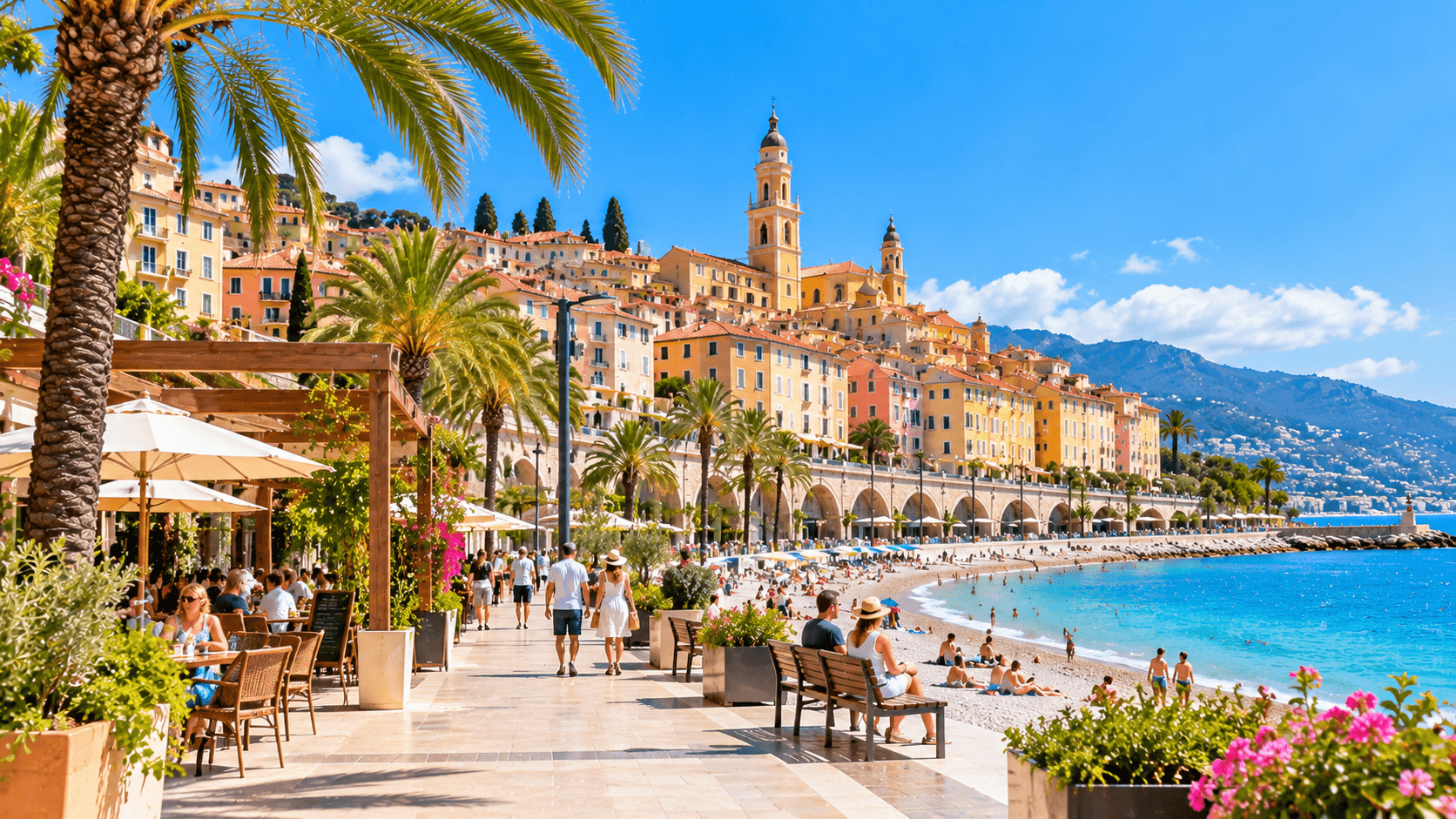
Stop 5. Les Sablettes and the old-town panorama: what changed?
Location: Esplanade des Sablettes.
Finish by looking back towards Menton's old town from the waterfront.
The colourful buildings rise above the sea, dominated by Saint-Michel.
It's one of the city's most memorable views.
But the modern esplanade, developed shoreline and many of the surrounding facilities belong to a much later era.
This is precisely why the viewpoint is useful.
It allows visitors to ask which features of the historic town have survived and which have been transformed.
The old town's silhouette gives a sense of continuity.
The seafront reveals how much has changed.
Literary connection: Menton as a real historical place that outlived the political world in which the novel takes place.
neighbourhood
neighbourhood
Rue Longue
A narrow old-town street with warm facades and steep visual rhythm; a useful stop on the Menton-on-screen walk.
Rue Longue, 06500 Menton
civic
civic
Basilica Saint-Michel-Archange
Menton's old-town landmark above the sea, useful for classic views, music-video mood and visual walks.
Place de l'Eglise, 06500 Menton
market
market
Halles du Marché
A natural first stop for picnic ingredients, citrus products and a morning look at local food life.
5 Quai de Monléon, 06500 Menton
Check current hours before visiting
The tourist office lists independent wheelchair access and free entry. This concerns the market building, not the surrounding streets or a published pushchair policy.
Source checked:
viewpoint
viewpoint
Esplanade des Sablettes
Pedestrian esplanade below the old town, distinct from the beach. Operator-reported wheelchair access; confirm your entrance, level changes and any lift before relying on it.
Esplanade des Sablettes, 06500 Menton
The published accessibility classification is not a measured survey of every approach. Beach access and seasonal assisted bathing are separate.
Source checked:
8. What to do if you have only one hour
Choose the old town and Saint-Michel.
Begin at Rue Longue, explore the historic streets and climb to the basilica square if you're comfortable with stairs.
The architecture offers the clearest visible connection with Menton's pre-revolutionary past.
If you have more time, continue to the market and waterfront.
The complete walk should take approximately 60–90 minutes at a relaxed pace, excluding an extended meal or museum visit.
These are planning estimates, not timed field measurements.
9. What kind of reader will enjoy Les Derniers Feux de la royauté?
This novel will particularly appeal to readers who enjoy historical romance with a strong sense of place.
Readers of French historical romance
The relationship between characters from opposing political and social worlds provides the central romantic tension.
The novel belongs to a genre in which personal relationships unfold against major historical events.
Readers interested in the French Revolution
The story introduces a less familiar geographical perspective on the revolutionary period.
Instead of remaining exclusively in Paris, it brings the political uncertainty of 1789 to the Mediterranean borderlands.
However, anyone seeking a detailed academic account of the Revolution should read historical research alongside it.
Readers who enjoy regional fiction
Virginie Platel's attachment to Menton gives the novel a particularly local purpose.
She researched the town's historical setting and aimed to evoke its landscapes, scents and everyday life.
Readers interested in women and artistic professions
Jeanne's identity as a portraitist adds another dimension to the historical romance.
Her professional skills are part of the fictional world, not merely decorative background.
Who might prefer another book?
If you primarily enjoy archival history, footnoted nonfiction or strictly documentary accounts, this may not be your first choice.
The novel is designed as historical romance.
Its aim is to tell an engaging story within a researched setting, not to provide a complete scholarly reconstruction of Menton in 1789.
10. Why this novel shouldn't be read as documentary history
Historical fiction can be a wonderful introduction to the past.
But several distinctions matter.
The author's use of archival research gives the setting greater credibility.
It does not turn every fictional episode into evidence.
A historical novel can compress time, invent characters and rearrange events to develop a narrative.
A traveller interested in the actual political history of Menton should therefore distinguish the literary experience from the historical record.
Where to research further
The City of Menton maintains municipal archives, including an ancient collection covering documents from before 1794.
The municipal library also holds historical resources relevant to local research. The municipal archives are a separate service: consult the catalogue and arrange an appointment rather than treating them as an unannounced walking-tour stop.
For readers who want to investigate eighteenth-century Menton, these institutional collections are more appropriate primary starting points than the novel alone.
| Element | How to interpret it |
|---|---|
| French Revolution beginning in 1789 | Documented historical event |
| Menton's relationship with Monaco | Documented political history |
| Prince Honoré III | Historical figure |
| Local citrus cultivation | Historical economic context |
| Jeanne Mercier | Fictional protagonist |
| Gabriel | Fictional protagonist |
| Their conversations and relationship | Literary invention |
| Particular houses and private encounters | Require evidence before treating as historical fact |
| Today's old-town buildings | Mixture of historic fabric and later changes |
11. Menton before the Belle Époque
One reason this book is a valuable addition to the AzurMenton literary collection is that it explores a period often overlooked by visitors.
Many familiar stories about Menton belong to the nineteenth and twentieth centuries.
The British winter visitors.
The grand hotels.
Katherine Mansfield.
Jean Cocteau.
The spectacular gardens.
The Lemon Festival.
But Les Derniers Feux de la royauté directs attention to an earlier city.
A Menton connected to Monaco and the Grimaldis.
A region shaped by Mediterranean trade and agricultural life.
A time when revolutionary ideas were challenging established political arrangements.
For readers who already know modern Menton, the contrast is fascinating.
The town's beauty may seem familiar.
Its historical identity is less so.
12. Read the novel, then visit the town
You can approach this literary experience in two different ways.
Read first
Begin with the novel.
Learn about Jeanne's situation and the political world she encounters.
Then explore Menton's old town with the historical distinctions in mind.
The streets and basilica become part of a larger imaginative landscape.
Visit first
Take the walking route without reading the novel.
Explore the historic centre, the basilica and the market.
Then read Les Derniers Feux de la royauté and compare the fictional atmosphere with what you've seen.
Either approach works.
The aim isn't to confirm every fictional scene.
It's to discover how a contemporary novelist can bring a lesser-known historical Menton into focus.
Frequently asked questions
Is Les Derniers Feux de la royauté set in Menton?
Yes. Menton is an important setting in the historical romance, following Jeanne Mercier's departure from Paris during the revolutionary period.
Who wrote Les Derniers Feux de la royauté?
French author and screenwriter Virginie Platel, who grew up in Menton.
When was the novel published?
It was published on 1 July 2020 by Harlequin, in the Aliénor historical romance collection.
Is Jeanne Mercier a real historical portraitist?
The character is presented as a fictional protagonist. She should not be identified with a documented royal portraitist without independent historical evidence.
Was Menton part of France in 1789?
No. Menton was part of the territory associated with the Principality of Monaco under the Grimaldi dynasty. Its political status changed during the Revolution, and it became definitively French in 1861.
Did the author research Menton's history?
Yes. The City of Menton reports that Platel consulted the Octobon collection through the municipal library while researching the eighteenth-century setting.
Can you visit locations from the novel?
You can explore the town's historic environment, including older streets and the Basilica of Saint-Michel. However, this guide does not claim that specific fictional scenes took place at the suggested stops.
Is the modern covered market from the eighteenth century?
No. Today's market building belongs to a later period. It is included as a thematic stop connected with local food culture.
Is the walking route suitable for wheelchair users?
The upper old town includes steep stairs and uneven surfaces. The full route is not step-free. Visitors with reduced mobility should choose a suitable lower-town alternative.
Is this guide spoiler-free?
Yes. It introduces the novel's premise, setting and historical context without revealing major developments or the ending.
Final thoughts: a different Menton behind the familiar façades
Menton is often presented through images of sunshine, gardens and the Mediterranean.
Those images are beautiful.
But they represent only part of the town's history.
In Les Derniers Feux de la royauté, Virginie Platel takes readers back to a period when the political future of Menton was uncertain and the French Revolution was transforming the world beyond its borders.
The fictional story brings together a woman associated with the royal court and a man drawn towards revolutionary ideas.
Their relationship offers a personal way into a much larger historical moment.
For visitors today, the novel provides a reason to look at Menton's old town differently.
To notice the buildings that stood before the nineteenth-century resort.
To consider the relationship with Monaco.
And to remember that the streets we walk through today have witnessed more than holidays and beautiful sunsets.
The Riviera has always been a place where different worlds meet.
In 1789, those differences could change the course of a life.
Sources and further reading
Harlequin: book, formats and publication details
City of Menton: Virginie Platel and the novel
City of Menton: political history
Regional heritage inventory: the historic town
City of Menton: basilica and published visiting times
City of Menton: bell-tower construction
Municipal archives: collections and appointments
Checked 4 November 2026. Literary description is based on the publisher's synopsis and the City of Menton's presentation, not a full-text reading. Historical context was checked separately. The five-stop walk is an original editorial interpretation, not a reconstruction of the characters' movements. Times are planning estimates; no step-free access is promised. The supplied artwork is an imagined promotional illustration, not the verified publisher's cover or a documentary image of 1789.